Day Three: Exploring West Coast Adventure: Haast to Hokitika

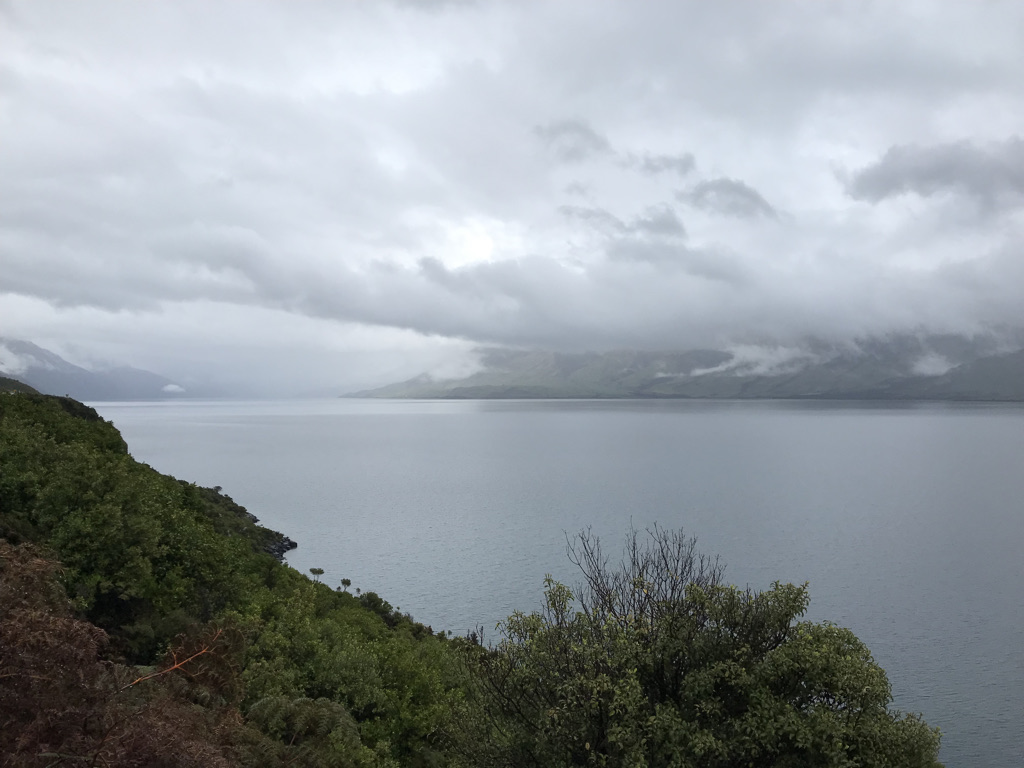
A low ceiling of cloud hung over Haast that morning, the kind that flattens the light and mutes the edges of everything. It wasn’t raining—not yet—but the air carried that quiet warning that it wouldn’t stay dry for long. The road north toward Hokitika waited in that in-between state, damp from the night, darkened under the trees, and already hinting at what the day might turn into. It felt less like setting off and more like slipping into whatever the West Coast had decided to offer.
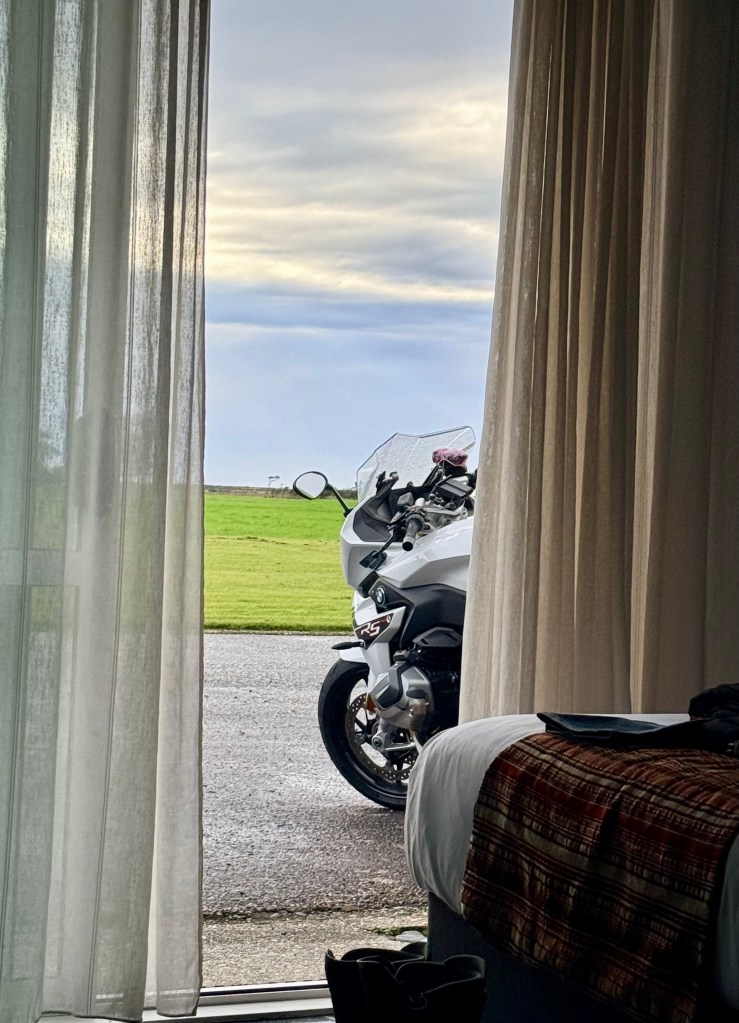
The morning didn’t so much arrive as quietly settle in. Looking out through the window, everything felt softened—edges blurred by low cloud, colours muted into shades of grey and green. There was a stillness to it, the kind that holds for just a moment before the day begins to move. It wasn’t a dramatic start, but it carried a quiet weight… the sort of morning that makes you wonder what the road is going to throw at you.

We greeted each other as we packed up our bikes and there was an air of quiet about the group.

This was a special day. One we had waited for. We were going to the final resting place of a very dear old friend who recently left us. Bob Tanner was a man who had woven himself in some way into all of our lives, and we were going to say hello.

We decided to delay breakfast until we got to the township of Franz Josef. After a cup of tea, we set off north. It was a brief start, for I was leading, had taken the group not 100 metres up the road, and thought I had left my wallet behind. Leaving my bewildered colleagues at the roadside, I returned to the hotel to retrieve my wallet, only to see it peeping out from under the lid of my tank bag. Feeling a little sheepish, I returned to the group, and we finally set off north.

Leaving Haast, the road north on State Highway 6 eases you in gently. The first stretch is deceptively calm—long straights, a few easy bends, the kind of riding where you settle into the day without much thought. The surface is good, the pace relaxed, and for a brief window it feels like the weather might just hold.

It doesn’t.

About twenty minutes in, the rain settled in properly—seeping into gloves, dulling the throttle response, turning every movement into something that needed to be deliberate. Not a passing shower, but that steady, committed West Coast rain that doesn’t come and go—it just is. The kind that builds on your visor until you’re wiping it more out of habit than effectiveness, the kind that turns the road from matte to mirror.

From a motorcyclist’s perspective, everything shifts.

The throttle hand softens. Braking stretches out earlier. Lines through corners become smoother, more deliberate. The road itself hasn’t changed—but the way you ride it absolutely has.

The bush thickens as you head north, pressing closer to the road. Water starts to appear everywhere—running off banks, dripping from overhanging branches, gathering in dark streaks across the tarmac. The surface, shaded and damp, keeps you honest. There’s grip there, but it’s quieter now, less forgiving of anything abrupt.

Corners that would normally be effortless take on a different character. Not difficult—just requiring respect. You read them a little earlier, tip in a little gentler, roll on the throttle with more care. It becomes less about flow and more about feel.

And then there’s the sensory side of it.

The smell of the bush intensifies with the rain—wet leaves, damp earth, that deep, almost sweet scent that seems to rise up from the forest itself. It cuts through everything, even at speed. The sound changes too—the steady hiss of tyres on wet seal, the soft drumming of rain on helmet and jacket, the engine note slightly muffled in the thick air.

Visibility narrows, not just from the rain on the visor but from the way the light flattens under the cloud. Greens deepen, shadows blur, and the road becomes a ribbon of dark grey threading through it all.
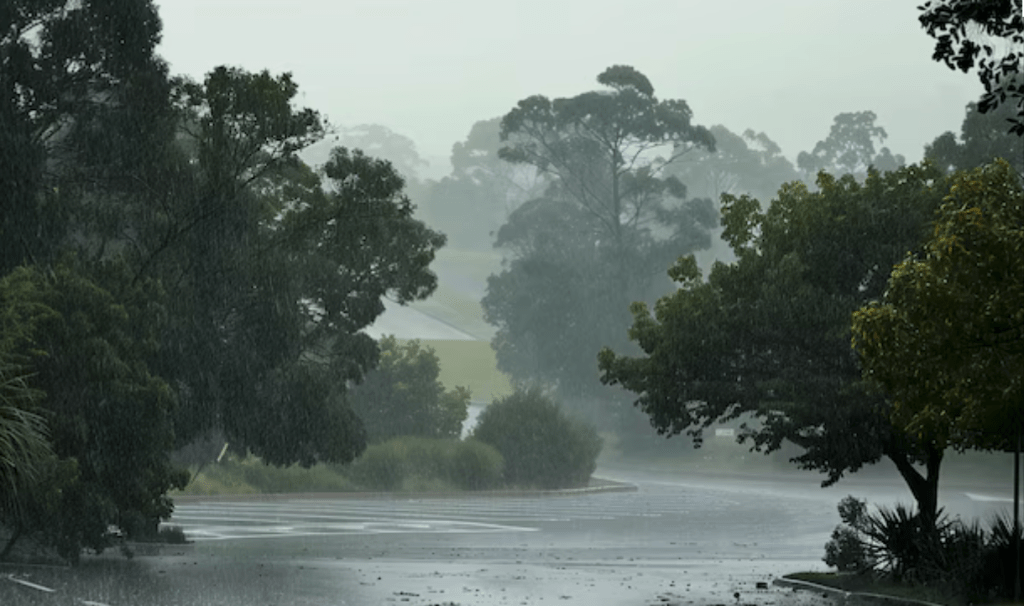
By the time you roll into the Lake Paringa Reserve, you’re properly in it. Not fighting it—just riding within it. Gear dampened, focus sharpened, and that quiet awareness that comes when the conditions demand your full attention.

It’s not the kind of riding that’s fast or effortless.

But it is the kind you remember. A hastily snapped photo does not do the place justice. Dotted about are soggy tents with soggier clothes hung on a line in a forlorn attempt to dry them. A toilet block with a verandah affords some shelter under which damp motorcyclists don wet-weather gear in an attempt to keep the water on the outside. No time to lose, we press on.

Pulling out from the Lake Paringa Reserve, zipped up and committed, there’s a quiet acceptance that this is how the ride is going to be now. The rain hasn’t eased—it’s settled in—and the road north on State Highway 6 feels different the moment you roll back onto it.

This stretch tightens up.

The bush presses closer, thicker and more enclosed, the canopy leaning over in places as if trying to reclaim the road. The corners come more frequently now—still flowing, but shorter, more connected. You’re no longer cruising between bends; you’re linking them together, one after another, with barely a pause.

On a dry day it would be a beautifully rhythmic piece of road. In the rain, it becomes something more focused.

The surface carries that constant sheen, broken by darker patches where water is collecting or tracking across the lane. You start to read those changes instinctively—avoiding the painted lines, staying smooth over anything that looks like it might be hiding a bit less grip. Every input matters a little more now. Evidence of land slips abounds. Is there one around the next bend?

Throttle gentle. Brakes progressive. Body relaxed but alert.

The rain intensifies the environment in a way that’s hard to describe unless you’ve ridden through it. The smell of the bush is stronger here—lush, almost overwhelming. Moss and lichens cling to everything: tree trunks, rock faces, even the roadside barriers, all saturated and alive. Water runs constantly—down banks, off leaves, across the road in thin, shifting streams that you cross without thinking, but never quite ignore. Non native possums litter the road, where vain attempts to cross were doomed to fail, and they are now food for the local raptors.

There’s a steady rhythm to it all:
Corner. Straight. Water crossing. Corner again.

Visibility ebbs and flows. One moment you’ve got a clear view through a bend, the next it tightens as the bush crowds in and the light dims under the canopy. You ride a little further back from the limit, giving yourself space—not out of hesitation, but out of respect for what the conditions are asking.

And yet, there’s something deeply satisfying about this section.

You’re fully engaged now. No distractions. No autopilot. Just you, the bike, and a narrow ribbon of wet tarmac threading through dense West Coast bush.
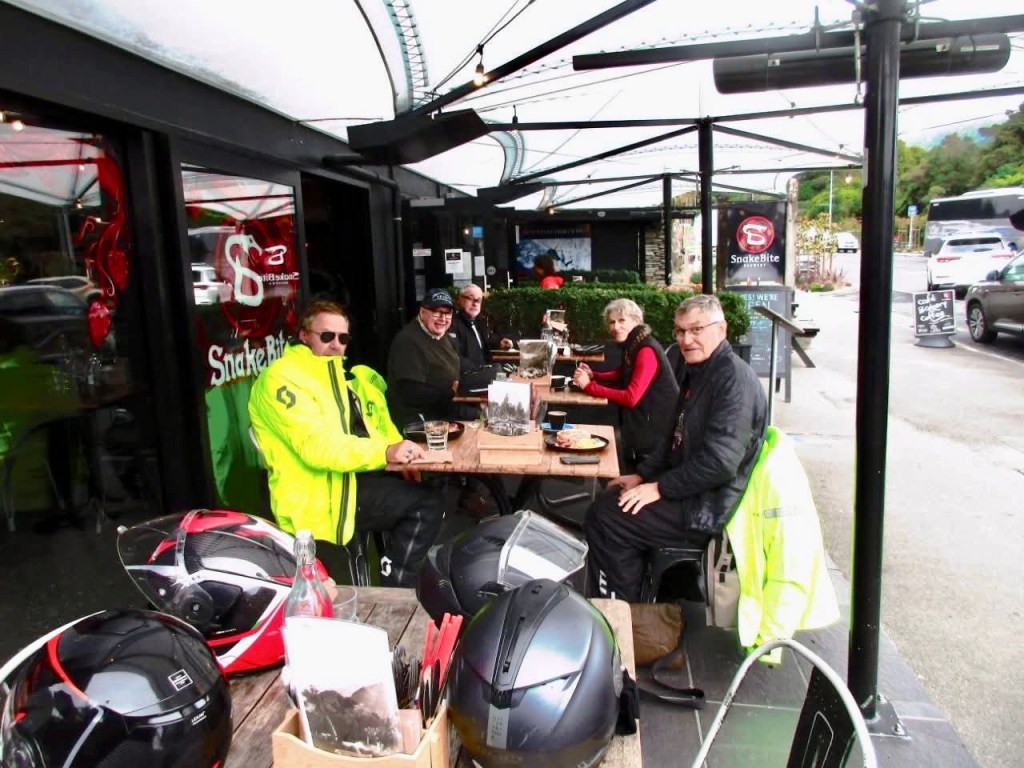
After a series of twisting and descending bends, we stopped in Franz Josef township for breakfast and topped up the bikes’ tanks. We needed this. The rain had started to ease, but it was time for a break.

We continued.

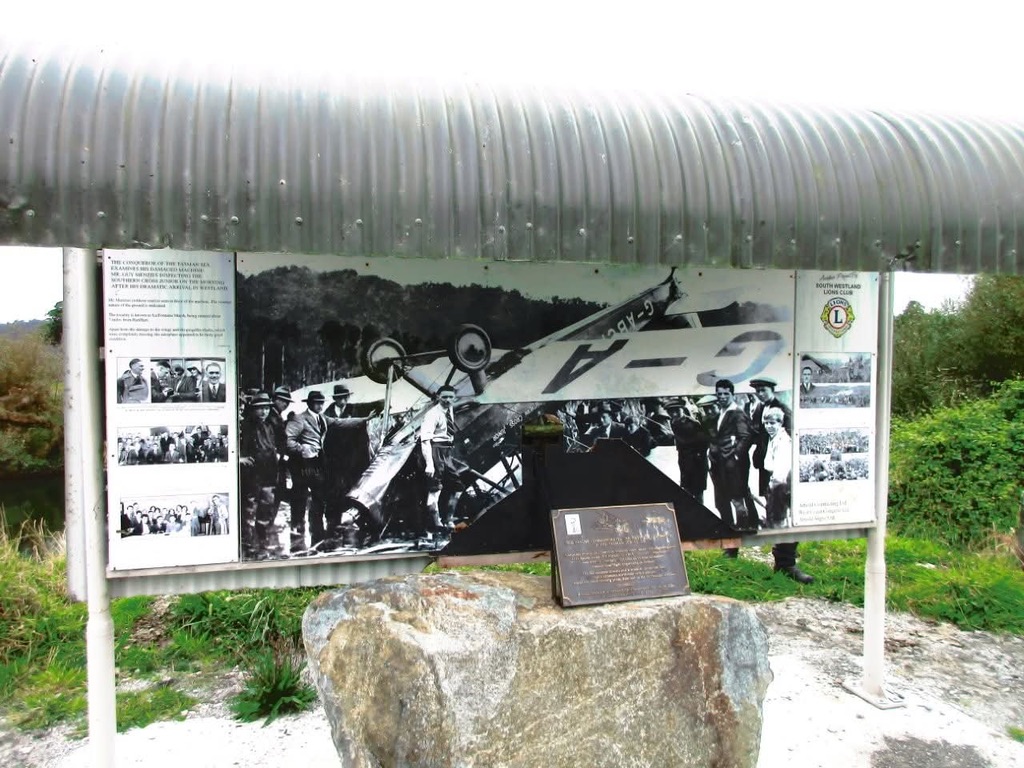
In short order, Hari Hari appears. The landscape has flattened and opened out. Then a small turn-off leads to the Guy Menzies Landing Site—easy to miss, but worth the pause. Another aviation story off the beaten track that’s worth a detour. A replica of his plane sits in a purpose-built building on the southern edge of Harihari township.
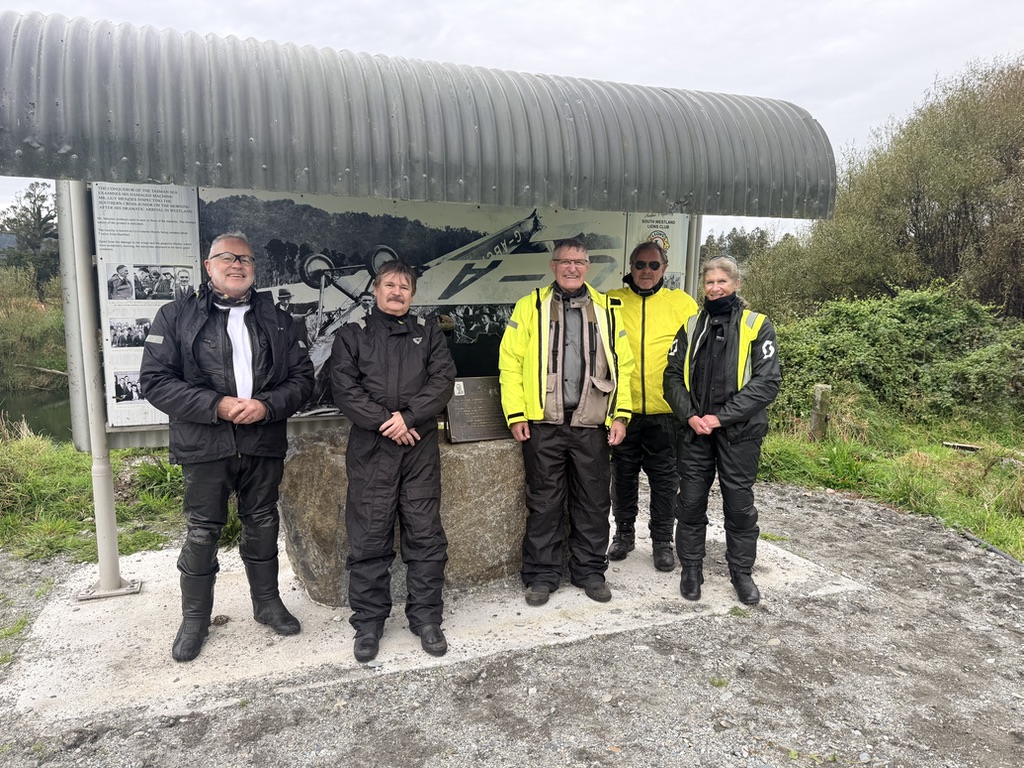
Leaving Harihari, the road north on State Highway 6 feels almost calm—but only just. The sky hangs low and heavy again, darker now, the kind of grey that doesn’t leave much doubt about what’s coming.

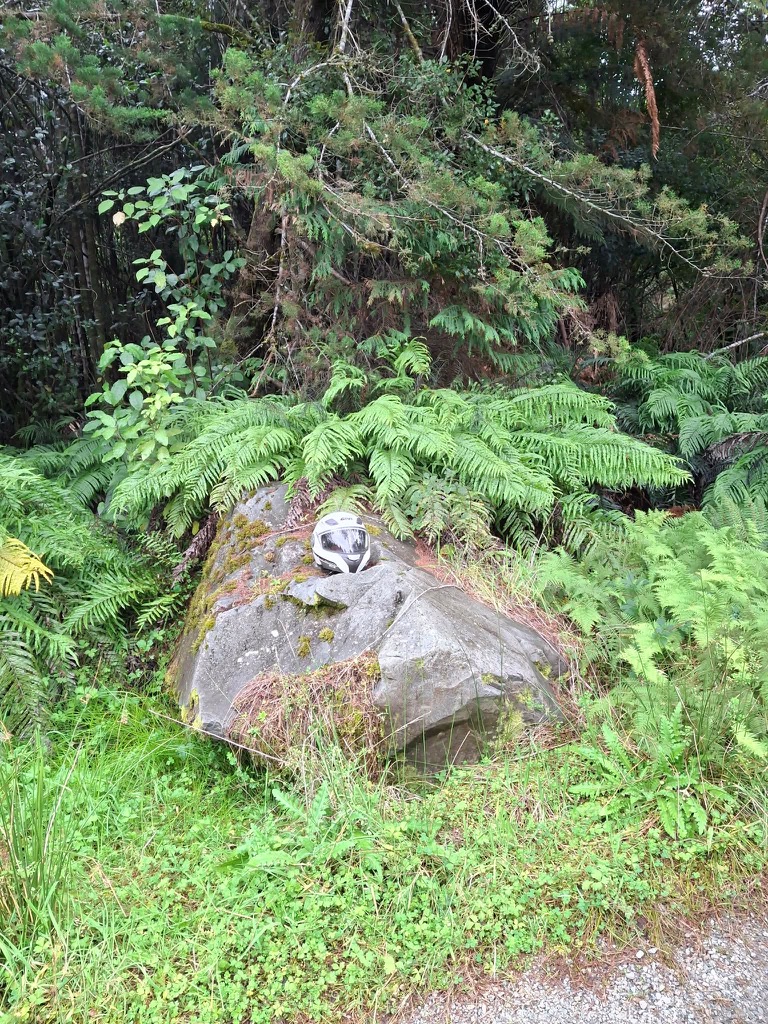
By the time Bob’s resting place begins to emerge, almost quietly from the greenery, it feels like you’ve been riding with the environment rather than through it. Slower, yes—but sharper, more connected, and completely absorbed in the moment. We turn off onto a gravel track and progress at a slow and steady pace until, in a hushed silence, we find his spot. A large rock marks it.
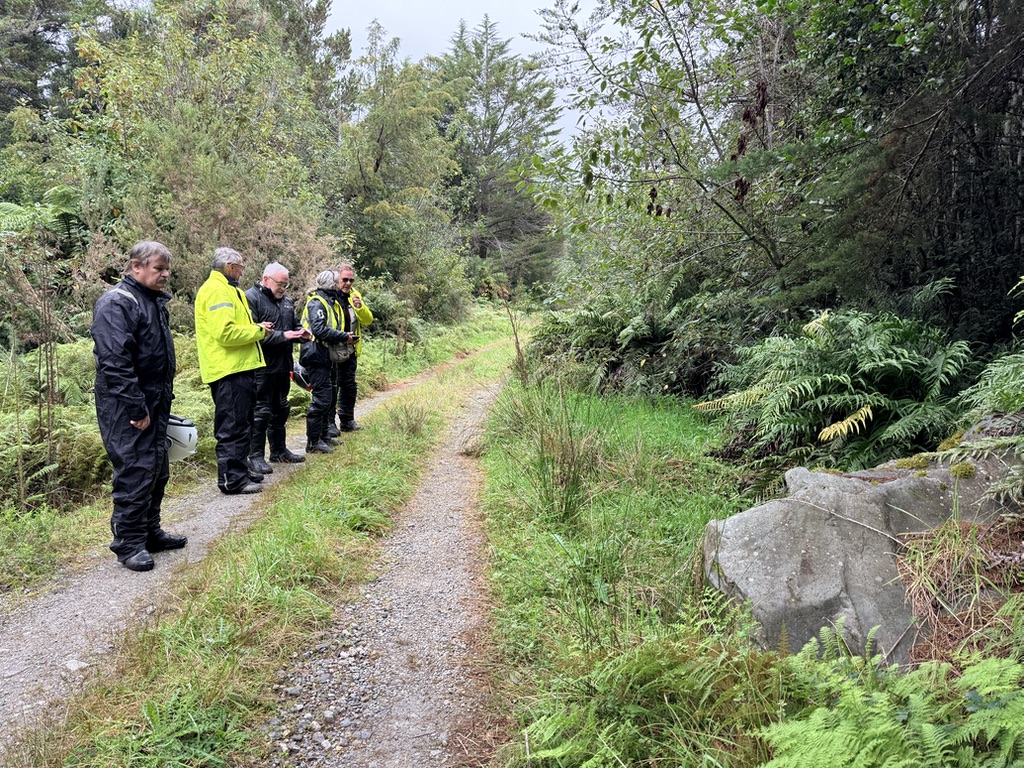
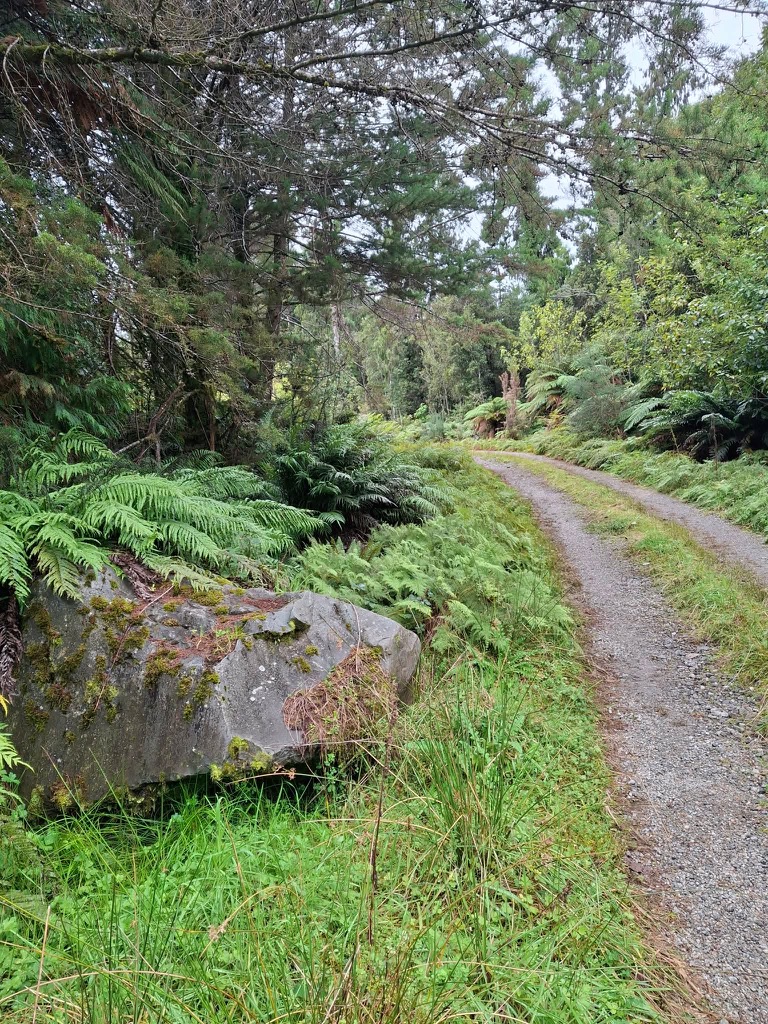
We stood without speaking, a loose line of riders gathered quietly in front of Bob Tanner’s final resting place. The engines had long since gone cold, and without them the silence felt heavier—more deliberate. Above us, a tall conifer stretched its branches wide, its dark canopy catching the light rain before letting it fall in slow, steady drops.

No one seemed in a hurry. Helmets stayed off, gloves tucked away, hands resting loosely at our sides. The rain softened everything—the sound, the light, even the edges of the moment itself. It tapped gently on jackets and dampened the gravel underfoot, the only movement in an otherwise still scene.

There’s a kind of understanding that doesn’t need words in moments like this. Just a shared respect, a quiet acknowledgement of someone who had ridden before us, who had known these same roads, felt the same pull to keep moving.

We stood there for a while, each in our own thoughts, the rain falling steadily through the branches above—until, almost without needing to say it, we knew it was time to ride on. A native fantail bird follows us away.
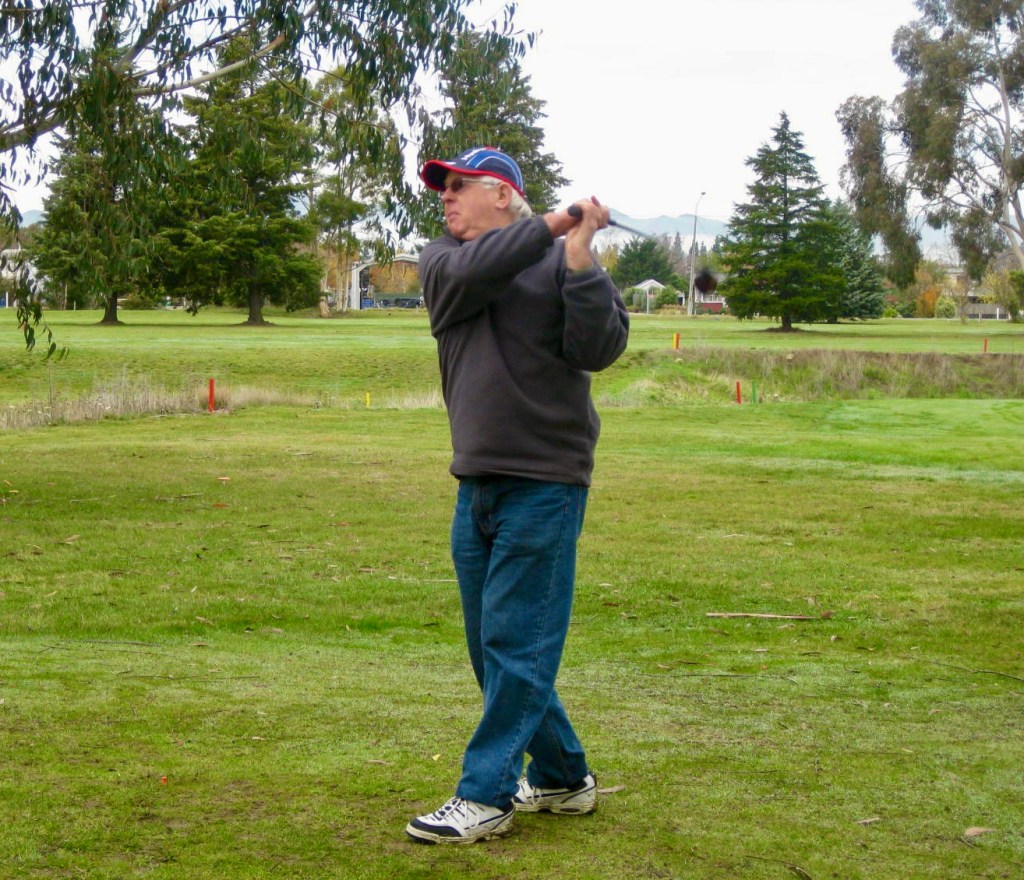
Bob Tanner
Bob Tanner in full swing. The great days of golfing. Well trying to hit a ball if truth be told.

Leaving Bob behind us, the road north on State Highway 6 felt almost too easy—wide, open, and forgiving in a way that let you settle back into the seat. But the sky told a different story.

It was building.

Out ahead, the horizon thickened into a solid wall of grey. The light flattened, draining the colour from the landscape, and the air took on that damp, metallic edge that comes just before the rain arrives for real. You could feel it more than see it at first—a change in the air, a quiet tightening of focus.

The road itself stayed kind. Long, sweeping bends linked together with easy straights, the kind of stretch where, in better weather, you’d let the bike run and simply enjoy the flow. But this wasn’t that kind of moment.

You ride differently when you know what’s coming.

The throttle hand softens. Braking starts earlier. Your eyes push further down the road, reading not just the corners, but the sky, the surface, the subtle darkening patches where the first moisture is starting to settle. It’s not caution—it’s anticipation.

A drop hits the visor. Then another.

Not enough to change anything yet, but enough to confirm it.

The wind shifts slightly, carrying that unmistakable scent of rain moving in from the coast. The road darkens in patches now, the seal losing its dry edge, and the tyres begin to whisper instead of hum.

You don’t rush it.

Instead, you settle into that space just before the weather takes over—fully aware, completely present, riding within a margin you don’t need to think about. The kind of riding that isn’t about speed or distance, but about reading the moment and responding to it.

And then, just as Hokitika comes into view, the sky finally gives in.

The rain arrives with intent—heavy drops that hit hard and fast, turning the road dark in seconds. It’s almost perfectly timed. No fight, no long grind through it. Just enough to remind you who’s really in charge out here.

Rolling into town as it sets in feels like slipping through a closing door—one last stretch of road, then shelter, warmth, and the quiet satisfaction of having read the day just right.
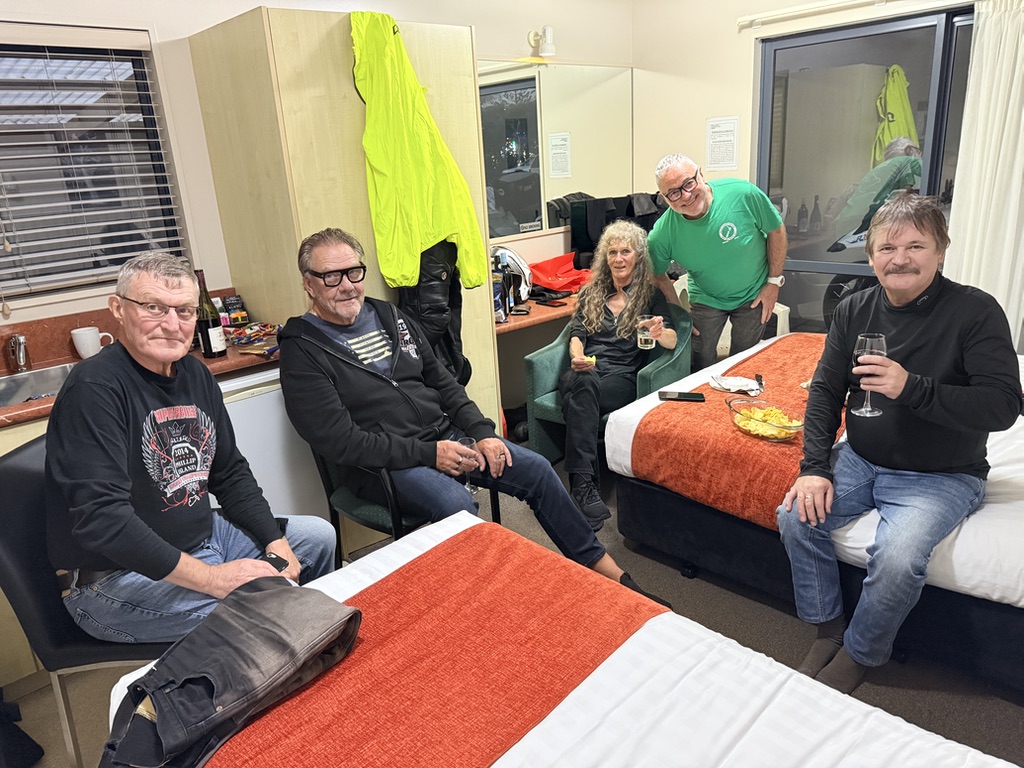
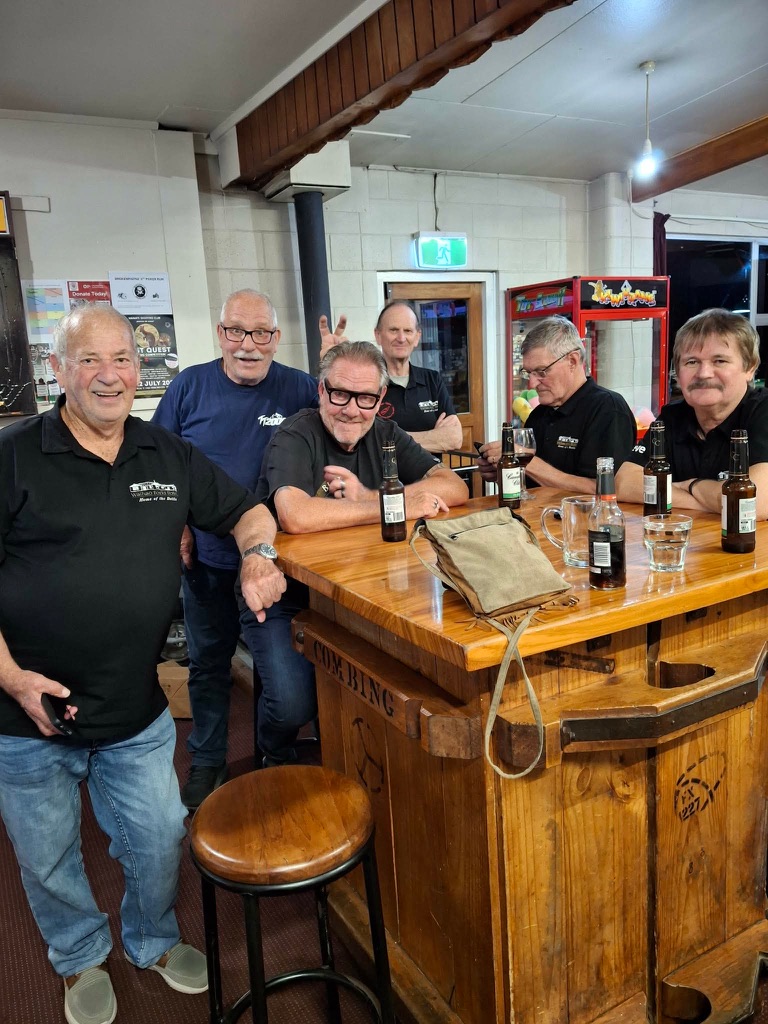
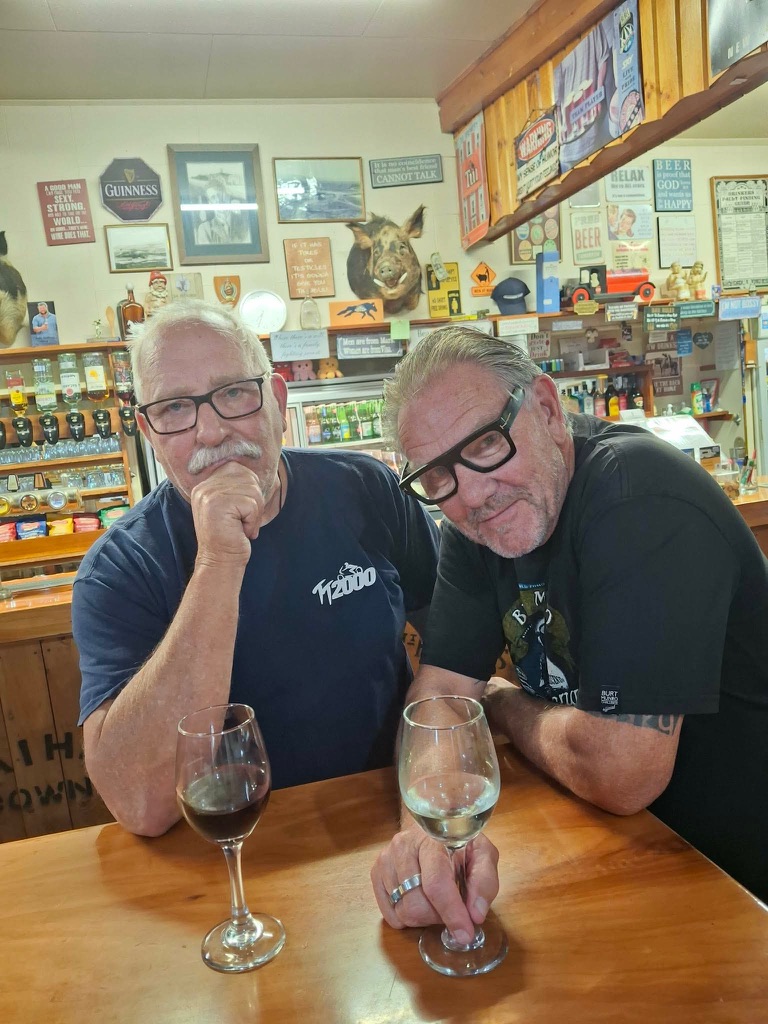
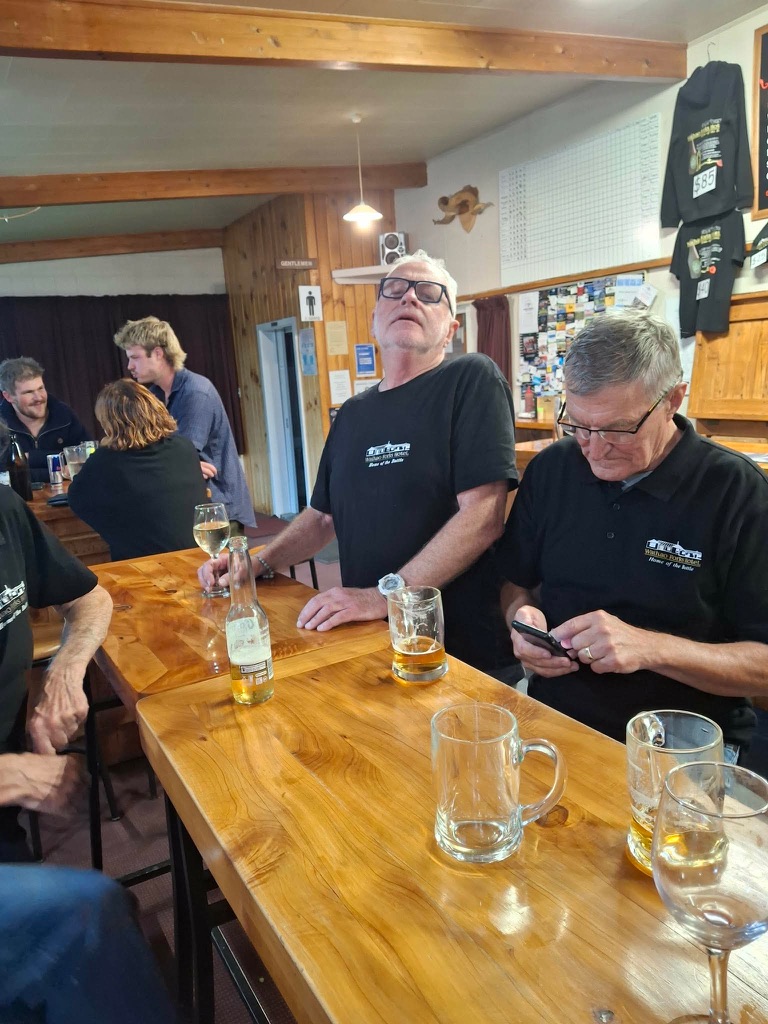
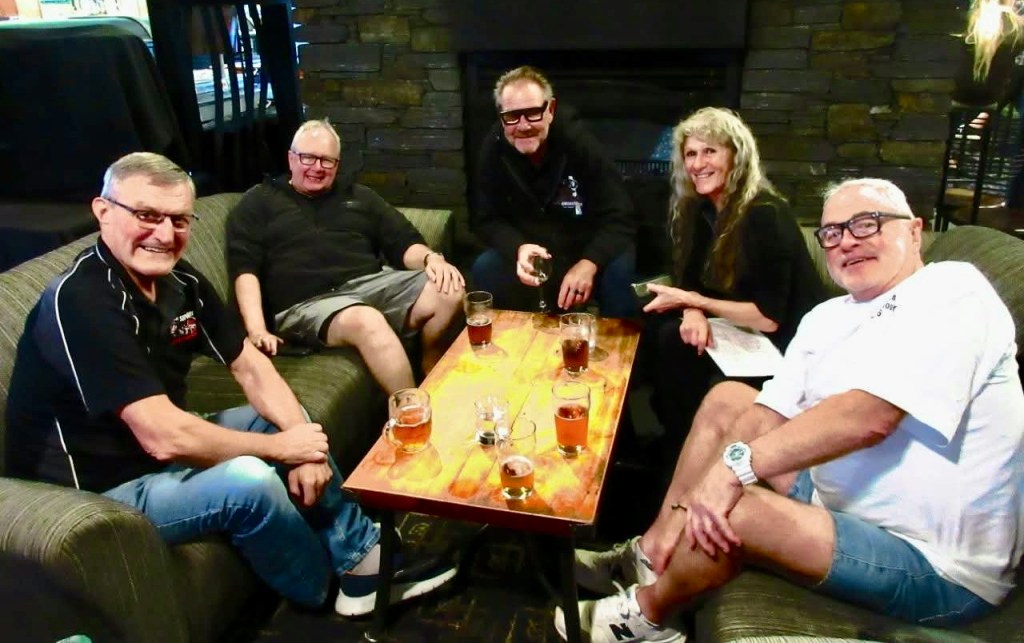
Back in the room at the Bella Vista Motel, Hokitika, wet gear hung where it could drip, and boots edged closer to the heater. It didn’t take long before the stories started.

The Richard Pearse Memorial came up first—an unlikely beginning that somehow set the tone. Then Omarama—coffee, warmth, and that shared look that says this is why we ride. The sweep over the Lindis Pass got its due too—wide, open, and effortless in the best possible way.

From there, the mood shifted. The Blue Pools—still, clear, almost unreal—followed by the ride through the Haast, where the rain, the bush, and the road demanded a different kind of focus. A few laughs about timing the stop at Lake Paringa Reserve just right for the wet weather gear.

And then, more quietly, the moment that stayed with everyone—standing in the rain, under the trees, at Bob Tanner’s resting place. No need to say much.

Outside, the rain continued to fall over Hokitika. Inside, it was warmth, tired bodies, and the quiet satisfaction of a ride that stayed with you—not for the distance, but for how it made you ride, and how it made you feel while doing it. Tomorrow we shall go our own ways back to the East Coast and home.

It wasn’t the distance that stayed with us, but the way the road kept asking something different each day.
Dry or wet, open or enclosed—we didn’t just ride through it, we adapted to it.
And somewhere along the way, it stopped being about where we were going… and became about the simple act of riding itself—I hope you’ve enjoyed the ride as much as we did following along.
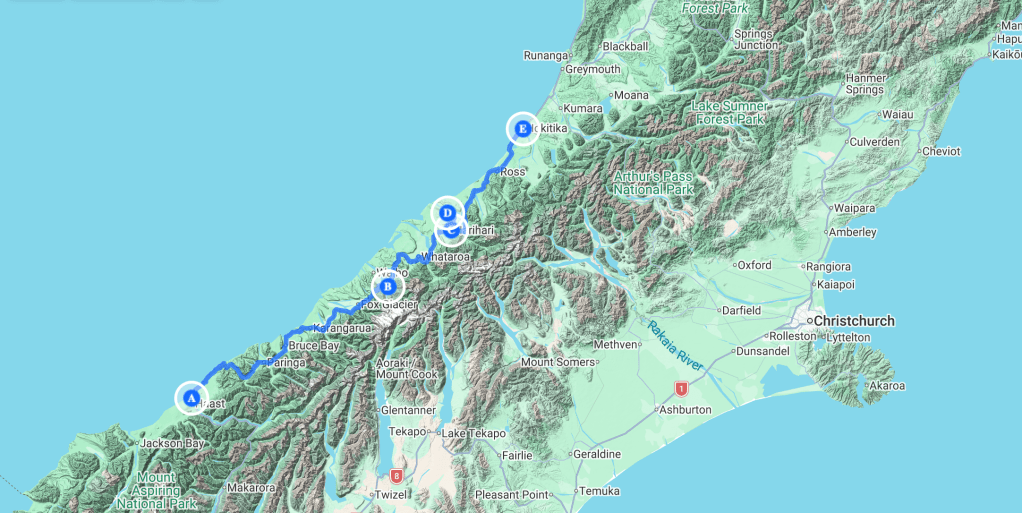
300 kms today in somewhat challenging weather for riding a motorcycle.

Day Two: From Lindis Pass to Haast: A Motorbike Adventure in New Zealand

A cold night had settled into everything—the bikes, the air, even the quiet around the buildings—and when dawn finally arrived, it did so gently. The light crept in soft and pale, the kind that makes you pause for a moment before gearing up, as if the day is offering a quiet promise rather than a bold statement. It felt like the start of something measured and unhurried… though, as it turned out, the road had other ideas waiting further west.

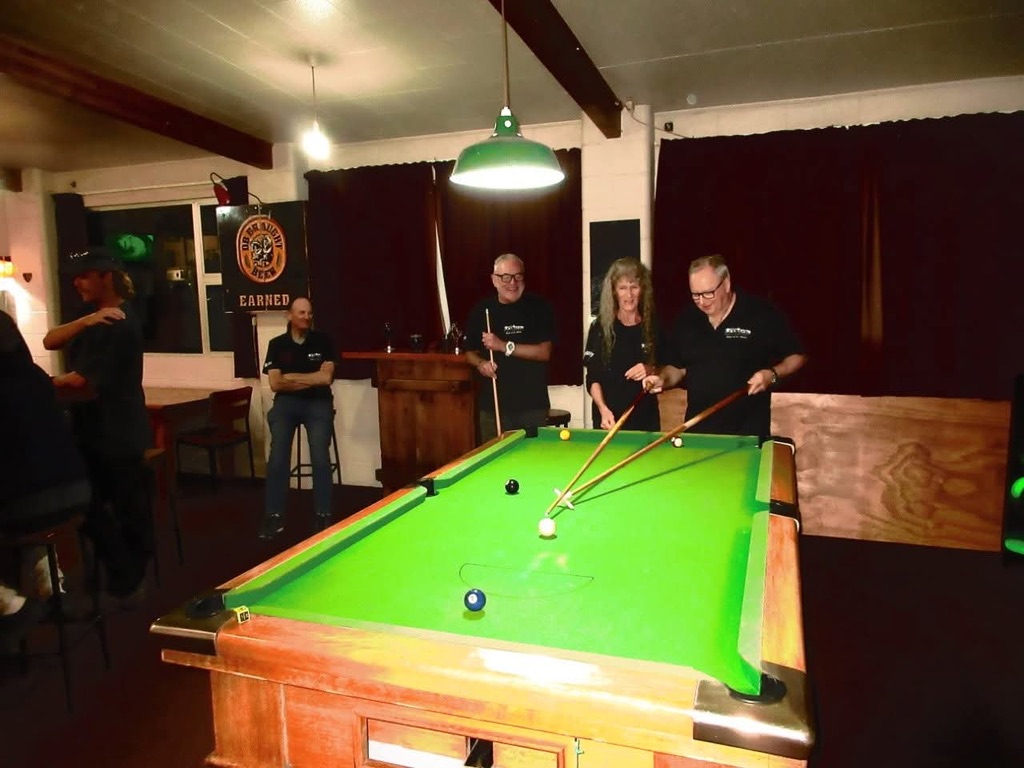
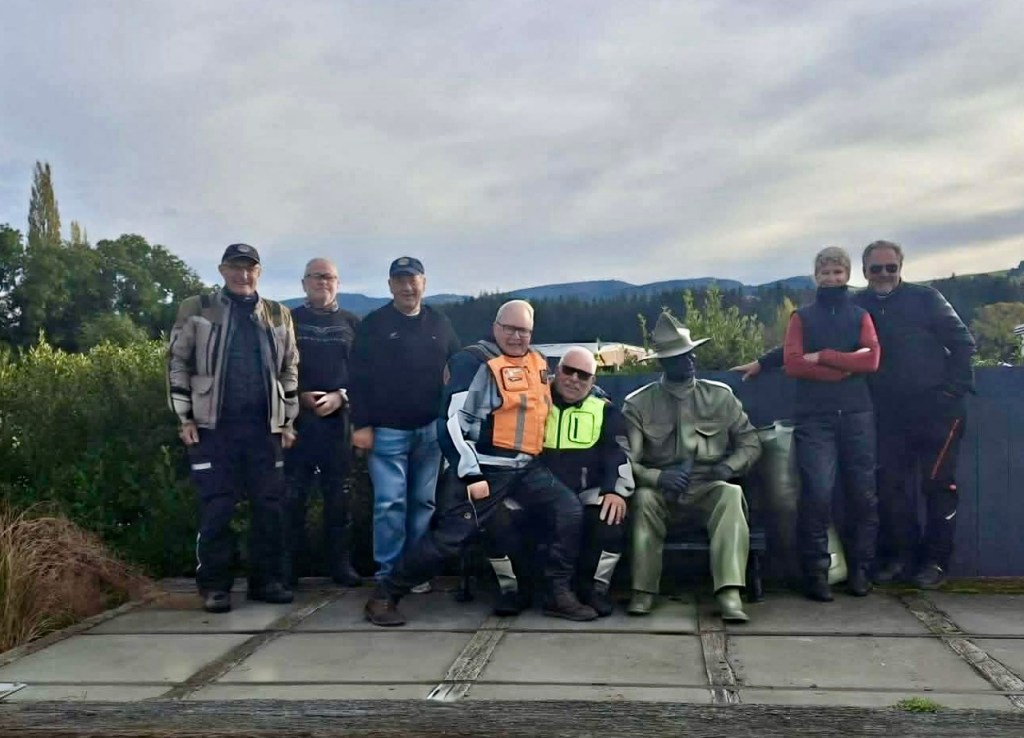
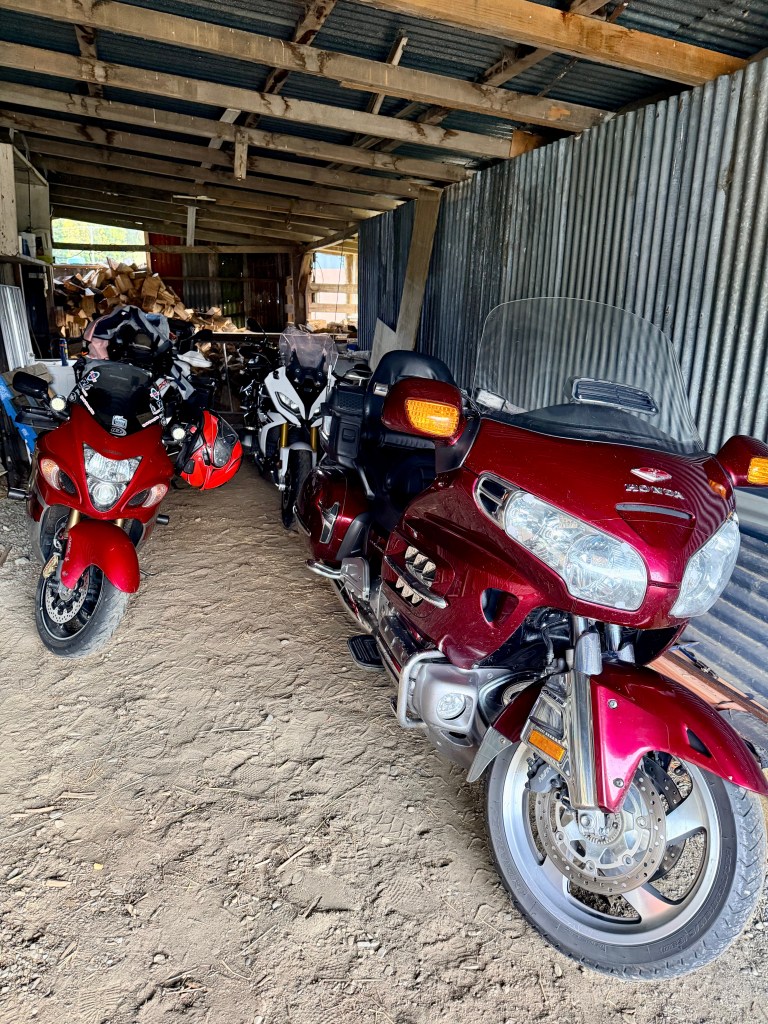
A quick check of the bikes tucked away in the shed showed all was well. Not all of our group had the time to continue our tour to the west. At breakfast, we caught up on the great night we had just enjoyed. We gathered for a final team photo and bid farewell to Terry, Brian and Chris as they prepared to head north for home.

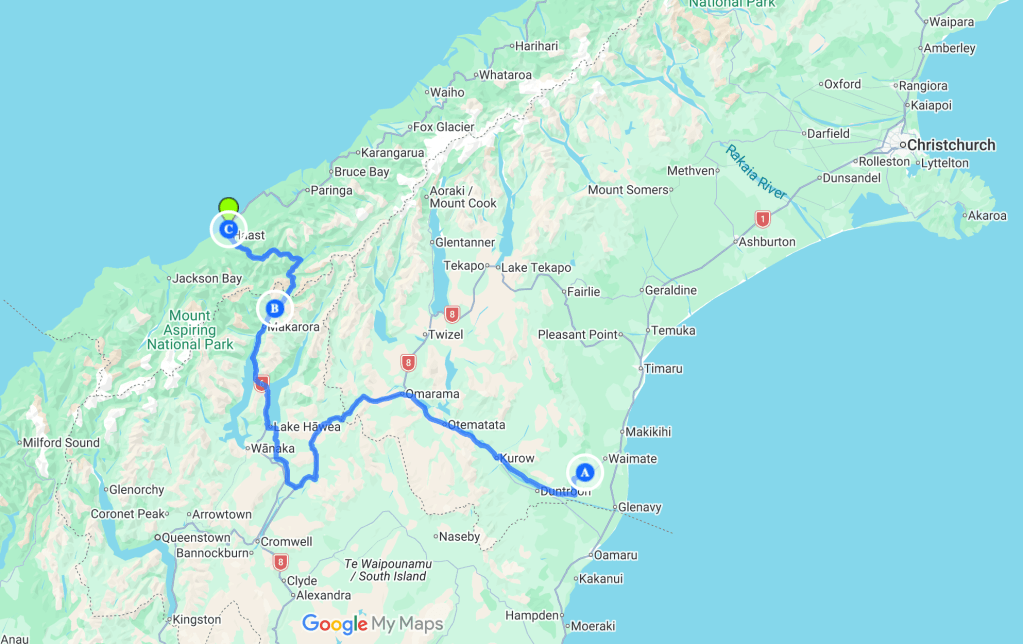
Having bid our friends farewell, I led the two Steves, Chrissie, Stu, and Jacko out of the hotel car park and turned right onto Highway 82 towards Ikawai. The ride north-west back toward Omarama is one of those rare stretches where going back doesn’t feel like going backwards. The Mackenzie colours—those soft golds and dusty greens—seem to shift depending on the time of day, and this morning they were all cool tones and long shadows.

By the time we rolled into Omarama, the fingers were just starting to feel the chill. Fuel tanks were topped up.

Coffee was non-negotiable.

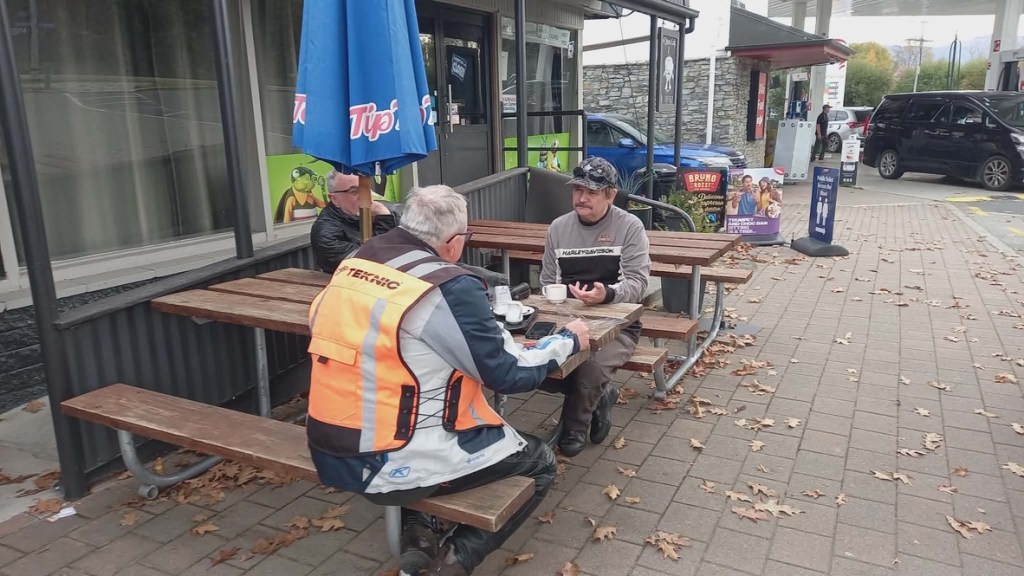
Helmets off, hands wrapped around something hot, and the usual exchange of road notes: “Still good the second time?” “Maybe better.”

Climbing out of Omarama, the road doesn’t shout about what’s coming—it just starts to lean upward, almost casually at first. The bends lengthen, the horizon pulls back, and before you know it, you’re being drawn into the wide, rolling sweep of Lindis Pass.

This isn’t a tight, technical pass that demands constant correction. It’s something else entirely. The corners are broad and flowing, the kind you can read from a distance and settle into early. You find a rhythm quickly — roll on, tip in, ease out — again and again, like a quiet conversation between you and the road. Oh, and smile. This road makes you smile. A lot.

The landscape is stripped back to its bones. No trees to crowd the view, no clutter to distract. Just undulating hills covered in tawny grass, folding into one another under an enormous sky. In the cool morning light, everything carries a muted palette — golds, greys, and soft browns — that feels almost cinematic. It’s a place that looks simple at first glance, but the longer you ride through it, the more detail reveals itself.

As the altitude builds, the air sharpens. You notice it in the way the bike breathes a little easier, in the way the wind cuts just a bit cleaner through your gear. The road climbs steadily toward the summit, and then — almost without ceremony — you’re there.

No dramatic peak. No towering cliffs. Just a quiet high point and a sign that feels almost understated for a place that delivers so much. Every time I pass this way, I think of the wonderful poem by Kiwi poet James K. Baxter called High Country Weather.

Alone we are born
And die alone
Yet see the red-gold cirrus
over snow-mountain shine.

Upon the upland road
Ride easy, stranger
Surrender to the sky
Your heart of anger.

And then comes the descent.

Dropping toward Tarras, the road opens even wider. The corners stretch out, visibility improves, and the pace naturally lifts without ever feeling forced. The valley ahead begins to take shape, the light shifts, and the world starts to fill back in again.

It’s the kind of stretch that leaves you with that rare feeling of being completely in sync — bike, road, and landscape all working together. No effort, no noise. Just motion.

If there’s a perfect piece of road to lose yourself in for a while, this might just be it.

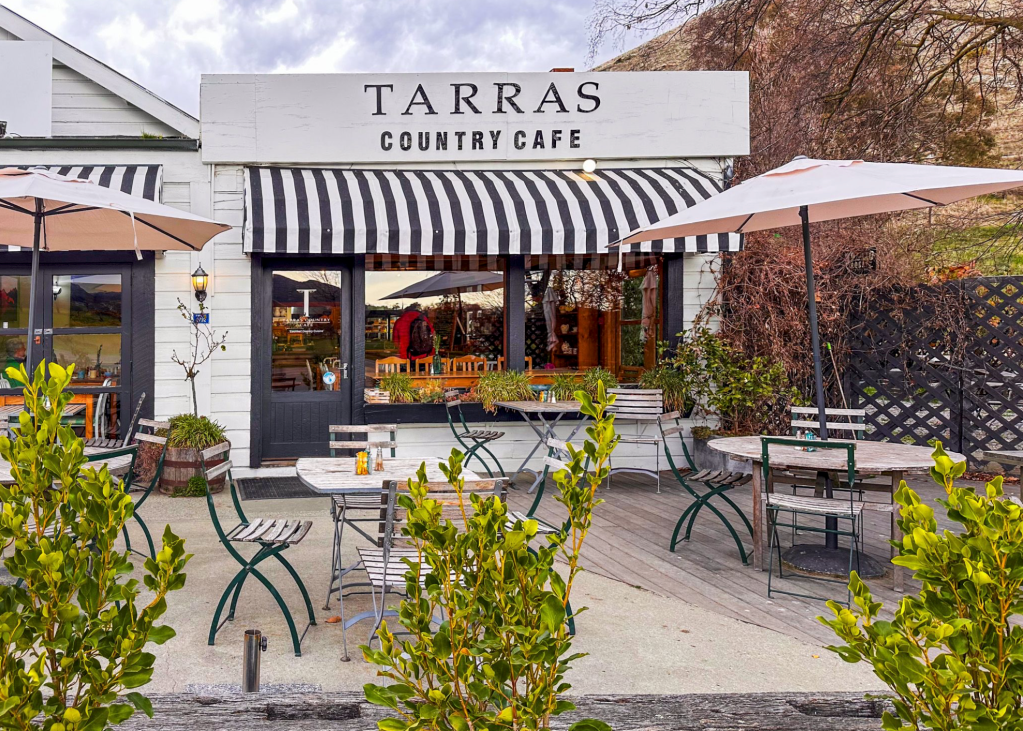
Tarras — a blink-and-you’ll-miss-it kind of town that’s perfect for exactly what we needed: a quick stretch, a wander, and a moment to take it all in.

No rush. No schedule. Just the quiet satisfaction of being exactly where you are.

The Tarras Country Cafe is a good place to stop and take a rest. They lose a few points for not being dog-friendly, mind you. Not an issue on this journey, but our Border Collie, Leia, would not approve.

From Tarras, the ride shifts tone.

Heading past Lake Hawea, the landscape begins to soften—water replacing dust, greenery creeping back in. The road hugs the lake in places, offering glimpses of deep blue framed by distant peaks. The road runs up the west shore of Lake Hawea, then crosses quickly to pick up the east shore of Lake Wanaka. This is a snaking, sinuous road hugging the narrow stretch of land between water and peaks. The weather takes a turn in the wrong direction. The temperature drops and the clouds descend.

By the time we reached Makarora, it felt like the right moment to stop properly.

Lunch was simple, satisfying, and well-earned. A hot drink and a toasted cheese sandwich. Before we set off we needed to get the wet weather gear out and put it on. We continued towards the West Coast.

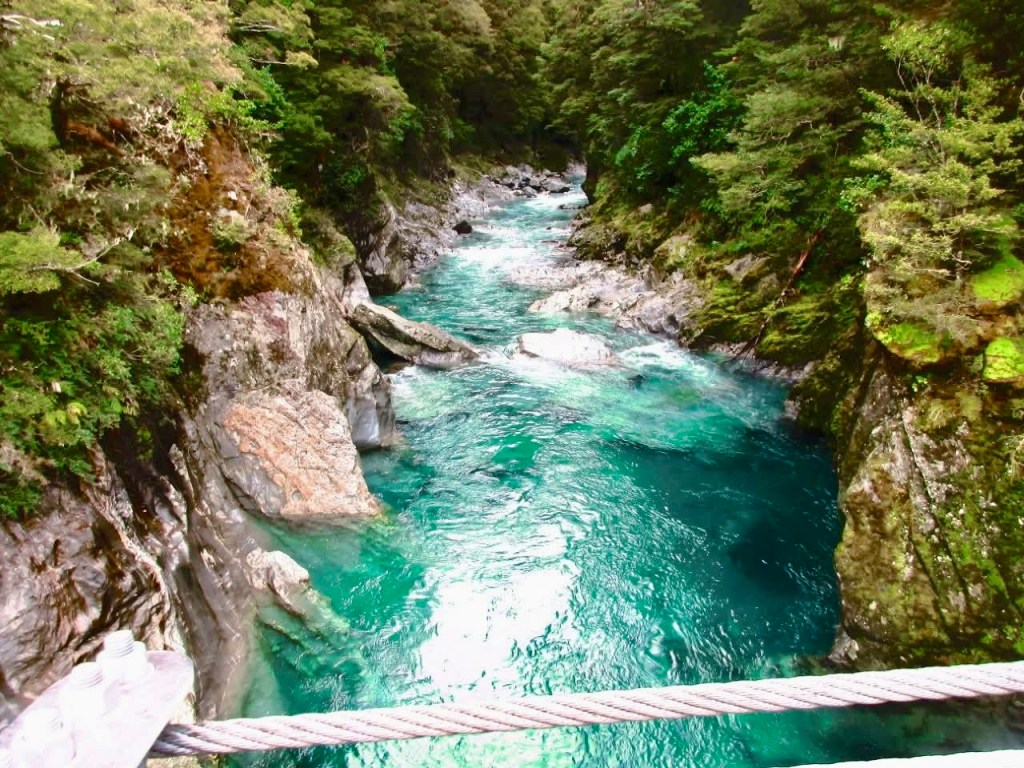
Not far up the road, we pulled in again—this time to stretch the legs on the short walk to the Blue Pools. Suspended bridges, crystal-clear water, and that unmistakable alpine stillness made it one of those stops that lingers longer than expected. The weather held. The sun peeped out just enough to show off the blue alpine waters at their very best.

Boots on gravel instead of pegs. A welcome change.

Then comes the turn west toward one of my favourite rides on the planet. Somewhere beyond Lake Hawea, the shift begins. At first it’s subtle—the air softens, the colours deepen—but by the time the road pulls you into the Haast Pass, the transformation is complete.

And then the rain arrives.

Not in a sudden burst, but as a steady, soaking presence—the kind that hangs in the air as much as it falls. The visor beads up, the road darkens, and every surface takes on that slick, reflective sheen that quietly demands respect.

The open high country is gone. In its place, the bush closes in tight.

Towering beech and podocarp press right up to the road’s edge, dense and dripping, alive in a way that feels almost overwhelming after the austerity of the Lindis. Everything is green—but not just one green; a hundred shades of it. Deep, wet greens layered with moss, the pale crust of lichens on rock faces, glossy leaves of undergrowth catching what little light filters through.

And the smell… unmistakable.

Rich, damp earth. Crushed leaves. That fresh, almost sweet scent of rain‑soaked vegetation seeps through your gear and settles in. You don’t just notice it—you ride through it.

The road changes character too. The long, sweeping curves are gone. Here it tightens, twists, folds back on itself. Corners stack up, visibility drops, and the surface—darkened by rain and shaded by trees—keeps you honest. Painted lines glisten. Tar bleeds feel just a touch more slippery. Every input has to be smoother, more deliberate.

Throttle gentle. Brakes measured. Eyes scanning.
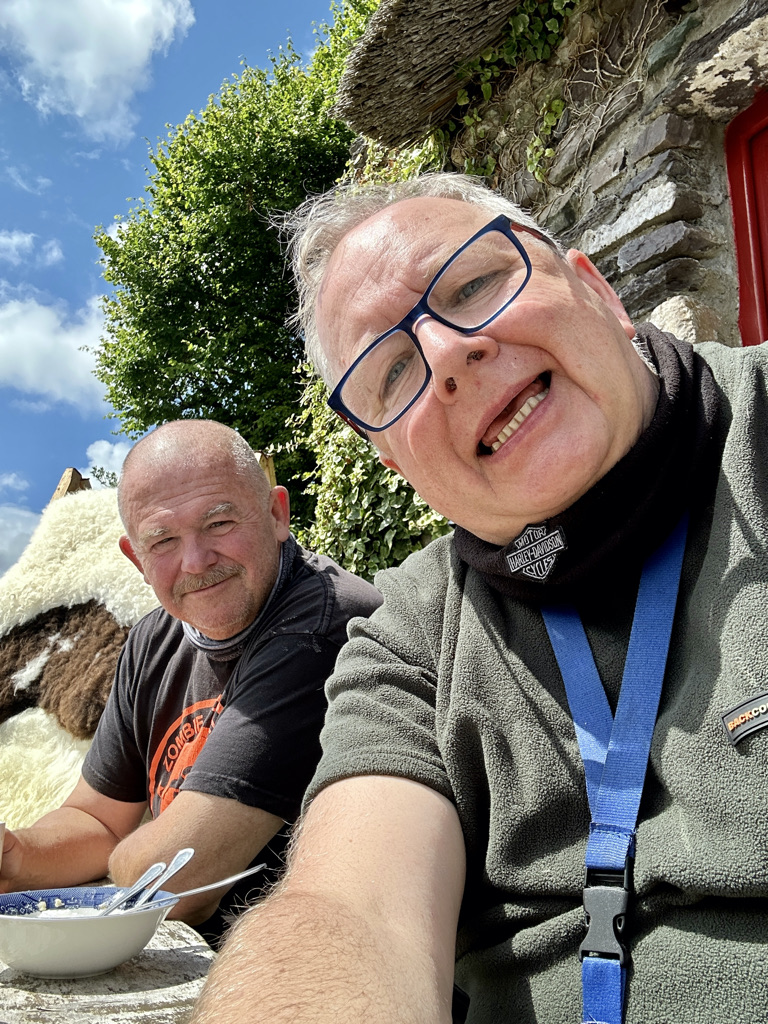
It’s not a place to rush. We cross the trestle bridge at the Gates of Haast, tyres humming over shingle, river roaring far below.

Water is everywhere now—trickling down rock faces, gathering in gutters, spilling in thin ribbons across the tarmac. New waterfalls appear out of nowhere, crashing down beside the road before disappearing back into the bush.

You ride through it all at a different pace. Slower, yes—but more connected. Every sense engaged. Every movement considered.

This isn’t a section about speed or heroics. It’s about immersion—being inside the landscape rather than just passing through it. The rain, the road, the forest all merge into a single, continuous experience.

By the time the road begins to ease and the bush starts to open toward Haast, you realise you’ve been holding a different kind of focus—quieter, sharper, more aware.

The sort of riding that stays with you long after you’ve dried out. Tiring, but exhilarating.

Rolling into the Heartland Hotel Haast feels like crossing a quiet finish line.
Gear damp, boots soggy and that familiar mix of fatigue and satisfaction that only comes from a full day in the saddle on the West Coast.

Inside, it’s warm. Dry. The showers are hot, the towels fluffy. Exactly what was needed. And, as always at the end of a big day on the bike, the bar beckons—to wash the dust of the day from our throats and trade stories about another sublime run on New Zealand’s South Island roads.

Why This Ride Sticks With You

This leg has a bit of everything:

  • The comfort of familiar roads
  • The wide‑open drama of the Lindis Pass
  • The subtle shift into lake country
  • The lush, rain‑soaked beauty of the West Coast

It’s a ride of contrasts—dry to wet, open to enclosed, fast to slow.

And like all the best rides, it’s not just about where you end up; it’s about how many different worlds you pass through along the way.

350 km of bliss.

Top Tips for Exploring the Wild Atlantic Way on a Motorcycle

I said that once we had returned to home I would write a few words about the trip. What we liked. What we did not and the do’s and don’ts.

A celebratory cinnamon bun having completed the trip.

There are plenty of books and maps to help in planning the Wild Atlantic Way. It’s best to visit any Irish Tourist office once you are in Ireland. Grab a handful of the free ones there. The entire route from Kinsale in the far south to Muff near the Northern Ireland border is very well signposted. Most of the tourist offices have maps divided into various regions. Examples include County Cork and the Ring of Kerry, and so forth.

I checked out various motorcycle forums, YouTube videos and general internet searches. There is so much information out there. Probably too much if I am honest. I included “must-dos” in the various forums. I added these roads where they fit into the basic route I had already planned.

I used the Calimoto app for planning the trip. It was easy to use and also the highlights are readily obvious. I downloaded the maps to use offline. I strongly recommend you do that. I did use Waze and google and Apple Maps for some background. Google Earth was also good to see what some of the very minor roads were like. Most places had cellphone signal. Only a bar or two was enough if near the towns and villages. But sometimes there was no signal at all. The downloaded maps became very useful then.

We used Stena Line ferries to and from Fishguard. They provided padded lashing straps for the bikes. There were no challenges using the ferry. The crew lashed the bikes. Its worth paying for access to the premium lounge. Plenty of food and drinks to stock up with.

We used bed and breakfasts where possible. When none were available we used hotels. I prefer the B+Bs as I like to meet the local landladies for a chat. Booking.com and AirBnB were handy. I did not find any decent Irish books or websites to find good B+Bs. There were so many B+Bs we passed that were not listed anywhere. I did ask one landlady why there is no decent directory of accommodation. She said the normal is just to rock up and knock on the door. This is to see if there were any vacancies. That approach isn’t helpful in some places. There were very few options, and there was no guarantee of a bed for the night. Do watch for this. Prices ranged from 80 Euros for the night to over 300 in some of the hotels. The standard was very good. There were a few quirky places and I loved them. Many of the pubs had accommodation but they tended to be noisy and no off street parking for the bikes.

Petrol (gas) stations were never a problem to find. Even the remotest places had a pump or two. Prices were cheaper in the bigger towns which is to be expected. We tended to fill up in the bigger places and top up if needed when remote.

So here are my do’s and don’ts.

Do’s

Whatever time you allow to do a particular leg then double it. Google maps often said 3 hours and it took 6. This is because unless you just want to get around as quick as possible then you simply have to stop. Then you get caught having a chat to a local. And oh how they can talk and I loved it. Often, sitting and having a coffee invited men to come and say hello. They would ask what we were doing and give tips on their best roads in the area. An hour was gone in no time! Then there are the photo stops and info boards at points of interest to read. Our day usually started around 9 am on the bikes. We would stop for lunch or coffee. We arrived at the B+B around 4 or 5 pm. Earlier if the weather was poor. That gave us time to have a hot shower and start to get wet stuff dried if possible. We tended to have a good lunch. In the evening, we would have a snack like an instant porridge pot. The B+Bs did not supply dinner but all had a kettle to boil water. Many were remote with nowhere in the area to go for food. Make sure to pack a box of porridge sachets or freeze dried soup. Keep them in your luggage for the evening if you need food. You can read the blog for an idea of mileage and the stops we made.

Do pack your bike for all weathers. It is called the Emerald Isle for a very good reason. You can get all seasons in one day. We were sat in the pouring rain one day miserable as hell. A local said don’t worry, summer will be along in 20 minutes. Sure enough it was. The wind on some of the west coast headlands can be significant. It can occur on peninsula’s at any time of the year.

Do avoid the obvious tourist traps if you travel in high season. We arrived at the Cliffs of Moher and they wanted 15 euros just to park. It was full of buses. We moved on. Slieve League in Donegal is better and less busy.

Do be familiar with any satnavs or apps that you use. We came across bikers touring on hire bikes. They had a preprogrammed route in a satnav. The bikers were struggling to use it because they were not familiar with it. It is all well and good when things are going right. But, if you leave the route or change it, they struggle.

Do I really need to tell you to make sure you and your bike are in tip top condition before you set out? Do I? This can be a rough ride in places and is tough going on any machine. The suspension will get tested. The tyres will get a beating. You will be challenged mentally and physically. Whilst you don’t need to be Mr Universe do make sure you are in good health before setting out. I make no apology for mentioning again the remote nature of some parts of the route.

We packed 10 days worth of undies and socks and around 5 T shirts. I included a pair of quick dry fishing shorts. I also added two decent polo shirts and a hoodie. Additionally, I packed a pair of chinos should we need semi decent clothing to eat out. Besides my boots, I packed a pair of slip on deck shoes. They are for wandering around the B+Bs and the towns in the evenings. Otherwise the day was spent in bike gear. This is not a fashion show. That gave us time to get into the trip before we needed to find a laundry. You can always get t shirts in pubs you visit and in the local supermarkets if you really need to. We got one from a great pub in Dingle. Well it’s a must is it not?

Do plan in a days rest now and then. We took two days off in a 22 day ride. One in Dingle and another in Clifden. Dingle is a fabulous place even if it is very touristy. Clifden has a great laundry service in the town. It also offers good eat and drink venues. It was absolutely worth it to get laundry done, rest, and check the bikes over. It was also great just to take a breather. This is quite stressful riding.

Irish roads can be interesting. You can be traveling over a brand new piece of road. The next minute, it suddenly reverts to teeth shaking and gravelly mush. Some of them are very narrow with stone walls close by or high hedges. Some can be rather rough in places. Tractors from the 1950s and 60s were plentiful bumbling along just around the next blind corner. You have been warned. The locals in cars and trucks don’t slow down much. Watch your lines through the curves. We encountered many cars crossing the center line on bends. Also beware the tourist coaches who really don’t care about anyone else. Again we had many encounters that left us scratching our heads.

Whenever we saw other motorbikes we always went and said hello. In the far west, we saw very few. We never missed a chance to catch up with a fellow biker.

Do be choosy about points of interest you really want to see when planning your route. Visiting every single location listed in the books is impossible. You would need at least 6 to 8 weeks to spare. I stuck to places of cultural and historical interest primarily. So many fabulous beaches are along the way that I gave up after a while. There were too many viewpoints overlooking a beach. Locals call them strands. After the first week, we only stopped at the really spectacular ones.

Do be sensible with the booze. Nobody likes a drunk, especially a lairy biker. The locals welcomed us in all the pubs we went into. I have become very fond of a cold Guinness. Not once did we come across anybody who had too much in the lovely pubs out west. Don’t be the first and spoil it for the rest who will come after you. The trip for me was really all about the people we met. The scenery was quite good too!

Do take a basic tool kit with you. Duct tape and cable ties are bikers friends. A puncture repair kit. Once you leave Cork and head west, you find fewer motorcycle shops. In large parts of the country, they reduce to zero. We were on BMW’s. There are two dealers on the entire Ireland so come prepared. Get good travel insurance that covers bikers. If possible, join the AA or RAC or similar for help if needed.

Do ride with a companion if you can. Some parts of the route are very remote. If anything untoward happens, having a mate along will really help. There were always cars and other travelers around but sometimes we did not see another soul for hours. Anyways, this is an adventure that really is best shared with a mate.

Another tip is to take two bread bags with you. You know the plastic bags that bread comes in. They are great if your boots get soaked and you cant dry them before the next day. Put dry socks on, put your feet in a bag and put your boots on. Feet keep dry even in a soggy boot. Likewise for your hands. If it rains, cover each glove with a bag. This keeps your gloves dry if you don’t have waterproof mitts. I never tour without two bread bags in my jacket pockets.

Do have the what3words app on your phone. Godsend for giving someone your location in any event if you need assistance. Particularly in the remote parts of west Ireland. Its free so why wouldn’t you?

If you have time, do plan to come down the middle of Ireland. Whilst not as rugged as the west coast it is as beautiful. It is often bypassed. It should not be. It is wonderful.

Don’ts.

Don’t plan the trip to death. We often took a wrong turn. Sometimes, we decided to venture off route up a road because it looked like a good road to ride. The calimoto app like most will always recalculate and get you back to your destination eventually.

Don’t rush. If you want to zip around, this blog is not for you. It’s meant for those who wish to enjoy the journey and not just the destination.

Don’t pass up the opportunity to have a chat with the locals. I found a simple good morning how are you today ended up passing an hour. In the entire time we were in Ireland we encountered Mr Angry only once.

Don’t spend money in the large supermarket chains unless you really must. Support the local businesses. There are loads of little local Supervalu supermarkets dotted about. They will thank you for it. We used local cafes and bakeries. They were really good. Besides, it is another opportunity to chat to the locals.

Don’t spend money on fancy visor cleaners. Go into your local specsavers or similar and pick up some spectacle cleaner. Much cheaper (sometimes free if you are a customer) and just as good. You will need it. I had anything from bird poo to flies to cow poo flung up at me. This is rural Ireland you are traveling through.

Don’t worry about the security of your bike. The B+Bs we used were mostly so remote they were totally safe. In the towns we stayed in the owners let us use a backyard or shed to put them in. One hotel had a secure car park. I took my big chain with me and used it once. Just take the usual precautions. Most people that were near the bikes just wanted to look at them. A couple of young kids had their photos taken on them. I never had any big concerns about security.

Don’t be tempted to have the full Irish breakfast every day. No really. Don’t. They are huge and totally awesome. Still, at 10,000 calories a pop, the rest of us mere mortals will be dead after a week. Unless you are one of those lucky people that can eat like that and live, avoid overindulgence. We had one a week. On a Sunday morning. Totally fabulous but makes the mornings ride a little uncomfortable with half of a small countries harvest in your stomach. Be warned. Public toilets were very scarce. Hence the use of cafes. They all had a toilet. Being of a certain age the availability of toilets is a consideration. You won’t read these top tips in any other blog!

In conclusion:

I am sure there is more I can write. Would I do it all again. You bet. I did the route in a motorhome with my wife and our dog and again on the bike. When I got back to Rosslare I wanted to turn around and go back again.

Ireland is awesome. It is everything you would expect it to be and so very much more. But for me it was all about the people. Like at home in New Zealand the people are genuinely interested in you. They are warm and welcoming. There is a wonderful community feel which has been lost elsewhere. My goodness can they talk! Quite often it was me that started it with a simple hello can you help me and away you go. From garages, to supermarkets to cafes to simply sat by the bike checking my phone people came to chat. Old people, children, grannies, land ladies, farmers on tractors, you name it they came. I will admit that in the beginning, I was very wary. I was thinking, oh what do they want? What can they pinch? It was just general suspicion. That’s sad because that’s the norm in other parts of the world. My fears were very quickly alleviated after my first few encounters. I would move to West Ireland tomorrow!

People say they will do it some day. Some day is not a day of the week. Go do it. Life is no dress rehearsal and this needs to be on your bucket list.

I hope this was helpful. Get in touch if there is anything more I can help with if you are thinking of doing the Wild Atlantic Way and Ireland in general for yourself. Safe riding.

Day 3. Castletownbere to Cloon

Yup. I have no idea where Cloon is either but here we are. Lets start at the days dawning.

The sun eased its way above the horizon to be veiled by clouds. The clouds parted. Briefly. The sun continued its valiant effort to bring warmth to this part of Ireland. The jury is out on its success.

Its gallant attempts did not go unnoticed by my good self. “OOO Andy, Blue skies”. Zero response from my colleague in duvet land in his bed. Nothing. Oh well. It was only 5:40 in the morning. The weather looked good to start with.

We got up, showered and ate a hearty breakfast. We started packing the bikes up and the only black cloud on the entire west coast of Ireland moved over and dropped its contents on us. Clearly we have been praying to the wrong God.

Slightly moist now we set off on the days ride.

The road continues in a SW direction. Sometimes rough and ready and sometimes even worse than that but always fabulous on a motorcycle. 


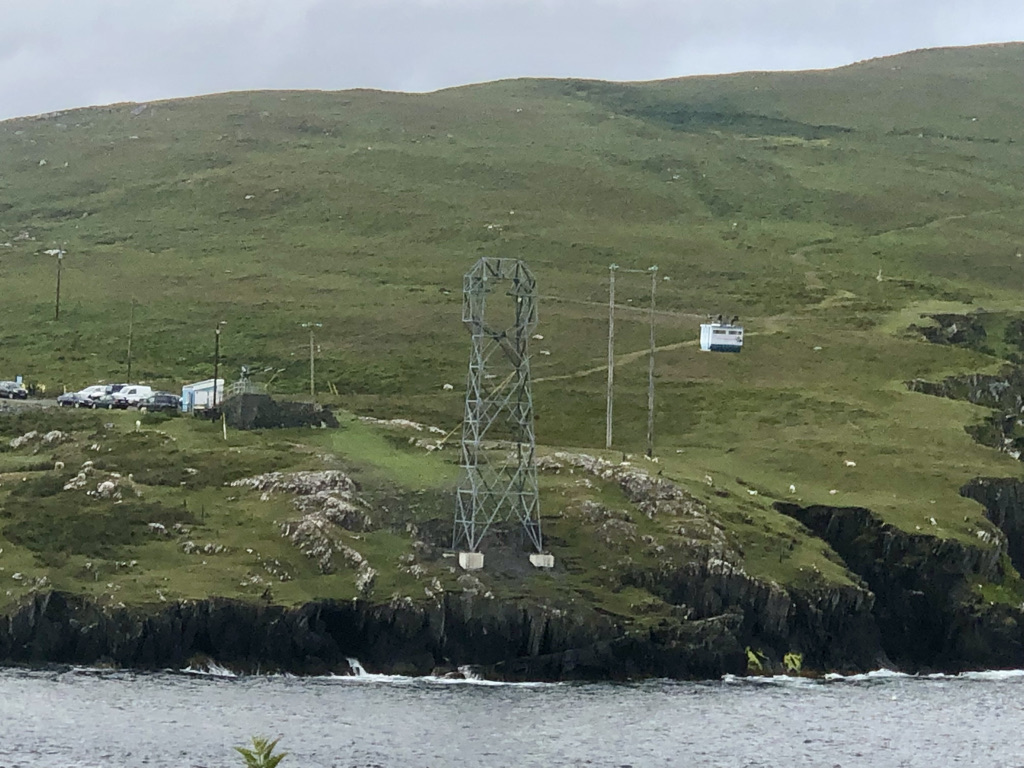
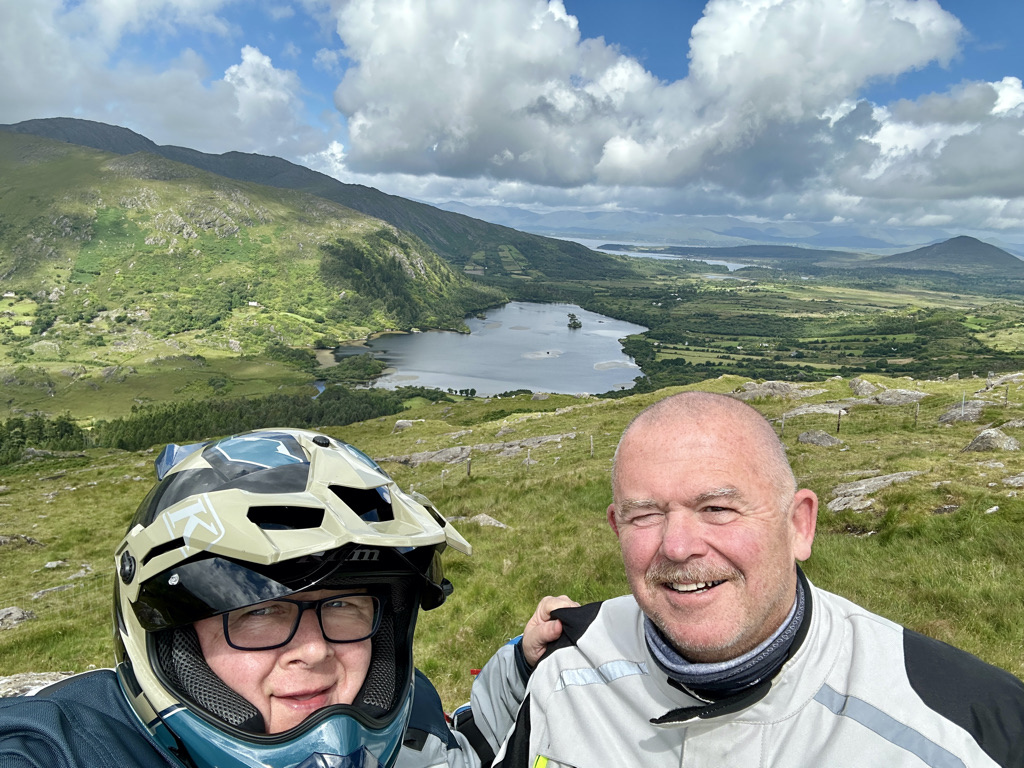
We stopped briefly at the carpark where the cable car to Dursey Island leaves should you choose to be transported in what looks like a caravan suspended above the sea on wires. Not for us. We chose to take a selfie in the rain instead.


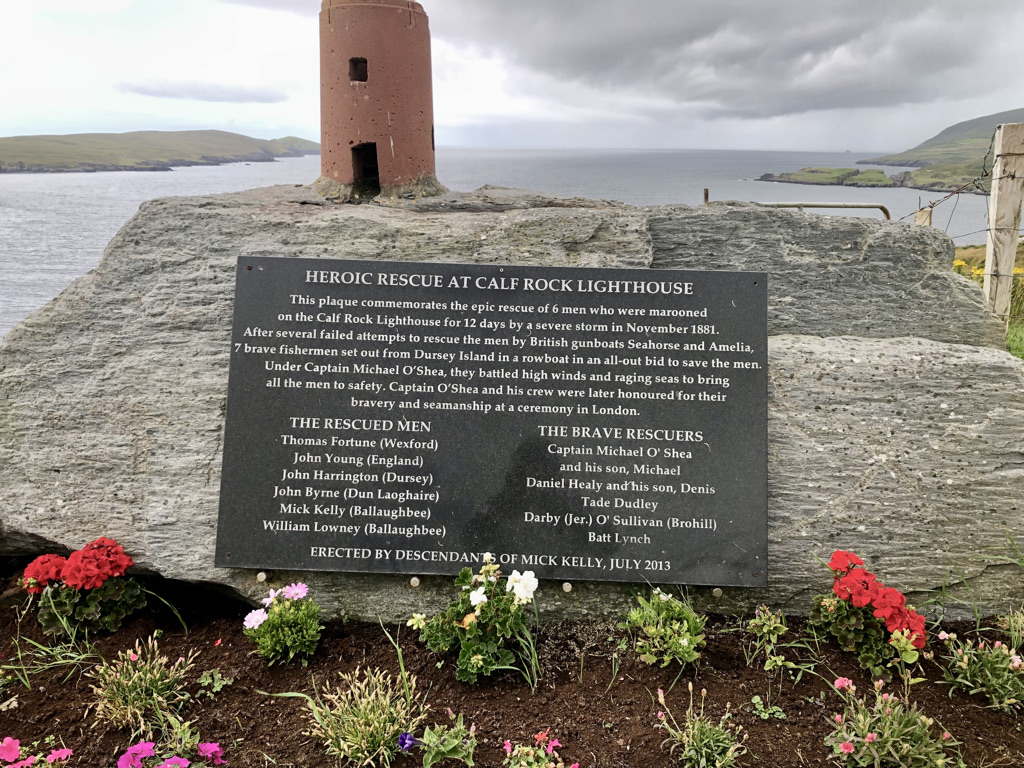
Retracing our steps and in what can only be described as a chance encounter in a lay-by we came across a cairn attesting to a feat of amazing seamanship. Blink and you would have missed it. A photo was taken. 


On On!! We followed the tourist route of the Beara Ring. For tourist route read farm track. In many places it was a single track road with eye height bracken obscuring everything. Grass grew down the middle of the road. The bracken obscured Camper vans driven by loons who thought that 60 km/hr was a safe speed coming the other way. It beggars belief why people drive faster than the distance they can stop in. Anyway. We continued on to a small cafe in Eyeries where a coffee and a slab of carrot and walnut cake in warmth and shelter alleviated the rising damp that had by now found its way past ankle height, above the knees, above even the trouser area into the midriff where the bottom of my shirt got wet. We needed to dry out. We went from wet to damp to slightly moist in around 45 minutes.

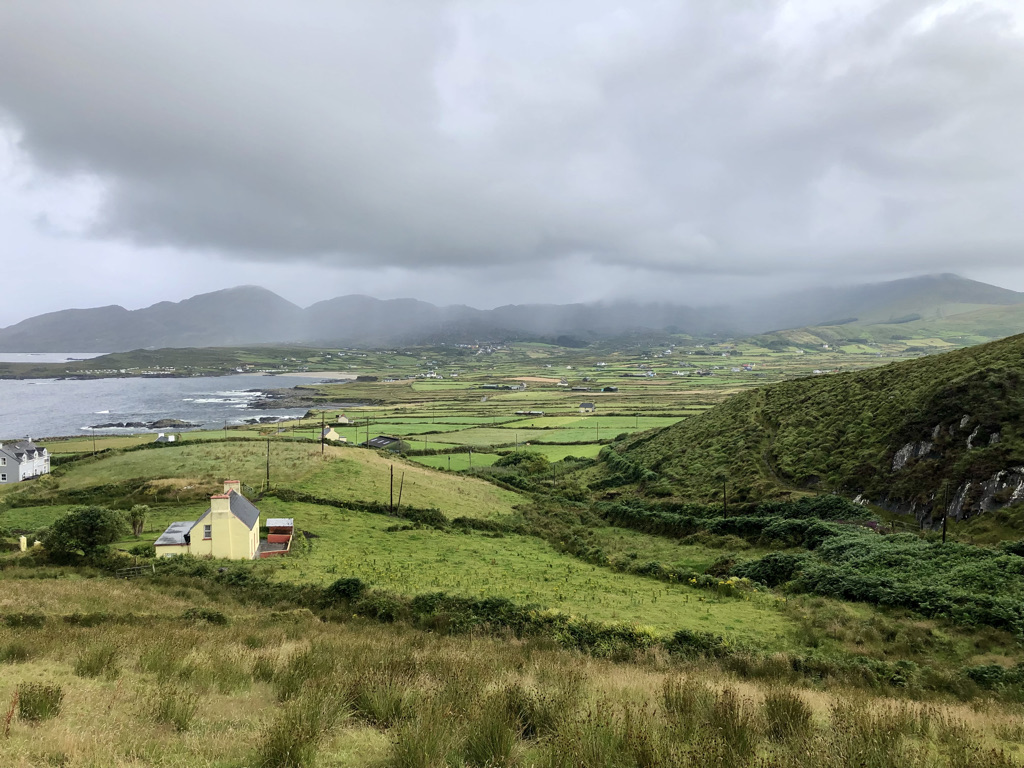
We continued on. Stopping now and then to take in the vistas and have a break the kilometres passed.

We turned off to take the Healy Pass road. If there is one road that simply must be ridden on a motorcycle then this is it. Twists, hairpin bends, a climb into a mountain pass and a descent to boot had us both grinning.

We stopped at the top to take some photos. Whilst I was snapping away Andy took a tumble behind me. He slipped on a rock. I turned and he was lying on the ground. I ran over and did what all good friends would do in such a dire situation. I roared with laughter. Called him various unpleasant names. He took a photo of me laughing from his prone position. He has a little bruise to show for it. I helped him up. I had to. Who else was going to pour my gin and tonic later in the day?

We moved on.

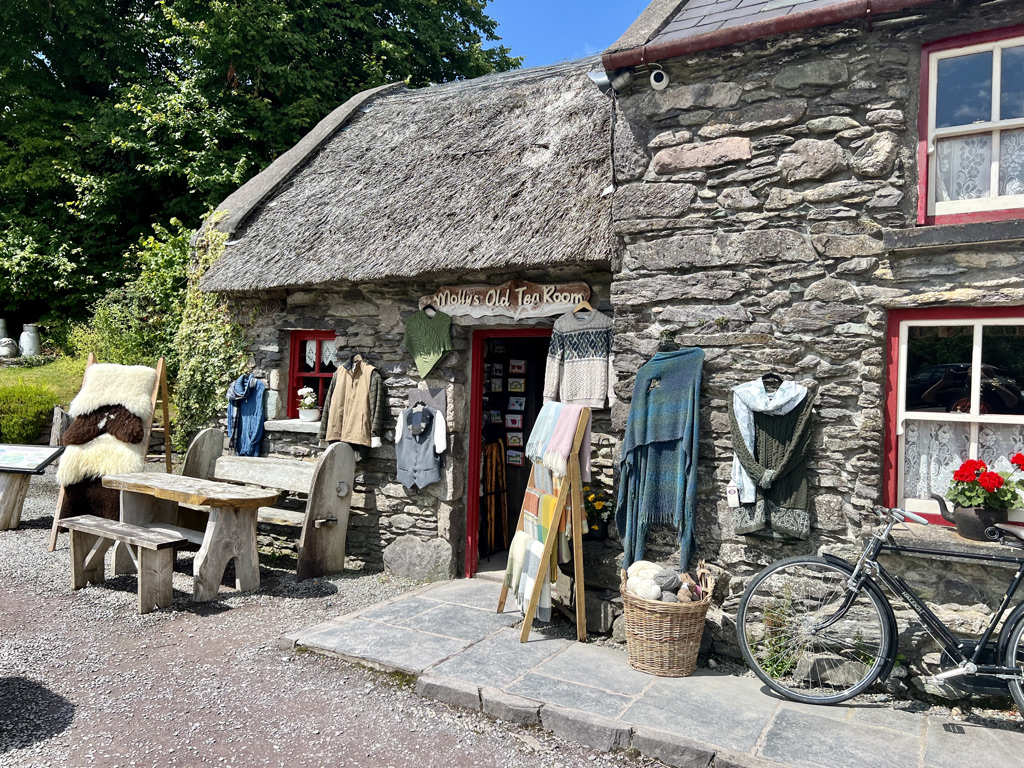
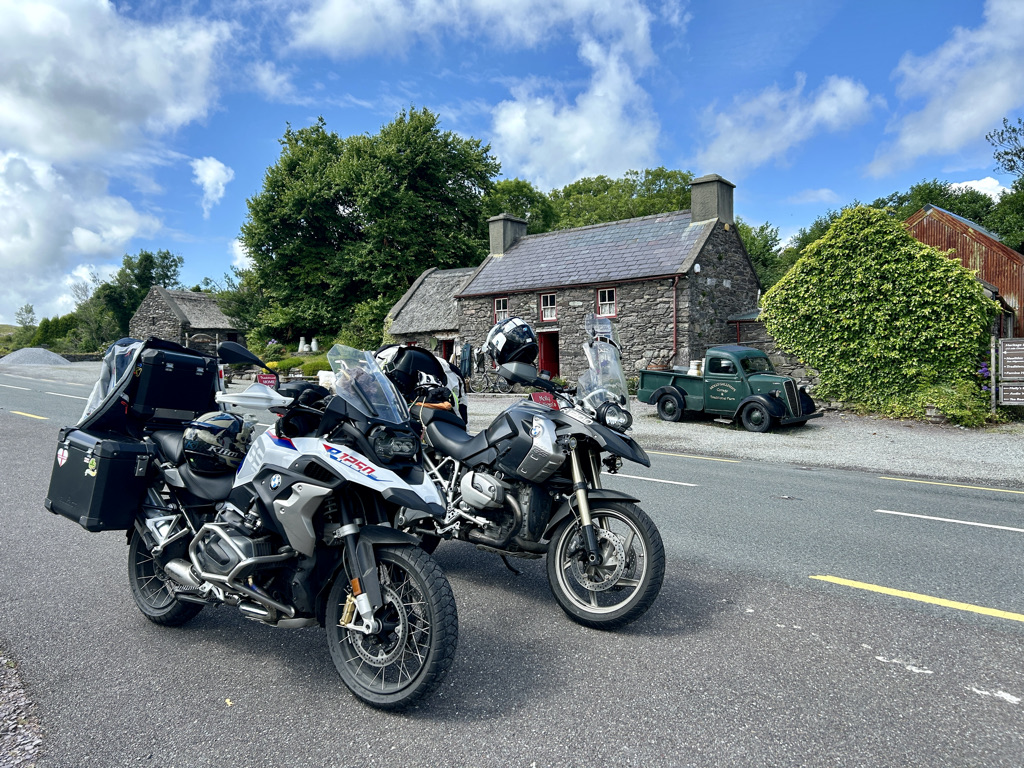
Back to Glengariff and turn north into the Caha Pass. A brief stop for a coffee break at Molly Gallivans Emporium.

We dropped down into Kenmare township for lunch. A superb bowl of Seafood chowder. Rich, tasty and a boon to the weary and now getting dry biker.

The final leg of our journey took us onto the southern part of the Ring of Kerry. It is busy. Tourist coaches rattle along at a fair pace. Traffic is busy. But then again it is promoted as a premier tourist route. For me, the Beara Ring is much more rustic, more beautiful and less trodden. 


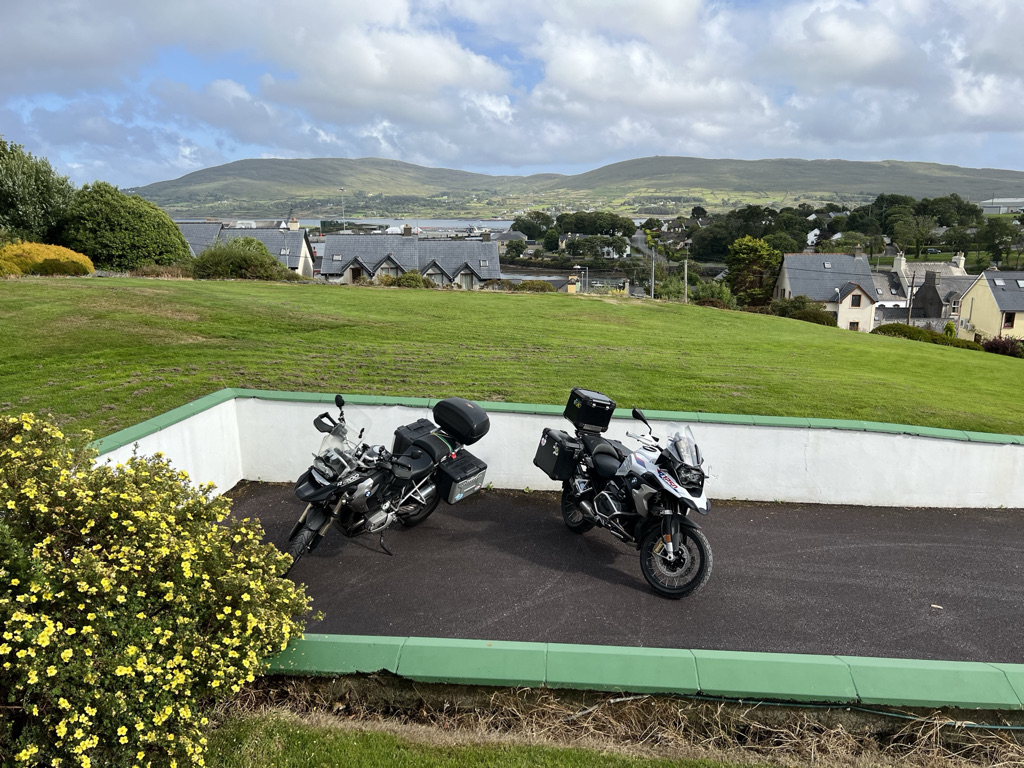
We arrived at our stop for the night. The Old School House in Cloon. Quirky, well lived in, an owner who keeps bees, a little dog that greets you. Time to rid ourselves of the last vestiges of the days showers, relax, recharge self and various gizmos batteries and write home. 140 miles of smiling, cussing, oh wowing and sheer unadulterated motorcycling pleasure.