Day Three: Exploring West Coast Adventure: Haast to Hokitika

A low ceiling of cloud hung over Haast that morning, the kind that flattens the light and mutes the edges of everything. It wasn’t raining—not yet—but the air carried that quiet warning that it wouldn’t stay dry for long. The road north toward Hokitika waited in that in-between state, damp from the night, darkened under the trees, and already hinting at what the day might turn into. It felt less like setting off and more like slipping into whatever the West Coast had decided to offer.
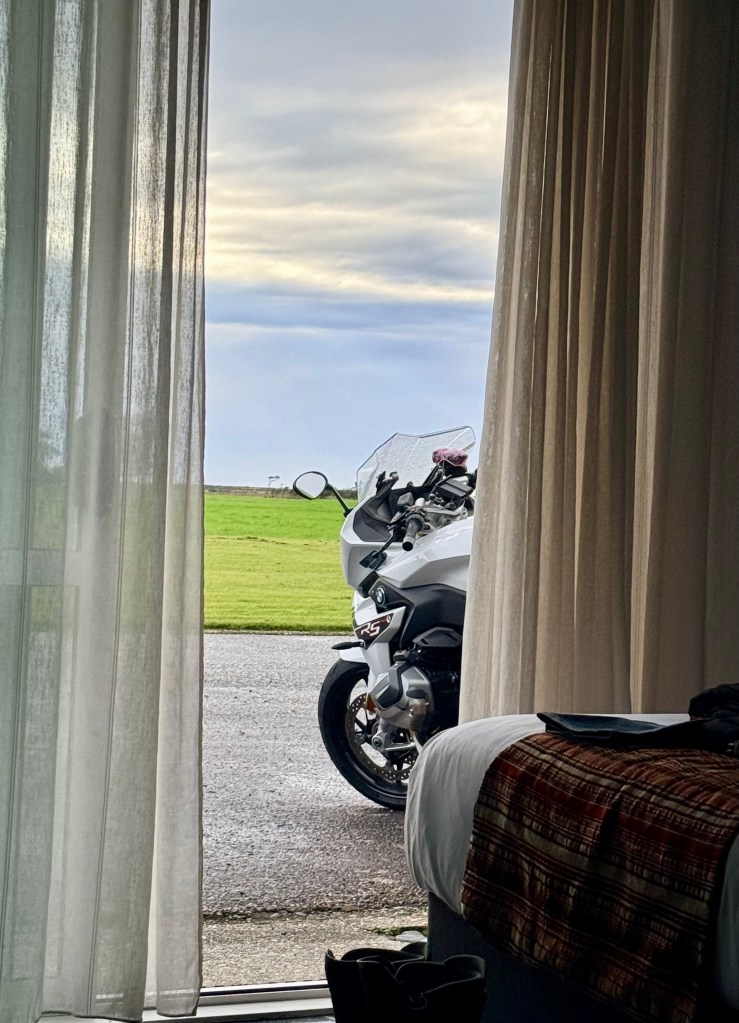
The morning didn’t so much arrive as quietly settle in. Looking out through the window, everything felt softened—edges blurred by low cloud, colours muted into shades of grey and green. There was a stillness to it, the kind that holds for just a moment before the day begins to move. It wasn’t a dramatic start, but it carried a quiet weight… the sort of morning that makes you wonder what the road is going to throw at you.

We greeted each other as we packed up our bikes and there was an air of quiet about the group.

This was a special day. One we had waited for. We were going to the final resting place of a very dear old friend who recently left us. Bob Tanner was a man who had woven himself in some way into all of our lives, and we were going to say hello.

We decided to delay breakfast until we got to the township of Franz Josef. After a cup of tea, we set off north. It was a brief start, for I was leading, had taken the group not 100 metres up the road, and thought I had left my wallet behind. Leaving my bewildered colleagues at the roadside, I returned to the hotel to retrieve my wallet, only to see it peeping out from under the lid of my tank bag. Feeling a little sheepish, I returned to the group, and we finally set off north.

Leaving Haast, the road north on State Highway 6 eases you in gently. The first stretch is deceptively calm—long straights, a few easy bends, the kind of riding where you settle into the day without much thought. The surface is good, the pace relaxed, and for a brief window it feels like the weather might just hold.

It doesn’t.

About twenty minutes in, the rain settled in properly—seeping into gloves, dulling the throttle response, turning every movement into something that needed to be deliberate. Not a passing shower, but that steady, committed West Coast rain that doesn’t come and go—it just is. The kind that builds on your visor until you’re wiping it more out of habit than effectiveness, the kind that turns the road from matte to mirror.

From a motorcyclist’s perspective, everything shifts.

The throttle hand softens. Braking stretches out earlier. Lines through corners become smoother, more deliberate. The road itself hasn’t changed—but the way you ride it absolutely has.

The bush thickens as you head north, pressing closer to the road. Water starts to appear everywhere—running off banks, dripping from overhanging branches, gathering in dark streaks across the tarmac. The surface, shaded and damp, keeps you honest. There’s grip there, but it’s quieter now, less forgiving of anything abrupt.

Corners that would normally be effortless take on a different character. Not difficult—just requiring respect. You read them a little earlier, tip in a little gentler, roll on the throttle with more care. It becomes less about flow and more about feel.

And then there’s the sensory side of it.

The smell of the bush intensifies with the rain—wet leaves, damp earth, that deep, almost sweet scent that seems to rise up from the forest itself. It cuts through everything, even at speed. The sound changes too—the steady hiss of tyres on wet seal, the soft drumming of rain on helmet and jacket, the engine note slightly muffled in the thick air.

Visibility narrows, not just from the rain on the visor but from the way the light flattens under the cloud. Greens deepen, shadows blur, and the road becomes a ribbon of dark grey threading through it all.
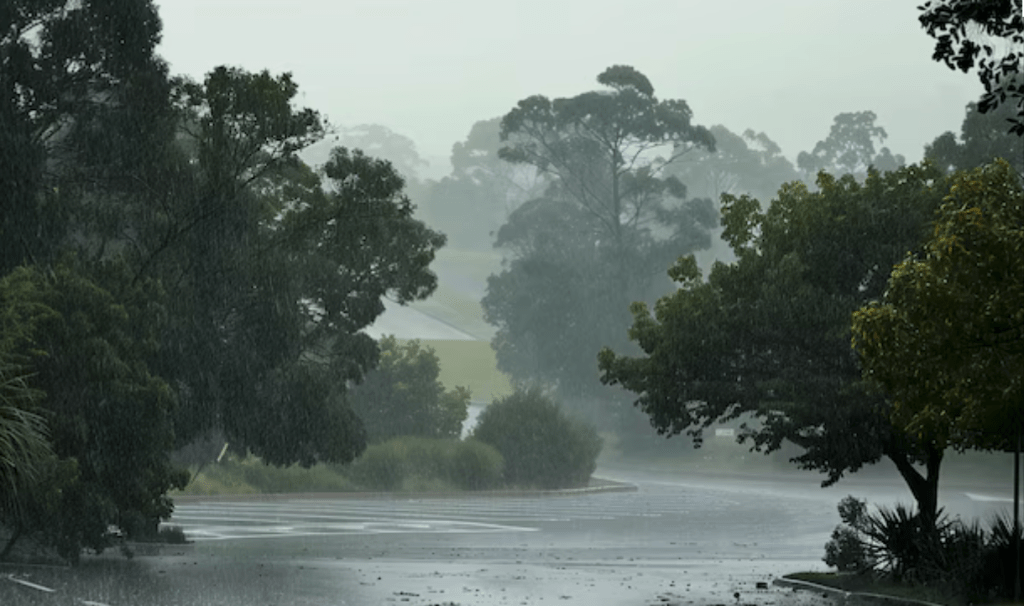
By the time you roll into the Lake Paringa Reserve, you’re properly in it. Not fighting it—just riding within it. Gear dampened, focus sharpened, and that quiet awareness that comes when the conditions demand your full attention.

It’s not the kind of riding that’s fast or effortless.

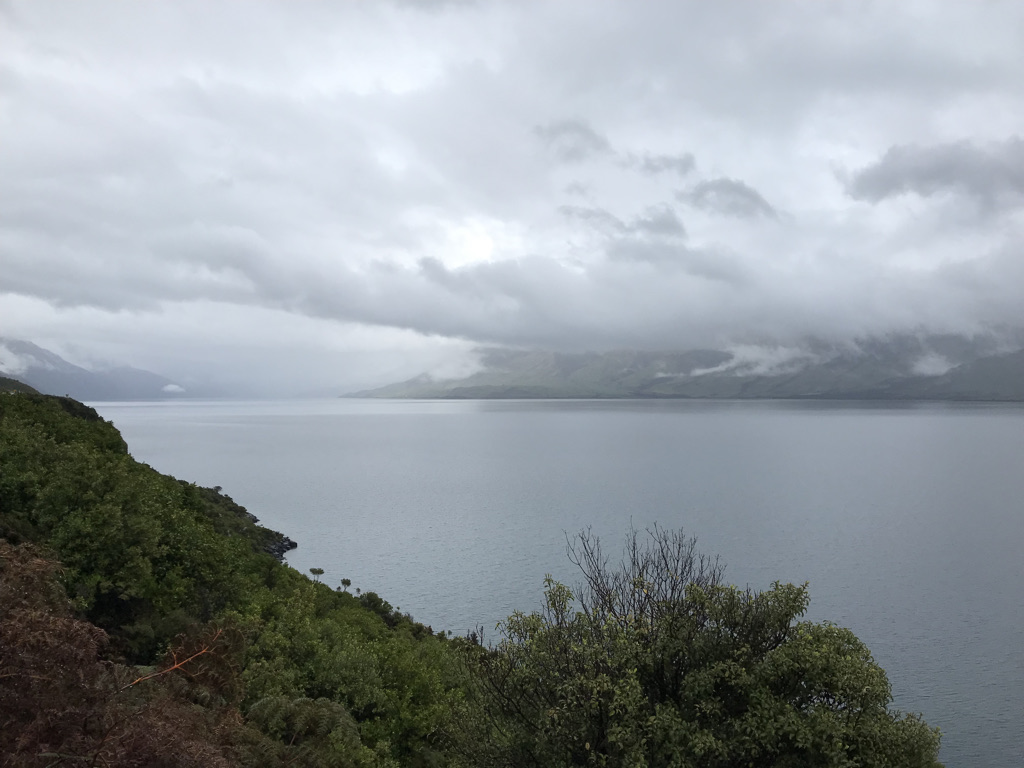
But it is the kind you remember. A hastily snapped photo does not do the place justice. Dotted about are soggy tents with soggier clothes hung on a line in a forlorn attempt to dry them. A toilet block with a verandah affords some shelter under which damp motorcyclists don wet-weather gear in an attempt to keep the water on the outside. No time to lose, we press on.

Pulling out from the Lake Paringa Reserve, zipped up and committed, there’s a quiet acceptance that this is how the ride is going to be now. The rain hasn’t eased—it’s settled in—and the road north on State Highway 6 feels different the moment you roll back onto it.

This stretch tightens up.

The bush presses closer, thicker and more enclosed, the canopy leaning over in places as if trying to reclaim the road. The corners come more frequently now—still flowing, but shorter, more connected. You’re no longer cruising between bends; you’re linking them together, one after another, with barely a pause.

On a dry day it would be a beautifully rhythmic piece of road. In the rain, it becomes something more focused.

The surface carries that constant sheen, broken by darker patches where water is collecting or tracking across the lane. You start to read those changes instinctively—avoiding the painted lines, staying smooth over anything that looks like it might be hiding a bit less grip. Every input matters a little more now. Evidence of land slips abounds. Is there one around the next bend?

Throttle gentle. Brakes progressive. Body relaxed but alert.

The rain intensifies the environment in a way that’s hard to describe unless you’ve ridden through it. The smell of the bush is stronger here—lush, almost overwhelming. Moss and lichens cling to everything: tree trunks, rock faces, even the roadside barriers, all saturated and alive. Water runs constantly—down banks, off leaves, across the road in thin, shifting streams that you cross without thinking, but never quite ignore. Non native possums litter the road, where vain attempts to cross were doomed to fail, and they are now food for the local raptors.

There’s a steady rhythm to it all:
Corner. Straight. Water crossing. Corner again.

Visibility ebbs and flows. One moment you’ve got a clear view through a bend, the next it tightens as the bush crowds in and the light dims under the canopy. You ride a little further back from the limit, giving yourself space—not out of hesitation, but out of respect for what the conditions are asking.

And yet, there’s something deeply satisfying about this section.

You’re fully engaged now. No distractions. No autopilot. Just you, the bike, and a narrow ribbon of wet tarmac threading through dense West Coast bush.
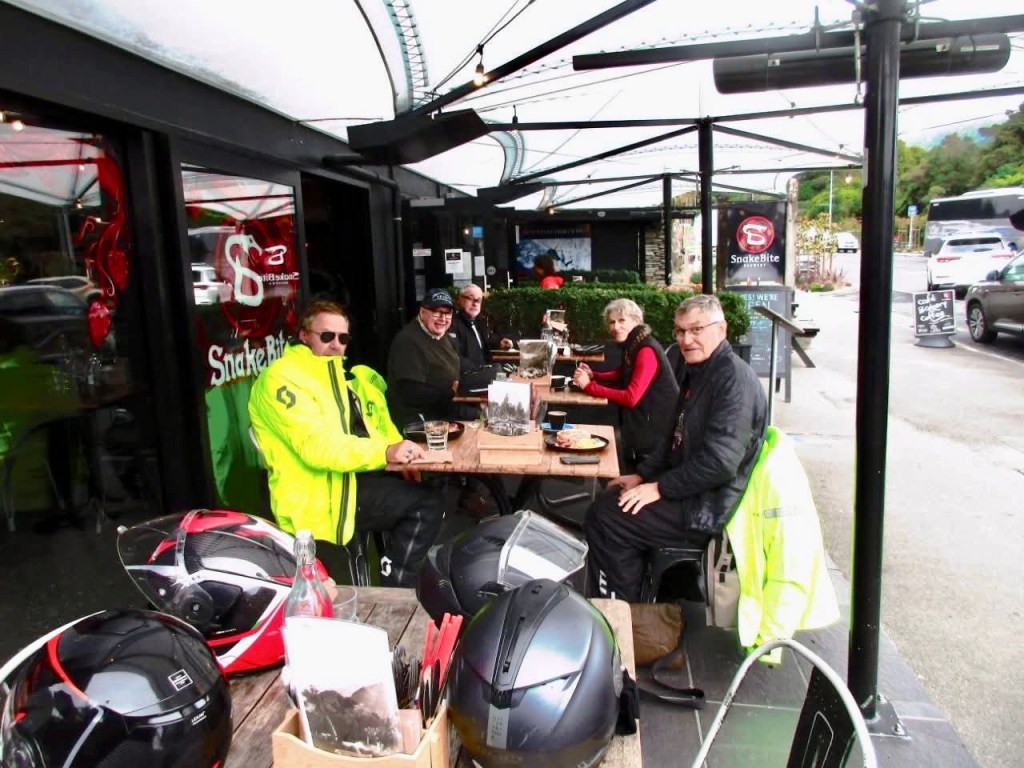
After a series of twisting and descending bends, we stopped in Franz Josef township for breakfast and topped up the bikes’ tanks. We needed this. The rain had started to ease, but it was time for a break.

We continued.

In short order, Hari Hari appears. The landscape has flattened and opened out. Then a small turn-off leads to the Guy Menzies Landing Site—easy to miss, but worth the pause. Another aviation story off the beaten track that’s worth a detour. A replica of his plane sits in a purpose-built building on the southern edge of Harihari township.
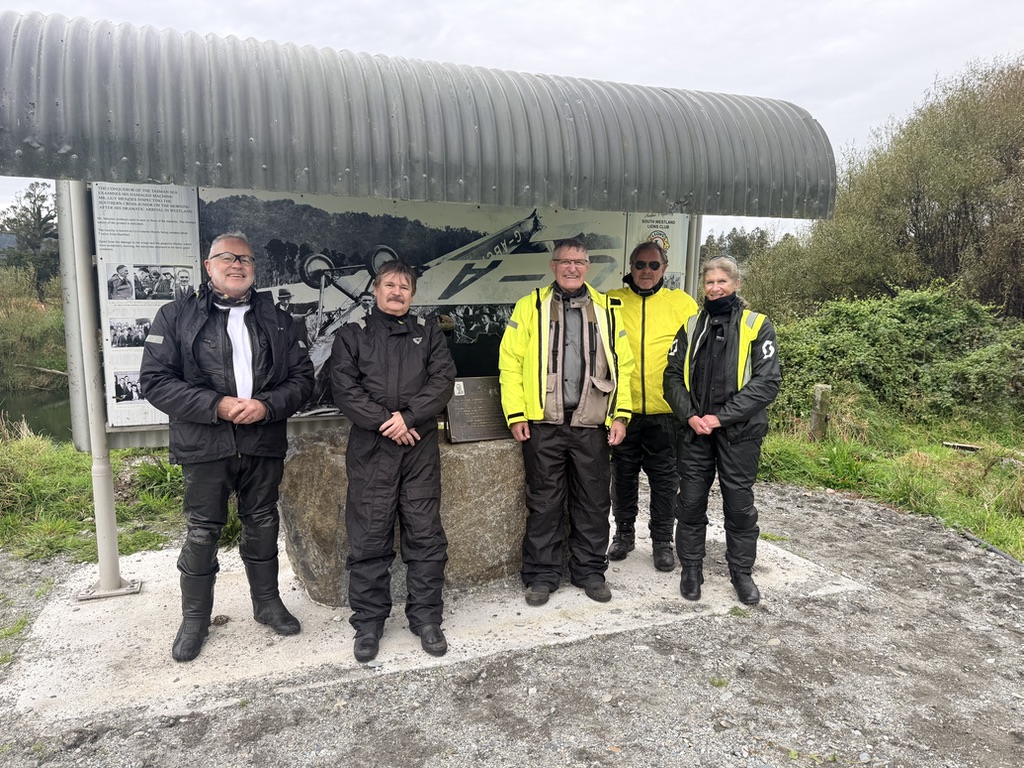
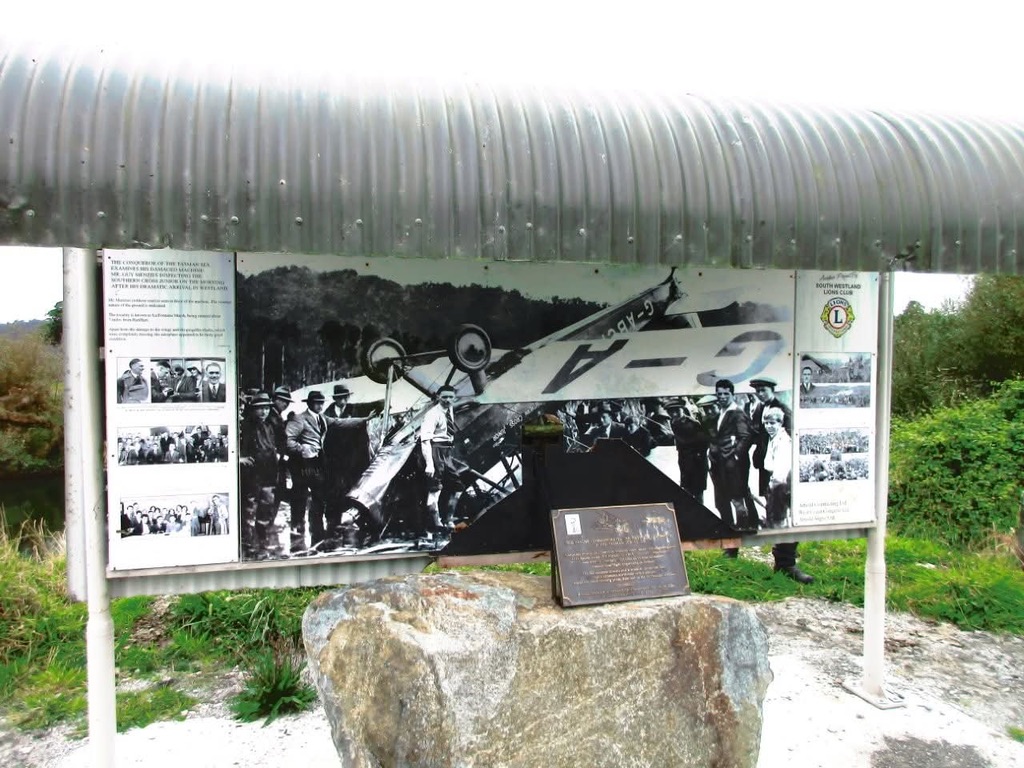
Leaving Harihari, the road north on State Highway 6 feels almost calm—but only just. The sky hangs low and heavy again, darker now, the kind of grey that doesn’t leave much doubt about what’s coming.

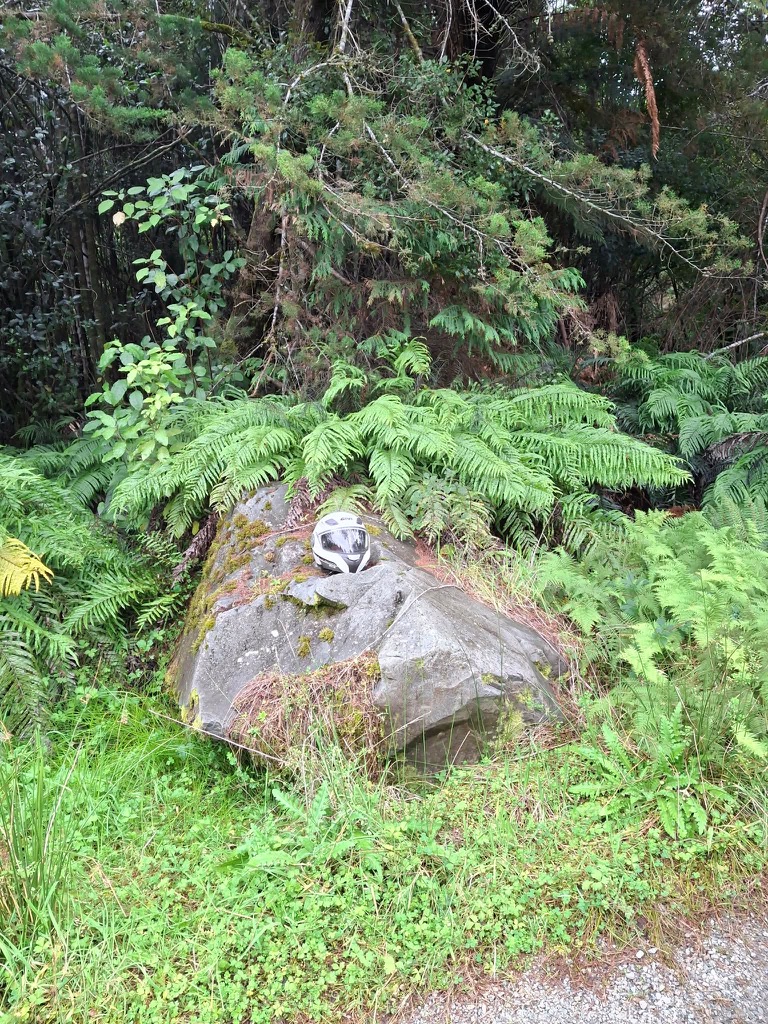
By the time Bob’s resting place begins to emerge, almost quietly from the greenery, it feels like you’ve been riding with the environment rather than through it. Slower, yes—but sharper, more connected, and completely absorbed in the moment. We turn off onto a gravel track and progress at a slow and steady pace until, in a hushed silence, we find his spot. A large rock marks it.
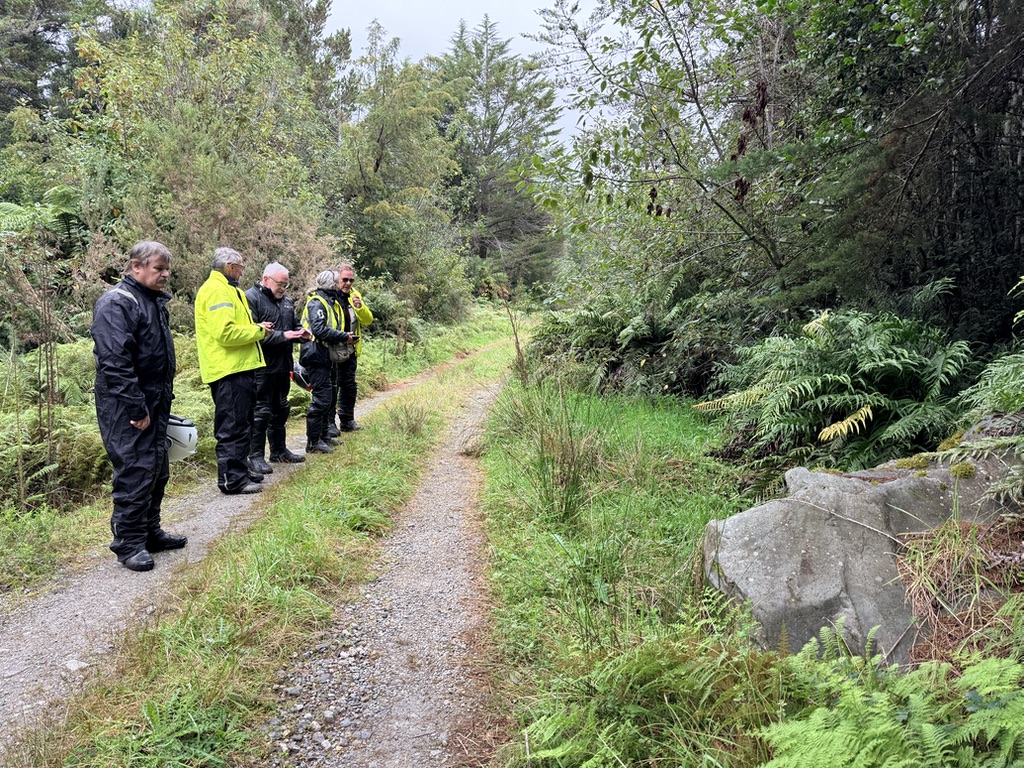
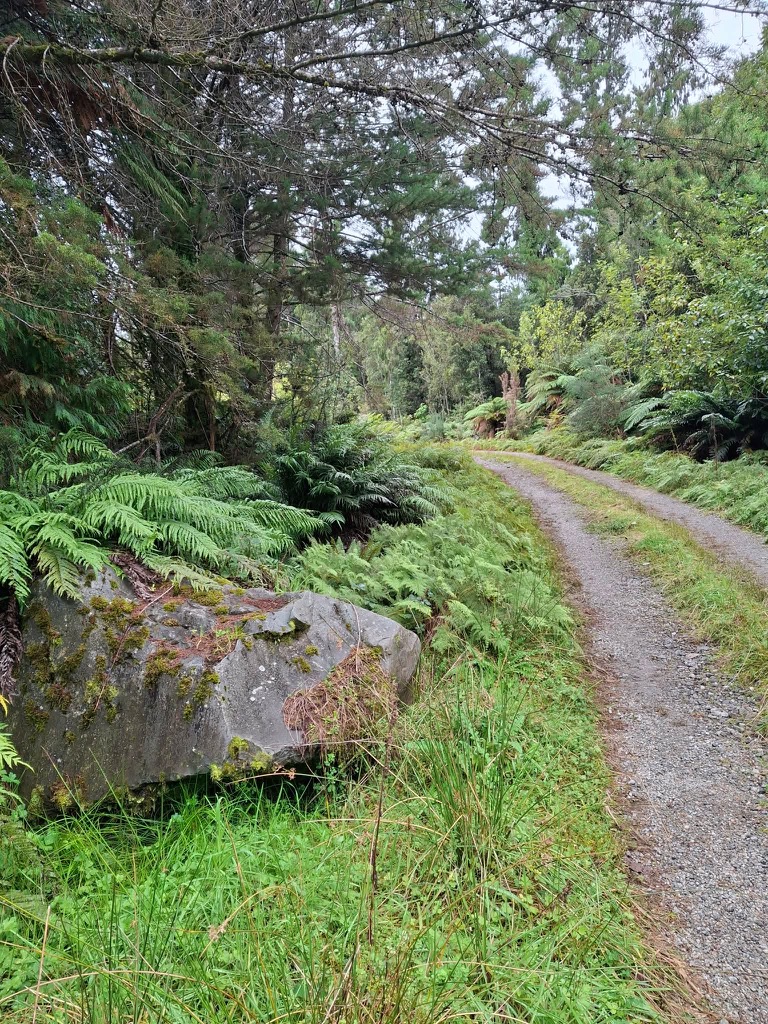
We stood without speaking, a loose line of riders gathered quietly in front of Bob Tanner’s final resting place. The engines had long since gone cold, and without them the silence felt heavier—more deliberate. Above us, a tall conifer stretched its branches wide, its dark canopy catching the light rain before letting it fall in slow, steady drops.

No one seemed in a hurry. Helmets stayed off, gloves tucked away, hands resting loosely at our sides. The rain softened everything—the sound, the light, even the edges of the moment itself. It tapped gently on jackets and dampened the gravel underfoot, the only movement in an otherwise still scene.

There’s a kind of understanding that doesn’t need words in moments like this. Just a shared respect, a quiet acknowledgement of someone who had ridden before us, who had known these same roads, felt the same pull to keep moving.

We stood there for a while, each in our own thoughts, the rain falling steadily through the branches above—until, almost without needing to say it, we knew it was time to ride on. A native fantail bird follows us away.
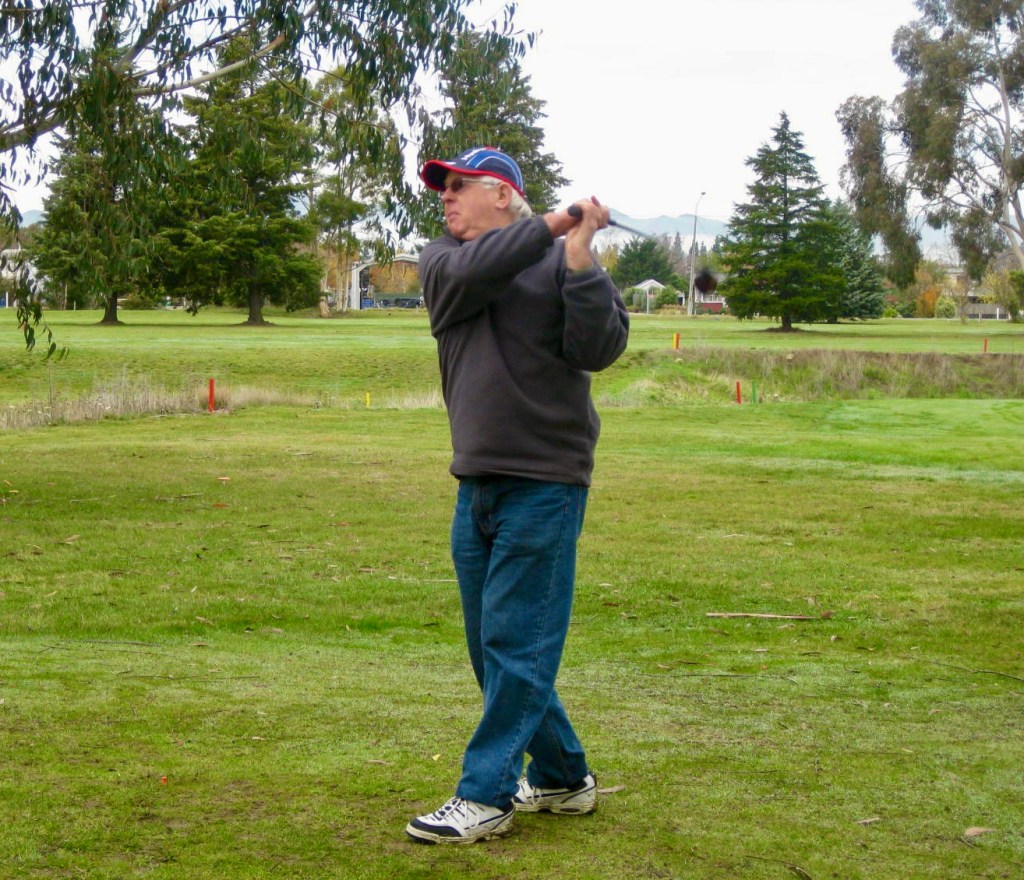
Bob Tanner
Bob Tanner in full swing. The great days of golfing. Well trying to hit a ball if truth be told.

Leaving Bob behind us, the road north on State Highway 6 felt almost too easy—wide, open, and forgiving in a way that let you settle back into the seat. But the sky told a different story.

It was building.

Out ahead, the horizon thickened into a solid wall of grey. The light flattened, draining the colour from the landscape, and the air took on that damp, metallic edge that comes just before the rain arrives for real. You could feel it more than see it at first—a change in the air, a quiet tightening of focus.

The road itself stayed kind. Long, sweeping bends linked together with easy straights, the kind of stretch where, in better weather, you’d let the bike run and simply enjoy the flow. But this wasn’t that kind of moment.

You ride differently when you know what’s coming.

The throttle hand softens. Braking starts earlier. Your eyes push further down the road, reading not just the corners, but the sky, the surface, the subtle darkening patches where the first moisture is starting to settle. It’s not caution—it’s anticipation.

A drop hits the visor. Then another.

Not enough to change anything yet, but enough to confirm it.

The wind shifts slightly, carrying that unmistakable scent of rain moving in from the coast. The road darkens in patches now, the seal losing its dry edge, and the tyres begin to whisper instead of hum.

You don’t rush it.

Instead, you settle into that space just before the weather takes over—fully aware, completely present, riding within a margin you don’t need to think about. The kind of riding that isn’t about speed or distance, but about reading the moment and responding to it.

And then, just as Hokitika comes into view, the sky finally gives in.

The rain arrives with intent—heavy drops that hit hard and fast, turning the road dark in seconds. It’s almost perfectly timed. No fight, no long grind through it. Just enough to remind you who’s really in charge out here.

Rolling into town as it sets in feels like slipping through a closing door—one last stretch of road, then shelter, warmth, and the quiet satisfaction of having read the day just right.
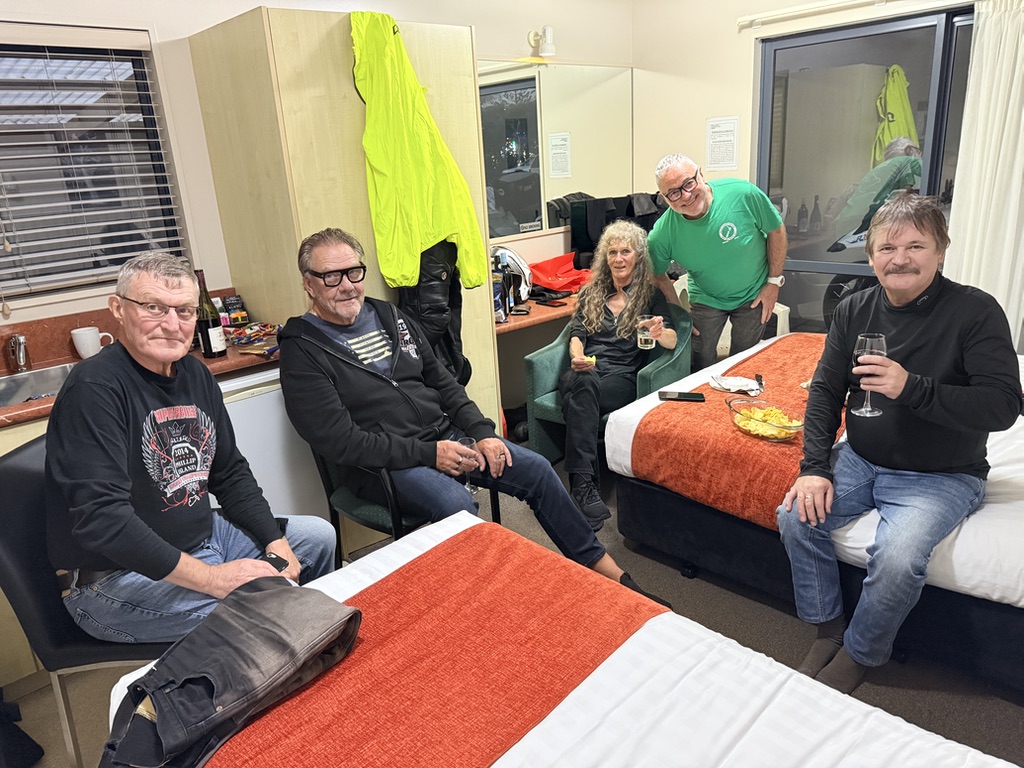
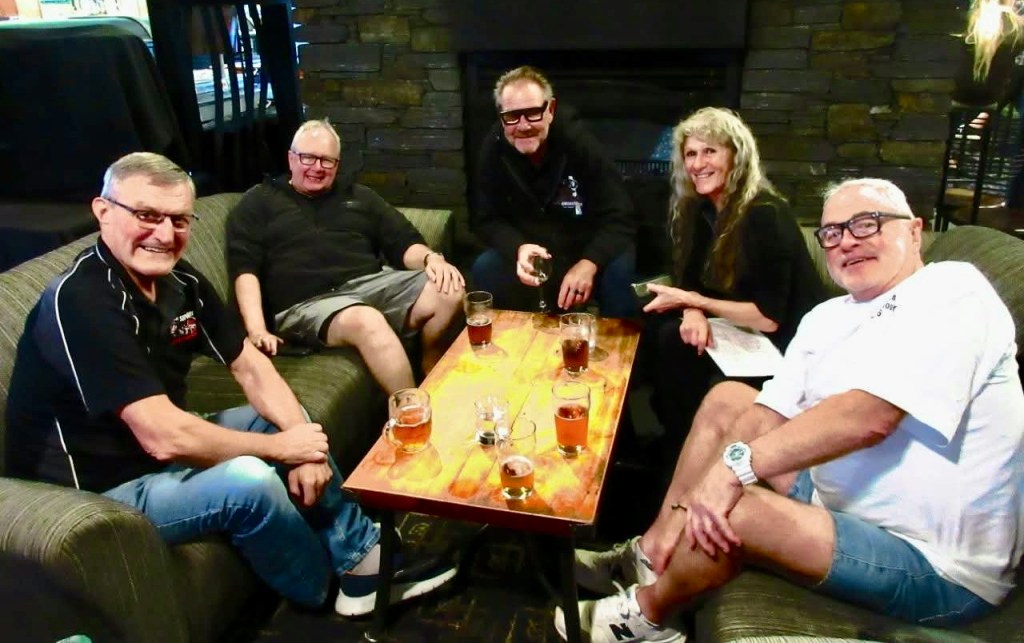
Back in the room at the Bella Vista Motel, Hokitika, wet gear hung where it could drip, and boots edged closer to the heater. It didn’t take long before the stories started.

The Richard Pearse Memorial came up first—an unlikely beginning that somehow set the tone. Then Omarama—coffee, warmth, and that shared look that says this is why we ride. The sweep over the Lindis Pass got its due too—wide, open, and effortless in the best possible way.

From there, the mood shifted. The Blue Pools—still, clear, almost unreal—followed by the ride through the Haast, where the rain, the bush, and the road demanded a different kind of focus. A few laughs about timing the stop at Lake Paringa Reserve just right for the wet weather gear.

And then, more quietly, the moment that stayed with everyone—standing in the rain, under the trees, at Bob Tanner’s resting place. No need to say much.

Outside, the rain continued to fall over Hokitika. Inside, it was warmth, tired bodies, and the quiet satisfaction of a ride that stayed with you—not for the distance, but for how it made you ride, and how it made you feel while doing it. Tomorrow we shall go our own ways back to the East Coast and home.

It wasn’t the distance that stayed with us, but the way the road kept asking something different each day.
Dry or wet, open or enclosed—we didn’t just ride through it, we adapted to it.
And somewhere along the way, it stopped being about where we were going… and became about the simple act of riding itself—I hope you’ve enjoyed the ride as much as we did following along.
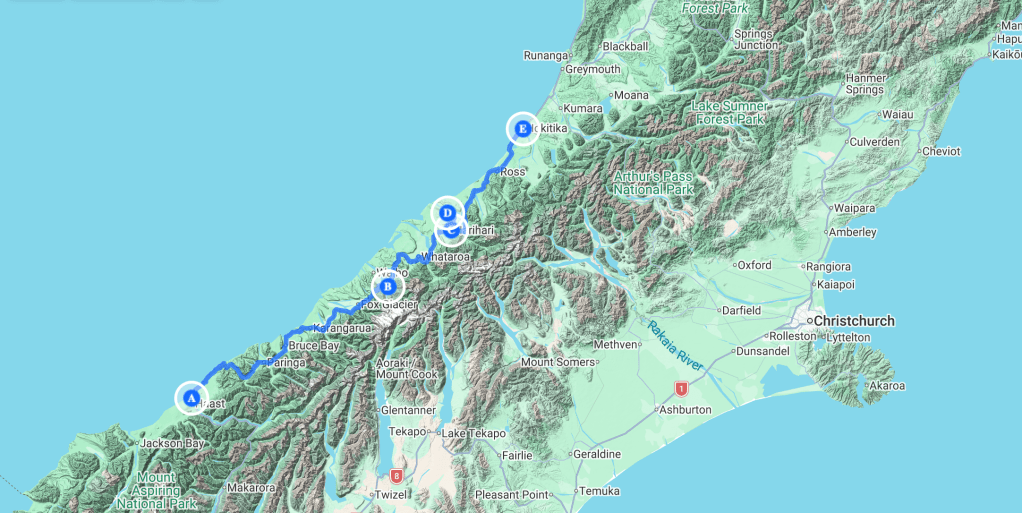
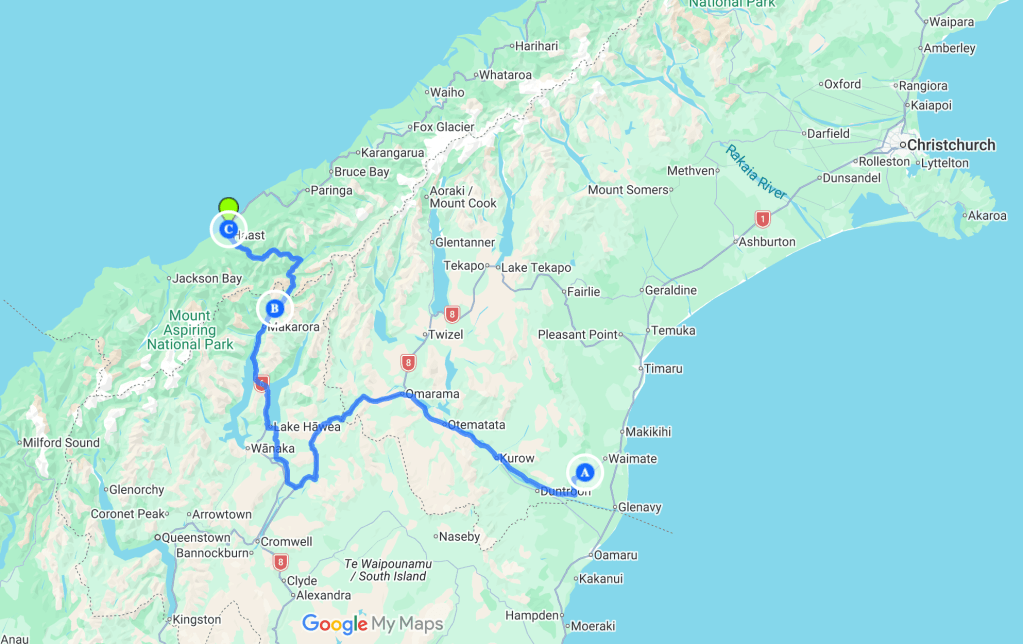
300 kms today in somewhat challenging weather for riding a motorcycle.

Day Two: From Lindis Pass to Haast: A Motorbike Adventure in New Zealand

A cold night had settled into everything—the bikes, the air, even the quiet around the buildings—and when dawn finally arrived, it did so gently. The light crept in soft and pale, the kind that makes you pause for a moment before gearing up, as if the day is offering a quiet promise rather than a bold statement. It felt like the start of something measured and unhurried… though, as it turned out, the road had other ideas waiting further west.

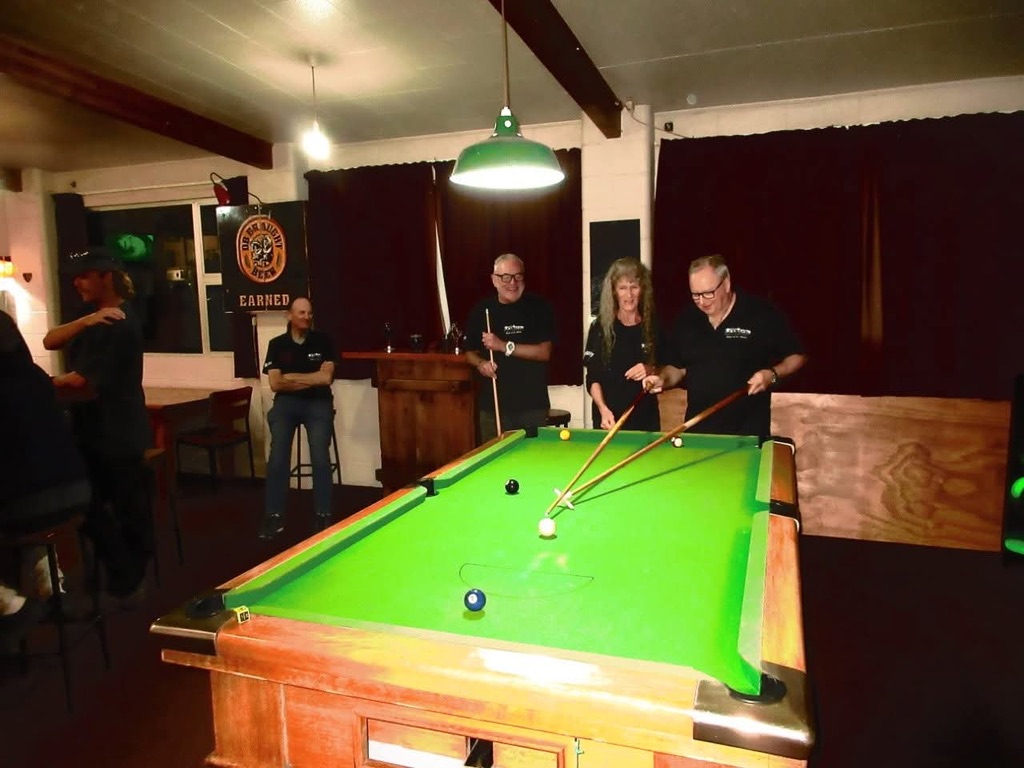
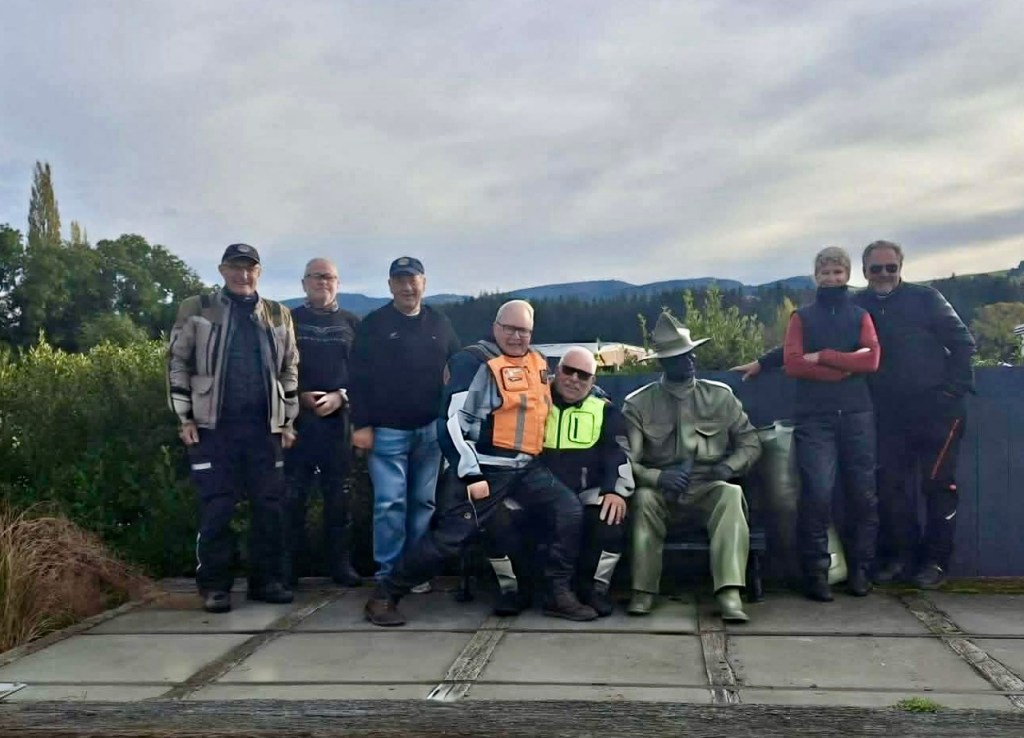
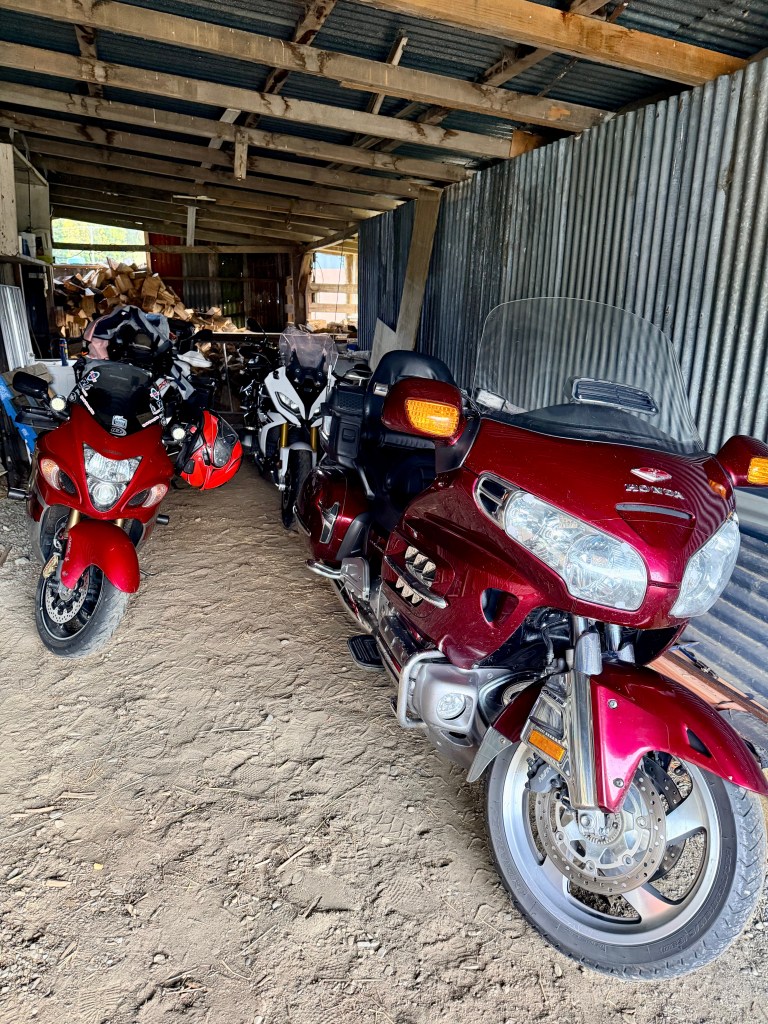
A quick check of the bikes tucked away in the shed showed all was well. Not all of our group had the time to continue our tour to the west. At breakfast, we caught up on the great night we had just enjoyed. We gathered for a final team photo and bid farewell to Terry, Brian and Chris as they prepared to head north for home.

Having bid our friends farewell, I led the two Steves, Chrissie, Stu, and Jacko out of the hotel car park and turned right onto Highway 82 towards Ikawai. The ride north-west back toward Omarama is one of those rare stretches where going back doesn’t feel like going backwards. The Mackenzie colours—those soft golds and dusty greens—seem to shift depending on the time of day, and this morning they were all cool tones and long shadows.

By the time we rolled into Omarama, the fingers were just starting to feel the chill. Fuel tanks were topped up.

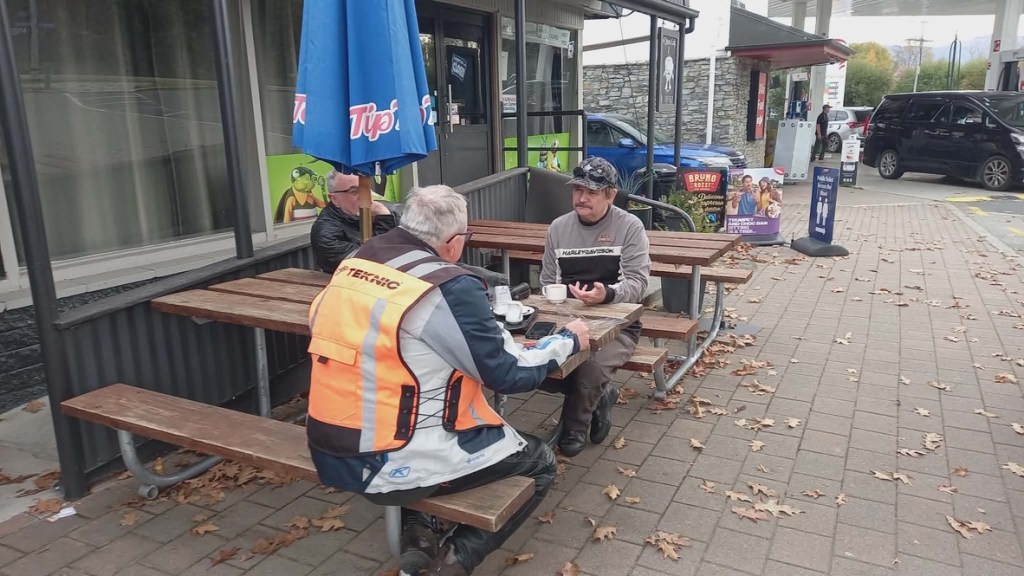
Coffee was non-negotiable.

Helmets off, hands wrapped around something hot, and the usual exchange of road notes: “Still good the second time?” “Maybe better.”

Climbing out of Omarama, the road doesn’t shout about what’s coming—it just starts to lean upward, almost casually at first. The bends lengthen, the horizon pulls back, and before you know it, you’re being drawn into the wide, rolling sweep of Lindis Pass.

This isn’t a tight, technical pass that demands constant correction. It’s something else entirely. The corners are broad and flowing, the kind you can read from a distance and settle into early. You find a rhythm quickly — roll on, tip in, ease out — again and again, like a quiet conversation between you and the road. Oh, and smile. This road makes you smile. A lot.

The landscape is stripped back to its bones. No trees to crowd the view, no clutter to distract. Just undulating hills covered in tawny grass, folding into one another under an enormous sky. In the cool morning light, everything carries a muted palette — golds, greys, and soft browns — that feels almost cinematic. It’s a place that looks simple at first glance, but the longer you ride through it, the more detail reveals itself.

As the altitude builds, the air sharpens. You notice it in the way the bike breathes a little easier, in the way the wind cuts just a bit cleaner through your gear. The road climbs steadily toward the summit, and then — almost without ceremony — you’re there.

No dramatic peak. No towering cliffs. Just a quiet high point and a sign that feels almost understated for a place that delivers so much. Every time I pass this way, I think of the wonderful poem by Kiwi poet James K. Baxter called High Country Weather.

Alone we are born
And die alone
Yet see the red-gold cirrus
over snow-mountain shine.

Upon the upland road
Ride easy, stranger
Surrender to the sky
Your heart of anger.

And then comes the descent.

Dropping toward Tarras, the road opens even wider. The corners stretch out, visibility improves, and the pace naturally lifts without ever feeling forced. The valley ahead begins to take shape, the light shifts, and the world starts to fill back in again.

It’s the kind of stretch that leaves you with that rare feeling of being completely in sync — bike, road, and landscape all working together. No effort, no noise. Just motion.

If there’s a perfect piece of road to lose yourself in for a while, this might just be it.

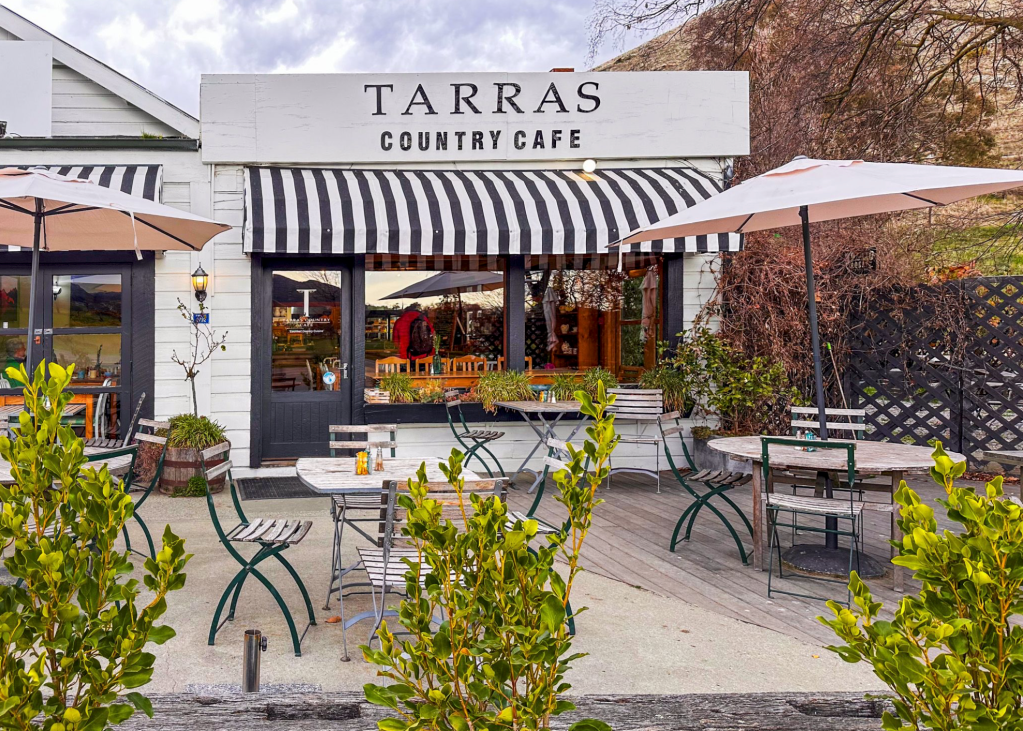
Tarras — a blink-and-you’ll-miss-it kind of town that’s perfect for exactly what we needed: a quick stretch, a wander, and a moment to take it all in.

No rush. No schedule. Just the quiet satisfaction of being exactly where you are.

The Tarras Country Cafe is a good place to stop and take a rest. They lose a few points for not being dog-friendly, mind you. Not an issue on this journey, but our Border Collie, Leia, would not approve.

From Tarras, the ride shifts tone.

Heading past Lake Hawea, the landscape begins to soften—water replacing dust, greenery creeping back in. The road hugs the lake in places, offering glimpses of deep blue framed by distant peaks. The road runs up the west shore of Lake Hawea, then crosses quickly to pick up the east shore of Lake Wanaka. This is a snaking, sinuous road hugging the narrow stretch of land between water and peaks. The weather takes a turn in the wrong direction. The temperature drops and the clouds descend.

By the time we reached Makarora, it felt like the right moment to stop properly.

Lunch was simple, satisfying, and well-earned. A hot drink and a toasted cheese sandwich. Before we set off we needed to get the wet weather gear out and put it on. We continued towards the West Coast.

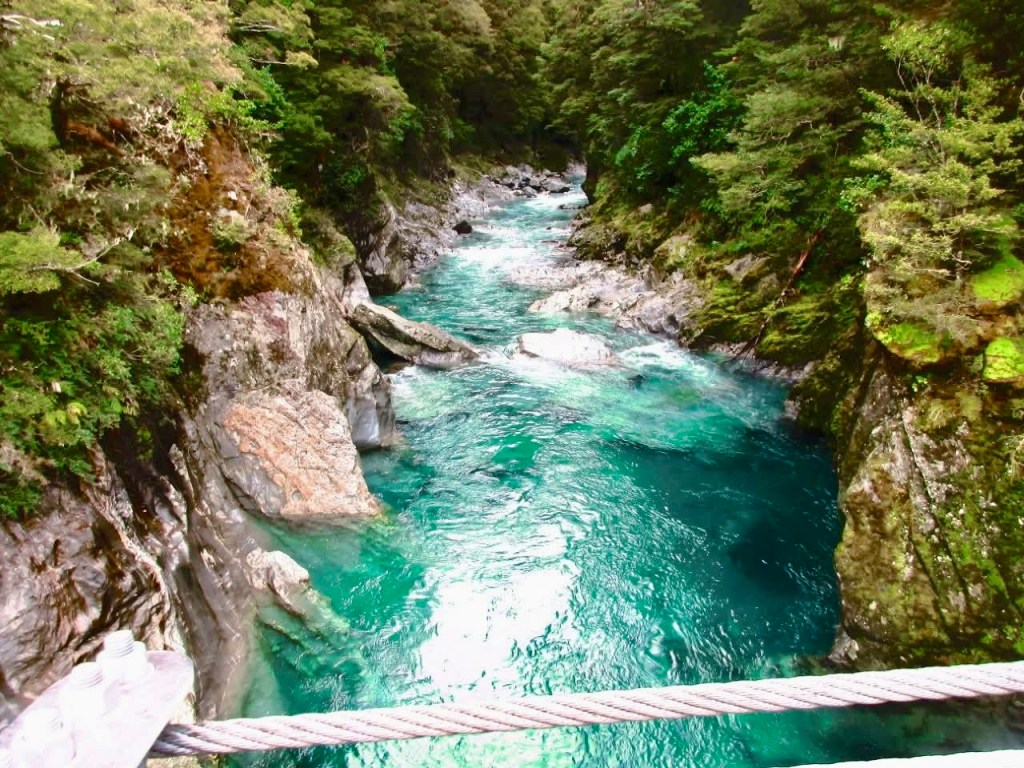
Not far up the road, we pulled in again—this time to stretch the legs on the short walk to the Blue Pools. Suspended bridges, crystal-clear water, and that unmistakable alpine stillness made it one of those stops that lingers longer than expected. The weather held. The sun peeped out just enough to show off the blue alpine waters at their very best.

Boots on gravel instead of pegs. A welcome change.

Then comes the turn west toward one of my favourite rides on the planet. Somewhere beyond Lake Hawea, the shift begins. At first it’s subtle—the air softens, the colours deepen—but by the time the road pulls you into the Haast Pass, the transformation is complete.

And then the rain arrives.

Not in a sudden burst, but as a steady, soaking presence—the kind that hangs in the air as much as it falls. The visor beads up, the road darkens, and every surface takes on that slick, reflective sheen that quietly demands respect.

The open high country is gone. In its place, the bush closes in tight.

Towering beech and podocarp press right up to the road’s edge, dense and dripping, alive in a way that feels almost overwhelming after the austerity of the Lindis. Everything is green—but not just one green; a hundred shades of it. Deep, wet greens layered with moss, the pale crust of lichens on rock faces, glossy leaves of undergrowth catching what little light filters through.

And the smell… unmistakable.

Rich, damp earth. Crushed leaves. That fresh, almost sweet scent of rain‑soaked vegetation seeps through your gear and settles in. You don’t just notice it—you ride through it.

The road changes character too. The long, sweeping curves are gone. Here it tightens, twists, folds back on itself. Corners stack up, visibility drops, and the surface—darkened by rain and shaded by trees—keeps you honest. Painted lines glisten. Tar bleeds feel just a touch more slippery. Every input has to be smoother, more deliberate.

Throttle gentle. Brakes measured. Eyes scanning.

It’s not a place to rush. We cross the trestle bridge at the Gates of Haast, tyres humming over shingle, river roaring far below.

Water is everywhere now—trickling down rock faces, gathering in gutters, spilling in thin ribbons across the tarmac. New waterfalls appear out of nowhere, crashing down beside the road before disappearing back into the bush.

You ride through it all at a different pace. Slower, yes—but more connected. Every sense engaged. Every movement considered.

This isn’t a section about speed or heroics. It’s about immersion—being inside the landscape rather than just passing through it. The rain, the road, the forest all merge into a single, continuous experience.

By the time the road begins to ease and the bush starts to open toward Haast, you realise you’ve been holding a different kind of focus—quieter, sharper, more aware.

The sort of riding that stays with you long after you’ve dried out. Tiring, but exhilarating.

Rolling into the Heartland Hotel Haast feels like crossing a quiet finish line.

Gear damp, boots soggy and that familiar mix of fatigue and satisfaction that only comes from a full day in the saddle on the West Coast.

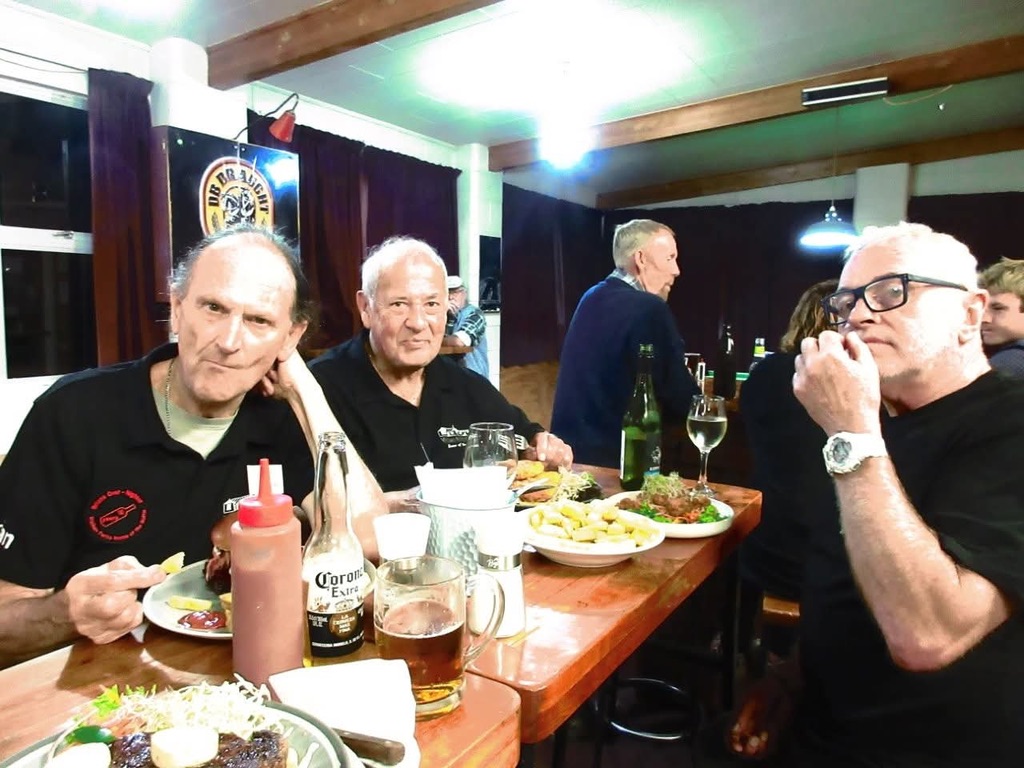
Inside, it’s warm. Dry. The showers are hot, the towels fluffy. Exactly what was needed. And, as always at the end of a big day on the bike, the bar beckons—to wash the dust of the day from our throats and trade stories about another sublime run on New Zealand’s South Island roads.

Why This Ride Sticks With You

This leg has a bit of everything:

  • The comfort of familiar roads
  • The wide‑open drama of the Lindis Pass
  • The subtle shift into lake country
  • The lush, rain‑soaked beauty of the West Coast

It’s a ride of contrasts—dry to wet, open to enclosed, fast to slow.

And like all the best rides, it’s not just about where you end up; it’s about how many different worlds you pass through along the way.

350 km of bliss.

Day one: Discover Richard Pearse Memorial on a Scenic Ride

And about time too!

Have you ever woken to a morning you’ve been hanging out for so long you reckoned it might never actually show? And then it does.

No drama. Just quietly there.

There’s a bite in the air, that proper South Island chill that wakes you up faster than any coffee. The kind that rolls down off the plains and settles in your chest. The sky’s clear in that big, open way you only get down here, and everything feels sharper—cleaner—like the land’s had a good rinse overnight.

You stand there for a bit, taking it all in. No wind. No traffic. Just you, the bike, and a road heading south with your name on it.

Bloody hell. This is it.

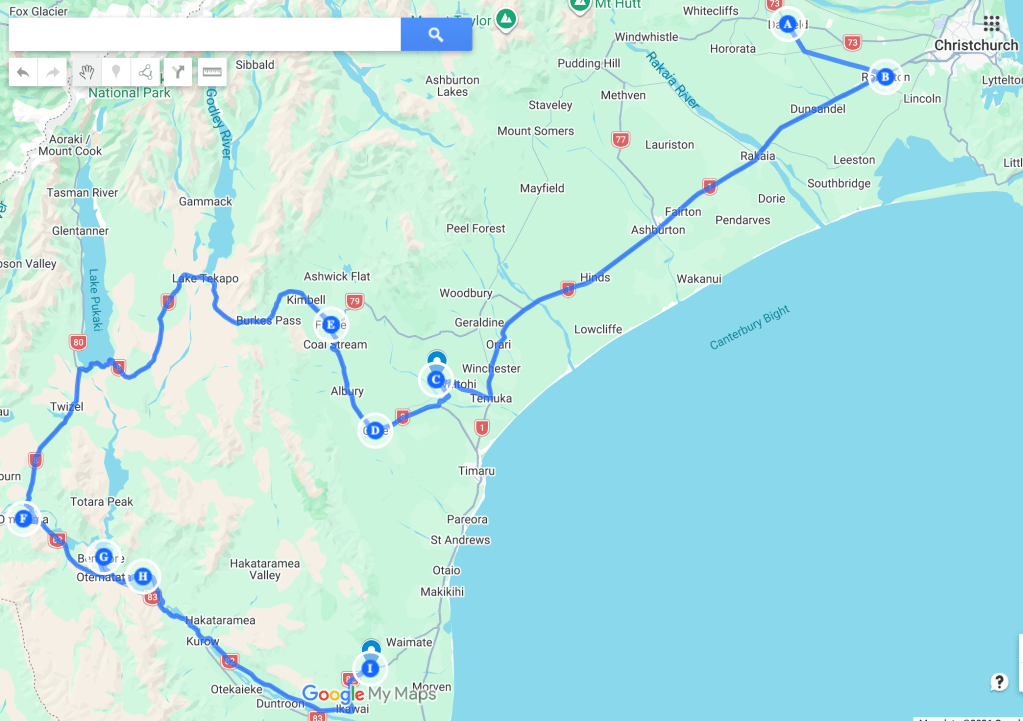
This was that morning. It was Saturday, April 11th, and it was 7:30 in the morning.

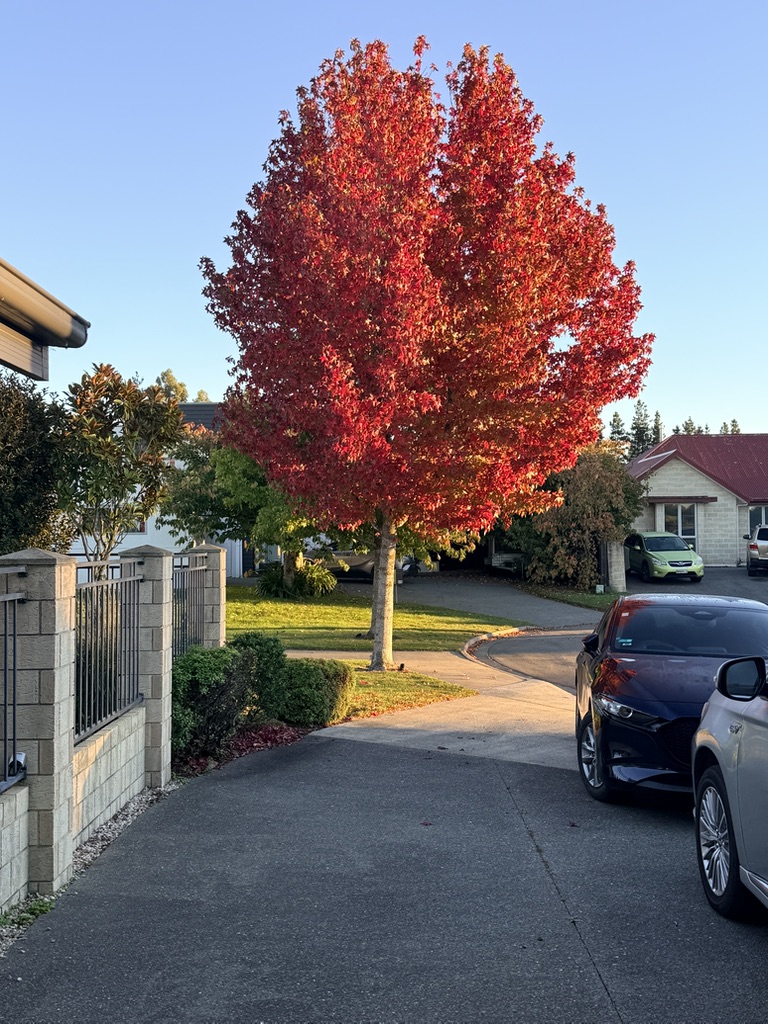
I had spent all week packing the motorcycle, unpacking it, and repacking it. I was now happy. It had been more than three years since my last ride out with this group of friends. The reason for the long absence is for another day. Suffice to say, I was so excited. I just wanted to get going. The sun rose into a pale French Blue sky. It had been a fairly calm and balmy night. No wet roads, no frost and no looming rain clouds. Yet. The scarlet oak tree out front looked as if aflame in the morning light.

I set off from home for our rendezvous point in Rolleston, south of Christchurch. The bike thermometer read 7 °C. It had been a while since I had ridden the bike with both side panniers and the top box fitted and loaded. The first few kilometres were spent just getting used to the little bit of extra weight on the bike. Taking time to make sure all was well with myself and the bike, for there were going to be a fair few kilometres added to both of us in the coming couple of days. Now was the time to ensure all was well. I passed through Oxford and Darfield and arrived in Rolleston to find most of the others were already there waiting for me.

I was beaming to see all my old riding buddies. This was like the last 3 years had never really happened, and it was business as usual. We talked bikes, weather, ailments (we are all of a certain age) and other nonsense before deciding it was time to head south.

Rolling out of Rolleston, the world still feels half-asleep. State Highway 1 stretches out ahead, long and straight, easing you into the day. It’s not the most thrilling bit of road, but that’s not the point—not yet. This is the warm-up. The chance to settle into the rhythm, feel the bike beneath you, and let the noise of everyday life drop away behind you somewhere north of Christchurch.

By the time you peel off at Temuka, things start to feel a bit more like a ride and less like a commute. The traffic thins, the pace changes, and the roads begin to wind just enough to keep things interesting.

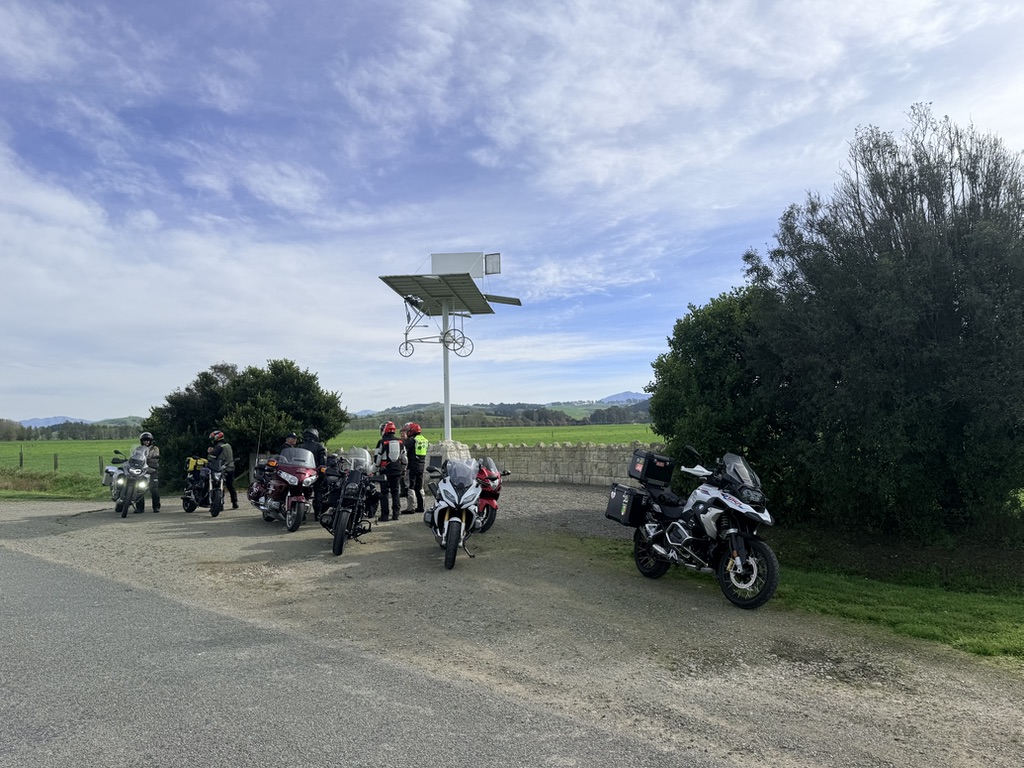
I mentioned to Brian I wanted to visit the Richard Pearse Memorial. After all, it was not far off our planned route, and it would add some interest. Who? said some of my fellow riders, and they were New Zealanders. Right says I, we have to do this.

A Flying Start (Almost)

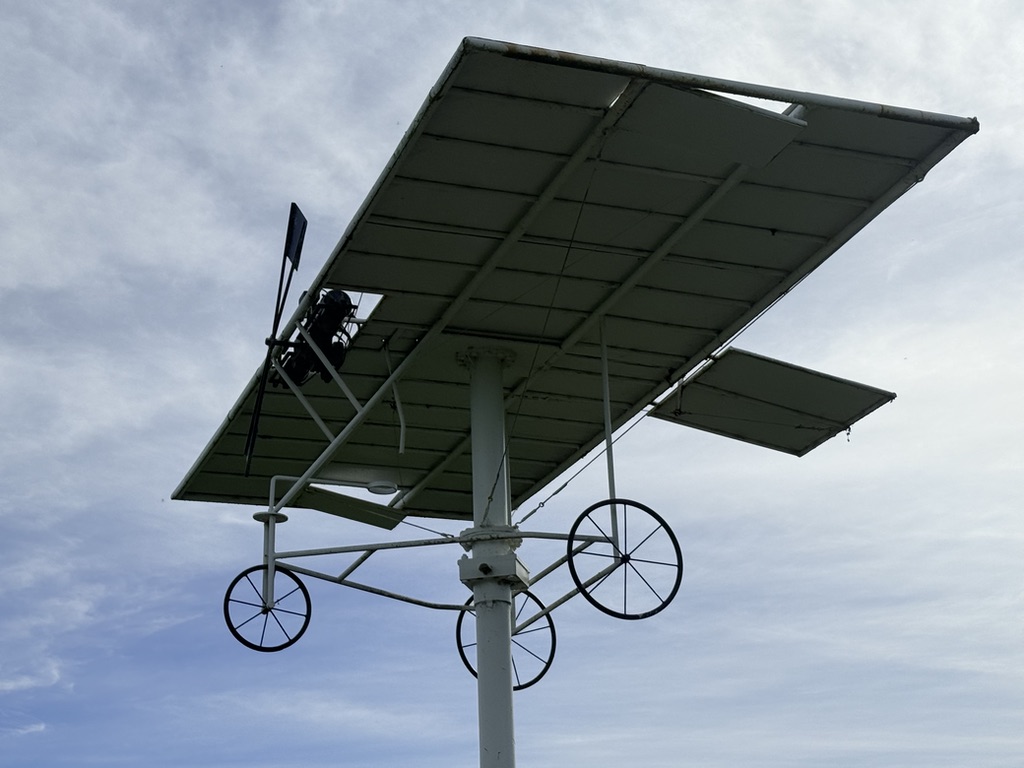
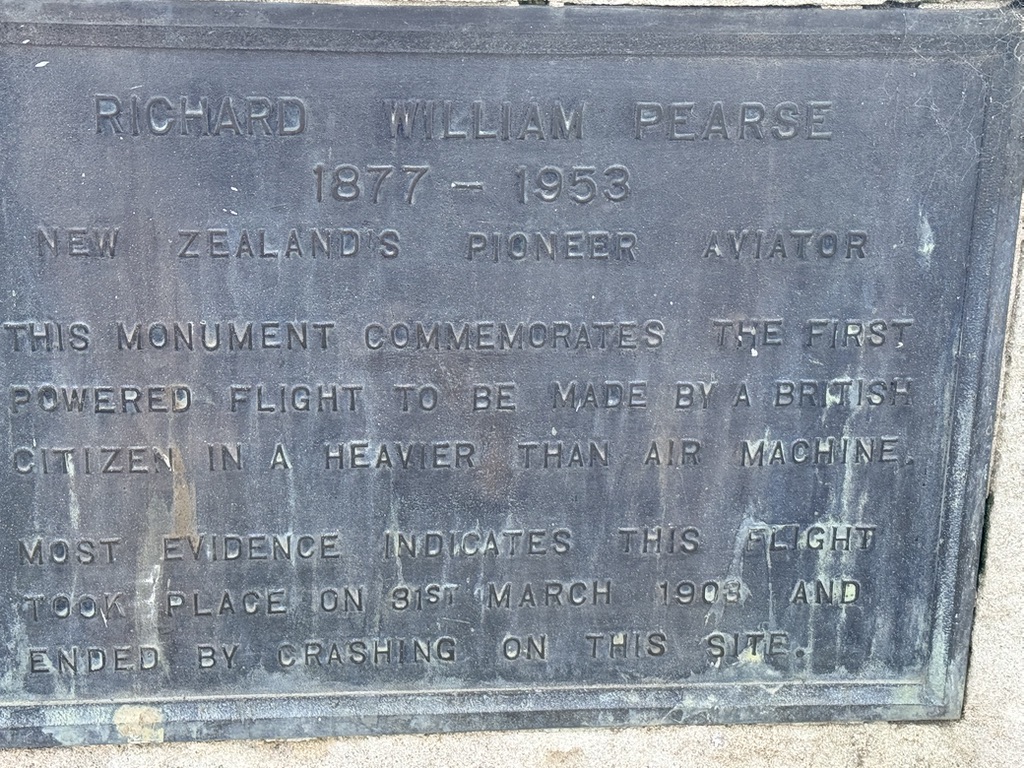
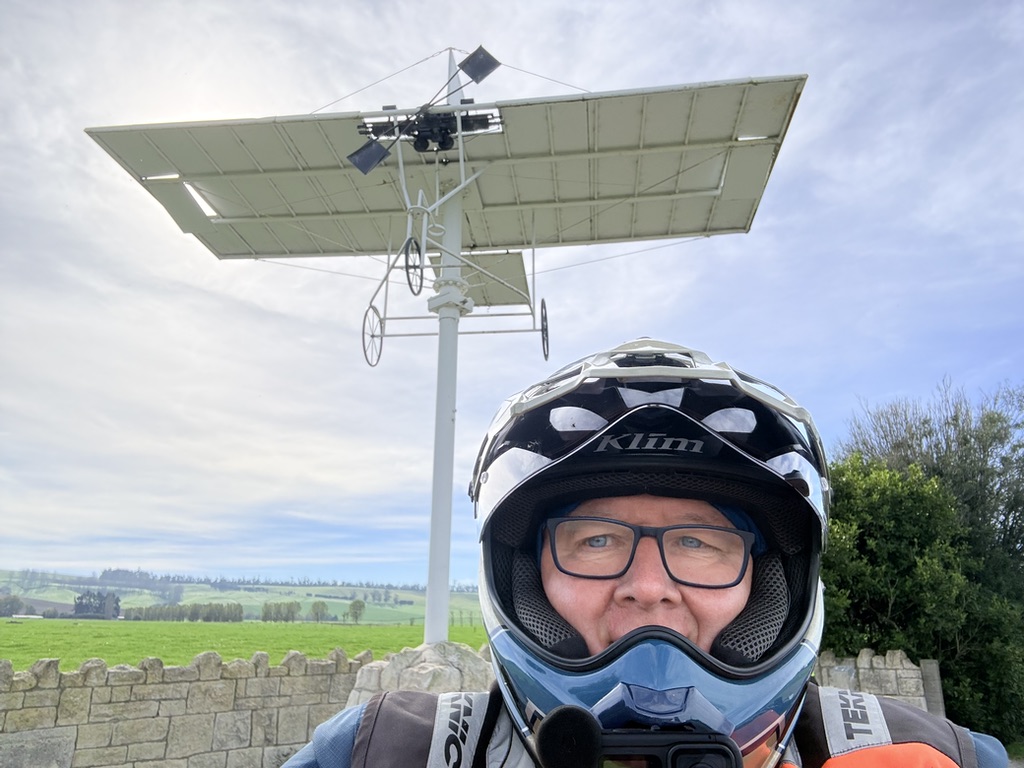
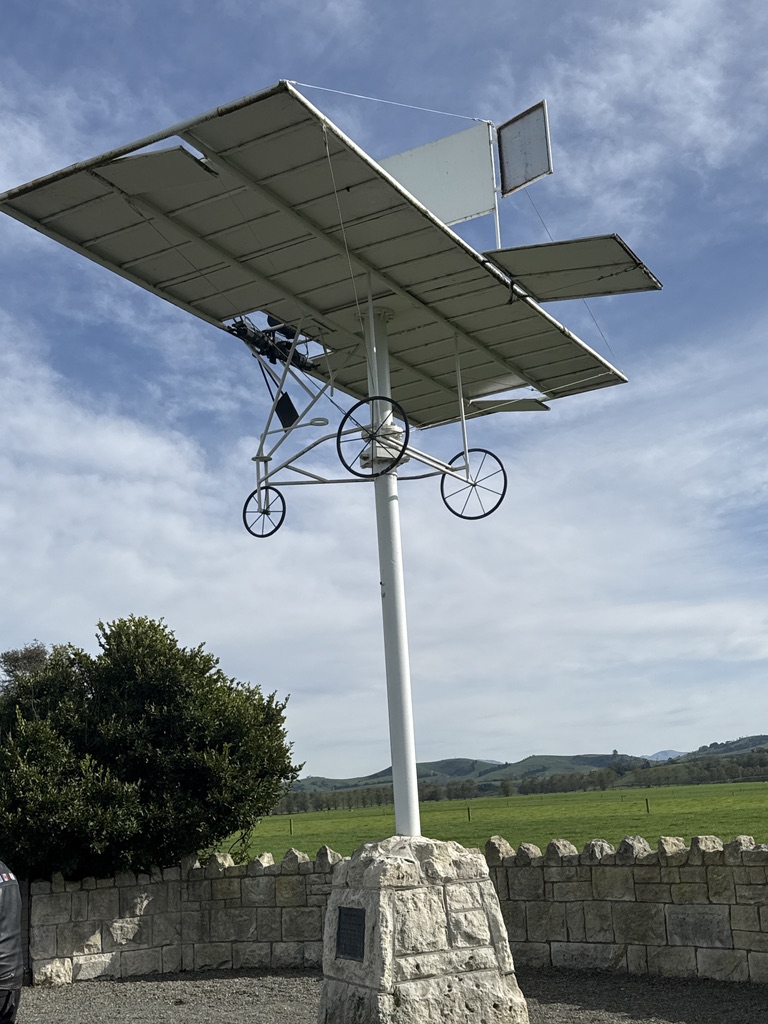
So, not long into the journey, we turned off SH1 onto the Waitohi Road and pulled over at the Richard Pearse Memorial—a fitting tribute to one of New Zealand’s more eccentric pioneers of flight. Click the link for more. Standing there, looking at the replica of Pearse’s rather… optimistic aircraft, it’s hard not to admire the sheer audacity of the man. Did he beat the Wright Brothers? Who knows. The history books would say not, but……

There’s something comforting about stopping for a break here. You stand there for a minute, looking out over the same flat land he would’ve known. It’s a good reminder that big ideas don’t always come from big places. A reminder that bold ideas—whether building flying machines or heading off on a long ride with no particular rush—are worth pursuing, even if they don’t always go perfectly to plan.

It has to be said that New Zealand is pretty awful at showing off what it’s got. Richard Pearse was a farmer who, I reckon, contributed to changing the world. No Smithsonian Institute fanfare for him. No replica hung from a lofty ceiling of what could be the world’s first powered flight. Nope. A replica stuck up a pole on a nondescript back road on the Canterbury plains is all he gets. And somehow that’s New Zealand. It punches way above its weight and expects nothing much in return. It just moves on to the next thing.

The Long Sweep Inland

From there, the road began to stretch its legs.

On through Pleasant Point and into Cave—roads that feel properly local now. Less polished, more character. You start to notice the details: the way the light hits the hills, the smell of farmland, the odd dog giving you a half-hearted chase from a driveway. It’s proper South Island riding—nothing fancy, just honest. South Canterbury unfolded in wide, golden strokes—farmland seamlessly transitioning to the stunning, expansive beauty of the Mackenzie Basin, adorned with vibrant cypress trees showcasing their autumnal colours. The traffic lightened, the curves invitingly opened up, and the exhilarating joy of riding took over, making everything else fade away. Lake Tekapo sparkled to our right, while the township buzzed with the excitement of a road cycle race. We then transitioned to quieter roads, where Lake Pukaki gleamed a beautiful blue as it often does. The sun radiated splendidly off the snowy peak of Aoraki, Mount Cook, inspiring us to pause for a refreshing break, stretch our legs, and soak in the breathtaking view.

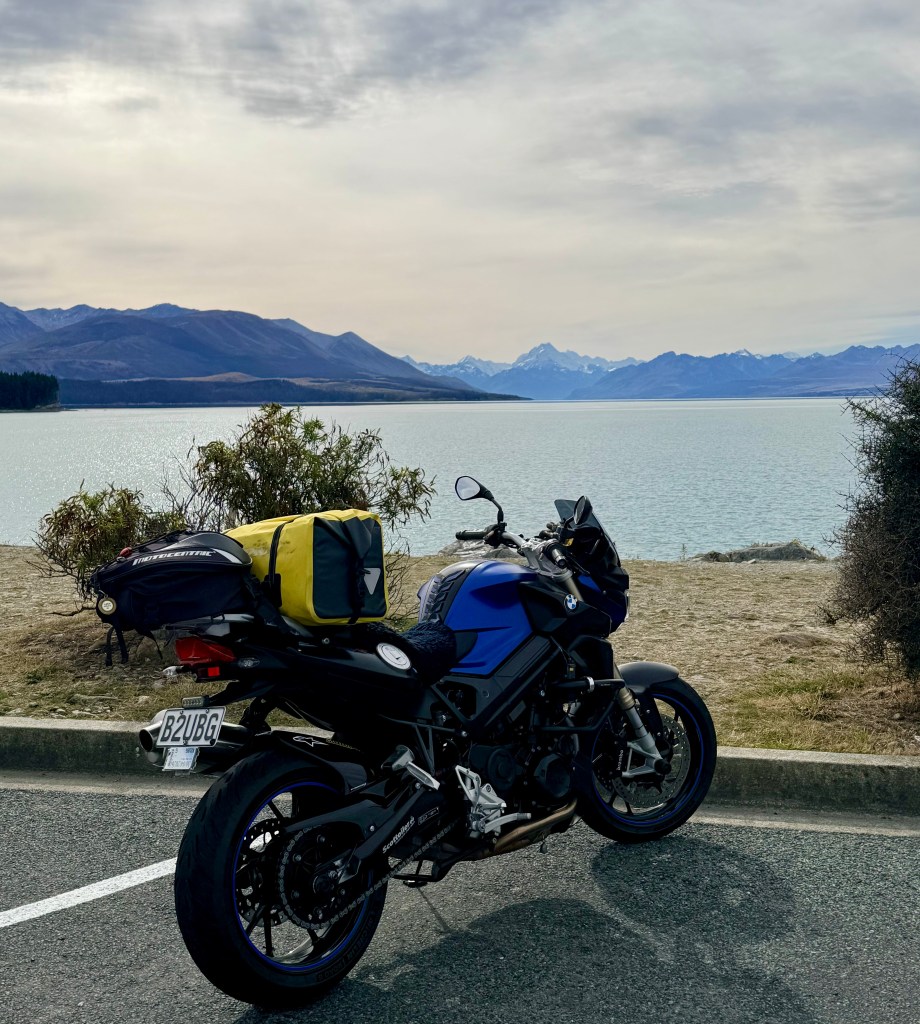
Brians BMW sits in front of Lake Pukaki and Aoraki, Mount Cook in the distance. The cloud had started to roll in turning the lake from a vivid blue to a cold grey.

Omarama is one of those places that feels like it exists purely for travellers—good coffee, easy parking, and a steady stream of fellow road wanderers swapping stories over lunch.

Helmets came off, jackets unzipped, and the usual conversation followed:
“How good is that road?”
“Did you see that view back there?”
“Should we stay longer?” We didn’t. But it was tempting.

By the time we rolled into Omarama, the bikes (and riders) were eager for a well-deserved break. I felt a bit saddle sore, having not enjoyed such a ride in a while, but the thought of refuelling with a hot cup of tea and some delicious sustenance lifted my spirits. That 30-minute break was just what we needed! A few stretches worked wonders on my shoulder blades, and a quick check around the bike reassured me that everything was in excellent shape. We excitedly headed east on Highway 83, turning off at Otematata to take the scenic road that led us to the impressive hydro dam at Benmore. Otematata, by the way, was a charming little town built to host the dedicated construction workers who brought the dam to life.

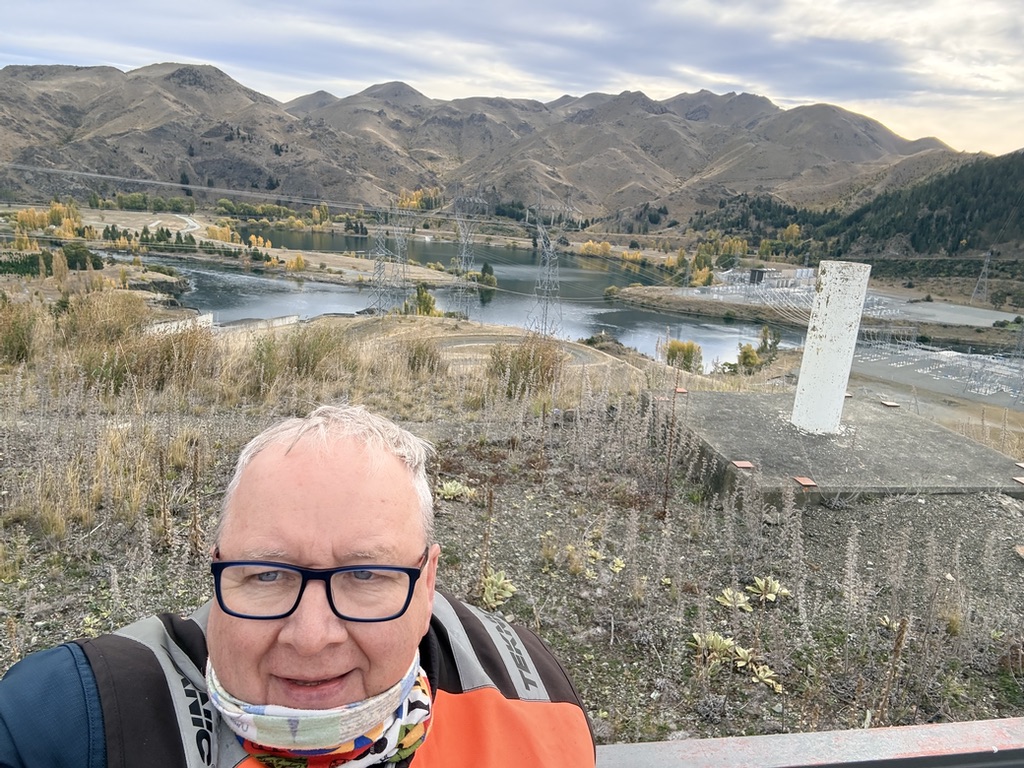
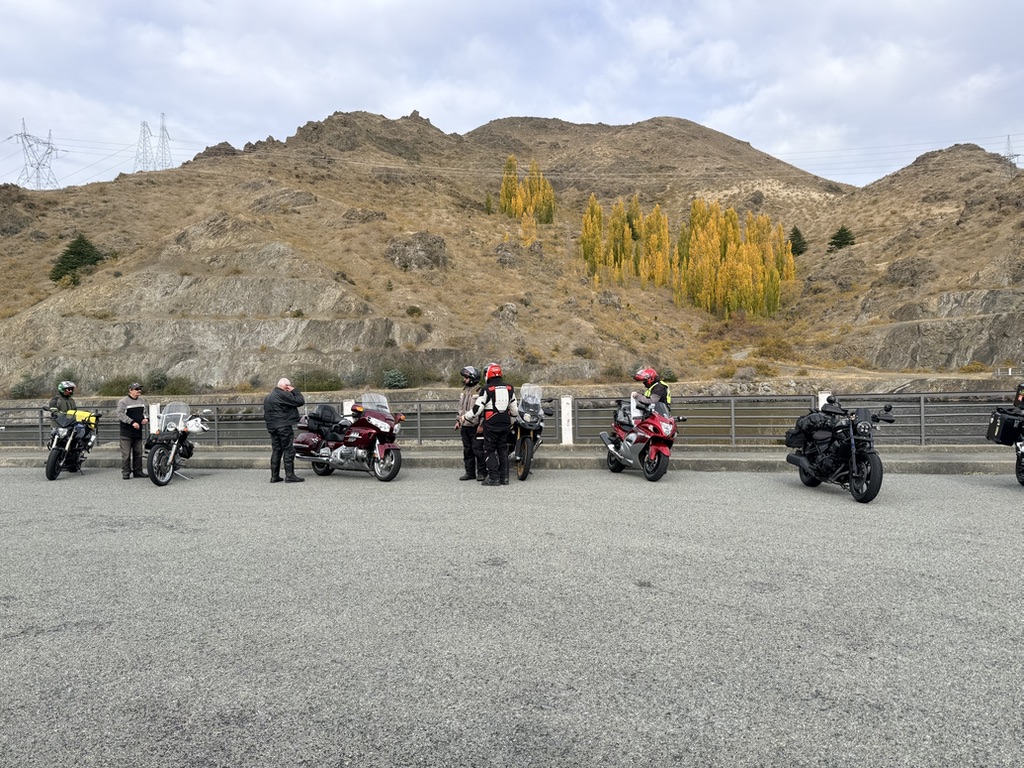
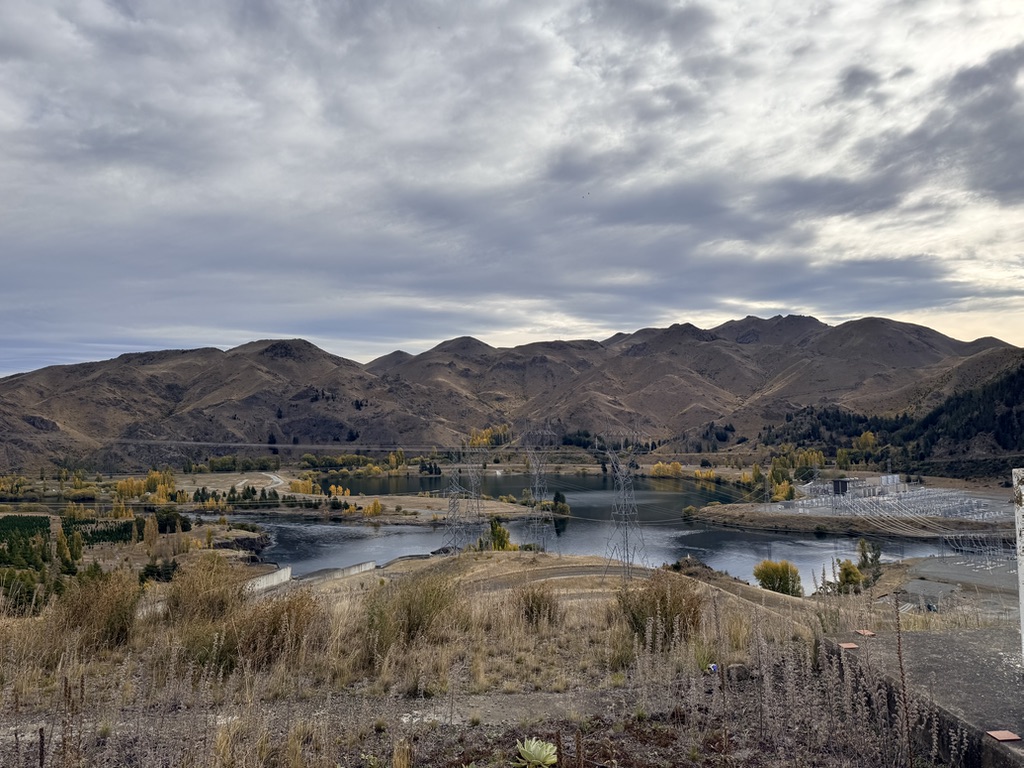
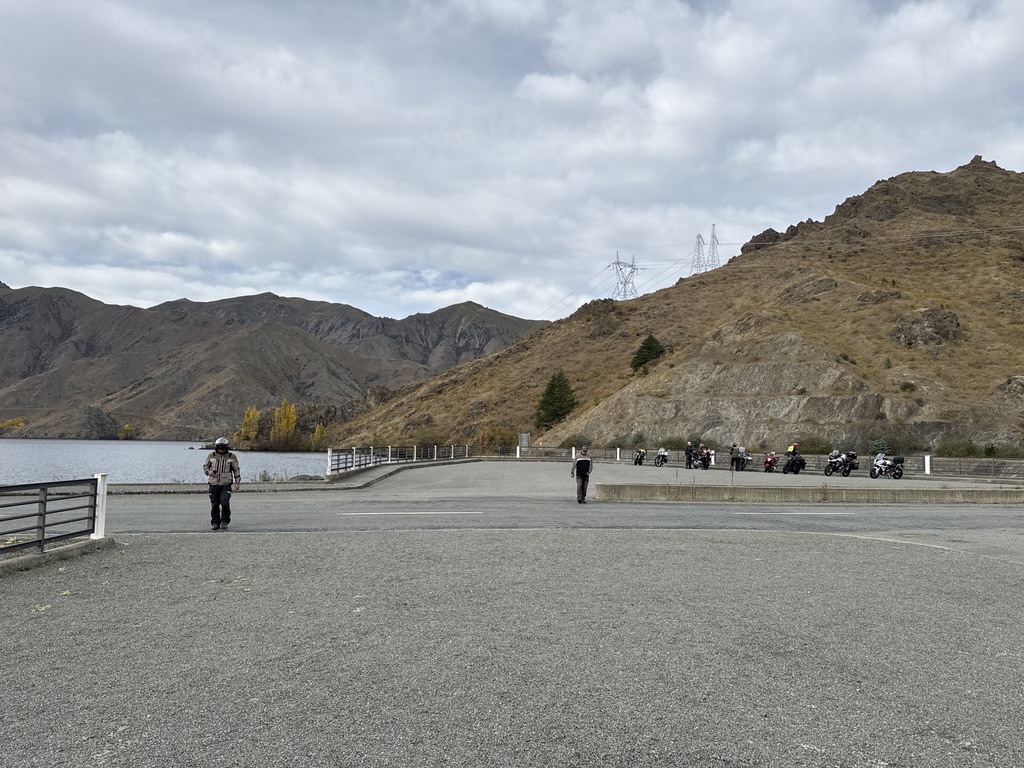
The South Island of New Zealand is dotted with hydro dams generating power for the grid. Benmore Dam is one of them and riding along the top of it affords outstanding views from a lofty perch. The stop at Benmore Dam is one of those moments where you have to pull over, whether you planned to or not. It’s big. Properly big. The kind of place that makes you feel small in the best possible way. The water stretched out behind it, the scale of the structure—it’s worth taking a few minutes just to stand there and take it in.

There’s something oddly mesmerising about the scale of the place—the massive wall of concrete holding back a lake dominated by lofty peaks behind it. It’s a different kind of scenic stop; less postcard, more “wow, humans built this?”

The road around the lake is a fun ride as well.


From Benmore, the road began to wind its way back towards the coast, twisting its way along the north shore of Lake Aviemore, the landscape softening again as the high country gave way to greener pastures. By this point, the light had started to mellow—the kind of late-afternoon glow that makes everything look just a little bit better.

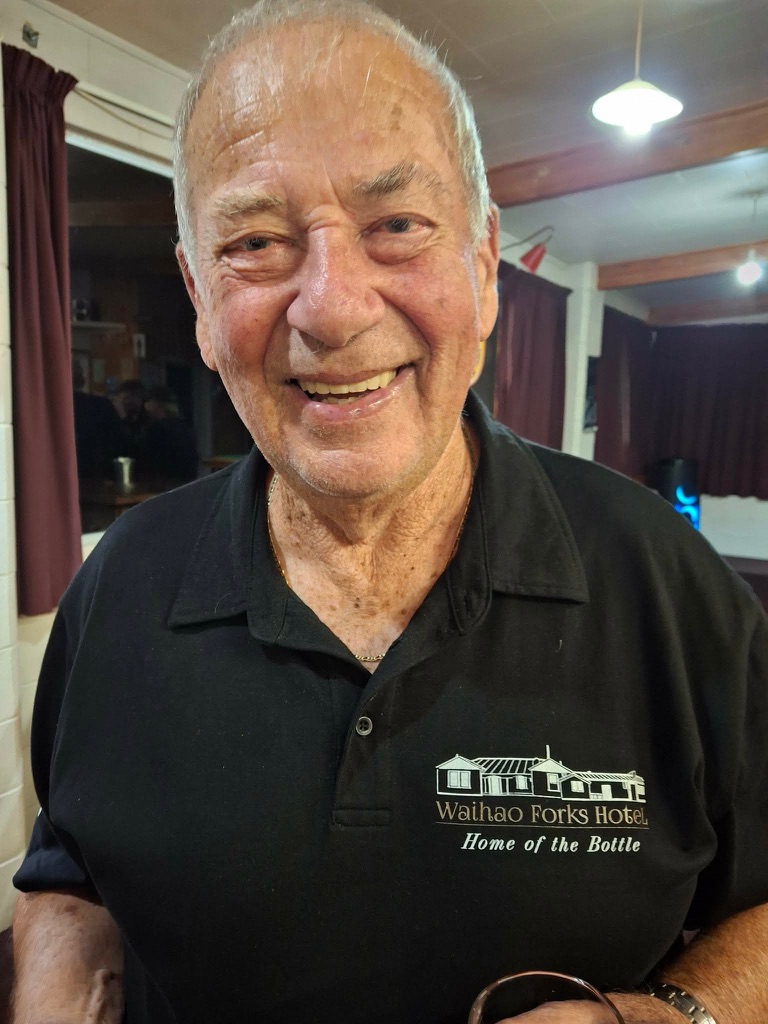
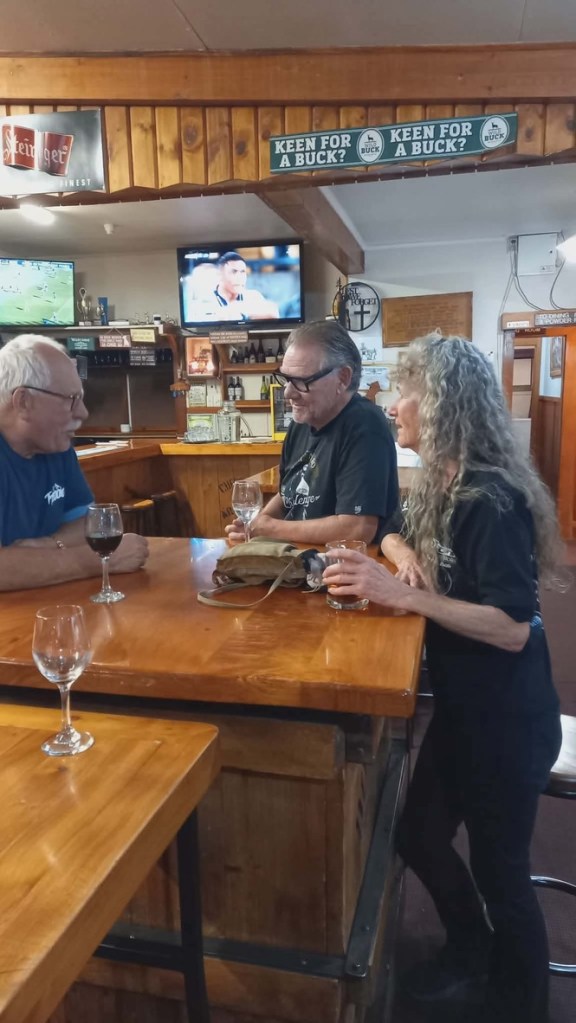
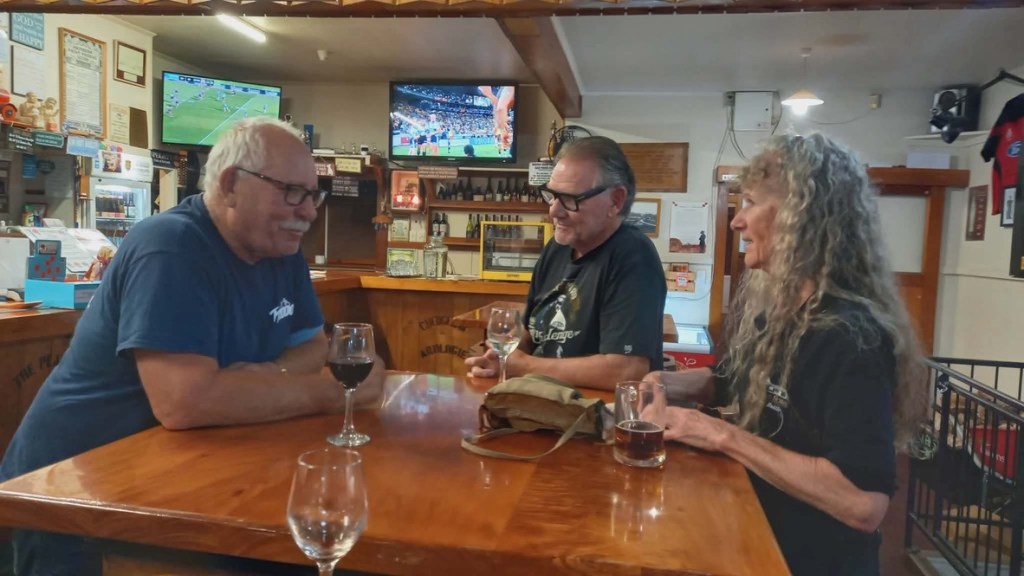
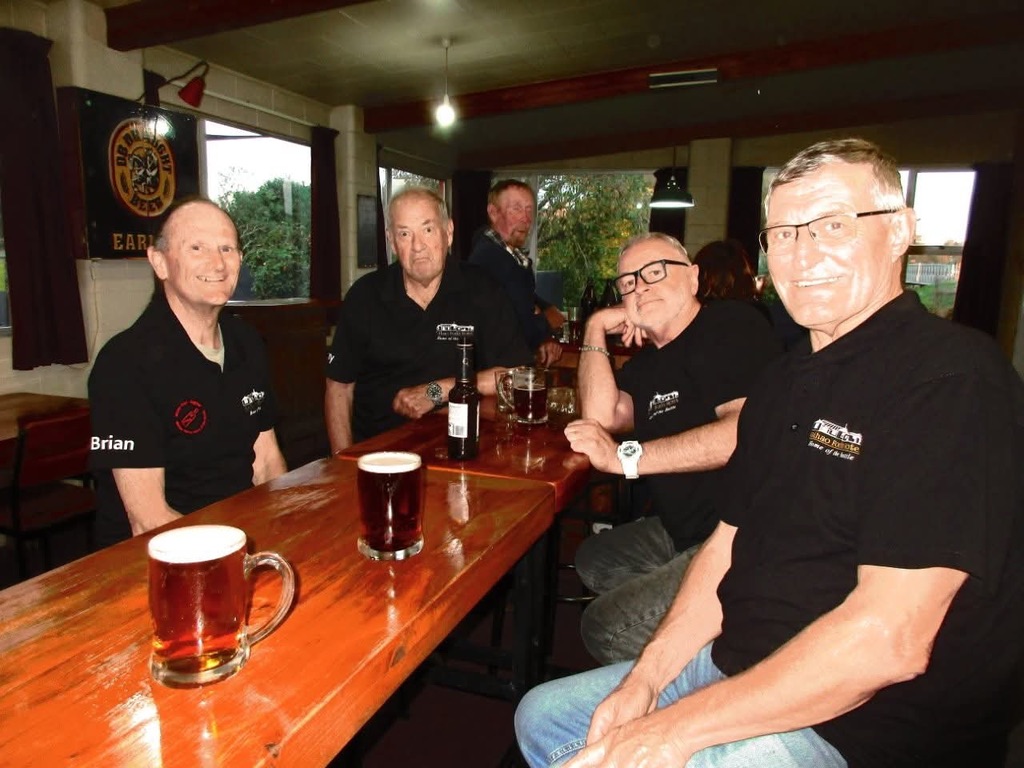
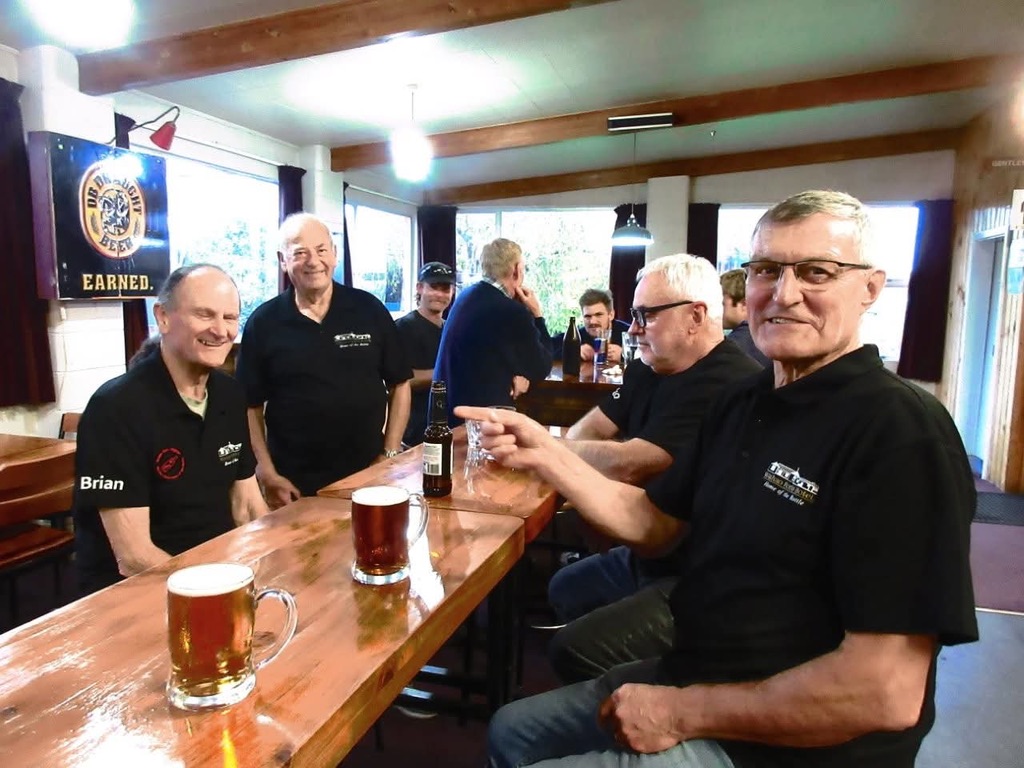
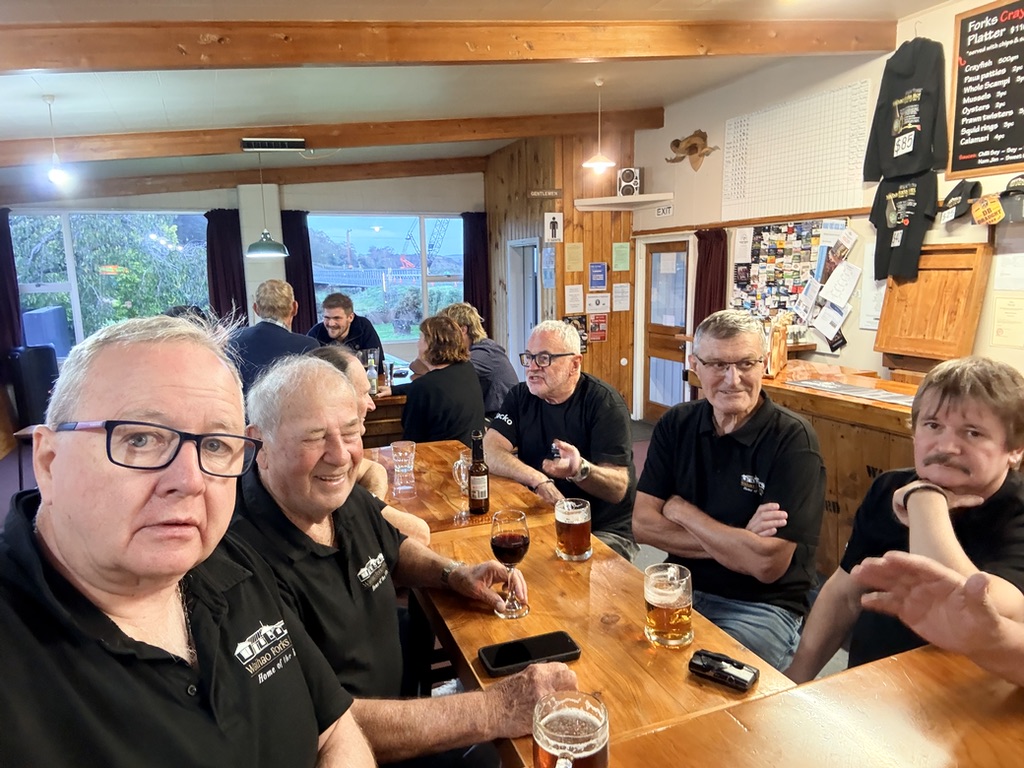
And then, tucked away where you almost feel like you’ve earned it, is the Waihao Forks Hotel.

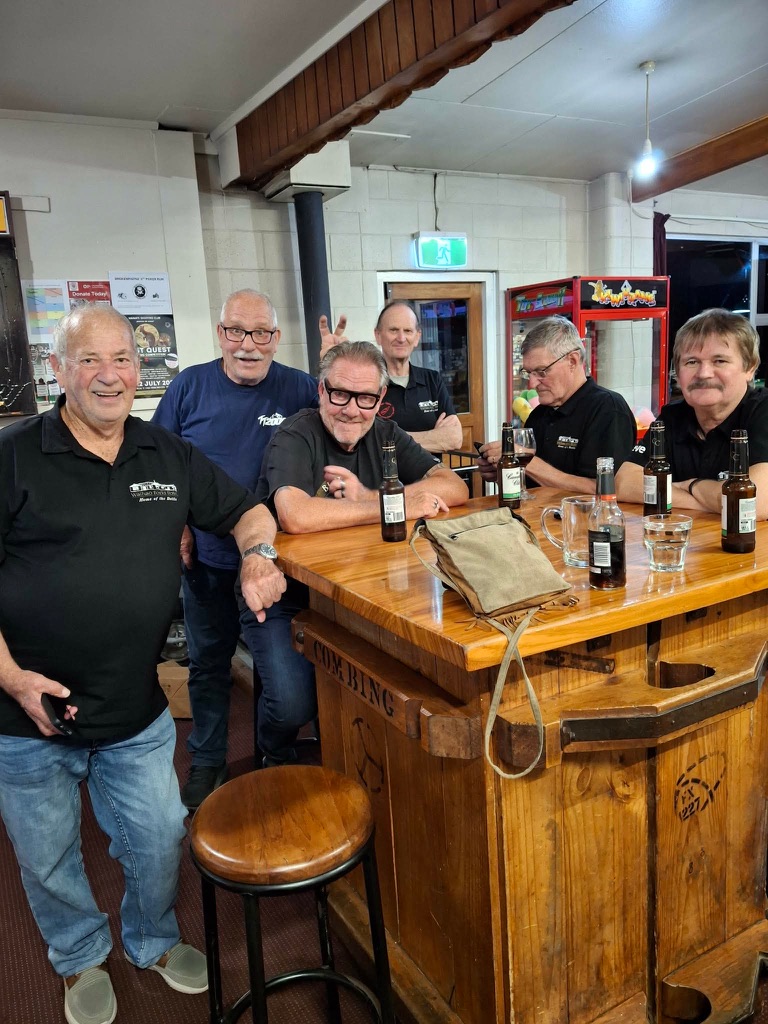
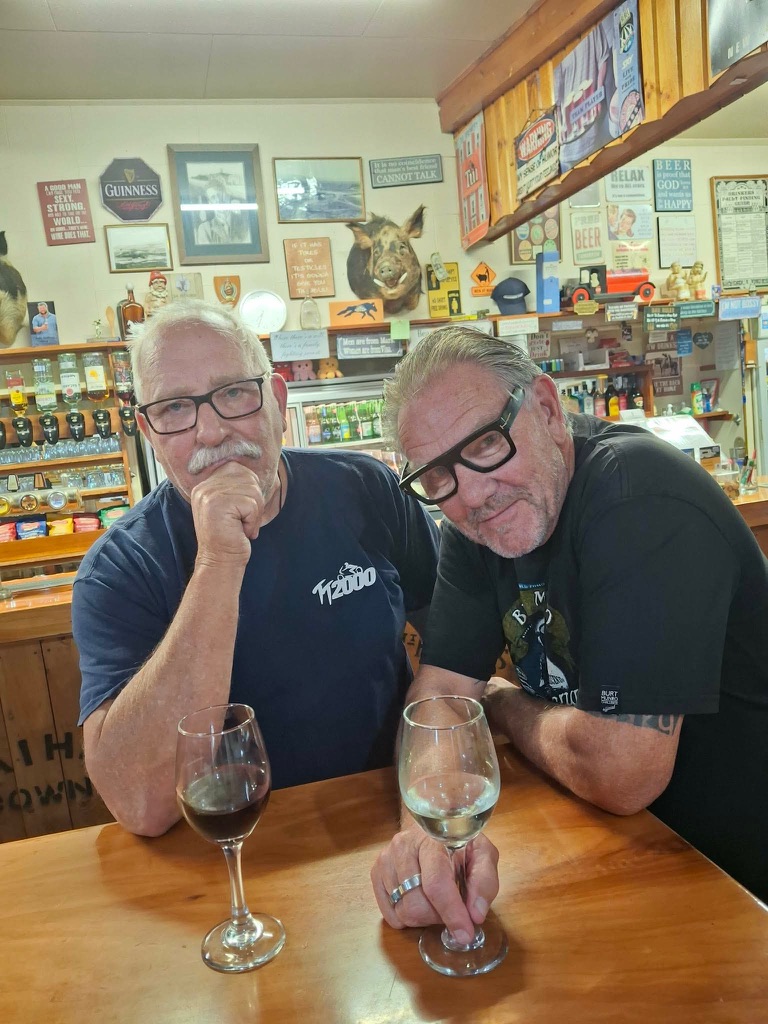
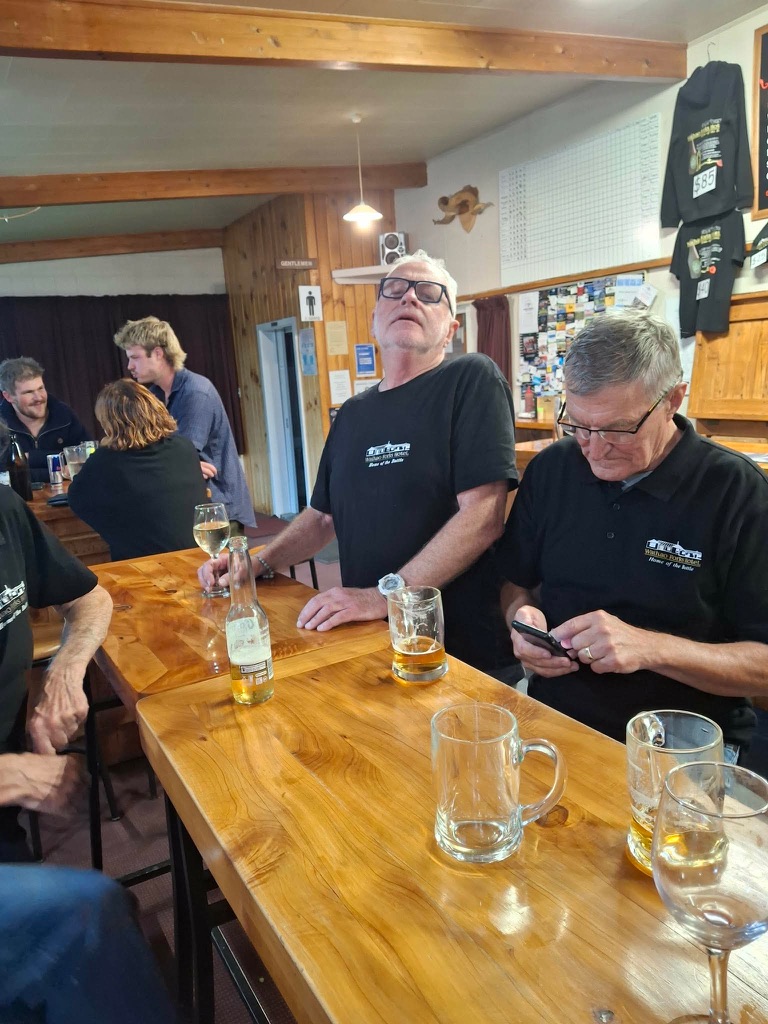
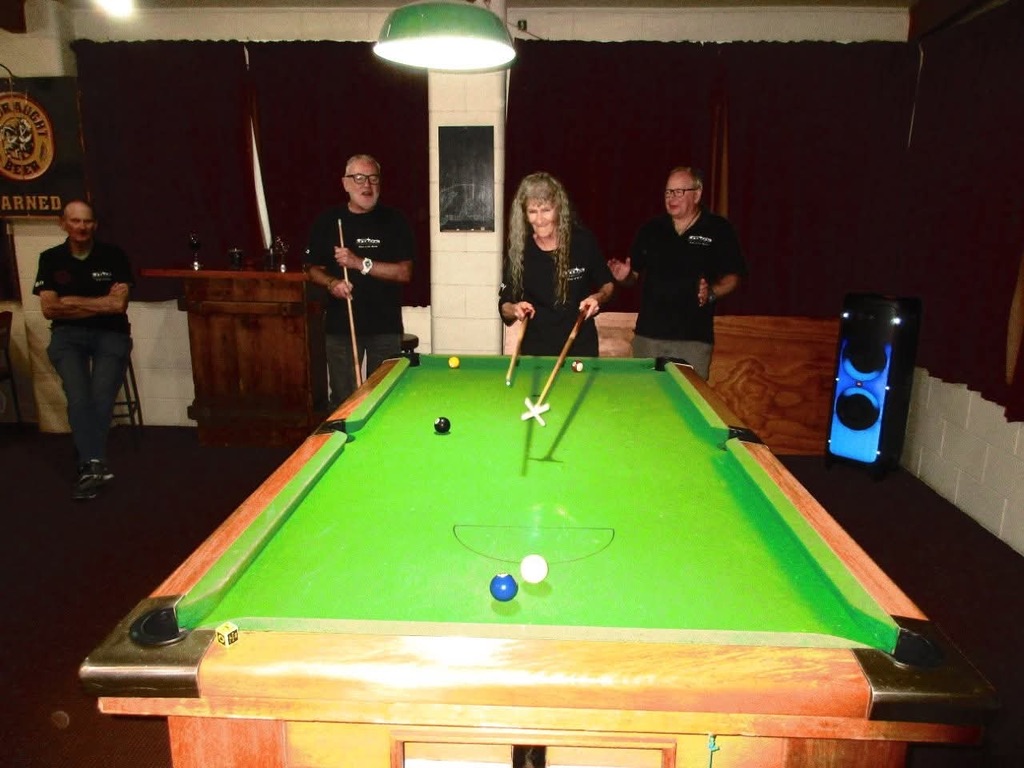
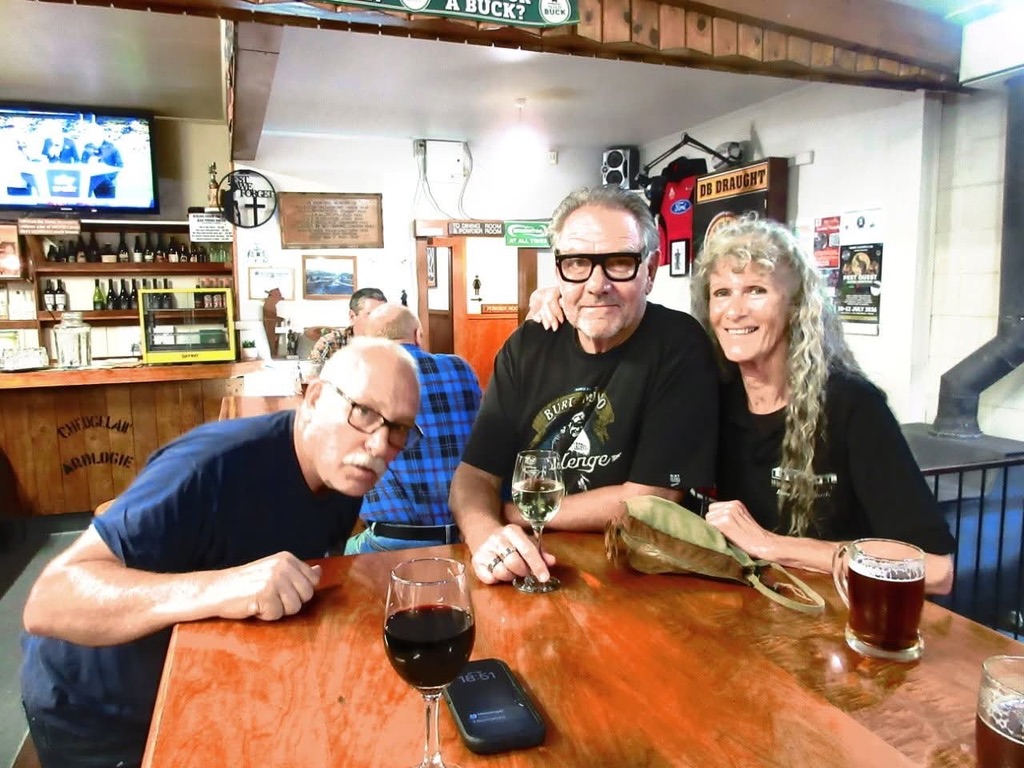
The kind you remember for a long time. The Waihao Forks Hotel isn’t trying to be anything other than what it is—and that’s exactly why it works. The hosts are warm and welcoming people. It’s not flashy. A proper country pub, sitting quietly at the end of a great day’s ride. The kind of place where the gravel crunches under your tyres as you roll in, and you know straight away you’ve made the right call.

Helmet off. Jacket unzipped. A cold drink in hand.

You look back on the road you’ve just ridden—the plains, the backroads, the high country, the dam—and it all adds up to something more than just kilometres.

Not every ride needs to be epic. But now and then, everything lines up—the weather, the road, the stops along the way—and you get one of those days.

Cold drinks, hearty food, a bit of local chatter, and that unmistakable feeling that you’ve properly arrived somewhere. It’s the kind of place that rewards the effort it takes to get there, especially on two wheels. Brians Overnighter has been coming here for 20 years. For good reason.

This days ride has a bit of everything:

  • History (and a touch of Kiwi ingenuity)
  • Wide-open riding through classic South Island landscapes
  • Proper small-town stops that feel authentic
  • And a destination that’s worth the miles

It’s not just about getting from A to B—it’s about the stops in between, the conversations, and those fleeting moments on the road where everything just clicks. If you’re looking for a ride that balances scenery, character, and just the right amount of distance, this one’s hard to beat.

And like all good rides… it’s even better the second time around.

524 Kms of rather lovely riding.