Day Three: Exploring West Coast Adventure: Haast to Hokitika

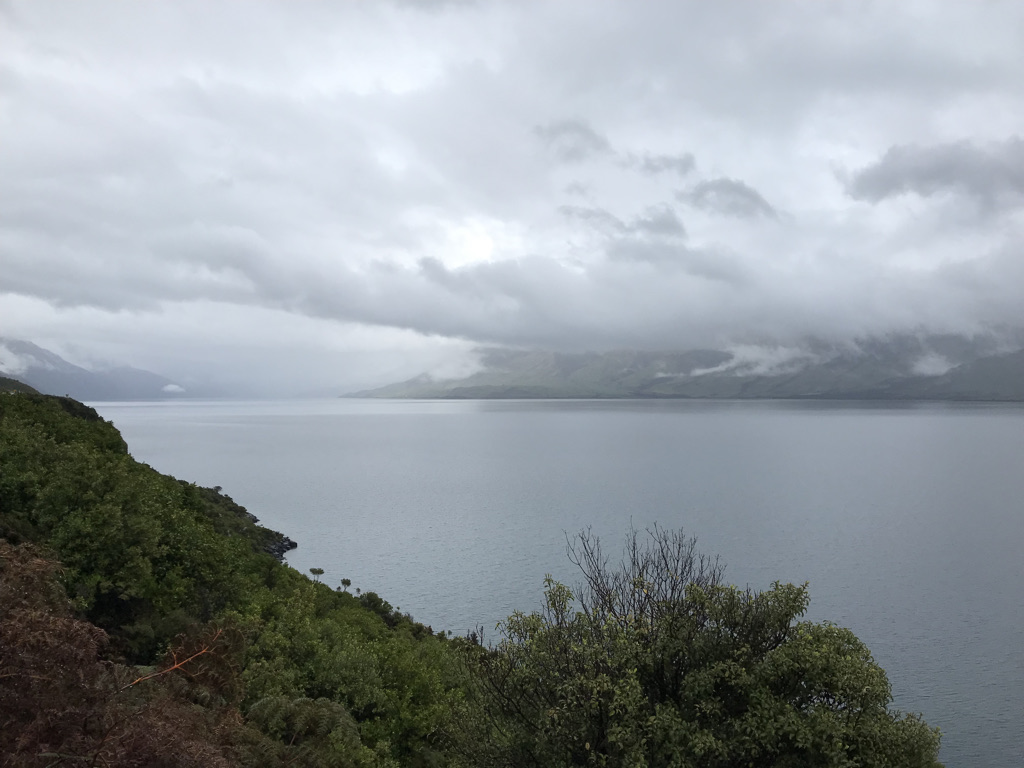
A low ceiling of cloud hung over Haast that morning, the kind that flattens the light and mutes the edges of everything. It wasn’t raining—not yet—but the air carried that quiet warning that it wouldn’t stay dry for long. The road north toward Hokitika waited in that in-between state, damp from the night, darkened under the trees, and already hinting at what the day might turn into. It felt less like setting off and more like slipping into whatever the West Coast had decided to offer.
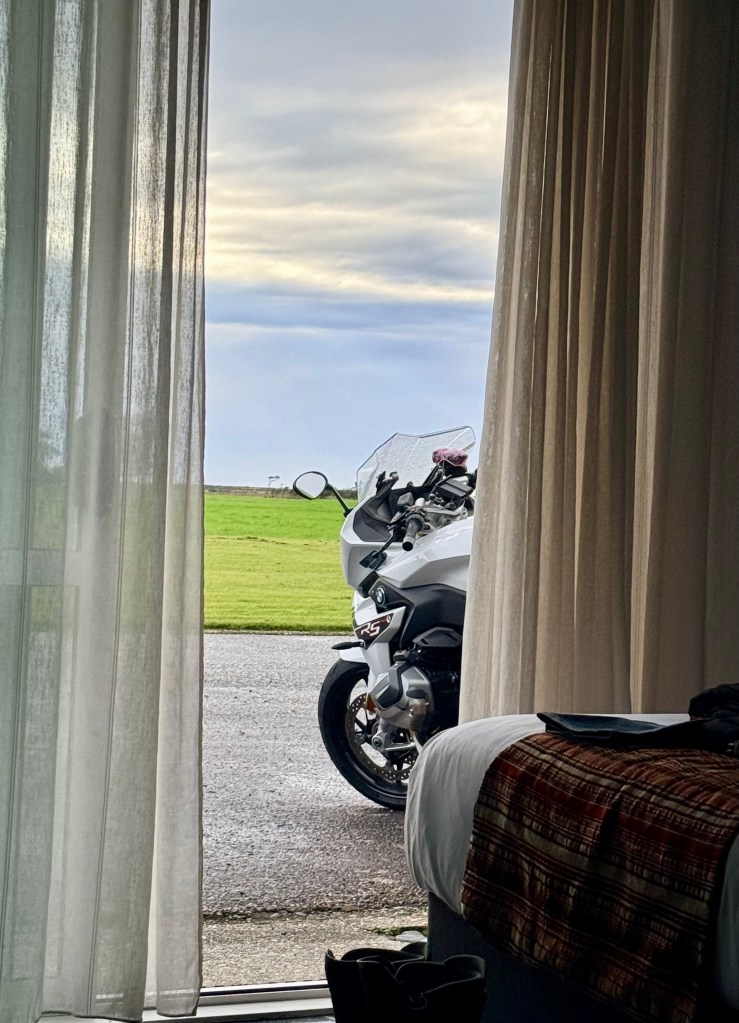
The morning didn’t so much arrive as quietly settle in. Looking out through the window, everything felt softened—edges blurred by low cloud, colours muted into shades of grey and green. There was a stillness to it, the kind that holds for just a moment before the day begins to move. It wasn’t a dramatic start, but it carried a quiet weight… the sort of morning that makes you wonder what the road is going to throw at you.

We greeted each other as we packed up our bikes and there was an air of quiet about the group.

This was a special day. One we had waited for. We were going to the final resting place of a very dear old friend who recently left us. Bob Tanner was a man who had woven himself in some way into all of our lives, and we were going to say hello.

We decided to delay breakfast until we got to the township of Franz Josef. After a cup of tea, we set off north. It was a brief start, for I was leading, had taken the group not 100 metres up the road, and thought I had left my wallet behind. Leaving my bewildered colleagues at the roadside, I returned to the hotel to retrieve my wallet, only to see it peeping out from under the lid of my tank bag. Feeling a little sheepish, I returned to the group, and we finally set off north.

Leaving Haast, the road north on State Highway 6 eases you in gently. The first stretch is deceptively calm—long straights, a few easy bends, the kind of riding where you settle into the day without much thought. The surface is good, the pace relaxed, and for a brief window it feels like the weather might just hold.

It doesn’t.

About twenty minutes in, the rain settled in properly—seeping into gloves, dulling the throttle response, turning every movement into something that needed to be deliberate. Not a passing shower, but that steady, committed West Coast rain that doesn’t come and go—it just is. The kind that builds on your visor until you’re wiping it more out of habit than effectiveness, the kind that turns the road from matte to mirror.

From a motorcyclist’s perspective, everything shifts.

The throttle hand softens. Braking stretches out earlier. Lines through corners become smoother, more deliberate. The road itself hasn’t changed—but the way you ride it absolutely has.

The bush thickens as you head north, pressing closer to the road. Water starts to appear everywhere—running off banks, dripping from overhanging branches, gathering in dark streaks across the tarmac. The surface, shaded and damp, keeps you honest. There’s grip there, but it’s quieter now, less forgiving of anything abrupt.

Corners that would normally be effortless take on a different character. Not difficult—just requiring respect. You read them a little earlier, tip in a little gentler, roll on the throttle with more care. It becomes less about flow and more about feel.

And then there’s the sensory side of it.

The smell of the bush intensifies with the rain—wet leaves, damp earth, that deep, almost sweet scent that seems to rise up from the forest itself. It cuts through everything, even at speed. The sound changes too—the steady hiss of tyres on wet seal, the soft drumming of rain on helmet and jacket, the engine note slightly muffled in the thick air.

Visibility narrows, not just from the rain on the visor but from the way the light flattens under the cloud. Greens deepen, shadows blur, and the road becomes a ribbon of dark grey threading through it all.
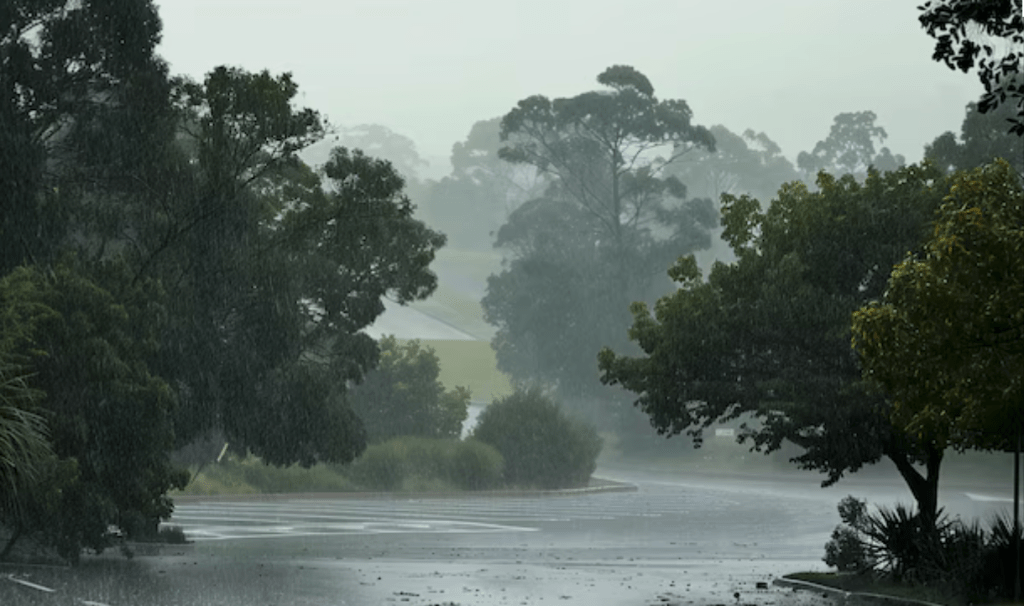
By the time you roll into the Lake Paringa Reserve, you’re properly in it. Not fighting it—just riding within it. Gear dampened, focus sharpened, and that quiet awareness that comes when the conditions demand your full attention.

It’s not the kind of riding that’s fast or effortless.

But it is the kind you remember. A hastily snapped photo does not do the place justice. Dotted about are soggy tents with soggier clothes hung on a line in a forlorn attempt to dry them. A toilet block with a verandah affords some shelter under which damp motorcyclists don wet-weather gear in an attempt to keep the water on the outside. No time to lose, we press on.

Pulling out from the Lake Paringa Reserve, zipped up and committed, there’s a quiet acceptance that this is how the ride is going to be now. The rain hasn’t eased—it’s settled in—and the road north on State Highway 6 feels different the moment you roll back onto it.

This stretch tightens up.

The bush presses closer, thicker and more enclosed, the canopy leaning over in places as if trying to reclaim the road. The corners come more frequently now—still flowing, but shorter, more connected. You’re no longer cruising between bends; you’re linking them together, one after another, with barely a pause.

On a dry day it would be a beautifully rhythmic piece of road. In the rain, it becomes something more focused.

The surface carries that constant sheen, broken by darker patches where water is collecting or tracking across the lane. You start to read those changes instinctively—avoiding the painted lines, staying smooth over anything that looks like it might be hiding a bit less grip. Every input matters a little more now. Evidence of land slips abounds. Is there one around the next bend?

Throttle gentle. Brakes progressive. Body relaxed but alert.

The rain intensifies the environment in a way that’s hard to describe unless you’ve ridden through it. The smell of the bush is stronger here—lush, almost overwhelming. Moss and lichens cling to everything: tree trunks, rock faces, even the roadside barriers, all saturated and alive. Water runs constantly—down banks, off leaves, across the road in thin, shifting streams that you cross without thinking, but never quite ignore. Non native possums litter the road, where vain attempts to cross were doomed to fail, and they are now food for the local raptors.

There’s a steady rhythm to it all:
Corner. Straight. Water crossing. Corner again.

Visibility ebbs and flows. One moment you’ve got a clear view through a bend, the next it tightens as the bush crowds in and the light dims under the canopy. You ride a little further back from the limit, giving yourself space—not out of hesitation, but out of respect for what the conditions are asking.

And yet, there’s something deeply satisfying about this section.

You’re fully engaged now. No distractions. No autopilot. Just you, the bike, and a narrow ribbon of wet tarmac threading through dense West Coast bush.
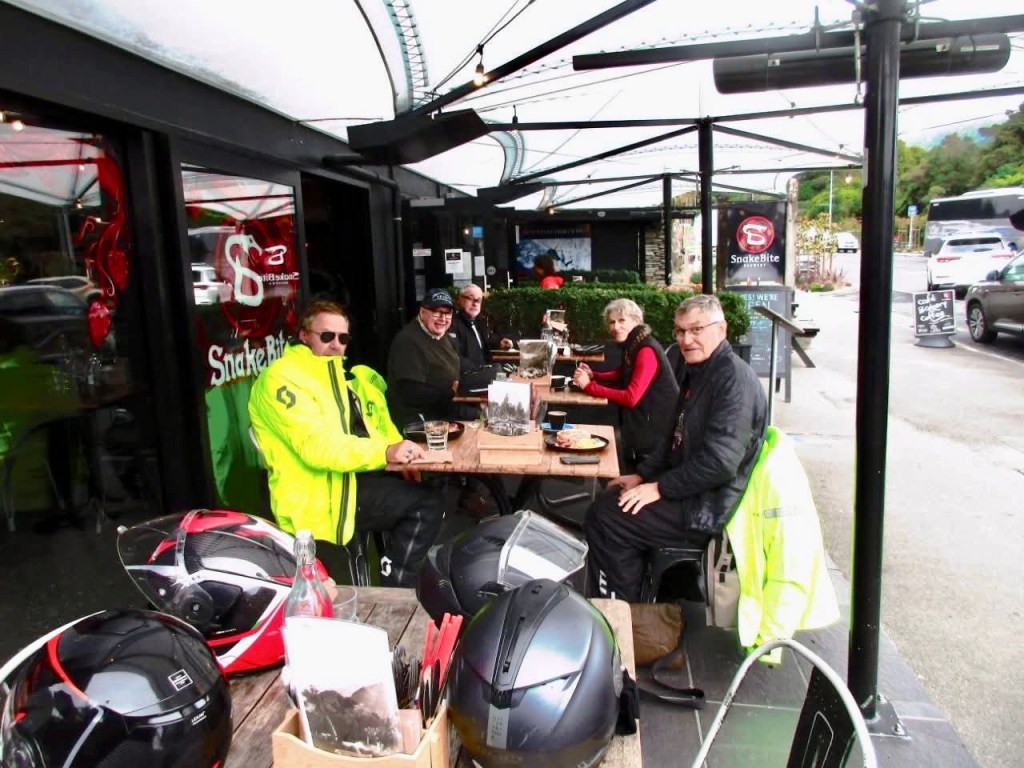
After a series of twisting and descending bends, we stopped in Franz Josef township for breakfast and topped up the bikes’ tanks. We needed this. The rain had started to ease, but it was time for a break.

We continued.

In short order, Hari Hari appears. The landscape has flattened and opened out. Then a small turn-off leads to the Guy Menzies Landing Site—easy to miss, but worth the pause. Another aviation story off the beaten track that’s worth a detour. A replica of his plane sits in a purpose-built building on the southern edge of Harihari township.
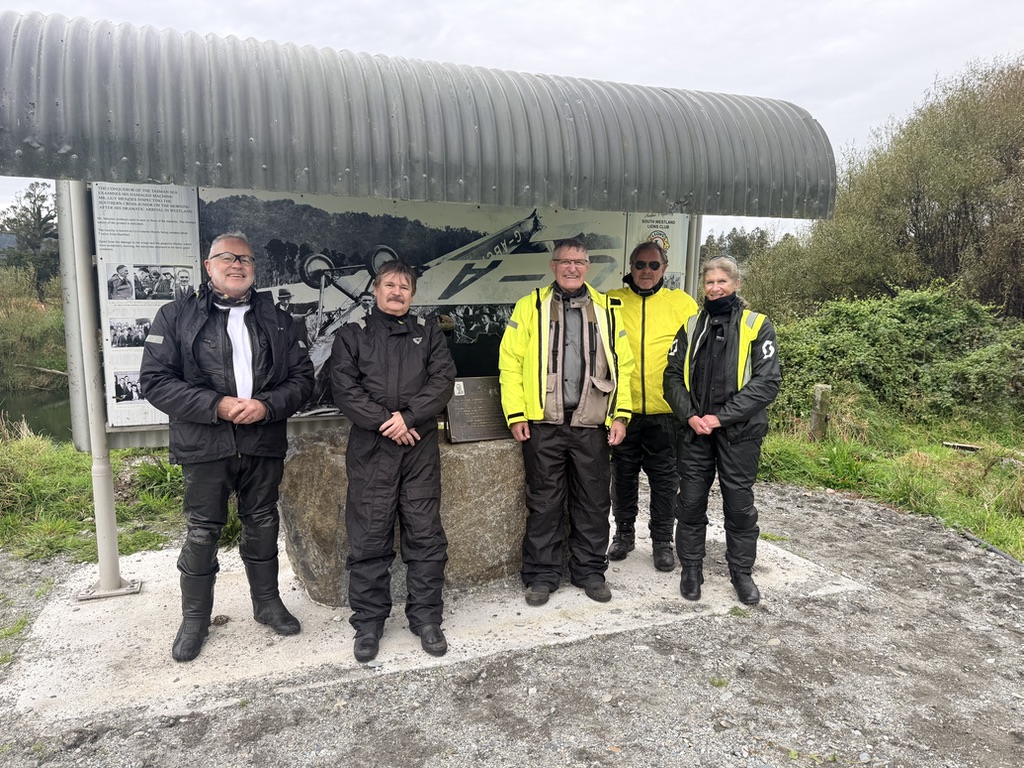
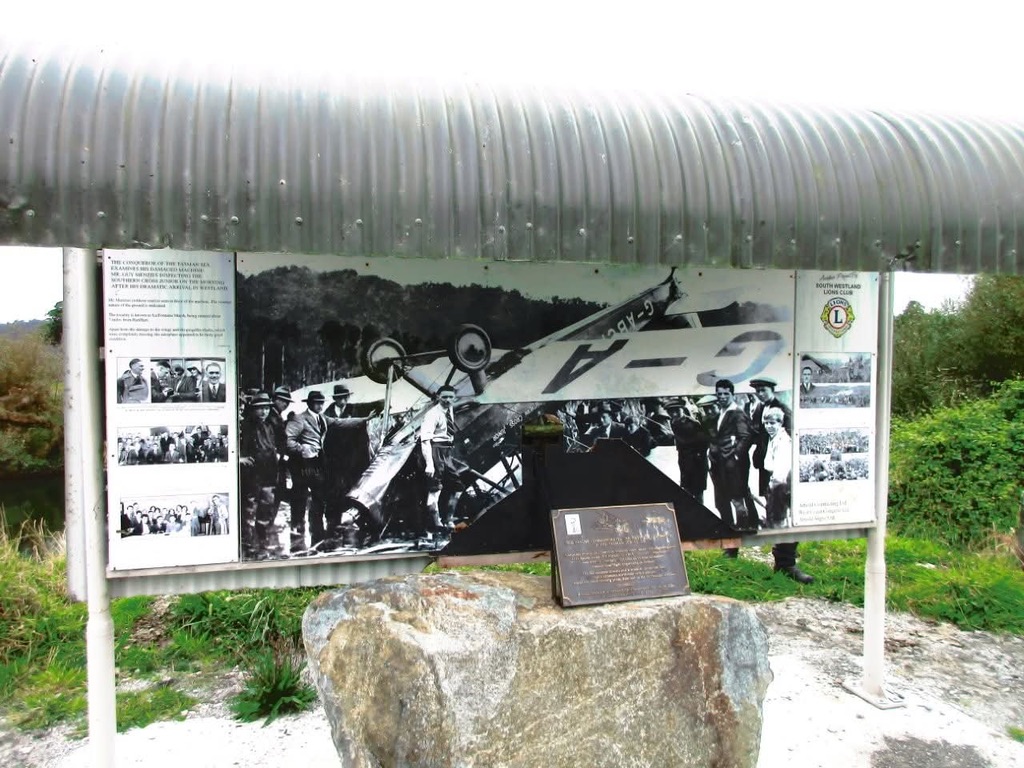
Leaving Harihari, the road north on State Highway 6 feels almost calm—but only just. The sky hangs low and heavy again, darker now, the kind of grey that doesn’t leave much doubt about what’s coming.

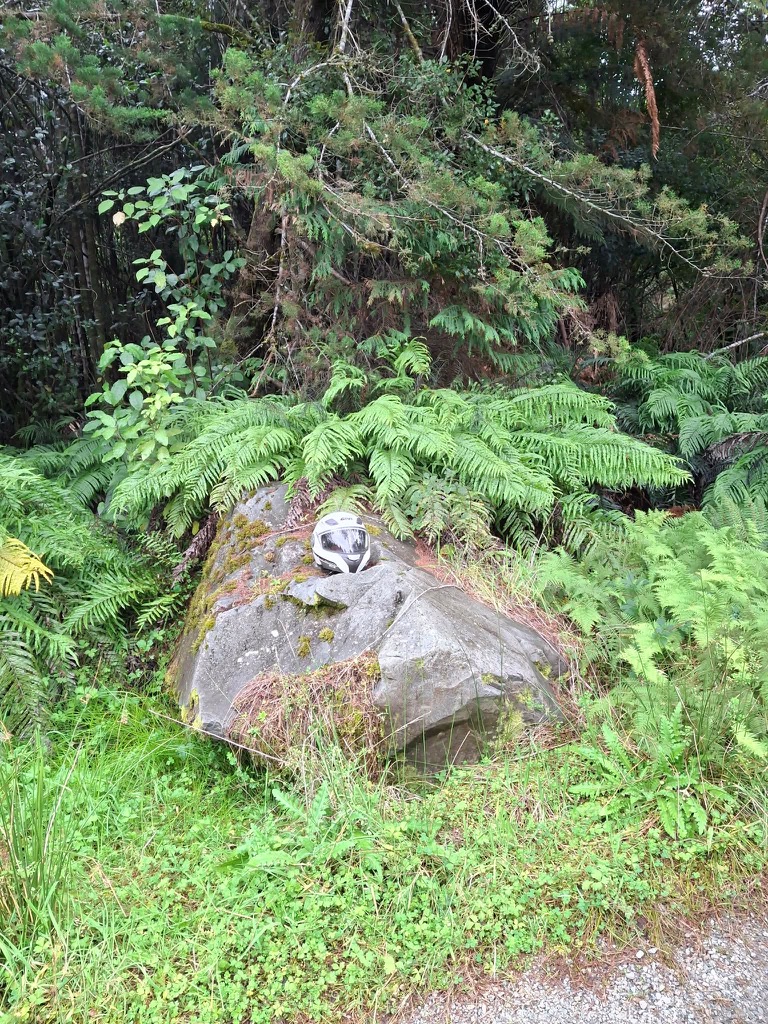
By the time Bob’s resting place begins to emerge, almost quietly from the greenery, it feels like you’ve been riding with the environment rather than through it. Slower, yes—but sharper, more connected, and completely absorbed in the moment. We turn off onto a gravel track and progress at a slow and steady pace until, in a hushed silence, we find his spot. A large rock marks it.
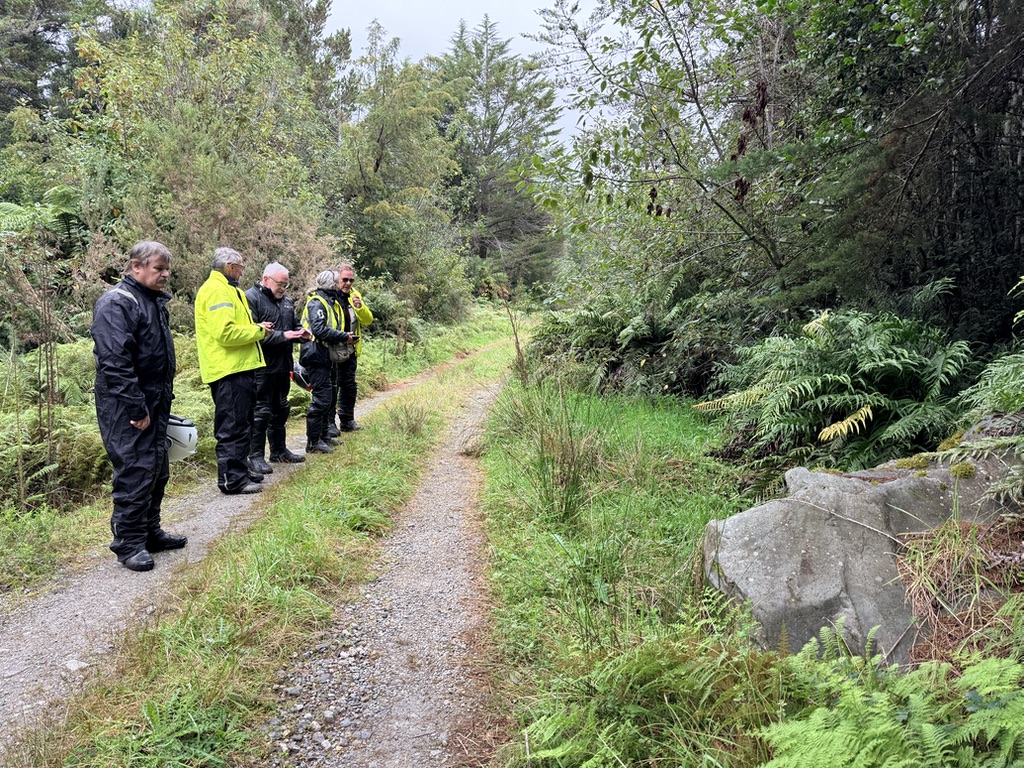
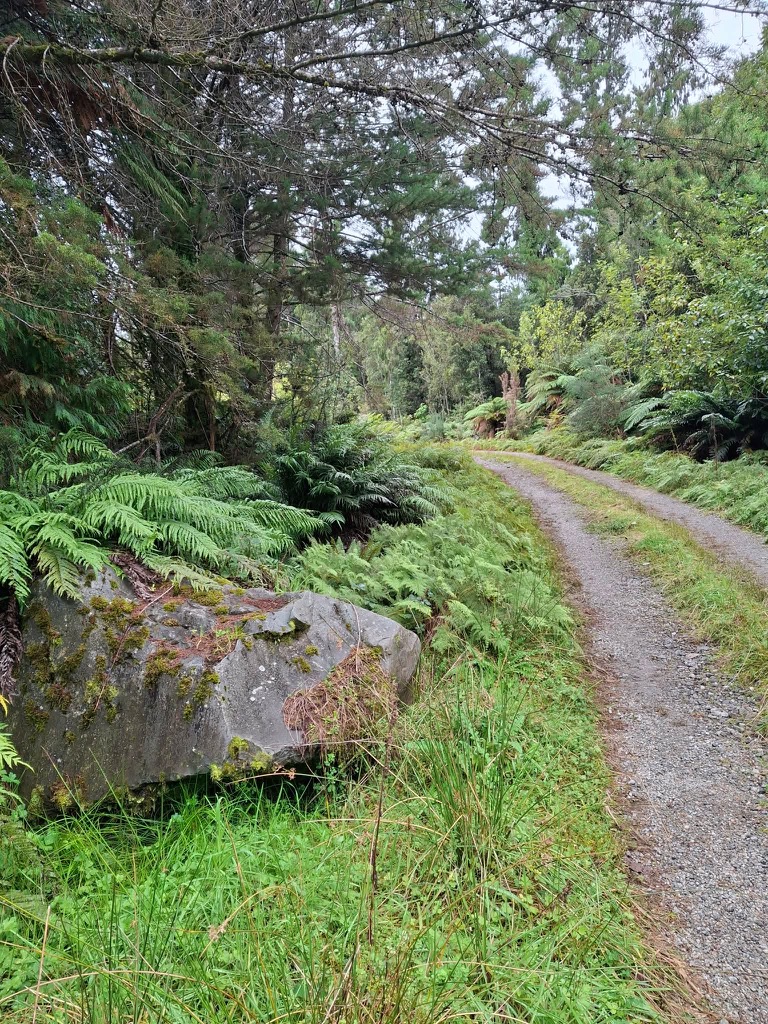
We stood without speaking, a loose line of riders gathered quietly in front of Bob Tanner’s final resting place. The engines had long since gone cold, and without them the silence felt heavier—more deliberate. Above us, a tall conifer stretched its branches wide, its dark canopy catching the light rain before letting it fall in slow, steady drops.

No one seemed in a hurry. Helmets stayed off, gloves tucked away, hands resting loosely at our sides. The rain softened everything—the sound, the light, even the edges of the moment itself. It tapped gently on jackets and dampened the gravel underfoot, the only movement in an otherwise still scene.

There’s a kind of understanding that doesn’t need words in moments like this. Just a shared respect, a quiet acknowledgement of someone who had ridden before us, who had known these same roads, felt the same pull to keep moving.

We stood there for a while, each in our own thoughts, the rain falling steadily through the branches above—until, almost without needing to say it, we knew it was time to ride on. A native fantail bird follows us away.
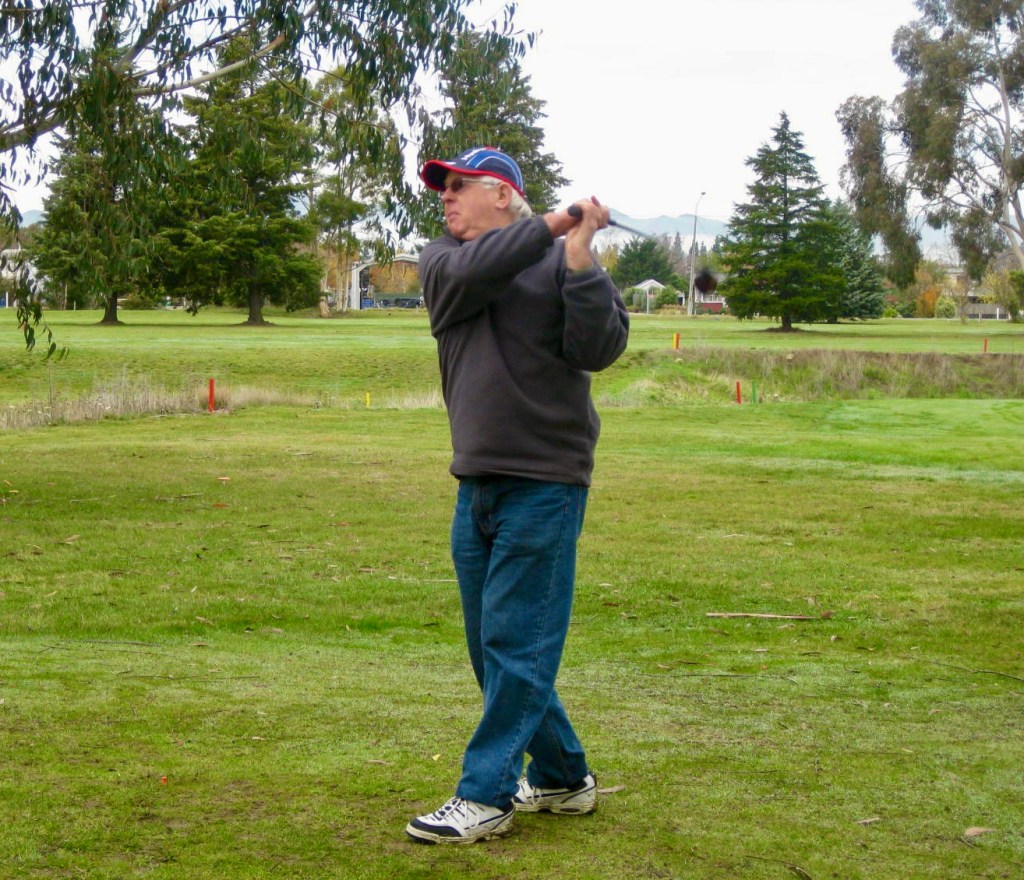
Bob Tanner
Bob Tanner in full swing. The great days of golfing. Well trying to hit a ball if truth be told.

Leaving Bob behind us, the road north on State Highway 6 felt almost too easy—wide, open, and forgiving in a way that let you settle back into the seat. But the sky told a different story.

It was building.

Out ahead, the horizon thickened into a solid wall of grey. The light flattened, draining the colour from the landscape, and the air took on that damp, metallic edge that comes just before the rain arrives for real. You could feel it more than see it at first—a change in the air, a quiet tightening of focus.

The road itself stayed kind. Long, sweeping bends linked together with easy straights, the kind of stretch where, in better weather, you’d let the bike run and simply enjoy the flow. But this wasn’t that kind of moment.

You ride differently when you know what’s coming.

The throttle hand softens. Braking starts earlier. Your eyes push further down the road, reading not just the corners, but the sky, the surface, the subtle darkening patches where the first moisture is starting to settle. It’s not caution—it’s anticipation.

A drop hits the visor. Then another.

Not enough to change anything yet, but enough to confirm it.

The wind shifts slightly, carrying that unmistakable scent of rain moving in from the coast. The road darkens in patches now, the seal losing its dry edge, and the tyres begin to whisper instead of hum.

You don’t rush it.

Instead, you settle into that space just before the weather takes over—fully aware, completely present, riding within a margin you don’t need to think about. The kind of riding that isn’t about speed or distance, but about reading the moment and responding to it.

And then, just as Hokitika comes into view, the sky finally gives in.

The rain arrives with intent—heavy drops that hit hard and fast, turning the road dark in seconds. It’s almost perfectly timed. No fight, no long grind through it. Just enough to remind you who’s really in charge out here.

Rolling into town as it sets in feels like slipping through a closing door—one last stretch of road, then shelter, warmth, and the quiet satisfaction of having read the day just right.
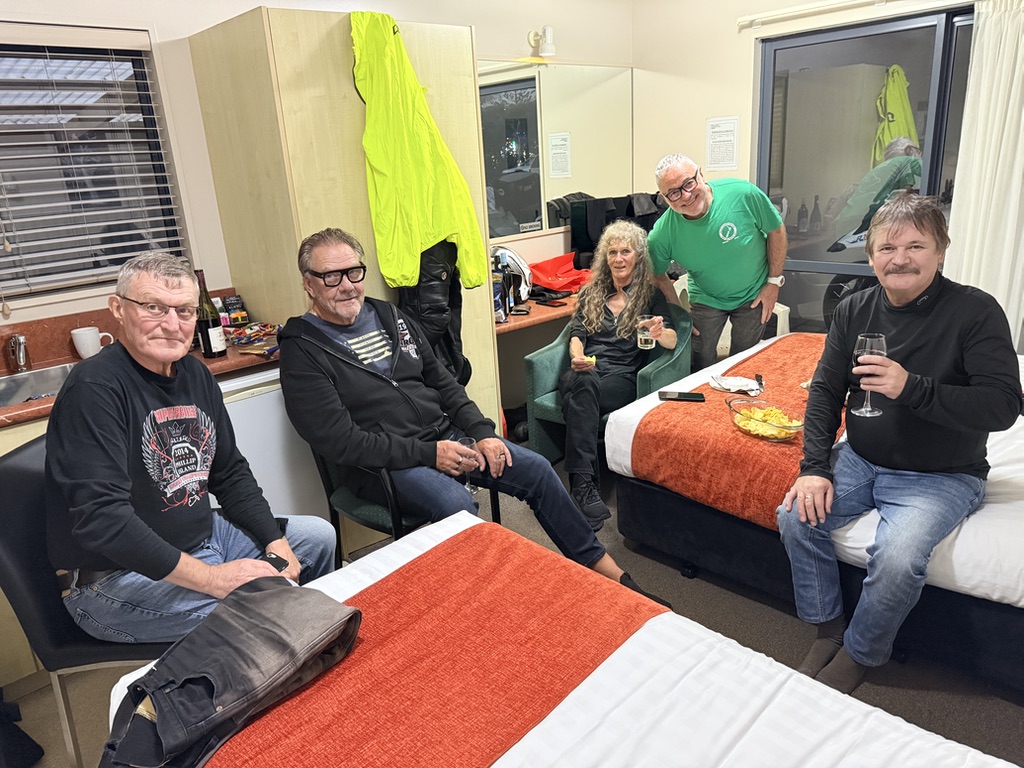
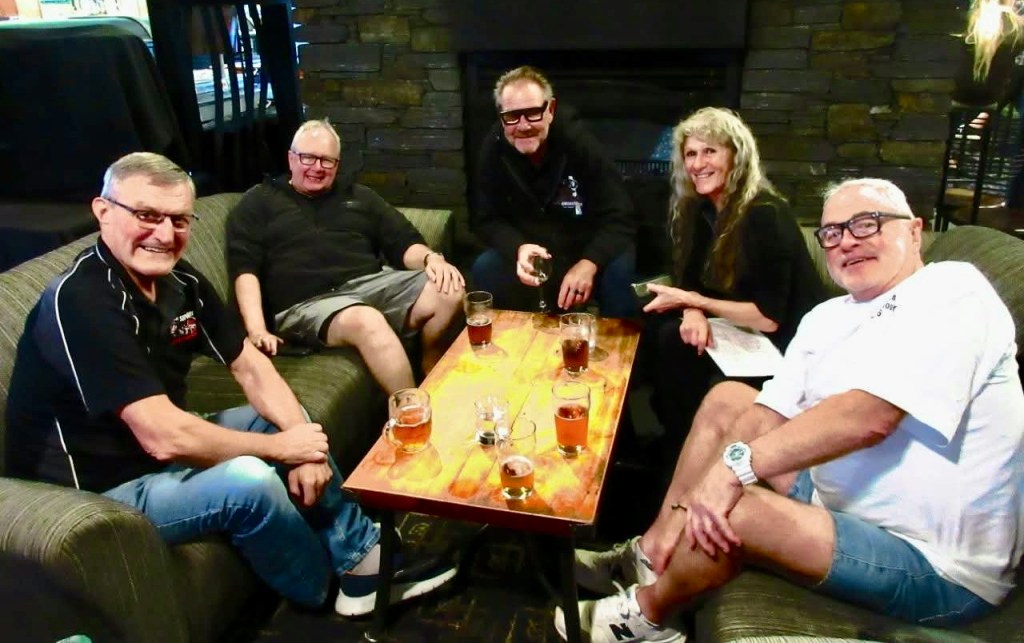
Back in the room at the Bella Vista Motel, Hokitika, wet gear hung where it could drip, and boots edged closer to the heater. It didn’t take long before the stories started.

The Richard Pearse Memorial came up first—an unlikely beginning that somehow set the tone. Then Omarama—coffee, warmth, and that shared look that says this is why we ride. The sweep over the Lindis Pass got its due too—wide, open, and effortless in the best possible way.

From there, the mood shifted. The Blue Pools—still, clear, almost unreal—followed by the ride through the Haast, where the rain, the bush, and the road demanded a different kind of focus. A few laughs about timing the stop at Lake Paringa Reserve just right for the wet weather gear.

And then, more quietly, the moment that stayed with everyone—standing in the rain, under the trees, at Bob Tanner’s resting place. No need to say much.

Outside, the rain continued to fall over Hokitika. Inside, it was warmth, tired bodies, and the quiet satisfaction of a ride that stayed with you—not for the distance, but for how it made you ride, and how it made you feel while doing it. Tomorrow we shall go our own ways back to the East Coast and home.

It wasn’t the distance that stayed with us, but the way the road kept asking something different each day.
Dry or wet, open or enclosed—we didn’t just ride through it, we adapted to it.
And somewhere along the way, it stopped being about where we were going… and became about the simple act of riding itself—I hope you’ve enjoyed the ride as much as we did following along.
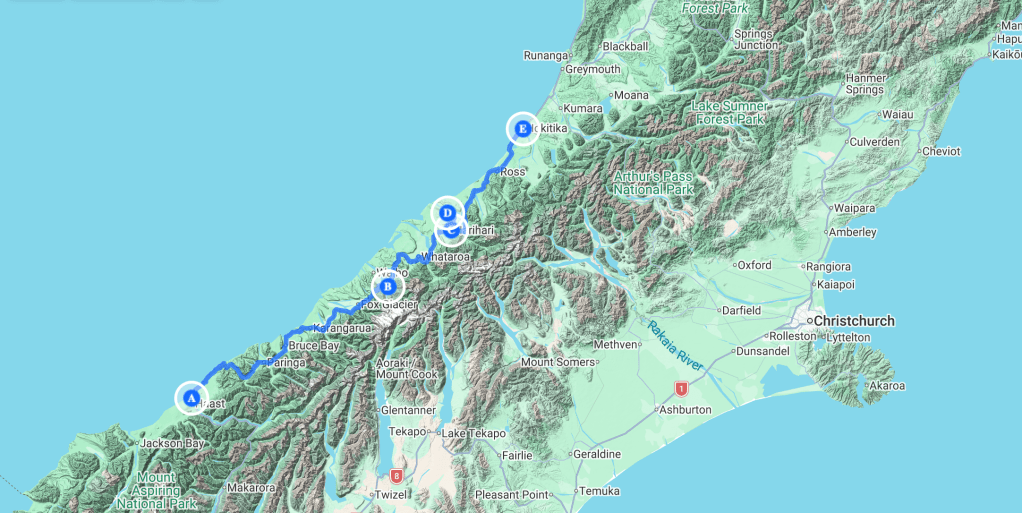
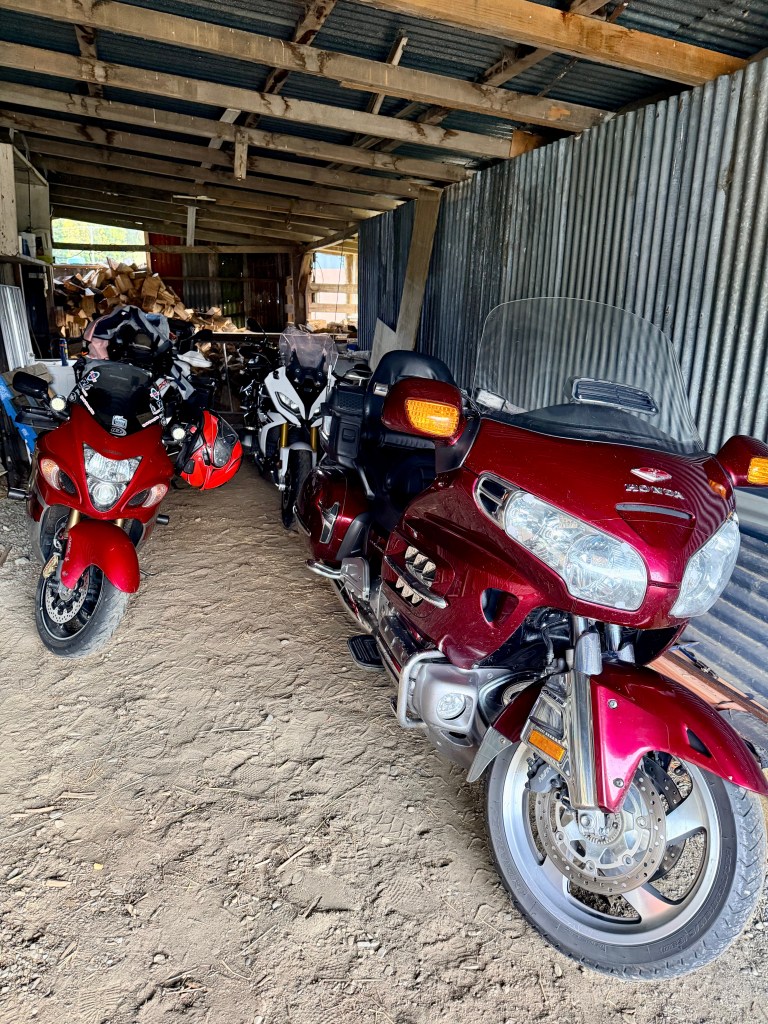
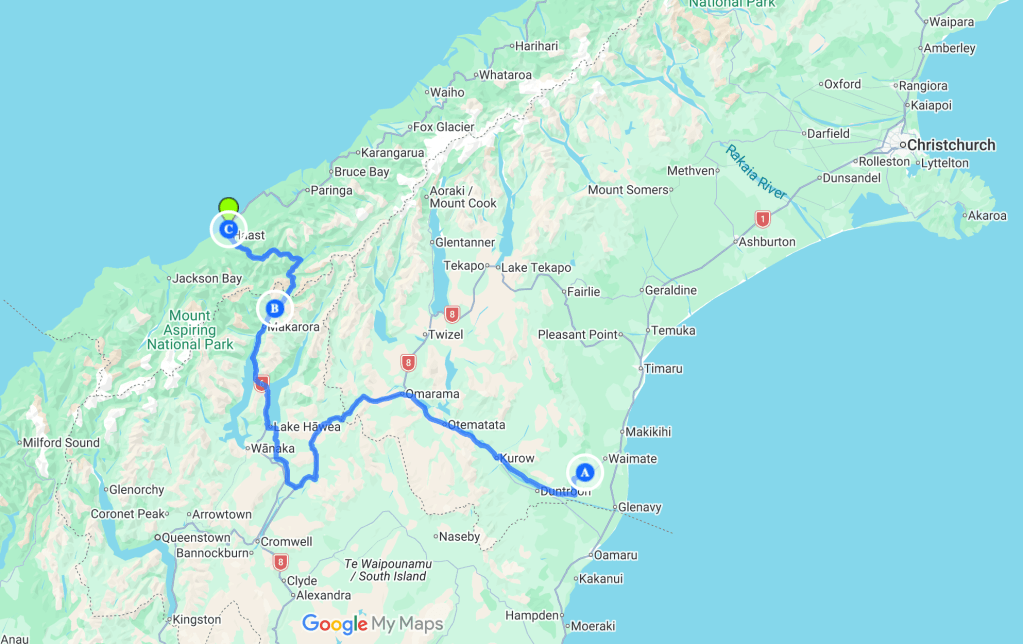
300 kms today in somewhat challenging weather for riding a motorcycle.

Day Two: From Lindis Pass to Haast: A Motorbike Adventure in New Zealand

A cold night had settled into everything—the bikes, the air, even the quiet around the buildings—and when dawn finally arrived, it did so gently. The light crept in soft and pale, the kind that makes you pause for a moment before gearing up, as if the day is offering a quiet promise rather than a bold statement. It felt like the start of something measured and unhurried… though, as it turned out, the road had other ideas waiting further west.

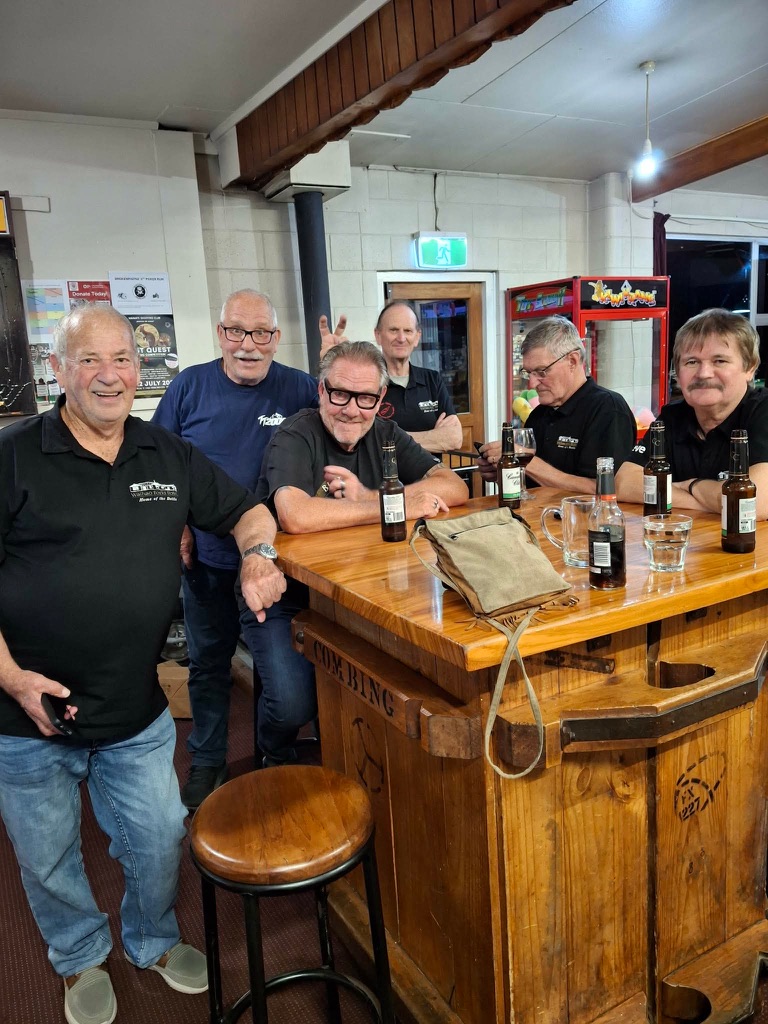
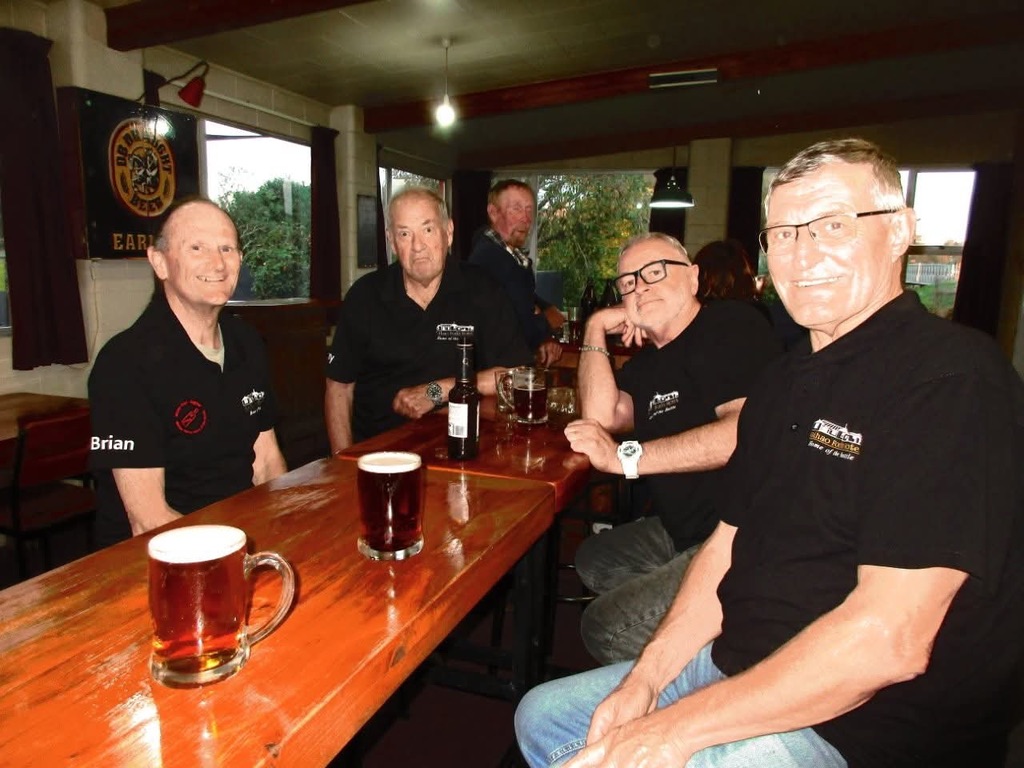
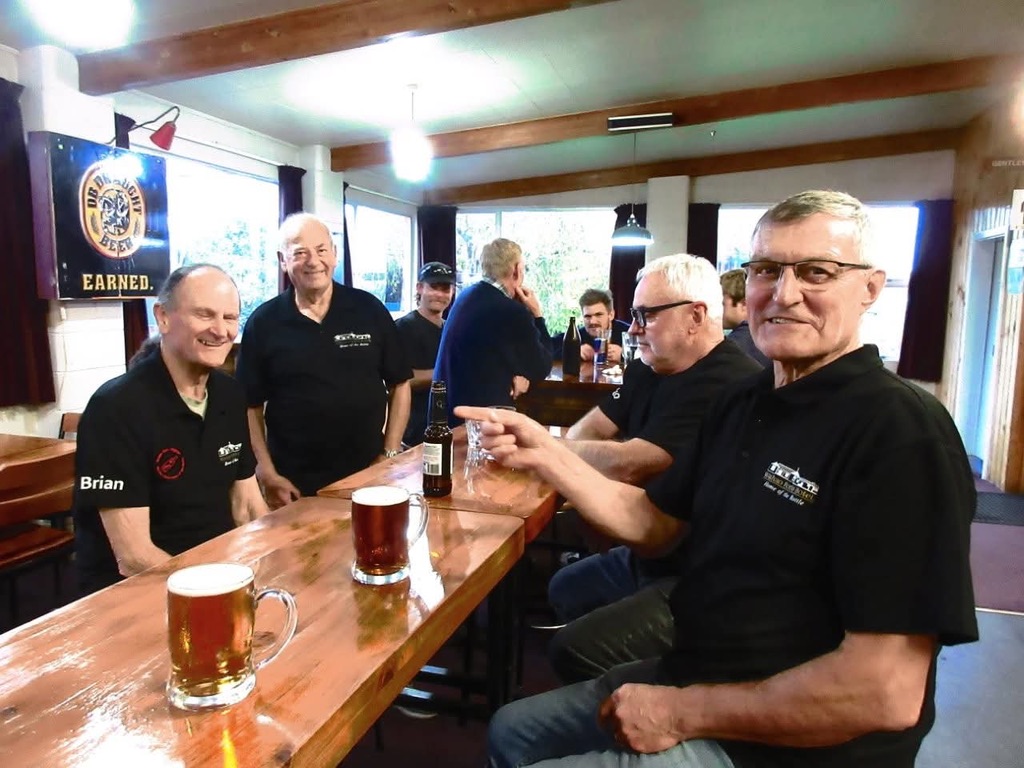
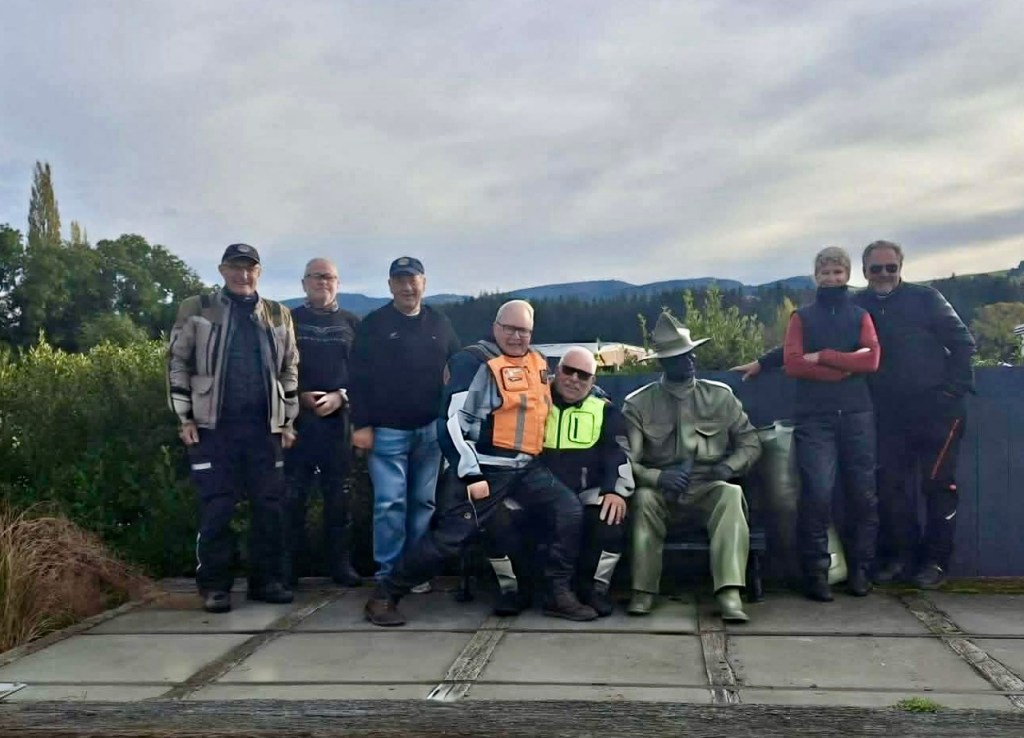
A quick check of the bikes tucked away in the shed showed all was well. Not all of our group had the time to continue our tour to the west. At breakfast, we caught up on the great night we had just enjoyed. We gathered for a final team photo and bid farewell to Terry, Brian and Chris as they prepared to head north for home.

Having bid our friends farewell, I led the two Steves, Chrissie, Stu, and Jacko out of the hotel car park and turned right onto Highway 82 towards Ikawai. The ride north-west back toward Omarama is one of those rare stretches where going back doesn’t feel like going backwards. The Mackenzie colours—those soft golds and dusty greens—seem to shift depending on the time of day, and this morning they were all cool tones and long shadows.

By the time we rolled into Omarama, the fingers were just starting to feel the chill. Fuel tanks were topped up.

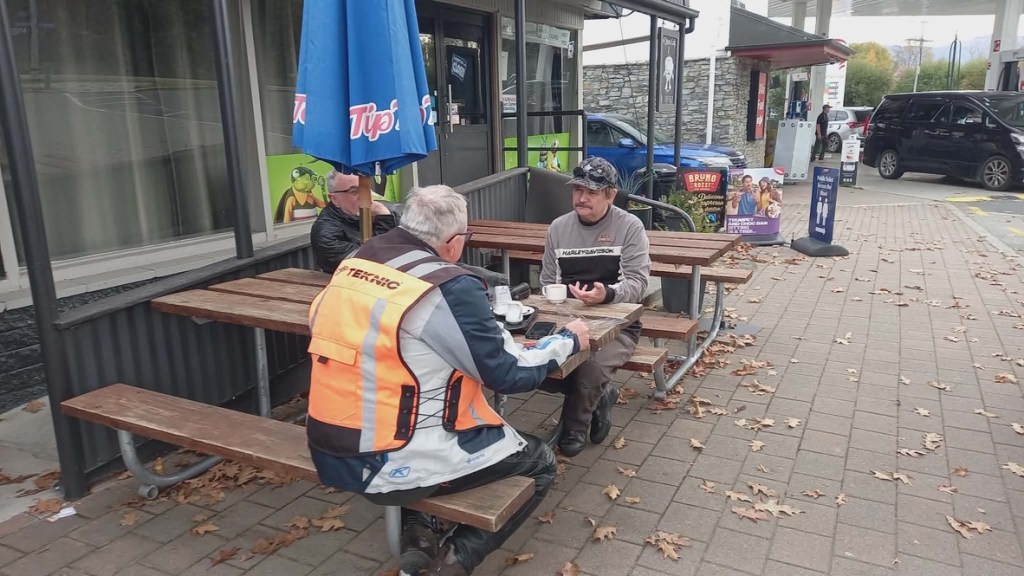
Coffee was non-negotiable.

Helmets off, hands wrapped around something hot, and the usual exchange of road notes: “Still good the second time?” “Maybe better.”

Climbing out of Omarama, the road doesn’t shout about what’s coming—it just starts to lean upward, almost casually at first. The bends lengthen, the horizon pulls back, and before you know it, you’re being drawn into the wide, rolling sweep of Lindis Pass.

This isn’t a tight, technical pass that demands constant correction. It’s something else entirely. The corners are broad and flowing, the kind you can read from a distance and settle into early. You find a rhythm quickly — roll on, tip in, ease out — again and again, like a quiet conversation between you and the road. Oh, and smile. This road makes you smile. A lot.

The landscape is stripped back to its bones. No trees to crowd the view, no clutter to distract. Just undulating hills covered in tawny grass, folding into one another under an enormous sky. In the cool morning light, everything carries a muted palette — golds, greys, and soft browns — that feels almost cinematic. It’s a place that looks simple at first glance, but the longer you ride through it, the more detail reveals itself.

As the altitude builds, the air sharpens. You notice it in the way the bike breathes a little easier, in the way the wind cuts just a bit cleaner through your gear. The road climbs steadily toward the summit, and then — almost without ceremony — you’re there.

No dramatic peak. No towering cliffs. Just a quiet high point and a sign that feels almost understated for a place that delivers so much. Every time I pass this way, I think of the wonderful poem by Kiwi poet James K. Baxter called High Country Weather.

Alone we are born
And die alone
Yet see the red-gold cirrus
over snow-mountain shine.

Upon the upland road
Ride easy, stranger
Surrender to the sky
Your heart of anger.

And then comes the descent.

Dropping toward Tarras, the road opens even wider. The corners stretch out, visibility improves, and the pace naturally lifts without ever feeling forced. The valley ahead begins to take shape, the light shifts, and the world starts to fill back in again.

It’s the kind of stretch that leaves you with that rare feeling of being completely in sync — bike, road, and landscape all working together. No effort, no noise. Just motion.

If there’s a perfect piece of road to lose yourself in for a while, this might just be it.

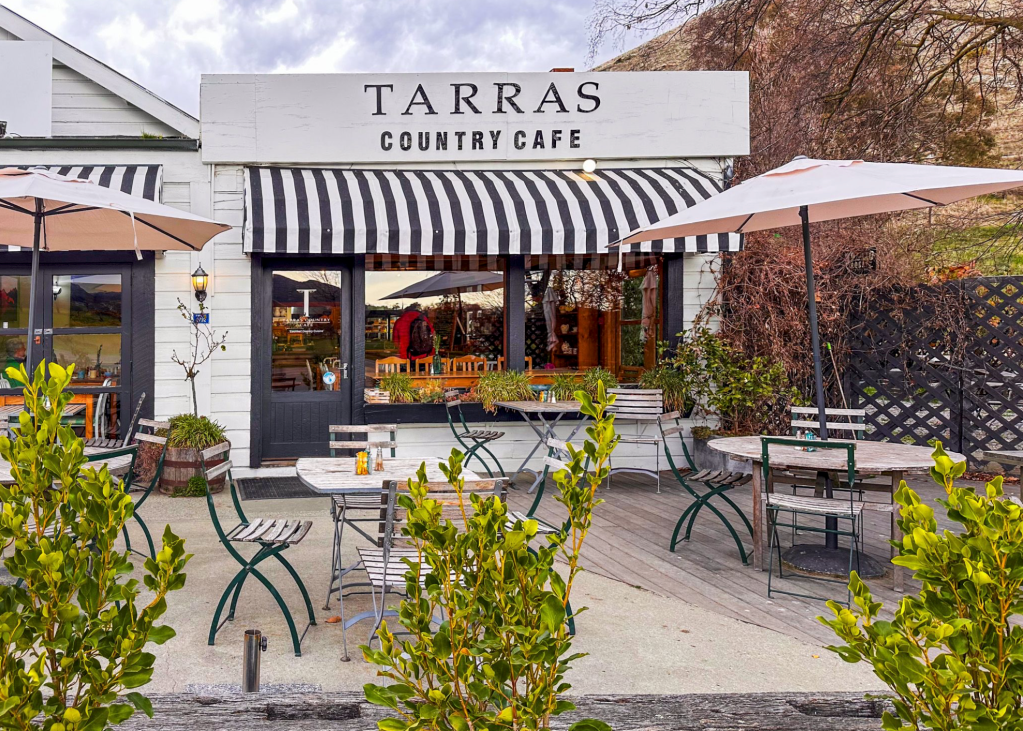
Tarras — a blink-and-you’ll-miss-it kind of town that’s perfect for exactly what we needed: a quick stretch, a wander, and a moment to take it all in.

No rush. No schedule. Just the quiet satisfaction of being exactly where you are.

The Tarras Country Cafe is a good place to stop and take a rest. They lose a few points for not being dog-friendly, mind you. Not an issue on this journey, but our Border Collie, Leia, would not approve.

From Tarras, the ride shifts tone.

Heading past Lake Hawea, the landscape begins to soften—water replacing dust, greenery creeping back in. The road hugs the lake in places, offering glimpses of deep blue framed by distant peaks. The road runs up the west shore of Lake Hawea, then crosses quickly to pick up the east shore of Lake Wanaka. This is a snaking, sinuous road hugging the narrow stretch of land between water and peaks. The weather takes a turn in the wrong direction. The temperature drops and the clouds descend.

By the time we reached Makarora, it felt like the right moment to stop properly.

Lunch was simple, satisfying, and well-earned. A hot drink and a toasted cheese sandwich. Before we set off we needed to get the wet weather gear out and put it on. We continued towards the West Coast.

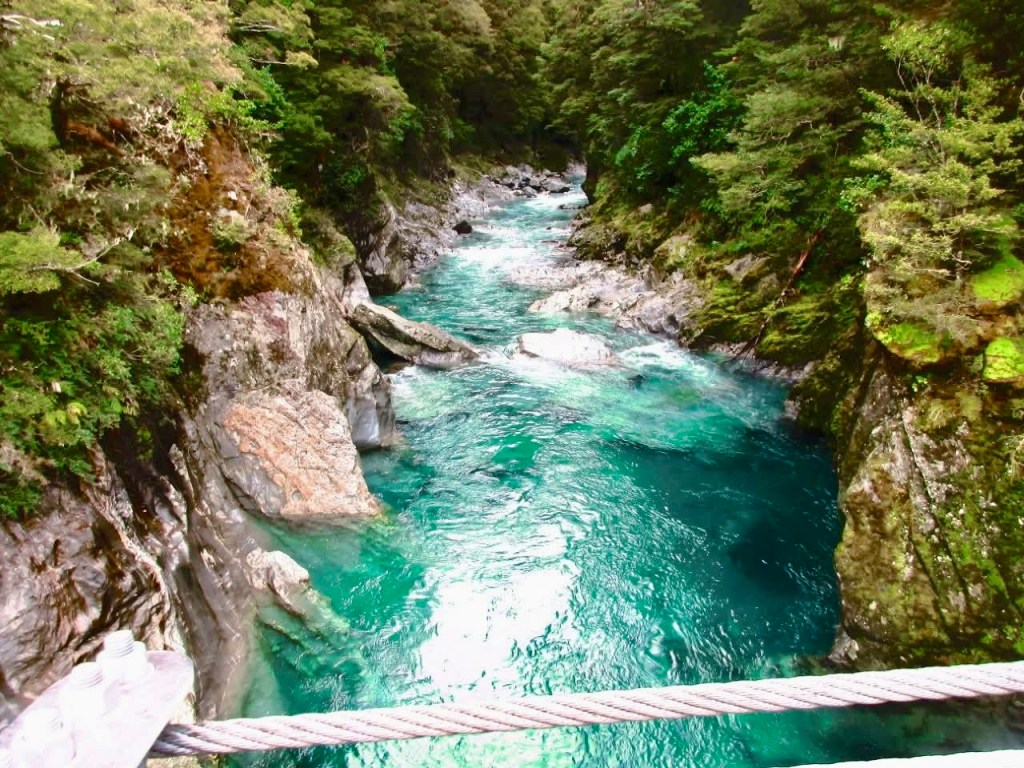
Not far up the road, we pulled in again—this time to stretch the legs on the short walk to the Blue Pools. Suspended bridges, crystal-clear water, and that unmistakable alpine stillness made it one of those stops that lingers longer than expected. The weather held. The sun peeped out just enough to show off the blue alpine waters at their very best.

Boots on gravel instead of pegs. A welcome change.

Then comes the turn west toward one of my favourite rides on the planet. Somewhere beyond Lake Hawea, the shift begins. At first it’s subtle—the air softens, the colours deepen—but by the time the road pulls you into the Haast Pass, the transformation is complete.

And then the rain arrives.

Not in a sudden burst, but as a steady, soaking presence—the kind that hangs in the air as much as it falls. The visor beads up, the road darkens, and every surface takes on that slick, reflective sheen that quietly demands respect.

The open high country is gone. In its place, the bush closes in tight.

Towering beech and podocarp press right up to the road’s edge, dense and dripping, alive in a way that feels almost overwhelming after the austerity of the Lindis. Everything is green—but not just one green; a hundred shades of it. Deep, wet greens layered with moss, the pale crust of lichens on rock faces, glossy leaves of undergrowth catching what little light filters through.

And the smell… unmistakable.

Rich, damp earth. Crushed leaves. That fresh, almost sweet scent of rain‑soaked vegetation seeps through your gear and settles in. You don’t just notice it—you ride through it.

The road changes character too. The long, sweeping curves are gone. Here it tightens, twists, folds back on itself. Corners stack up, visibility drops, and the surface—darkened by rain and shaded by trees—keeps you honest. Painted lines glisten. Tar bleeds feel just a touch more slippery. Every input has to be smoother, more deliberate.

Throttle gentle. Brakes measured. Eyes scanning.

It’s not a place to rush. We cross the trestle bridge at the Gates of Haast, tyres humming over shingle, river roaring far below.

Water is everywhere now—trickling down rock faces, gathering in gutters, spilling in thin ribbons across the tarmac. New waterfalls appear out of nowhere, crashing down beside the road before disappearing back into the bush.

You ride through it all at a different pace. Slower, yes—but more connected. Every sense engaged. Every movement considered.

This isn’t a section about speed or heroics. It’s about immersion—being inside the landscape rather than just passing through it. The rain, the road, the forest all merge into a single, continuous experience.

By the time the road begins to ease and the bush starts to open toward Haast, you realise you’ve been holding a different kind of focus—quieter, sharper, more aware.

The sort of riding that stays with you long after you’ve dried out. Tiring, but exhilarating.

Rolling into the Heartland Hotel Haast feels like crossing a quiet finish line.

Gear damp, boots soggy and that familiar mix of fatigue and satisfaction that only comes from a full day in the saddle on the West Coast.

Inside, it’s warm. Dry. The showers are hot, the towels fluffy. Exactly what was needed. And, as always at the end of a big day on the bike, the bar beckons—to wash the dust of the day from our throats and trade stories about another sublime run on New Zealand’s South Island roads.

Why This Ride Sticks With You

This leg has a bit of everything:

  • The comfort of familiar roads
  • The wide‑open drama of the Lindis Pass
  • The subtle shift into lake country
  • The lush, rain‑soaked beauty of the West Coast

It’s a ride of contrasts—dry to wet, open to enclosed, fast to slow.

And like all the best rides, it’s not just about where you end up; it’s about how many different worlds you pass through along the way.

350 km of bliss.

Day one: Discover Richard Pearse Memorial on a Scenic Ride

And about time too!

Have you ever woken to a morning you’ve been hanging out for so long you reckoned it might never actually show? And then it does.

No drama. Just quietly there.

There’s a bite in the air, that proper South Island chill that wakes you up faster than any coffee. The kind that rolls down off the plains and settles in your chest. The sky’s clear in that big, open way you only get down here, and everything feels sharper—cleaner—like the land’s had a good rinse overnight.

You stand there for a bit, taking it all in. No wind. No traffic. Just you, the bike, and a road heading south with your name on it.

Bloody hell. This is it.

This was that morning. It was Saturday, April 11th, and it was 7:30 in the morning.

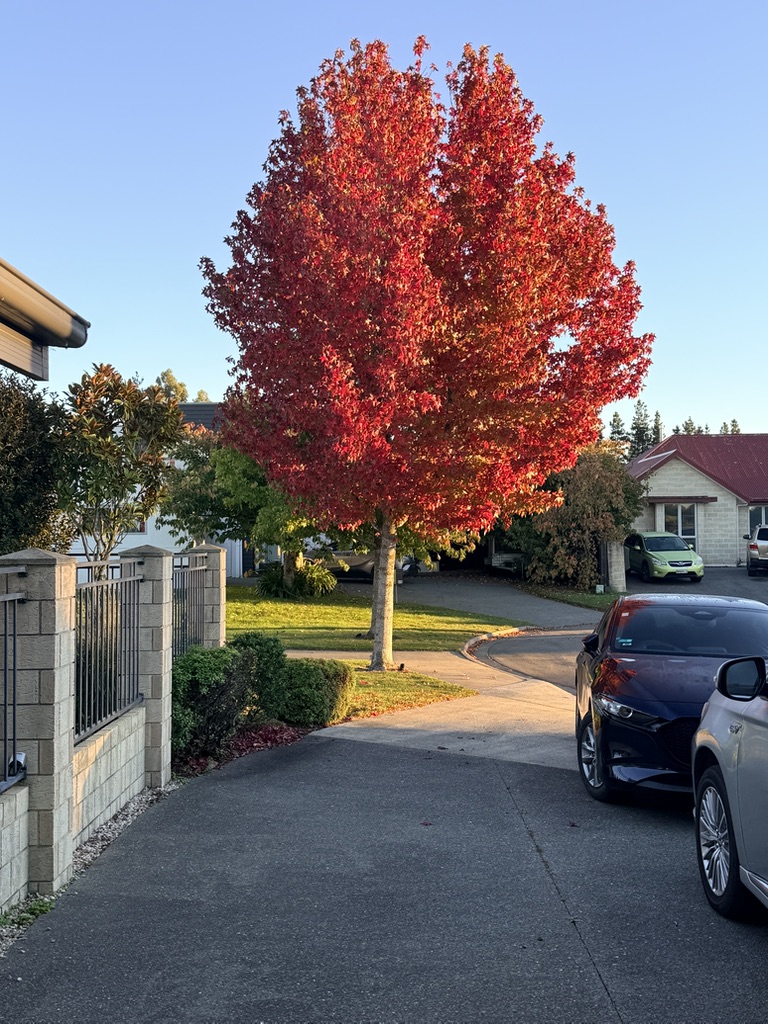
I had spent all week packing the motorcycle, unpacking it, and repacking it. I was now happy. It had been more than three years since my last ride out with this group of friends. The reason for the long absence is for another day. Suffice to say, I was so excited. I just wanted to get going. The sun rose into a pale French Blue sky. It had been a fairly calm and balmy night. No wet roads, no frost and no looming rain clouds. Yet. The scarlet oak tree out front looked as if aflame in the morning light.

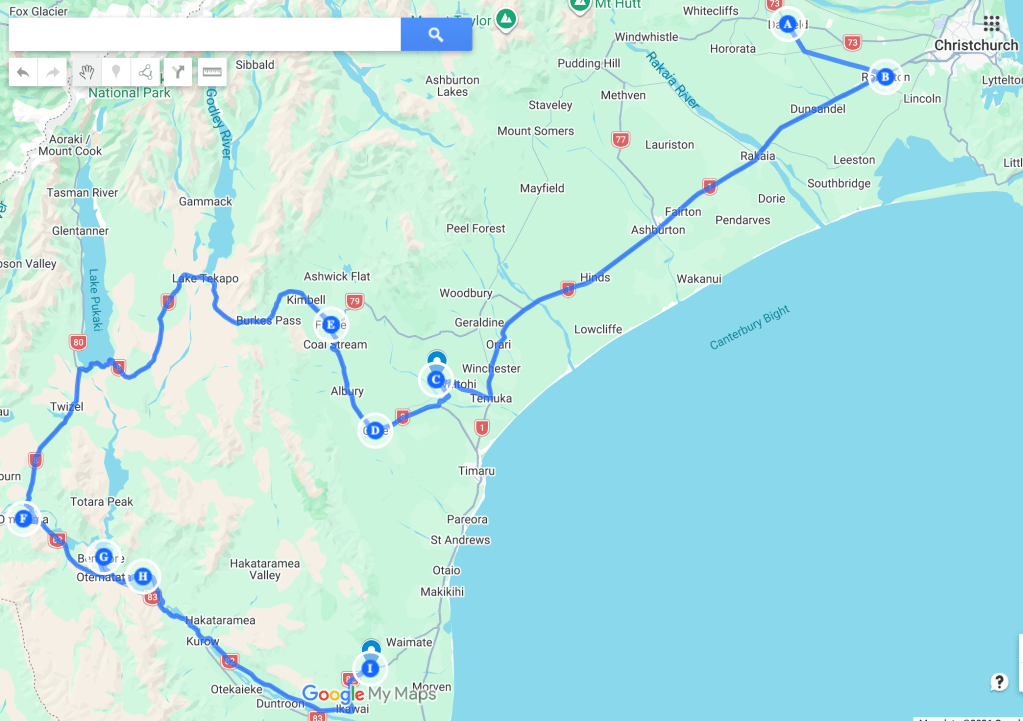
I set off from home for our rendezvous point in Rolleston, south of Christchurch. The bike thermometer read 7 °C. It had been a while since I had ridden the bike with both side panniers and the top box fitted and loaded. The first few kilometres were spent just getting used to the little bit of extra weight on the bike. Taking time to make sure all was well with myself and the bike, for there were going to be a fair few kilometres added to both of us in the coming couple of days. Now was the time to ensure all was well. I passed through Oxford and Darfield and arrived in Rolleston to find most of the others were already there waiting for me.

I was beaming to see all my old riding buddies. This was like the last 3 years had never really happened, and it was business as usual. We talked bikes, weather, ailments (we are all of a certain age) and other nonsense before deciding it was time to head south.

Rolling out of Rolleston, the world still feels half-asleep. State Highway 1 stretches out ahead, long and straight, easing you into the day. It’s not the most thrilling bit of road, but that’s not the point—not yet. This is the warm-up. The chance to settle into the rhythm, feel the bike beneath you, and let the noise of everyday life drop away behind you somewhere north of Christchurch.

By the time you peel off at Temuka, things start to feel a bit more like a ride and less like a commute. The traffic thins, the pace changes, and the roads begin to wind just enough to keep things interesting.

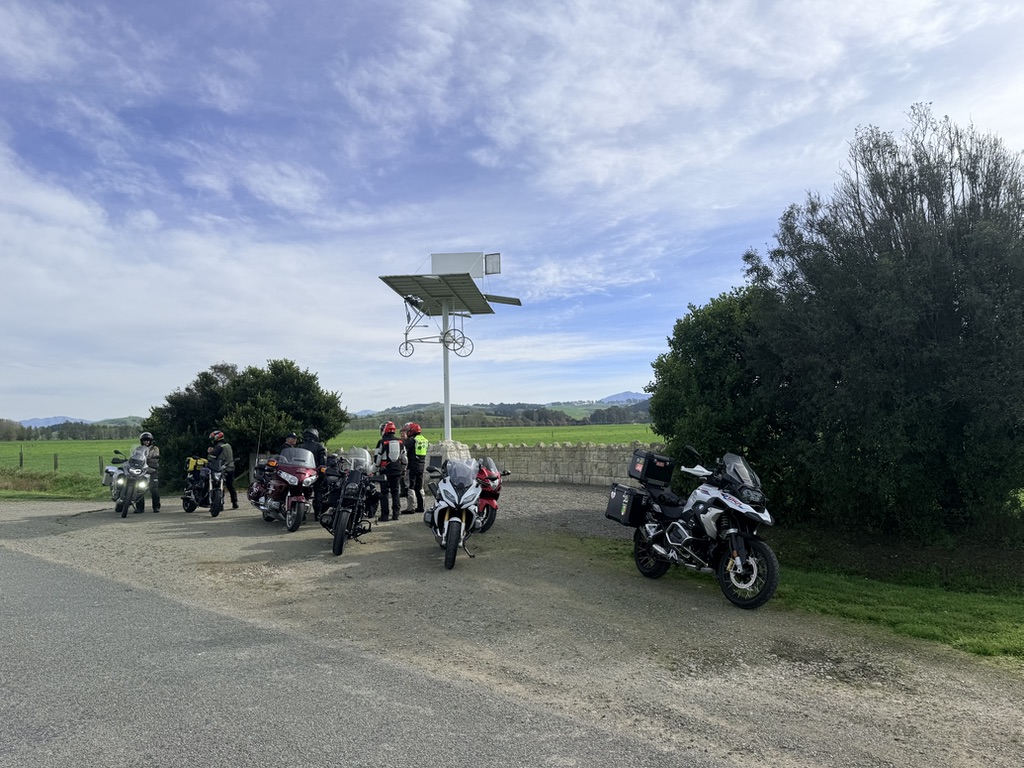
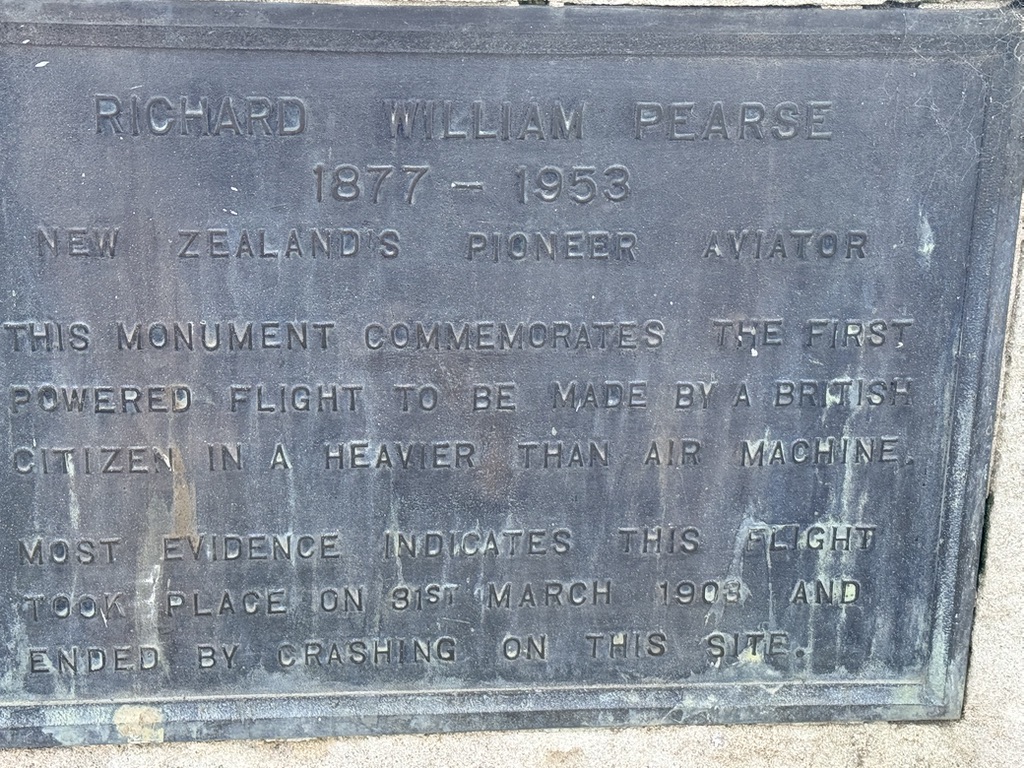
I mentioned to Brian I wanted to visit the Richard Pearse Memorial. After all, it was not far off our planned route, and it would add some interest. Who? said some of my fellow riders, and they were New Zealanders. Right says I, we have to do this.

A Flying Start (Almost)

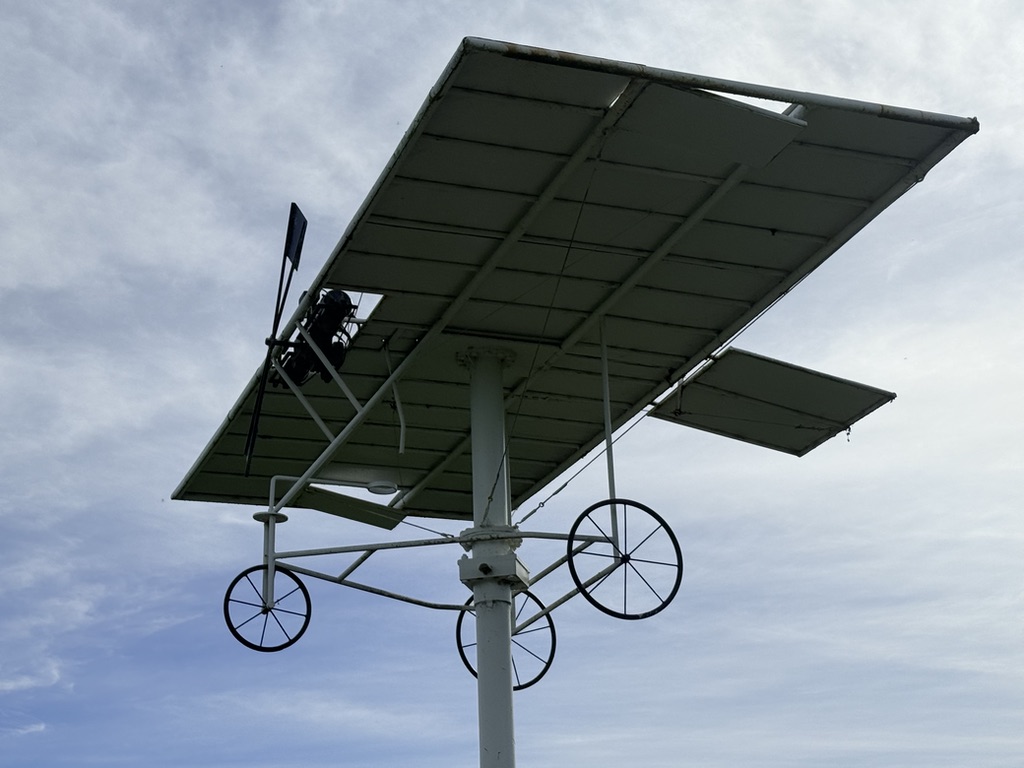
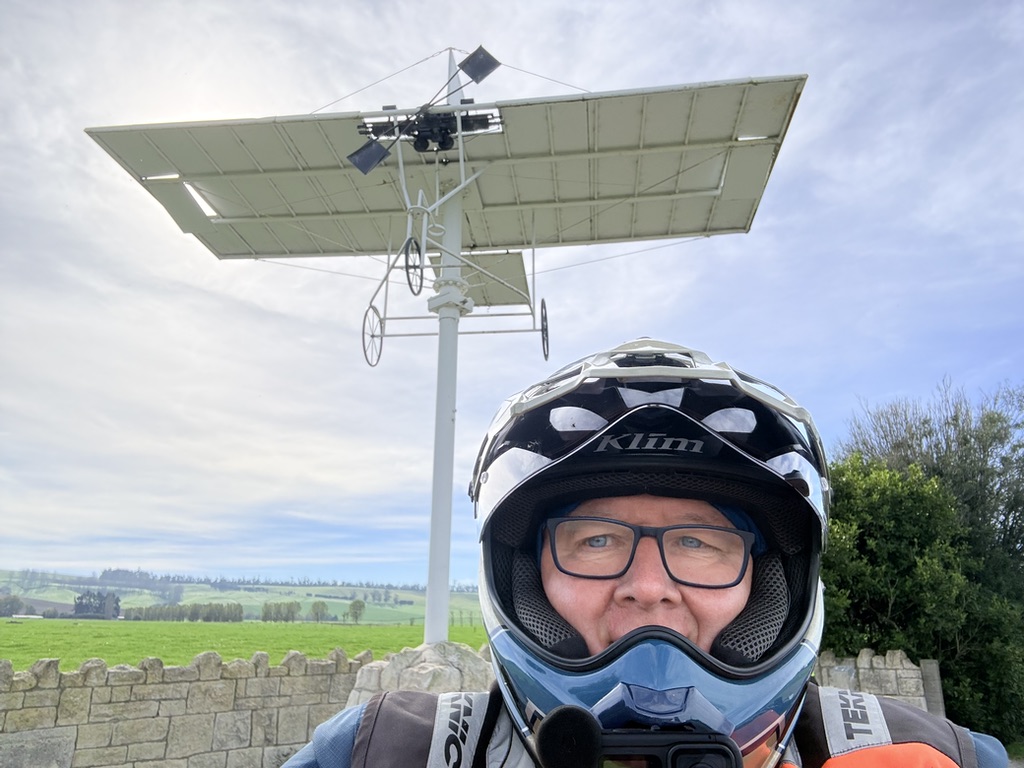
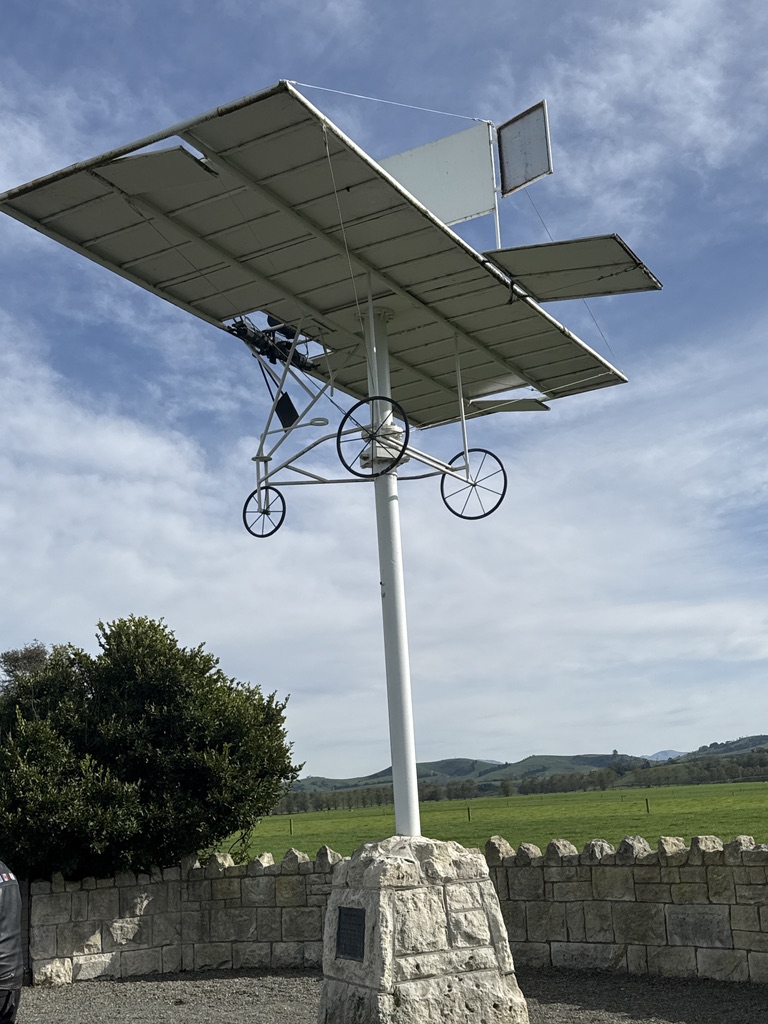
So, not long into the journey, we turned off SH1 onto the Waitohi Road and pulled over at the Richard Pearse Memorial—a fitting tribute to one of New Zealand’s more eccentric pioneers of flight. Click the link for more. Standing there, looking at the replica of Pearse’s rather… optimistic aircraft, it’s hard not to admire the sheer audacity of the man. Did he beat the Wright Brothers? Who knows. The history books would say not, but……

There’s something comforting about stopping for a break here. You stand there for a minute, looking out over the same flat land he would’ve known. It’s a good reminder that big ideas don’t always come from big places. A reminder that bold ideas—whether building flying machines or heading off on a long ride with no particular rush—are worth pursuing, even if they don’t always go perfectly to plan.

It has to be said that New Zealand is pretty awful at showing off what it’s got. Richard Pearse was a farmer who, I reckon, contributed to changing the world. No Smithsonian Institute fanfare for him. No replica hung from a lofty ceiling of what could be the world’s first powered flight. Nope. A replica stuck up a pole on a nondescript back road on the Canterbury plains is all he gets. And somehow that’s New Zealand. It punches way above its weight and expects nothing much in return. It just moves on to the next thing.

The Long Sweep Inland

From there, the road began to stretch its legs.

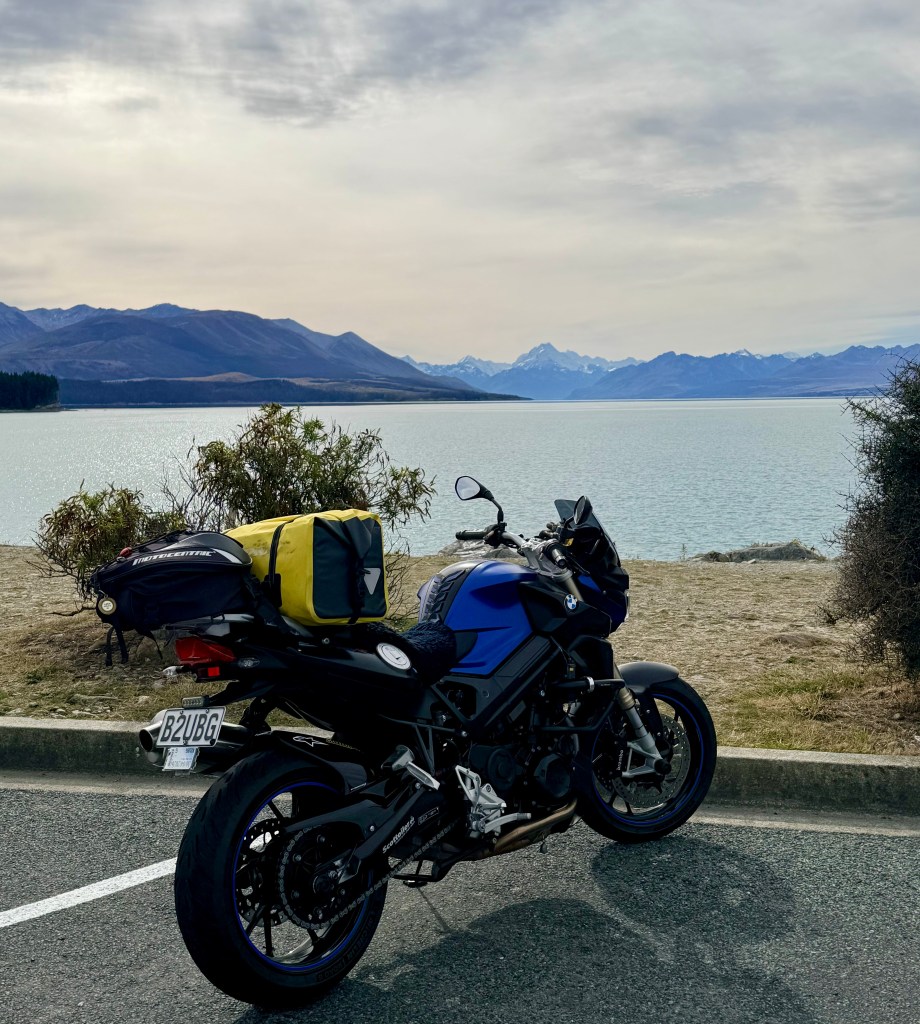
On through Pleasant Point and into Cave—roads that feel properly local now. Less polished, more character. You start to notice the details: the way the light hits the hills, the smell of farmland, the odd dog giving you a half-hearted chase from a driveway. It’s proper South Island riding—nothing fancy, just honest. South Canterbury unfolded in wide, golden strokes—farmland seamlessly transitioning to the stunning, expansive beauty of the Mackenzie Basin, adorned with vibrant cypress trees showcasing their autumnal colours. The traffic lightened, the curves invitingly opened up, and the exhilarating joy of riding took over, making everything else fade away. Lake Tekapo sparkled to our right, while the township buzzed with the excitement of a road cycle race. We then transitioned to quieter roads, where Lake Pukaki gleamed a beautiful blue as it often does. The sun radiated splendidly off the snowy peak of Aoraki, Mount Cook, inspiring us to pause for a refreshing break, stretch our legs, and soak in the breathtaking view.

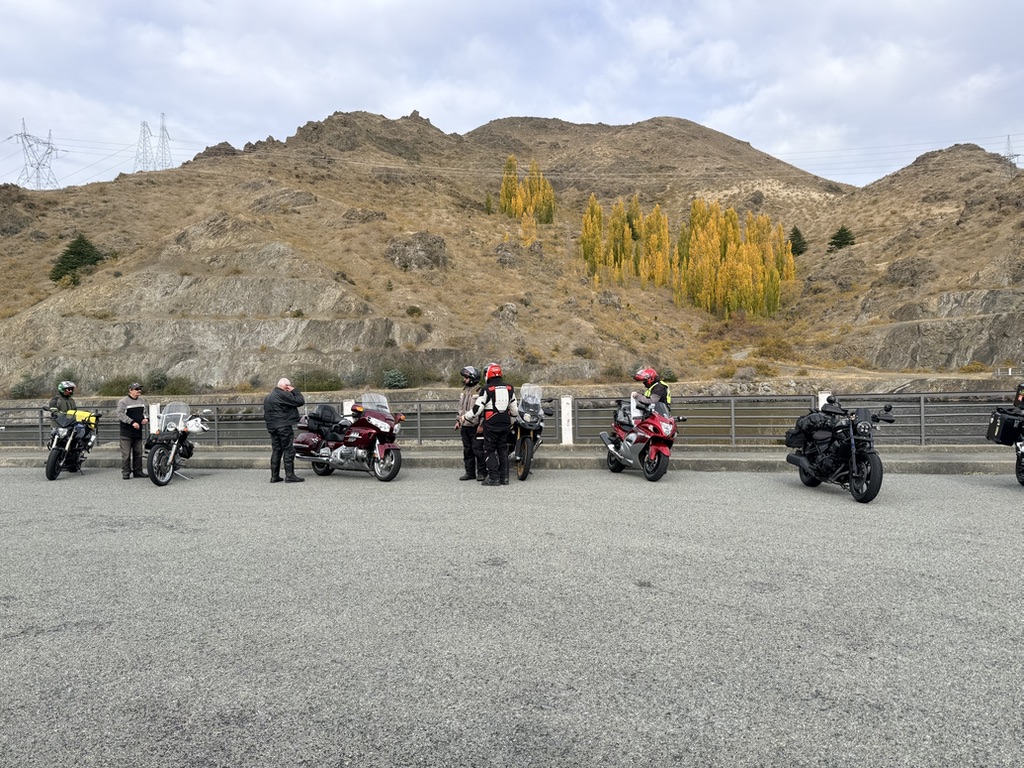
Brians BMW sits in front of Lake Pukaki and Aoraki, Mount Cook in the distance. The cloud had started to roll in turning the lake from a vivid blue to a cold grey.

Omarama is one of those places that feels like it exists purely for travellers—good coffee, easy parking, and a steady stream of fellow road wanderers swapping stories over lunch.

Helmets came off, jackets unzipped, and the usual conversation followed:
“How good is that road?”
“Did you see that view back there?”
“Should we stay longer?” We didn’t. But it was tempting.

By the time we rolled into Omarama, the bikes (and riders) were eager for a well-deserved break. I felt a bit saddle sore, having not enjoyed such a ride in a while, but the thought of refuelling with a hot cup of tea and some delicious sustenance lifted my spirits. That 30-minute break was just what we needed! A few stretches worked wonders on my shoulder blades, and a quick check around the bike reassured me that everything was in excellent shape. We excitedly headed east on Highway 83, turning off at Otematata to take the scenic road that led us to the impressive hydro dam at Benmore. Otematata, by the way, was a charming little town built to host the dedicated construction workers who brought the dam to life.

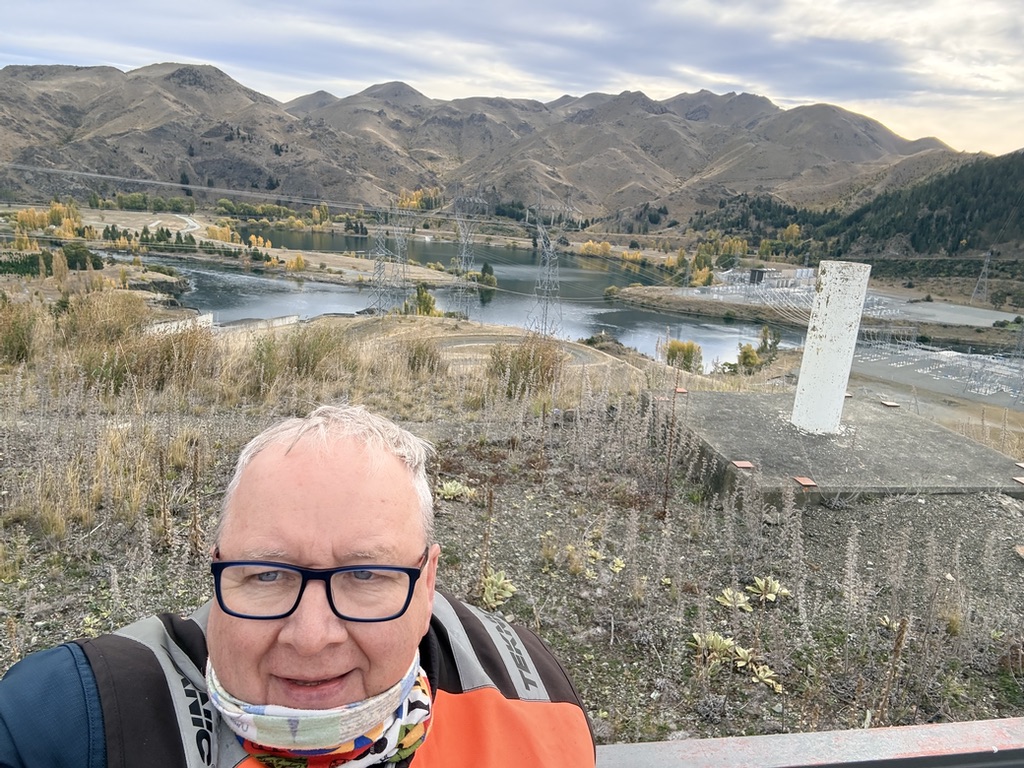
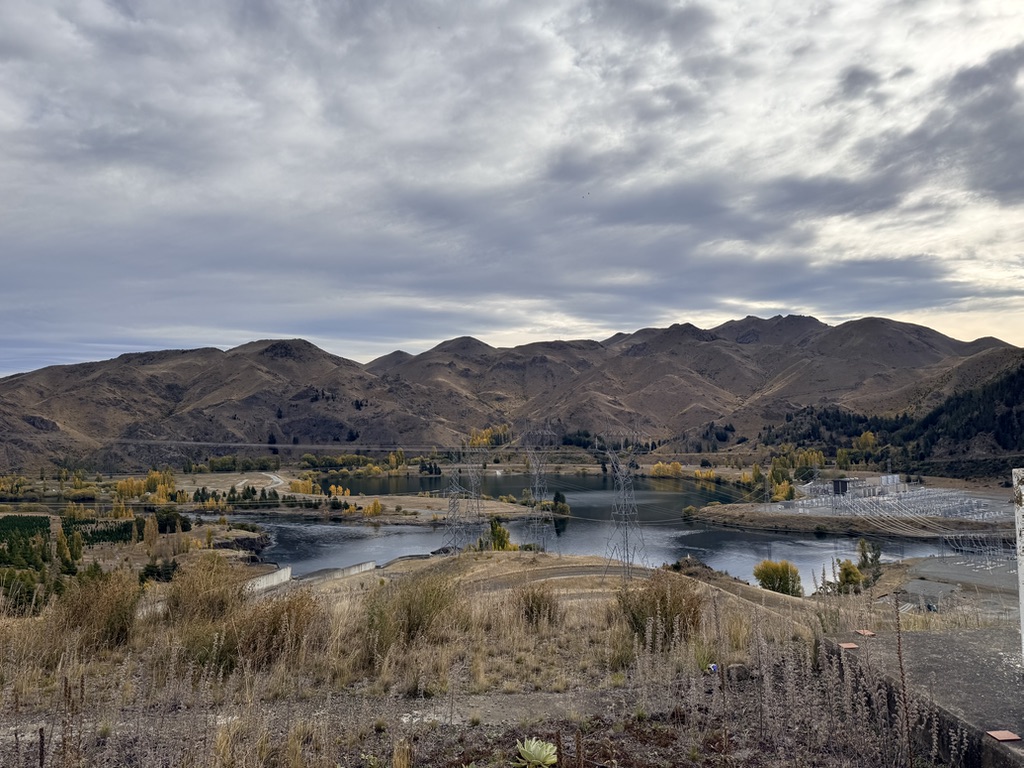
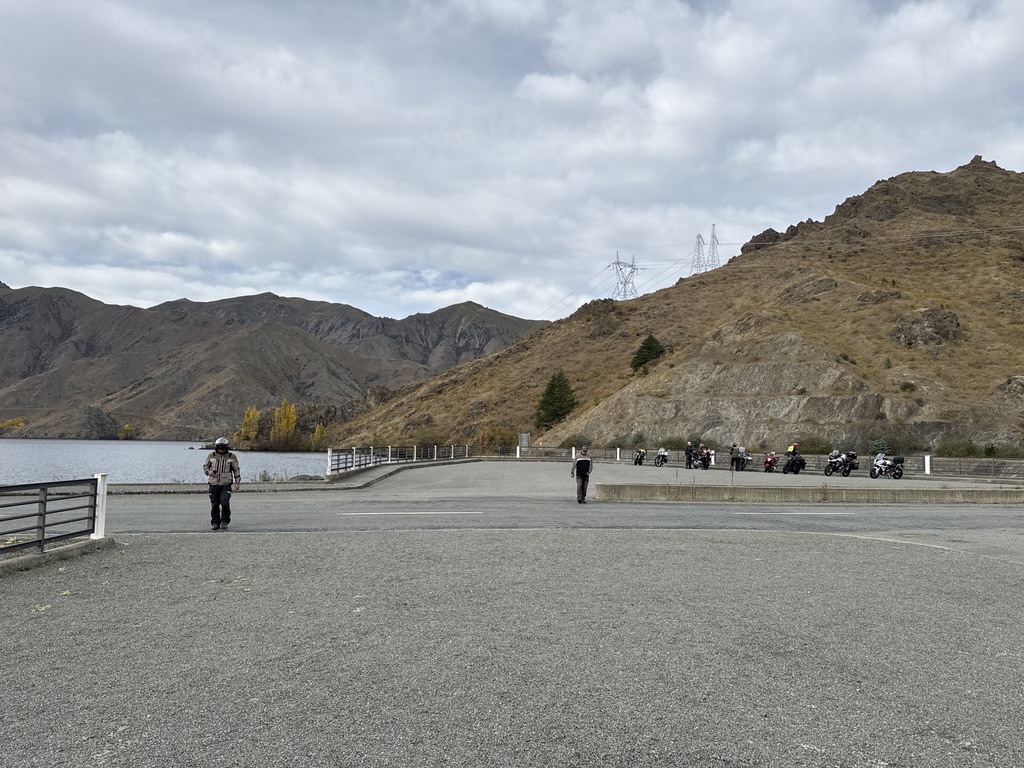
The South Island of New Zealand is dotted with hydro dams generating power for the grid. Benmore Dam is one of them and riding along the top of it affords outstanding views from a lofty perch. The stop at Benmore Dam is one of those moments where you have to pull over, whether you planned to or not. It’s big. Properly big. The kind of place that makes you feel small in the best possible way. The water stretched out behind it, the scale of the structure—it’s worth taking a few minutes just to stand there and take it in.

There’s something oddly mesmerising about the scale of the place—the massive wall of concrete holding back a lake dominated by lofty peaks behind it. It’s a different kind of scenic stop; less postcard, more “wow, humans built this?”

The road around the lake is a fun ride as well.


From Benmore, the road began to wind its way back towards the coast, twisting its way along the north shore of Lake Aviemore, the landscape softening again as the high country gave way to greener pastures. By this point, the light had started to mellow—the kind of late-afternoon glow that makes everything look just a little bit better.

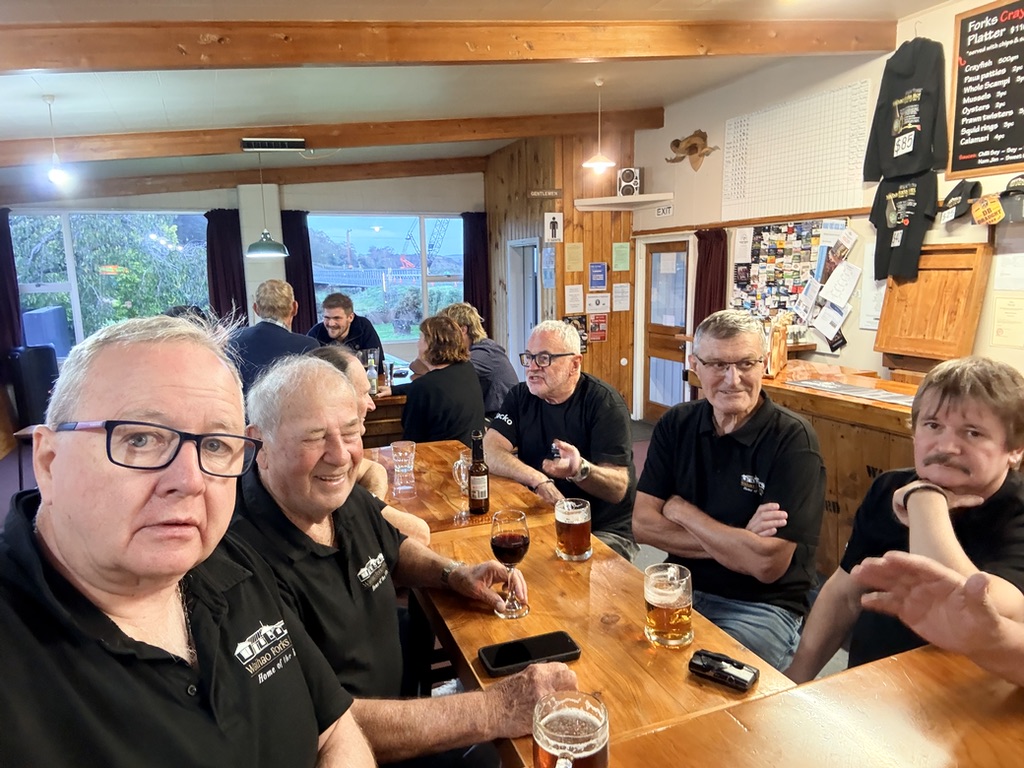
And then, tucked away where you almost feel like you’ve earned it, is the Waihao Forks Hotel.

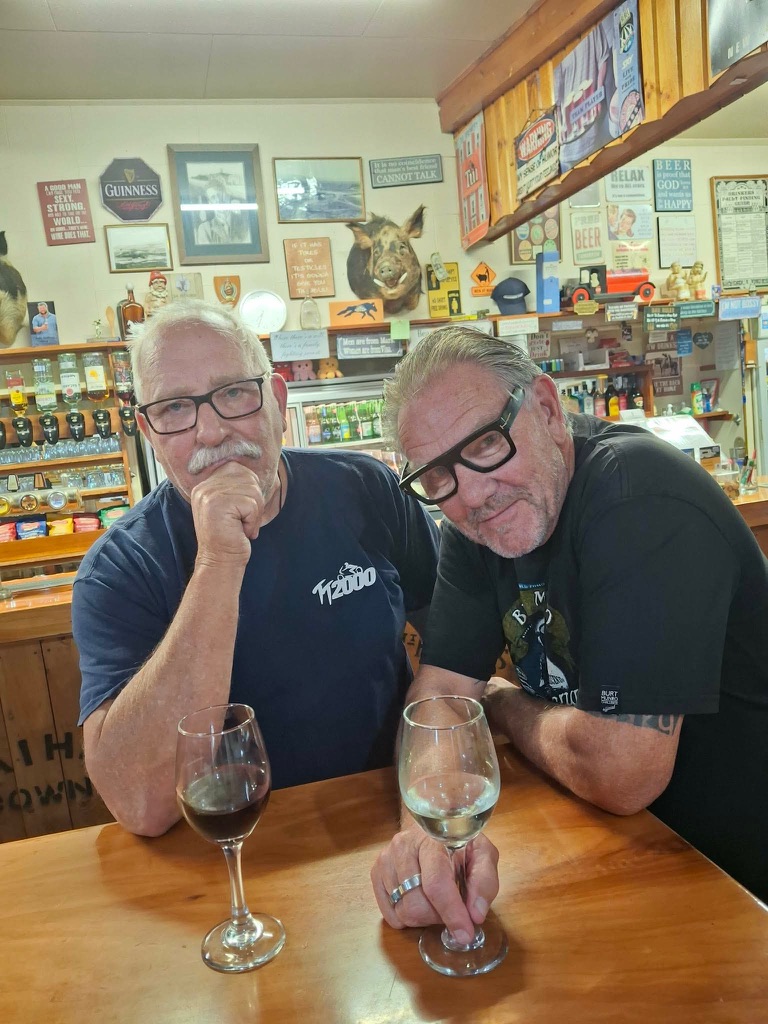
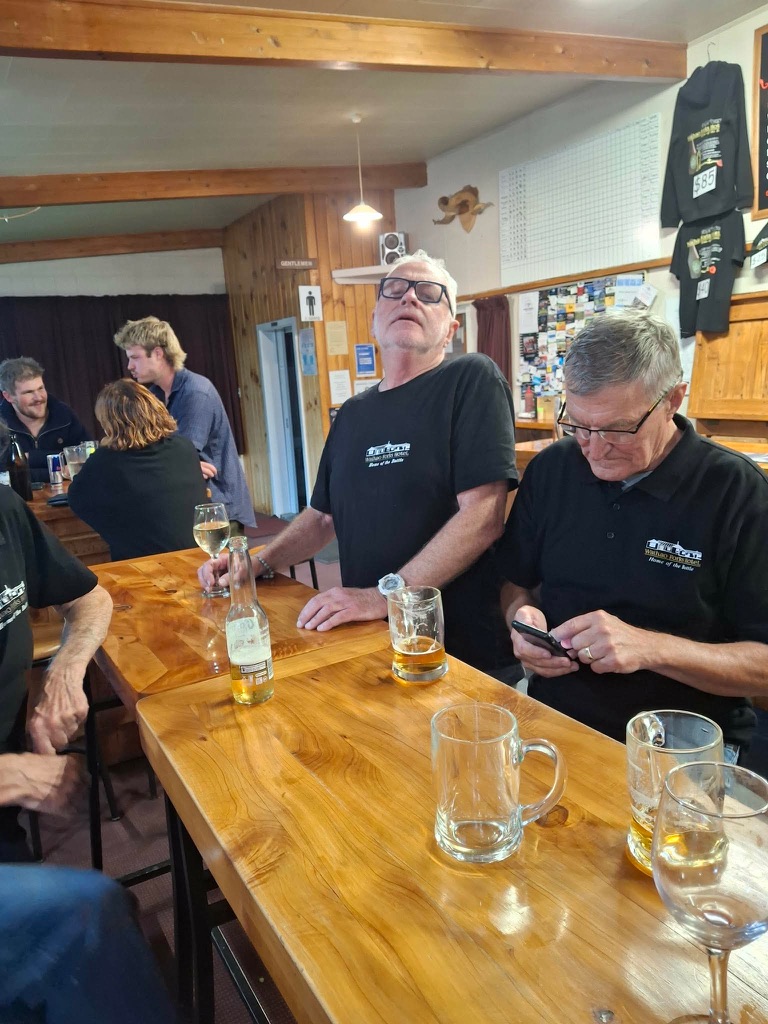
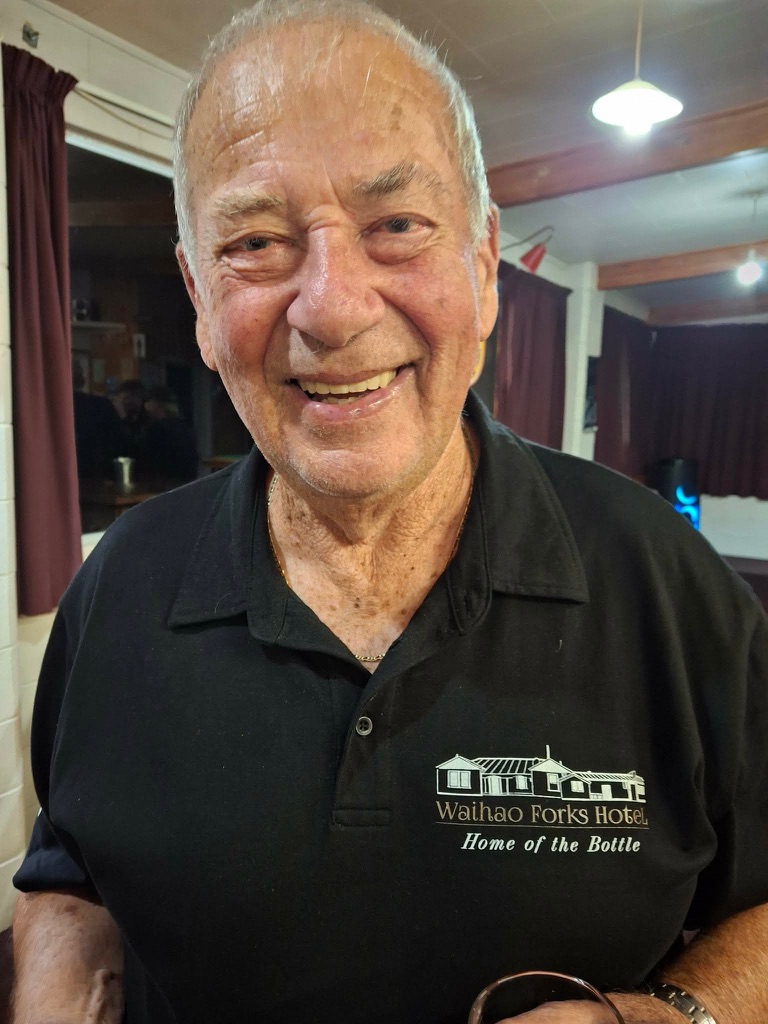
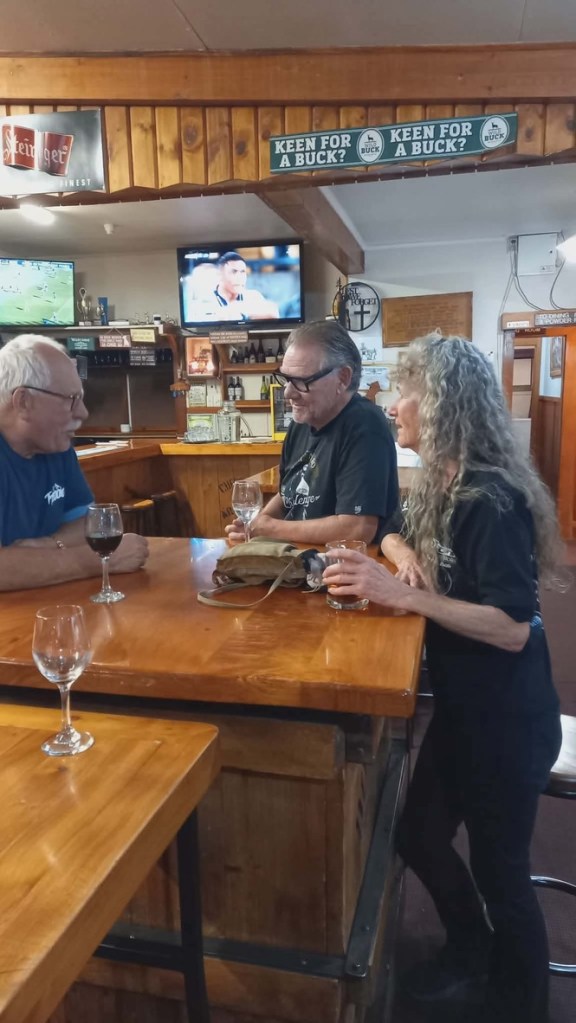
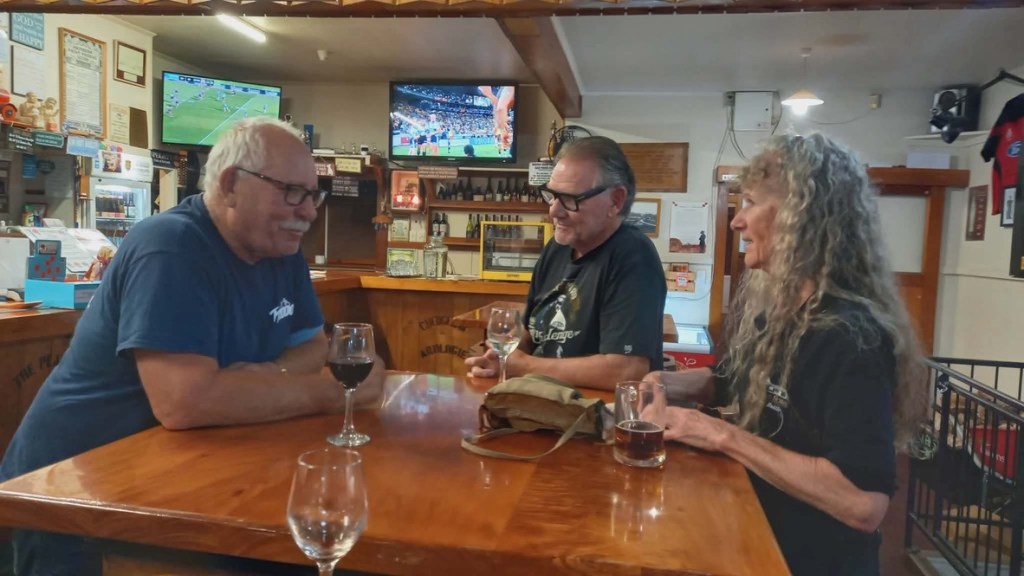
The kind you remember for a long time. The Waihao Forks Hotel isn’t trying to be anything other than what it is—and that’s exactly why it works. The hosts are warm and welcoming people. It’s not flashy. A proper country pub, sitting quietly at the end of a great day’s ride. The kind of place where the gravel crunches under your tyres as you roll in, and you know straight away you’ve made the right call.

Helmet off. Jacket unzipped. A cold drink in hand.

You look back on the road you’ve just ridden—the plains, the backroads, the high country, the dam—and it all adds up to something more than just kilometres.

Not every ride needs to be epic. But now and then, everything lines up—the weather, the road, the stops along the way—and you get one of those days.

Cold drinks, hearty food, a bit of local chatter, and that unmistakable feeling that you’ve properly arrived somewhere. It’s the kind of place that rewards the effort it takes to get there, especially on two wheels. Brians Overnighter has been coming here for 20 years. For good reason.

This days ride has a bit of everything:

  • History (and a touch of Kiwi ingenuity)
  • Wide-open riding through classic South Island landscapes
  • Proper small-town stops that feel authentic
  • And a destination that’s worth the miles

It’s not just about getting from A to B—it’s about the stops in between, the conversations, and those fleeting moments on the road where everything just clicks. If you’re looking for a ride that balances scenery, character, and just the right amount of distance, this one’s hard to beat.

And like all good rides… it’s even better the second time around.

524 Kms of rather lovely riding.

Top Tips for Exploring the Wild Atlantic Way on a Motorcycle

I said that once we had returned to home I would write a few words about the trip. What we liked. What we did not and the do’s and don’ts.

A celebratory cinnamon bun having completed the trip.

There are plenty of books and maps to help in planning the Wild Atlantic Way. It’s best to visit any Irish Tourist office once you are in Ireland. Grab a handful of the free ones there. The entire route from Kinsale in the far south to Muff near the Northern Ireland border is very well signposted. Most of the tourist offices have maps divided into various regions. Examples include County Cork and the Ring of Kerry, and so forth.

I checked out various motorcycle forums, YouTube videos and general internet searches. There is so much information out there. Probably too much if I am honest. I included “must-dos” in the various forums. I added these roads where they fit into the basic route I had already planned.

I used the Calimoto app for planning the trip. It was easy to use and also the highlights are readily obvious. I downloaded the maps to use offline. I strongly recommend you do that. I did use Waze and google and Apple Maps for some background. Google Earth was also good to see what some of the very minor roads were like. Most places had cellphone signal. Only a bar or two was enough if near the towns and villages. But sometimes there was no signal at all. The downloaded maps became very useful then.

We used Stena Line ferries to and from Fishguard. They provided padded lashing straps for the bikes. There were no challenges using the ferry. The crew lashed the bikes. Its worth paying for access to the premium lounge. Plenty of food and drinks to stock up with.

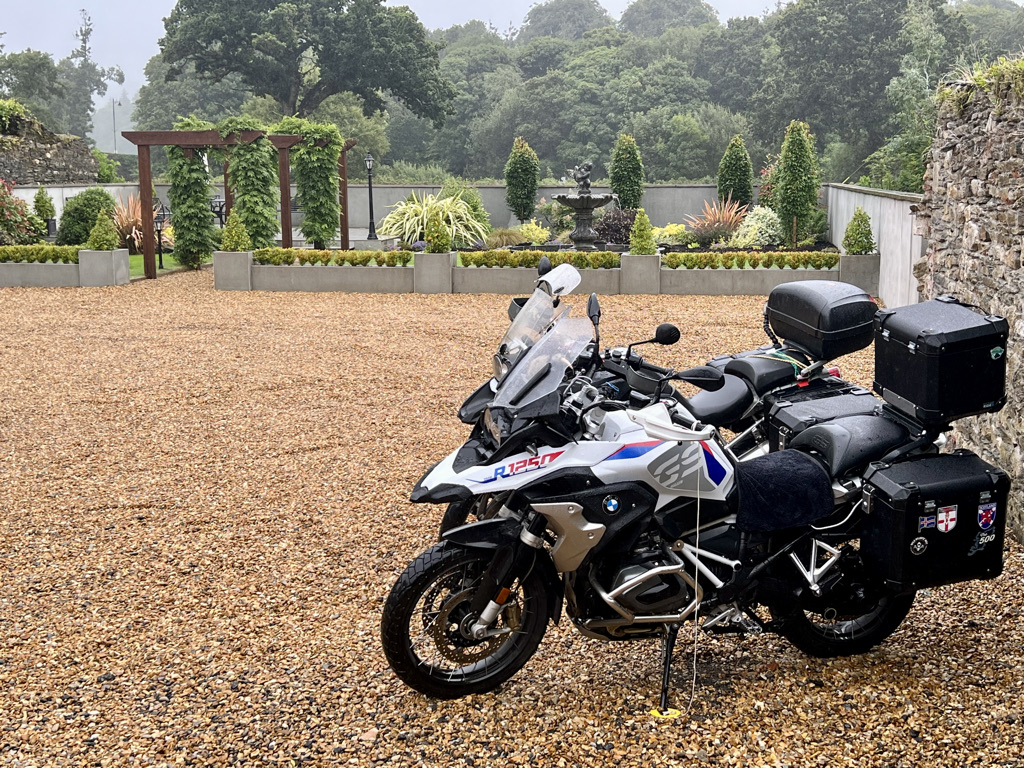
We used bed and breakfasts where possible. When none were available we used hotels. I prefer the B+Bs as I like to meet the local landladies for a chat. Booking.com and AirBnB were handy. I did not find any decent Irish books or websites to find good B+Bs. There were so many B+Bs we passed that were not listed anywhere. I did ask one landlady why there is no decent directory of accommodation. She said the normal is just to rock up and knock on the door. This is to see if there were any vacancies. That approach isn’t helpful in some places. There were very few options, and there was no guarantee of a bed for the night. Do watch for this. Prices ranged from 80 Euros for the night to over 300 in some of the hotels. The standard was very good. There were a few quirky places and I loved them. Many of the pubs had accommodation but they tended to be noisy and no off street parking for the bikes.

Petrol (gas) stations were never a problem to find. Even the remotest places had a pump or two. Prices were cheaper in the bigger towns which is to be expected. We tended to fill up in the bigger places and top up if needed when remote.

So here are my do’s and don’ts.

Do’s

Whatever time you allow to do a particular leg then double it. Google maps often said 3 hours and it took 6. This is because unless you just want to get around as quick as possible then you simply have to stop. Then you get caught having a chat to a local. And oh how they can talk and I loved it. Often, sitting and having a coffee invited men to come and say hello. They would ask what we were doing and give tips on their best roads in the area. An hour was gone in no time! Then there are the photo stops and info boards at points of interest to read. Our day usually started around 9 am on the bikes. We would stop for lunch or coffee. We arrived at the B+B around 4 or 5 pm. Earlier if the weather was poor. That gave us time to have a hot shower and start to get wet stuff dried if possible. We tended to have a good lunch. In the evening, we would have a snack like an instant porridge pot. The B+Bs did not supply dinner but all had a kettle to boil water. Many were remote with nowhere in the area to go for food. Make sure to pack a box of porridge sachets or freeze dried soup. Keep them in your luggage for the evening if you need food. You can read the blog for an idea of mileage and the stops we made.

Do pack your bike for all weathers. It is called the Emerald Isle for a very good reason. You can get all seasons in one day. We were sat in the pouring rain one day miserable as hell. A local said don’t worry, summer will be along in 20 minutes. Sure enough it was. The wind on some of the west coast headlands can be significant. It can occur on peninsula’s at any time of the year.

Do avoid the obvious tourist traps if you travel in high season. We arrived at the Cliffs of Moher and they wanted 15 euros just to park. It was full of buses. We moved on. Slieve League in Donegal is better and less busy.

Do be familiar with any satnavs or apps that you use. We came across bikers touring on hire bikes. They had a preprogrammed route in a satnav. The bikers were struggling to use it because they were not familiar with it. It is all well and good when things are going right. But, if you leave the route or change it, they struggle.

Do I really need to tell you to make sure you and your bike are in tip top condition before you set out? Do I? This can be a rough ride in places and is tough going on any machine. The suspension will get tested. The tyres will get a beating. You will be challenged mentally and physically. Whilst you don’t need to be Mr Universe do make sure you are in good health before setting out. I make no apology for mentioning again the remote nature of some parts of the route.

We packed 10 days worth of undies and socks and around 5 T shirts. I included a pair of quick dry fishing shorts. I also added two decent polo shirts and a hoodie. Additionally, I packed a pair of chinos should we need semi decent clothing to eat out. Besides my boots, I packed a pair of slip on deck shoes. They are for wandering around the B+Bs and the towns in the evenings. Otherwise the day was spent in bike gear. This is not a fashion show. That gave us time to get into the trip before we needed to find a laundry. You can always get t shirts in pubs you visit and in the local supermarkets if you really need to. We got one from a great pub in Dingle. Well it’s a must is it not?

Do plan in a days rest now and then. We took two days off in a 22 day ride. One in Dingle and another in Clifden. Dingle is a fabulous place even if it is very touristy. Clifden has a great laundry service in the town. It also offers good eat and drink venues. It was absolutely worth it to get laundry done, rest, and check the bikes over. It was also great just to take a breather. This is quite stressful riding.

Irish roads can be interesting. You can be traveling over a brand new piece of road. The next minute, it suddenly reverts to teeth shaking and gravelly mush. Some of them are very narrow with stone walls close by or high hedges. Some can be rather rough in places. Tractors from the 1950s and 60s were plentiful bumbling along just around the next blind corner. You have been warned. The locals in cars and trucks don’t slow down much. Watch your lines through the curves. We encountered many cars crossing the center line on bends. Also beware the tourist coaches who really don’t care about anyone else. Again we had many encounters that left us scratching our heads.

Whenever we saw other motorbikes we always went and said hello. In the far west, we saw very few. We never missed a chance to catch up with a fellow biker.

Do be choosy about points of interest you really want to see when planning your route. Visiting every single location listed in the books is impossible. You would need at least 6 to 8 weeks to spare. I stuck to places of cultural and historical interest primarily. So many fabulous beaches are along the way that I gave up after a while. There were too many viewpoints overlooking a beach. Locals call them strands. After the first week, we only stopped at the really spectacular ones.

Do be sensible with the booze. Nobody likes a drunk, especially a lairy biker. The locals welcomed us in all the pubs we went into. I have become very fond of a cold Guinness. Not once did we come across anybody who had too much in the lovely pubs out west. Don’t be the first and spoil it for the rest who will come after you. The trip for me was really all about the people we met. The scenery was quite good too!

Do take a basic tool kit with you. Duct tape and cable ties are bikers friends. A puncture repair kit. Once you leave Cork and head west, you find fewer motorcycle shops. In large parts of the country, they reduce to zero. We were on BMW’s. There are two dealers on the entire Ireland so come prepared. Get good travel insurance that covers bikers. If possible, join the AA or RAC or similar for help if needed.

Do ride with a companion if you can. Some parts of the route are very remote. If anything untoward happens, having a mate along will really help. There were always cars and other travelers around but sometimes we did not see another soul for hours. Anyways, this is an adventure that really is best shared with a mate.

Another tip is to take two bread bags with you. You know the plastic bags that bread comes in. They are great if your boots get soaked and you cant dry them before the next day. Put dry socks on, put your feet in a bag and put your boots on. Feet keep dry even in a soggy boot. Likewise for your hands. If it rains, cover each glove with a bag. This keeps your gloves dry if you don’t have waterproof mitts. I never tour without two bread bags in my jacket pockets.

Do have the what3words app on your phone. Godsend for giving someone your location in any event if you need assistance. Particularly in the remote parts of west Ireland. Its free so why wouldn’t you?

If you have time, do plan to come down the middle of Ireland. Whilst not as rugged as the west coast it is as beautiful. It is often bypassed. It should not be. It is wonderful.

Don’ts.

Don’t plan the trip to death. We often took a wrong turn. Sometimes, we decided to venture off route up a road because it looked like a good road to ride. The calimoto app like most will always recalculate and get you back to your destination eventually.

Don’t rush. If you want to zip around, this blog is not for you. It’s meant for those who wish to enjoy the journey and not just the destination.

Don’t pass up the opportunity to have a chat with the locals. I found a simple good morning how are you today ended up passing an hour. In the entire time we were in Ireland we encountered Mr Angry only once.

Don’t spend money in the large supermarket chains unless you really must. Support the local businesses. There are loads of little local Supervalu supermarkets dotted about. They will thank you for it. We used local cafes and bakeries. They were really good. Besides, it is another opportunity to chat to the locals.

Don’t spend money on fancy visor cleaners. Go into your local specsavers or similar and pick up some spectacle cleaner. Much cheaper (sometimes free if you are a customer) and just as good. You will need it. I had anything from bird poo to flies to cow poo flung up at me. This is rural Ireland you are traveling through.

Don’t worry about the security of your bike. The B+Bs we used were mostly so remote they were totally safe. In the towns we stayed in the owners let us use a backyard or shed to put them in. One hotel had a secure car park. I took my big chain with me and used it once. Just take the usual precautions. Most people that were near the bikes just wanted to look at them. A couple of young kids had their photos taken on them. I never had any big concerns about security.

Don’t be tempted to have the full Irish breakfast every day. No really. Don’t. They are huge and totally awesome. Still, at 10,000 calories a pop, the rest of us mere mortals will be dead after a week. Unless you are one of those lucky people that can eat like that and live, avoid overindulgence. We had one a week. On a Sunday morning. Totally fabulous but makes the mornings ride a little uncomfortable with half of a small countries harvest in your stomach. Be warned. Public toilets were very scarce. Hence the use of cafes. They all had a toilet. Being of a certain age the availability of toilets is a consideration. You won’t read these top tips in any other blog!

In conclusion:

I am sure there is more I can write. Would I do it all again. You bet. I did the route in a motorhome with my wife and our dog and again on the bike. When I got back to Rosslare I wanted to turn around and go back again.

Ireland is awesome. It is everything you would expect it to be and so very much more. But for me it was all about the people. Like at home in New Zealand the people are genuinely interested in you. They are warm and welcoming. There is a wonderful community feel which has been lost elsewhere. My goodness can they talk! Quite often it was me that started it with a simple hello can you help me and away you go. From garages, to supermarkets to cafes to simply sat by the bike checking my phone people came to chat. Old people, children, grannies, land ladies, farmers on tractors, you name it they came. I will admit that in the beginning, I was very wary. I was thinking, oh what do they want? What can they pinch? It was just general suspicion. That’s sad because that’s the norm in other parts of the world. My fears were very quickly alleviated after my first few encounters. I would move to West Ireland tomorrow!

People say they will do it some day. Some day is not a day of the week. Go do it. Life is no dress rehearsal and this needs to be on your bucket list.

I hope this was helpful. Get in touch if there is anything more I can help with if you are thinking of doing the Wild Atlantic Way and Ireland in general for yourself. Safe riding.

Day 21, Bunclody to Tagoat. Final Day Motorcycle Tour in Ireland: from The Woodend Wanderer

Bunclody is a pretty little place situated on the River Slaney. It also lies right on the border between Counties Wexford and Carlow. The 1798 rebellion features heavily in Bunclody’s history. Many motorcycle tourists don’t come this way too often I imagine which is a pity. It is off the well-trodden routes. It is worth a visit and lies at the foot of Mount Leinster, which we passed yesterday. I wish we had more time to explore more.

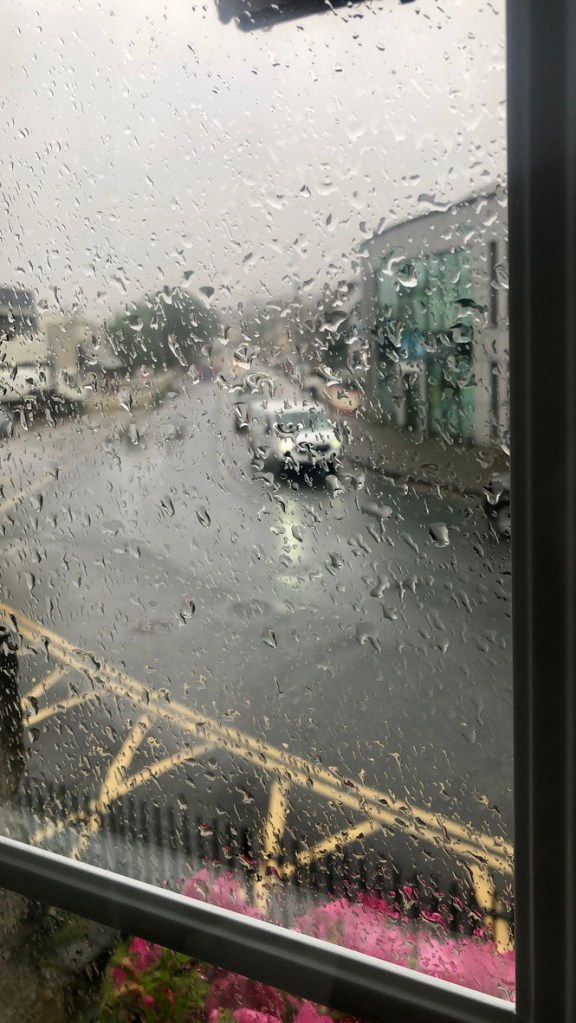
Not the most inspiring view out our window.

We woke up to persistent rain, as a frontal system was passing through, moving east. Curtains of drizzle blow across the landscape.

Our tour of Ireland started in the rain, and it looked like it would end the same way. Today was our final day. We felt quite sad, for the past 3 weeks have been simply superb. I will finish the blog with a summation page of feelings, emotions, do’s and don’ts. It will also include tips for anybody else that reads this and wants to do something similar.

After a hearty breakfast we bid farewell to the Meadowside B&B and our host Phyl. We donned the wet weather gear and set off north east. We crossed the river Clody. Then we turned southwest onto the L2026. 

The drizzle caused large plops of water to drip from the tree canopy above. The smell of the earthy woods and foliage was wonderful.

The road started to climb through pastures next the signs for the Leinster Way.

The wind now picked up as we approached the high ground. Cloud level is above us and we climb ever closer and disappear into it. Fog and mist are all around.

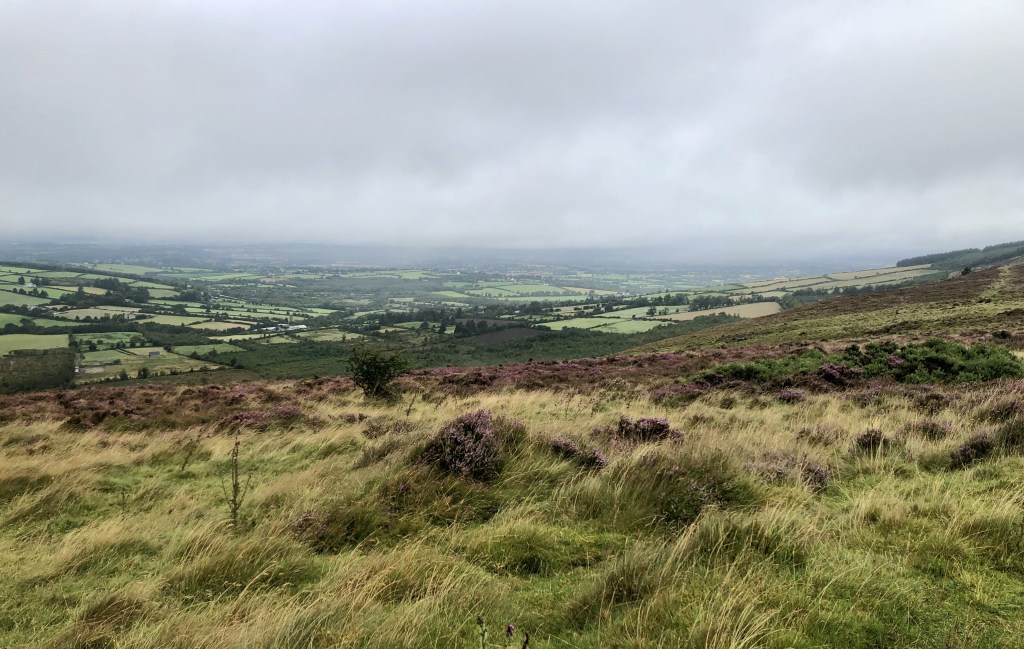
We are in glorious heather country again. Oh, how I love being up here. Yes, it is windy and wet and a little chilly. But the panoramas all around make up for that. The patchwork quilt of County Carlow spreads out around us. We pass a deer park information board in the mist. We see no deer. We do see a fox and plenty of sheep walking on the road.

As we descend on the L3005 down from the clouds and skirt the flanks of Slievebawn, suddenly blue skies unfold. The road dries. We dry. Huzzah!

Turning onto the L7045 we pass Killedmond. Bizarre name. We head for the small village of Borris and stop in a lay-by to remove the wet weather gear.

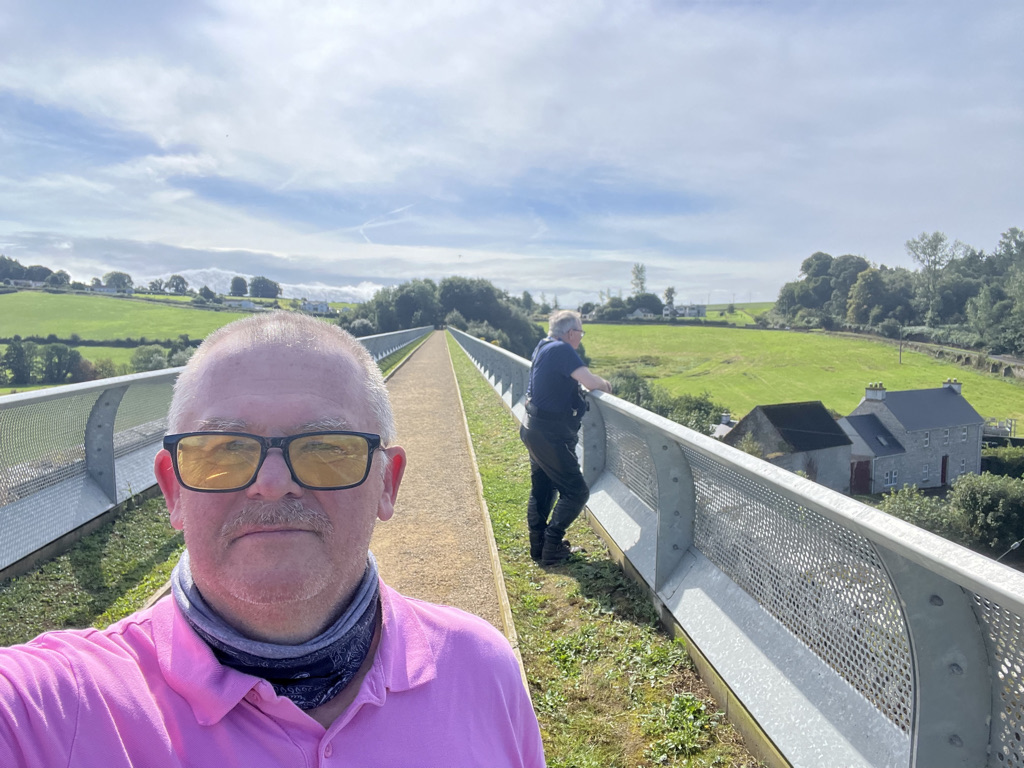
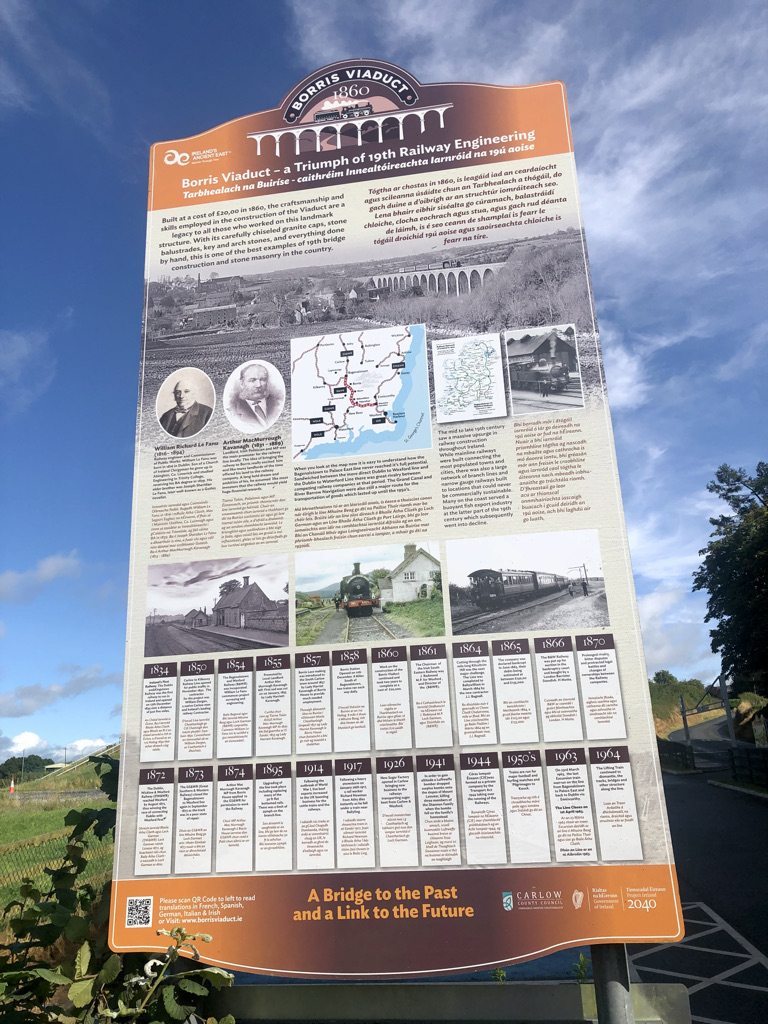
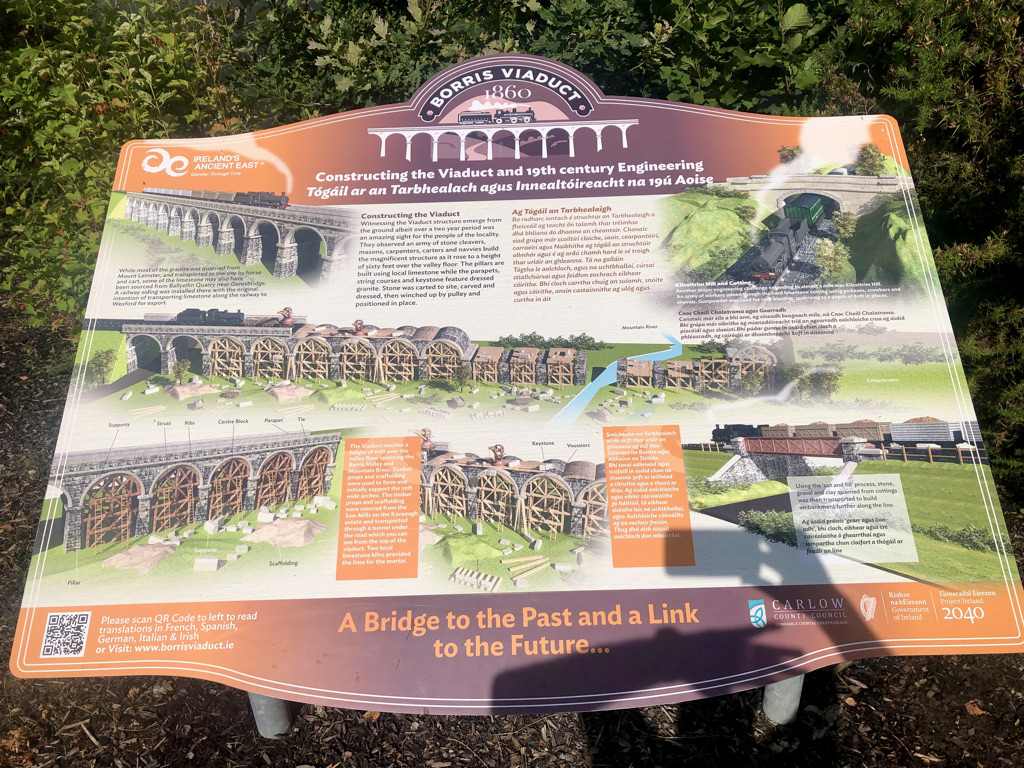
In a chance discovery, we see an enormous stone viaduct spread out before us. It needs exploring. Various notice boards describe it.

The Borris Railway viaduct is a truly impressive piece of railway heritage. You can walk over it where once the railway tracks were laid. Another example of finding hidden treasures if you wander off the track most trodden.

With less hindrance from wet weather gear we move on.

We pass the impossibly named village of Graiguenamanagh. We take the R703 and move along at a decent speed. We then cross the River Nore and enter Thomastown.

It is another pretty little place. Parking is a bit of an issue. We circle the one-way system twice and find a spot for the bikes. The Blackberry cafe hosts us for coffee. We have a slice of lemon cake and an almond tart. Both are scrumptious.

No really. Quality control only.

Duly refreshed we contuinue south on the R700. This is a fairly easy road to ride. Well surfaced and dry. Too many cars cross the centre white lines on the bends encroaching on our side of the road. Dont do that. You will kill a motorcyclist. We are on our guard all the time for this.

We enter the large town of New Ross by a bridge over the River Barrow.

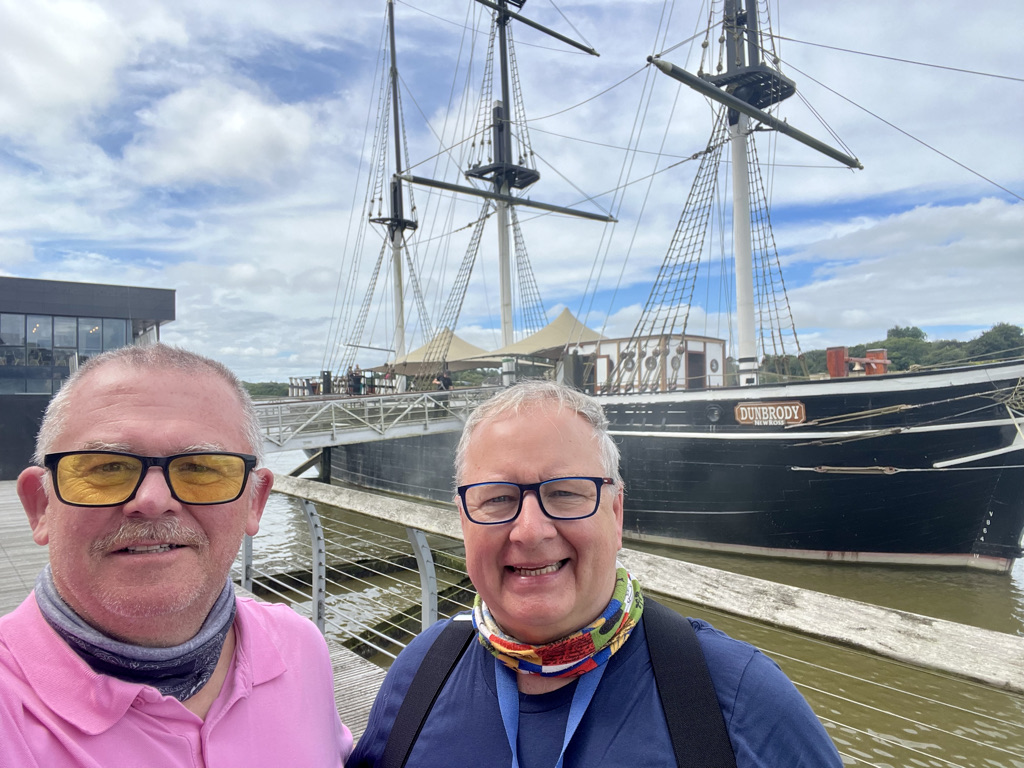
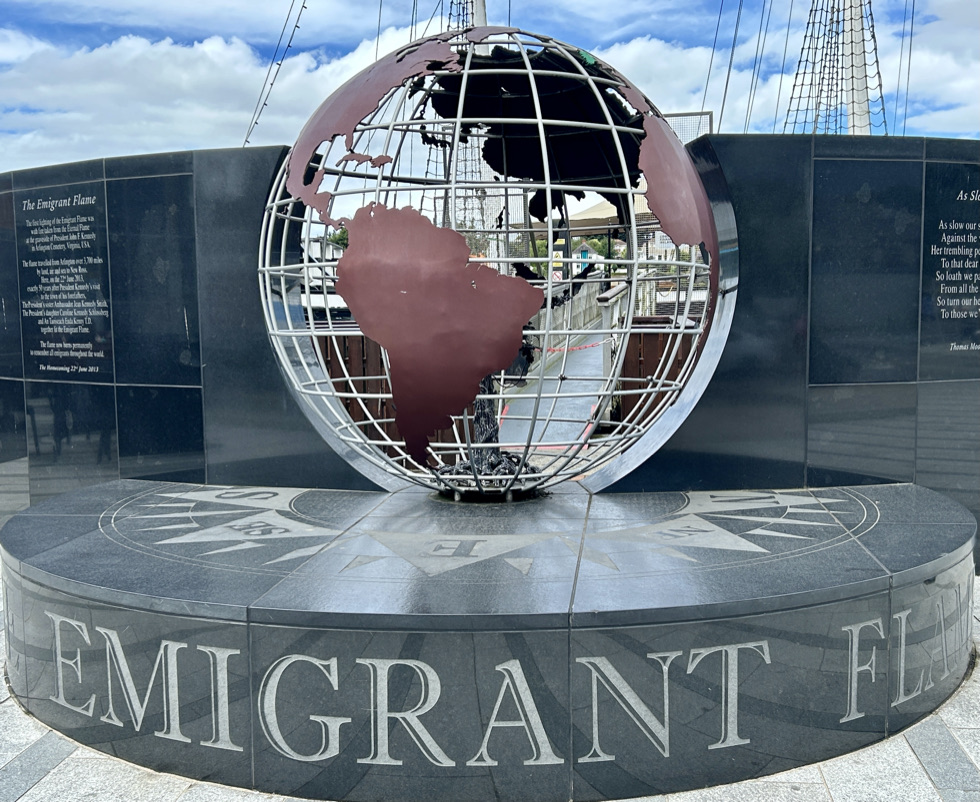
Upon the river lies the Dunbrody.

She was a ship that carried emigrants aboard. Many as a result of the great potato famine of 1845. You can read more here. This page even has a searchable emigrant database.

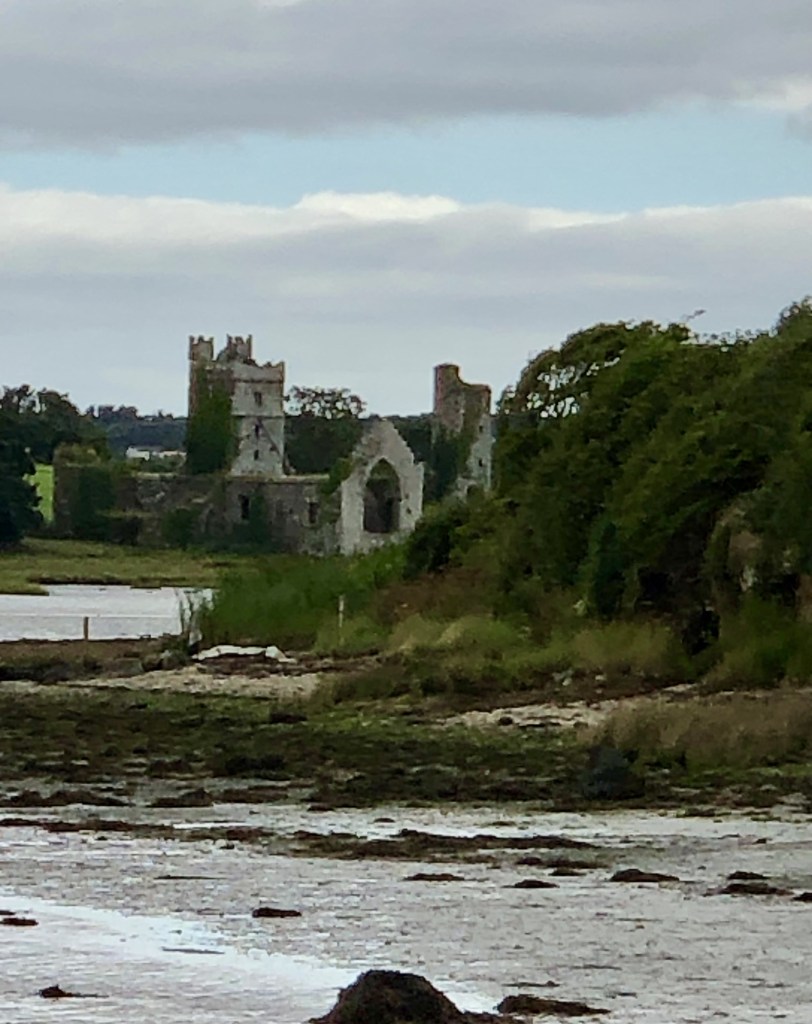
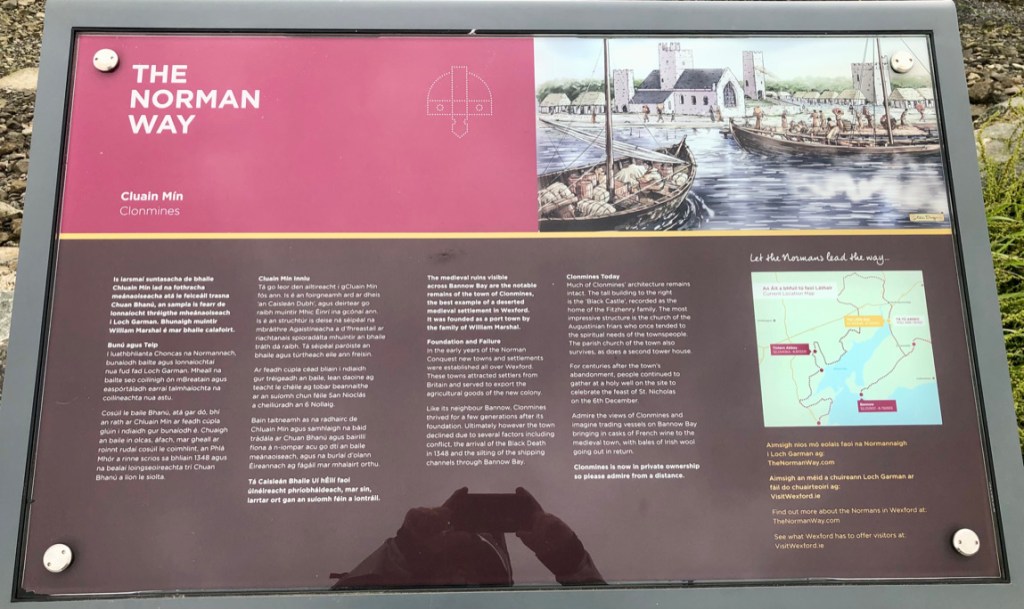
We take the road south once more. The countryside changes to open farmland and then coastal reed lands. The uplands are for the sheep. The lowlands are for the cattle and arable crops. The fields are different shades of colour reflecting their use. There is evidence all around of the Normans. Church towers are square. We chance upon signs for the Norman Way. The smell of the sea is suddenly in the air. It is heady and wholesome.

Passing through Wellingtonbridge we stop and soak in the views.

We continue following country lanes rather than the main highways. Around every corner, interesting architecture presents itself.

We divert down to Kilmore Quay just for a look.

It is a busy holiday makers gathering spot. Ice cream sellers appear to be doing rather well. We stretch our legs and take a wander around.

Time to stand and stare.

We have to check in to our accommodation near Rosslare for our last night. So, we press on to Kilmore. We continue to Tomhaggard (got to love that name). Broadway is next (we were in Hollywood yesterday). Finally, we reach Tagoat. 

The enormity of what we have done has not sunk in yet. It will. In time.

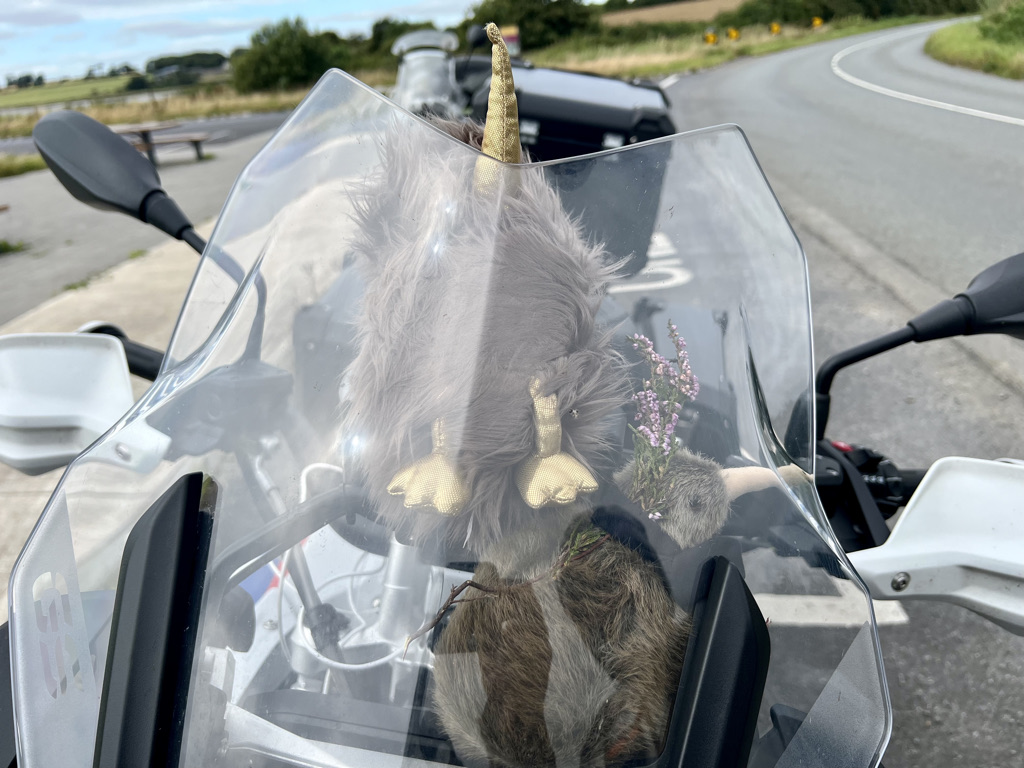
My two kiwis and heather. My guardians on the road since day 1.

Today has been another fabulous day in the saddle. Ireland is the country that keeps on giving. If seeing is believing then I am a convert.

We have an early morning ferry home tomorrow morning. In a few days once I have gathered my thoughts I will do a final post. Until then farewell Ireland. You and your people are beguiling, enchanting, funny, witty, chatty, warm, and giving. I love you. I love you. I love you.

There will forever be a part of Ireland in our soul. Neither I or Andy will leave the Emerald Isle without leaving a part of us behind.

Day 20, Kilcullen to Bunclody. Exploring Wicklow Mountains: Motorcycle Tour with Breathtaking Views and Heartwarming Encounters

It was a restless night for both Andy and I.  It was a warm night. We left the window open to get some air. But, the traffic noise in the street outside caused some disturbance.

After a breakfast of porridge and fruit that Andy had acquired yesterday we set off into the morning.

Today’s journey was a run into the Wicklow mountains. When planning today’s leg I had heard that they were beautiful and had to be seen. 

Taking the R413 we set off east through the Coillte forest. The dappled sunlight passing through the trees canopy was wonderful to enjoy. A light breeze ruffled them above us. The smell of damp vegetation wafted through our visors. No better way to start the day.

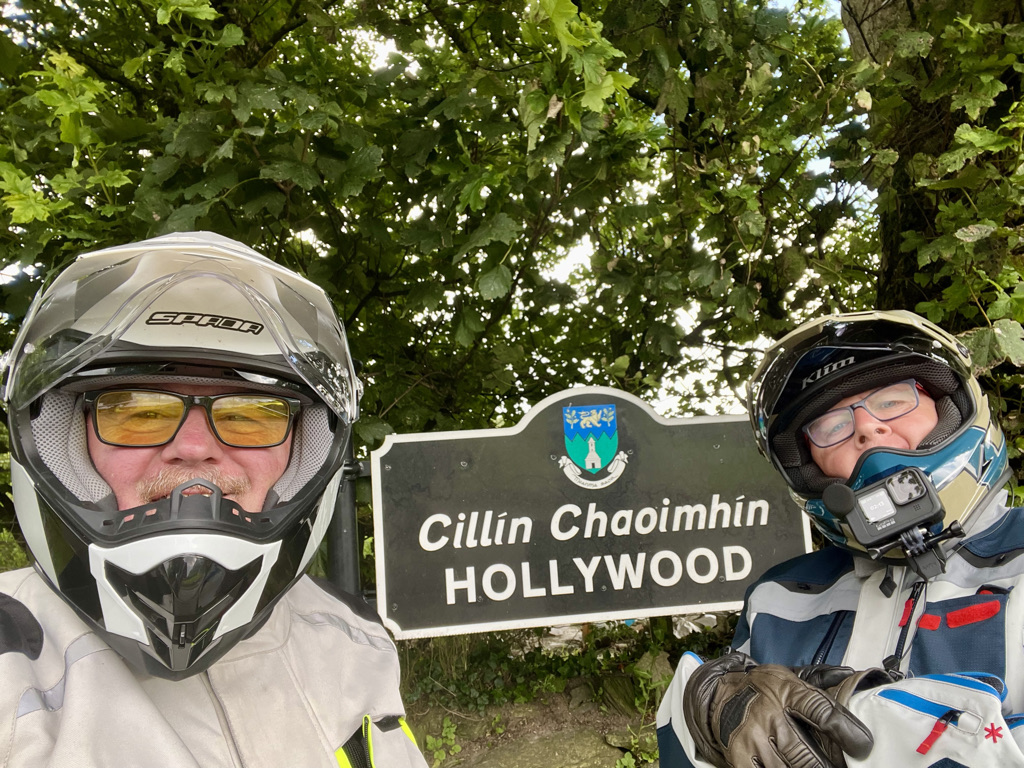
Two blog stars

We skirted south of the wonderfully named village of Ballymore Eustace into the equally splendidly named village of Hollywood. We just had to get a photo.

We are now on the R756 that starts to climb gradually up into the hills. The scenery changes with altitude. Brockagh Mountain looms overhead to our left.

Oh Ireland Ireland! What have you done to us? Your landscapes enchant. Your people are warm and sincere. Memories are forged for a lifetime. 

Windswept in the Wicklow Gap.

We stop at the Wicklow Gap to soak up the scenery. To stand and stare.

It is bleak and windy. The purple heather carpets the flanks of the hills all around. This is what touring is all about. Get off the bikes to stand and stare. The road now descends to the southeast. We arrive in the pretty town of Laragh.

the sun shines on the righteous

Time for a coffee at a lovely little café adorned with flowers in baskets and tubs.

Refreshed we take the old military road, the R115 and start to climb once more heading north.

The road winds and twists its way next the Glenmacnass river up the valley.

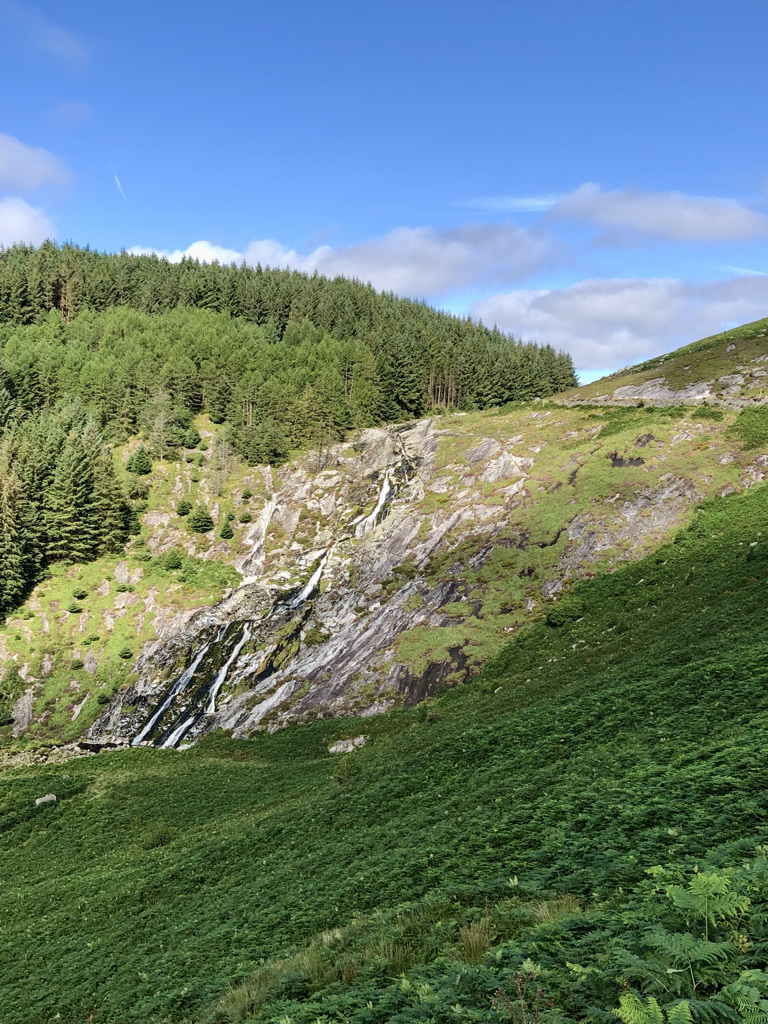
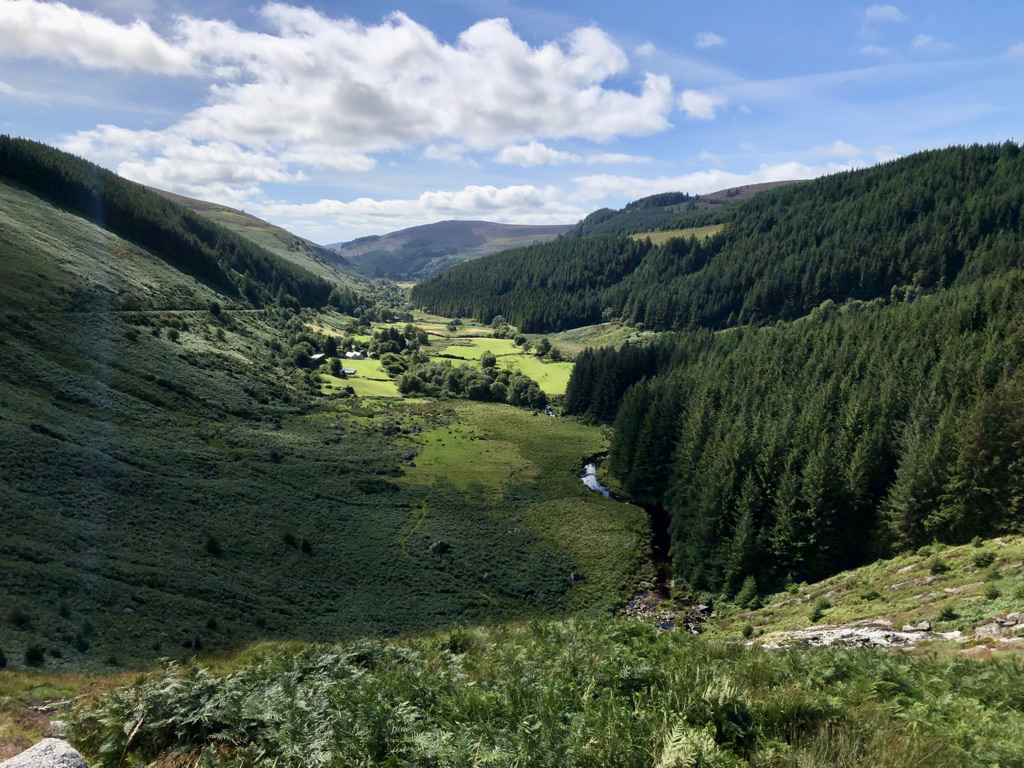
Again deciduous trees give way to conifers. They in turn give way to brackens and finally to heather moorlands. We stop at the Glenmacnass waterfall to take some more photos and look back down the valley.

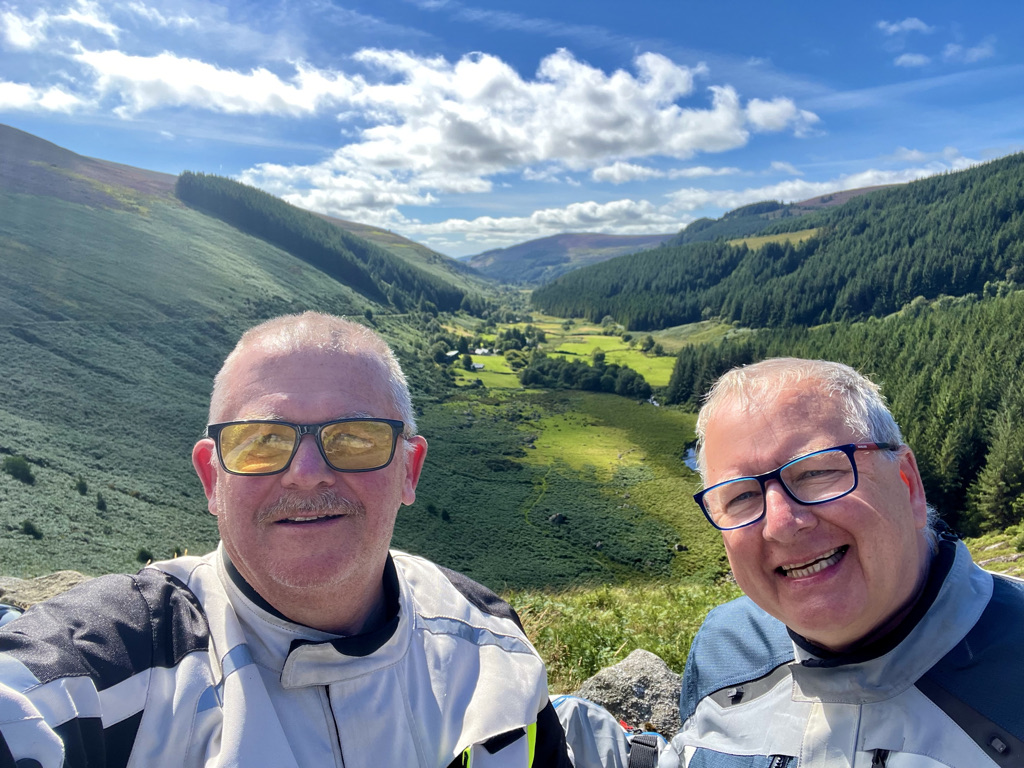
You would be forgiven for thinking you were in a Swiss Alpine meadow.

The road continues its upward trajectory and crosses open moorland where sheep graze. They rather like wandering onto the road as well. In the middle of nowhere, the road turns hard right onto the R759.

Two kiwis watching the road ahead.

It winds its way along the eastern shore of Lough Tay. It sparkles down in the valley way below. Its dark waters are lightly ruffled by the wind. Surrounded by an artists palette of colour, this is the stuff of stories.

Sapphire blue waters in Lough Tay.

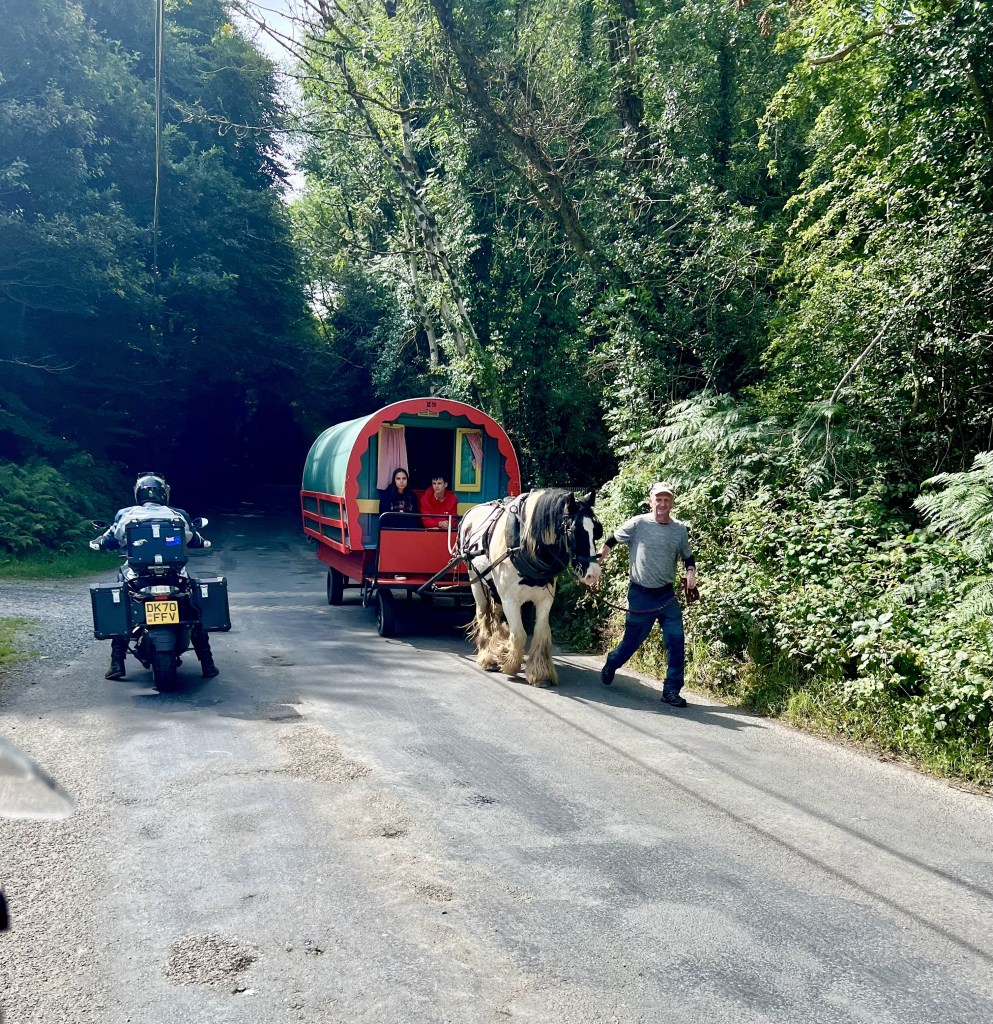
The road starts its long descent to skirt the Vartry reservoirs. It then passes through the pretty town of Roundwood. It continues in a southerly direction on the L1076 into deciduous forest again. The dappled sunlight is back. The wind has gone. We chance upon two traditional caravans pulled by large horses. We stop to let them pass by so as not to frighten the horses with our motorbikes.

We continued on to Rathdrum to relieve the local shop of two ice creams for two weary travellers.

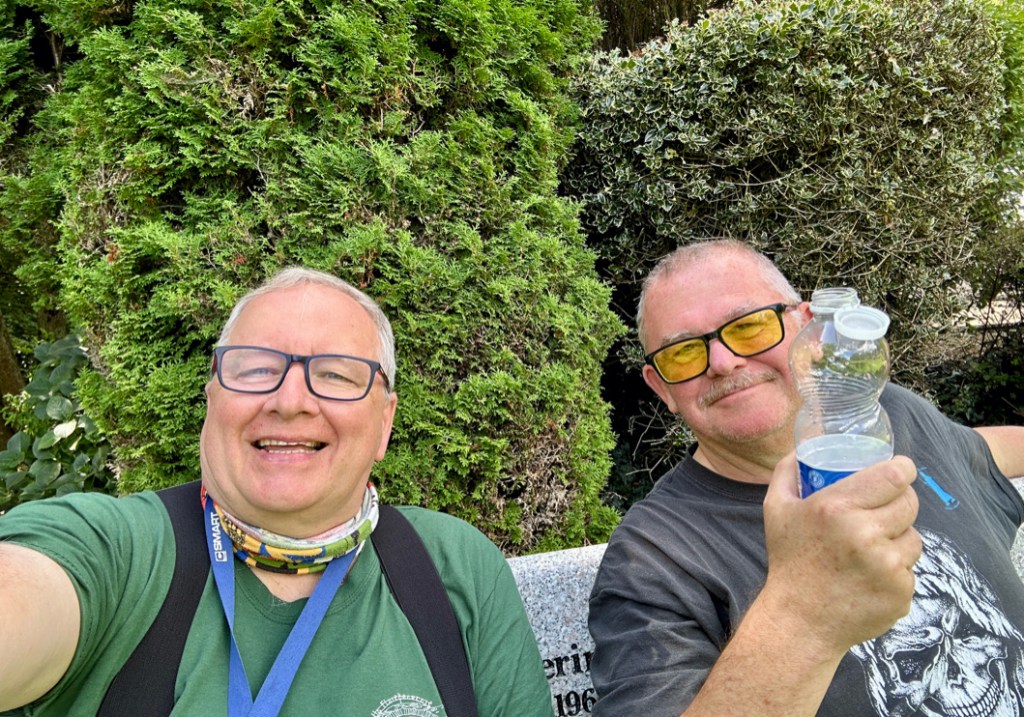
The winding roads and sun are taking their toll. We decide to stop in a very small park in Craanford. Strolling in the shade of the trees along the banks of the very small River Lask is just the tonic. We stop on a bench to take in the peace. We are approached by a man in an Ireland Rugby shirt. He asks about the bikes and what we are doing. He goes to his car and returns with two bottles of water for us, saying we must be thirsty. Paddy is our chance encounter of the day that restores our faith in humanity.

He is a chef in a local pub and stopped to phone his wife. He saw us and came for a chat. For 30 minutes, we chatted about this and that. Another genuinely nice person in this amazing country. Before departing, he left us another two bottles of water. He jumped in his car. He tooted, waved, and went on his way. Andy and I were speechless.

We have now arrived at our accommodation in Bunclody. 

What an outstanding day this has been. Our tour nears its end and still produces days like today. Have we been on the best road of the entire tour? Quite possibly. Hard to tell. But oh my. We will be talking about today for some time to come.

Day 19, Castlepollard to Kilcullen. Exploring Kells Abbey and Battle of the Boyne: A Historical Ride in Ireland

There were only two real goals to try and achieve today. One was to visit the site of Kells Abbey. This was because my wife Debbie had seen the Book of Kells in Dublin. I wanted to see where it had been kept for 700 years before being deposited in Trinity College Library Dublin. The other was the Battle of the Boyne site. I had read much on this and wanted to visit.

With that in mind we awoke to a glorious morning. A light warm breeze had kept the bikes free of dew overnight. After a decent breakfast we packed up our stuff onto the bikes and set off for Kells.

The road from Castlepollard to Kells is the R195 and is an easy ride in the morning sun. It is sunday. The smell of freshly mown lawns wafts on the warm breeze. It is rich. It reminds me of my boys following around the garden as I mowed the lawn when they were growing up. As the road reaches Kells we pass the Spire of Lloyd. A magnificent tower set atop a hill on the side of the road. 

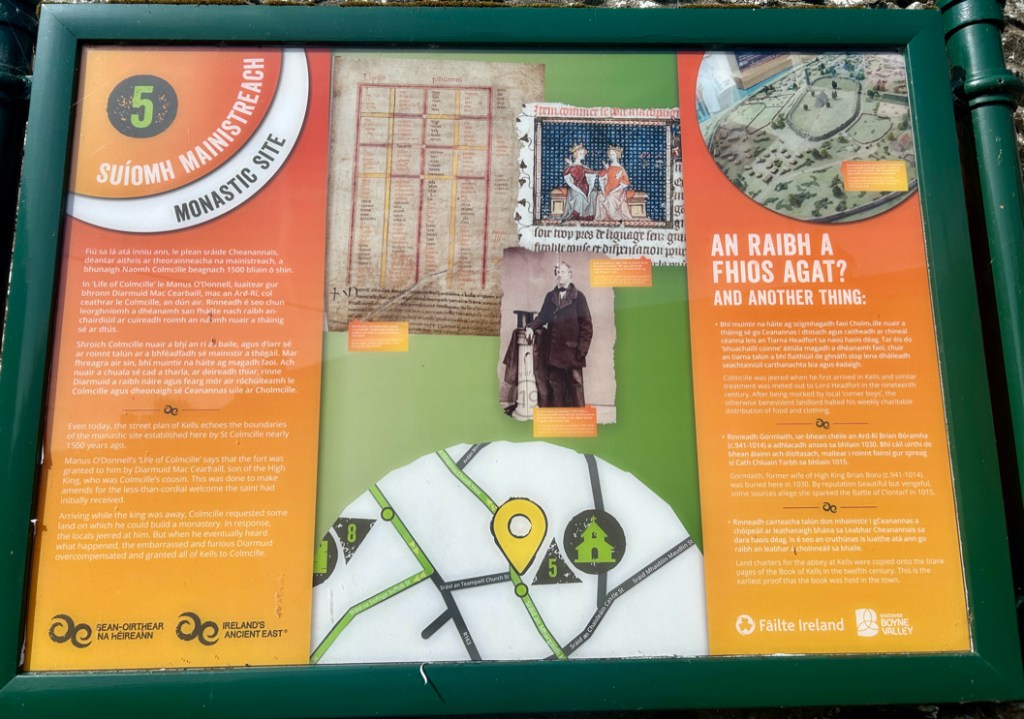
Kells at first appearance is just another Irish town. Nothing remarkable stands out. But oh how I was wrong. A large square structure of white plastic sheeting around scaffolding stands proud. It is the Kells Abbey tower. The only remaining remnant of the original abbey. It is being restored and maintained and is hidden from view. I have to resort to a web picture to show you what it’s like. I must credit lovetovisitireland.com for the photo.

A fairly modern church, St Columba’s Church, now stands on the site of the old abbey. A picture board at the entrance alludes to the scene from the past. It is quite humbling.
Only the tower remains today. To think we were parked just outside the southern gate . We stop and reflect. We move on.

The R163 strikes east through Gibbstown and joins the N51. It is a nondescript road but carries us quickly to The Battle of the Boyne visitors centre.

We had just parked the bikes. We were heading to the cafe when we met three of the staff working at the centre. Employed by the OPW, Office for Public Works, they are a credit to to Ireland. How lucky we were. One of the men was Graham Hartnett. He was one of those amazing individuals that bring something special to your day.

Take a bow Graham. You are one special person.

We chatted and mentioned we were going for a coffee. He started to show us to the cafe. Outside the stately home that is now the visitors’ centre, he turned us to look over the battlefield.

The brown field behind us is the site of the battle.

Then he started to tell us about the battle. I was under his spell. His enthusiasm for the subject became infectious. Now I have been to the site of the Charge of the Light Brigade. I have also been to General Menchikov’s redoubt, Nagasaki, and Hiroshima. I listened to guides. But none came close to Graham’s talk on the Battle of the Boyne. Having read much, I thought I knew what the battle was all about. But Graham filled in much of what I was missing. You can read about this in books. But get someone like Graham to bring it alive in front of you……well that lasts a lifetime. Thank you Sir!
I also had no idea how much of European and UK history sprung from this one battle. For example, the Pope supported the Williamite cause against the Catholic Jacobites and much more. I strongly suggest you go. Seek out Graham and listen to his infectious and enthusiastic commentary. This 20 minutes in his company has epitomised our trip to Ireland. Warmth, friendship, and a willingness to share. The laser-enhanced demonstration of the battle in the visitors’ center is also truly excellent.

Time was pressing on. After a cup tea and delicious almond slice in the cafe we had to move on.

We had intended to go to the Newgrange neolithic site not far from the Boyne visitors centre. But we had ran out of time. We will save that for another day. 

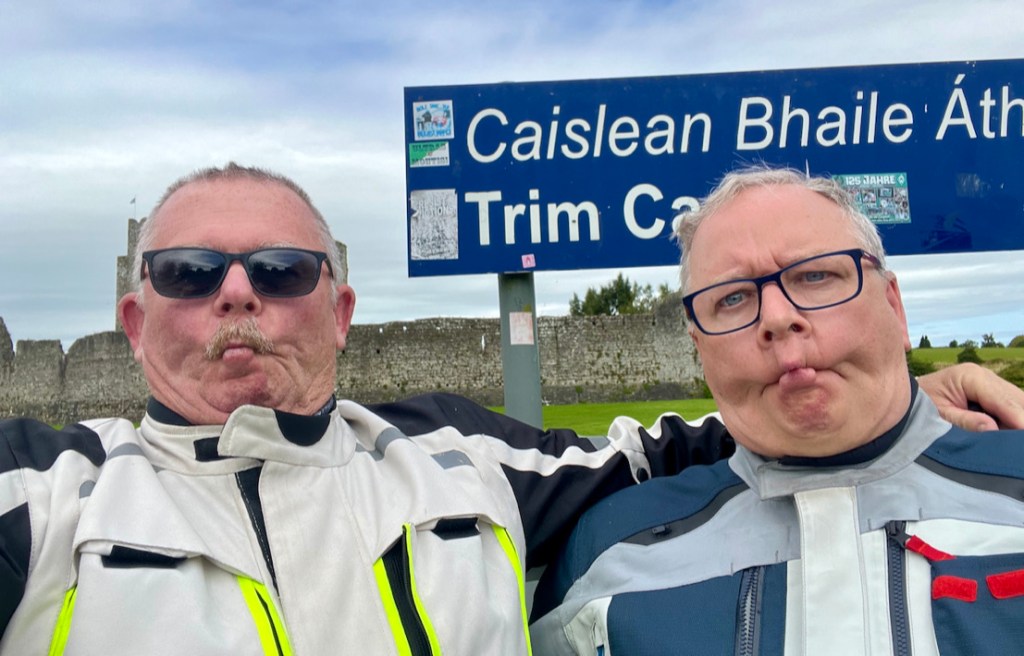
Taking the L1601 we now go west next to the Boyne Navigation canal. We skirt around Navan and take the R161 Southwest. This leads us to the very pretty town of Trim. This very tidy town has it all.

Two fellows trying to appear trim in Trim.

A castle, beautiful churches, a river and a substantial monument to the Duke of Wellington. Arthur Wellesey, better known as the 1st Duke of Wellington or ‘the Iron Duke’, was educated at Trim. He spent much of his childhood at the nearby Dangan Castle, his father’s country house (now in ruins). He was also an MP for Trim. Every day is a school day in Ireland. I had no idea of Wellingtons connection to Ireland.

The road from here on in follows farm tracks and country roads. It winds through pasture lands. We get our first glimpse of the Wicklow mountains where we shall be tomorrow. We pass the Curragh race course. It is huge. Immaculate grass clipped to perfection waiting for horses to rip it to shreds. We are in racing country.

Journeys end is in the small town of Kilcullen.

As the day draws to a close dark clouds gather. A few spots of rain spatter the window.

It has been a very different riding day today. Easy roads. Some rough in places, especially where they crossed the bogs south of Edenberry. The countryside could be anywhere in England: undulating and green, but with a certain feel to it. I can’t put my finger on it. That is until you interact with the wonderful local people. I do love this country.

Day 18, Farnaght to Castle Pollard. Discovering Hidden Gems: Motorcycle Journey Through Rural Ireland

My bovine alarm clock went off shortly before 5 am. Some young cows in an adjacent field took it upon themselves to herald the arrival of dawn. They did this by mooing to all and sundry.

The sun rose. It was lovely morning.

Opening the back door, two furry faces appeared. The two collies, Ben and Roy, came to say hello and get a chin scratch. What a lovely way to start the day.

We bid farewell to Gerry and Josephine and set off. The L1053 initially strikes north through green and rolling pasture land. Deciduous trees in full leaf line the road. The smell under their canopy in the early morning is divine.

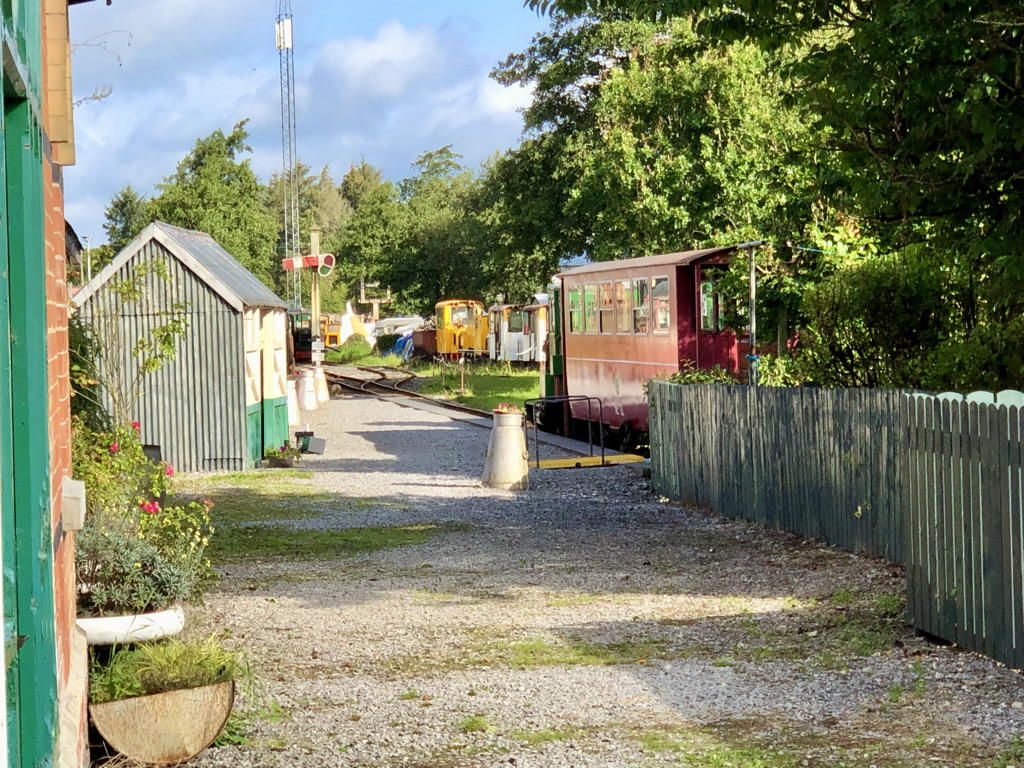
We pass through Gortletteragh and Mohill and join the R202. We ramp up the pace a little as this road has an 80 KMH speed limit and is more open. We continue into the small town of Dromod and park at the railway station. To be found here is the Cavan and Leitrim Railway museum.

Alas, it is closed. Peering through the fence, we see an odd collection of planes. There are old buses and various railway wagons and coaches, all in a sad state of decay. They hope for restoration one day. Andy spies somebody working in one of the dilapidated coaches. He says there is a steam engine coming tomorrow. We will miss it. We move on.

Taking the L1601, we progress north again up the east side of Lough Bofin and Lough Boderg. At Drumsna, we cross the River Shannon. The last time we crossed it was by ferry from Tarbert on the west coast. It is still a wide and impressive river this far inland.
Sticking to small and narrow local roads, we take the L1405 south through rolling farmland. This road is a single-lane track through woodlands and fields and is a delight to ride.

Arriving into Stokestown, we stop to refuel the bikes. What strikes me is that this entire area is one enormous dairy area. As far as the eye can see, green pastures and meadows stretch away to the horizons. Small hamlets of a few houses dot the landscape.

Frequent stops are made to let tractors bimble passed.

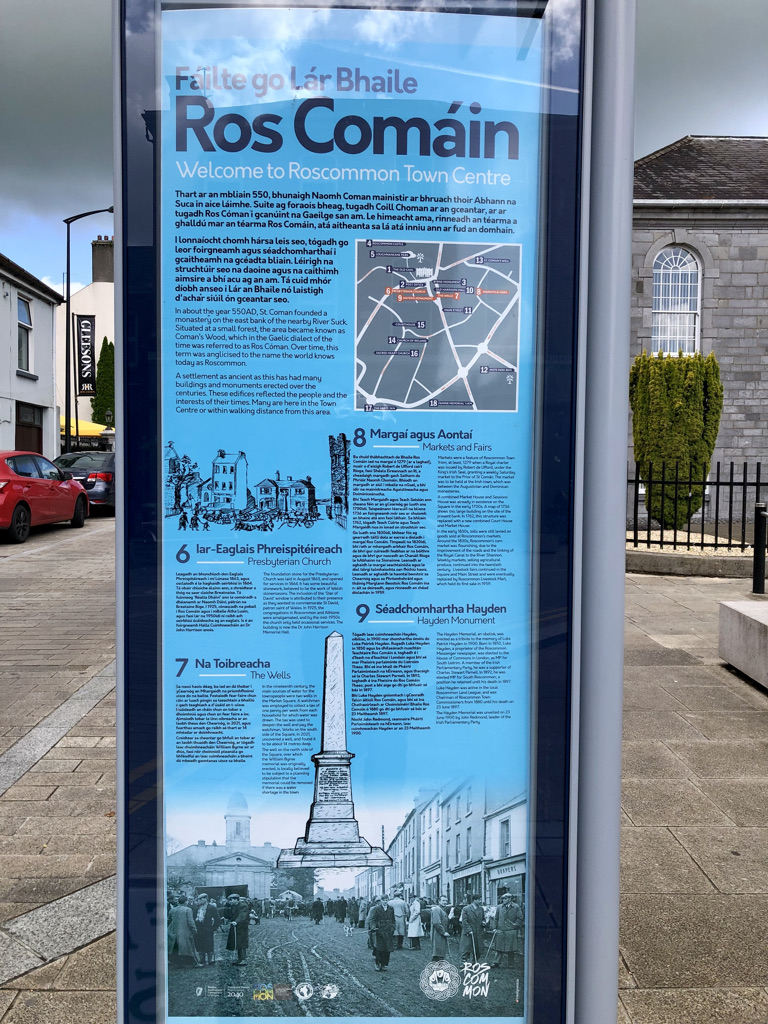
Continuing on to Ballyleague and Roscommon, it is time for a coffee. Roscommon is a busy wee place, and we park rather naughtily on a pavement in the square.

This is a pretty town with a rather impressive looking bank in the town square.

Andy finds a very nice cafe for a sojourn. On returning to the bikes, we see a man sitting on a bench with two golden retrievers at his feet. I ask whether I can say hello to them. They are 2 ½ and 4 years old. Beautiful, placid, and loved a scratch. So much so that the younger one kept putting her paw on me when I stopped.

We bid them farewell and press on.

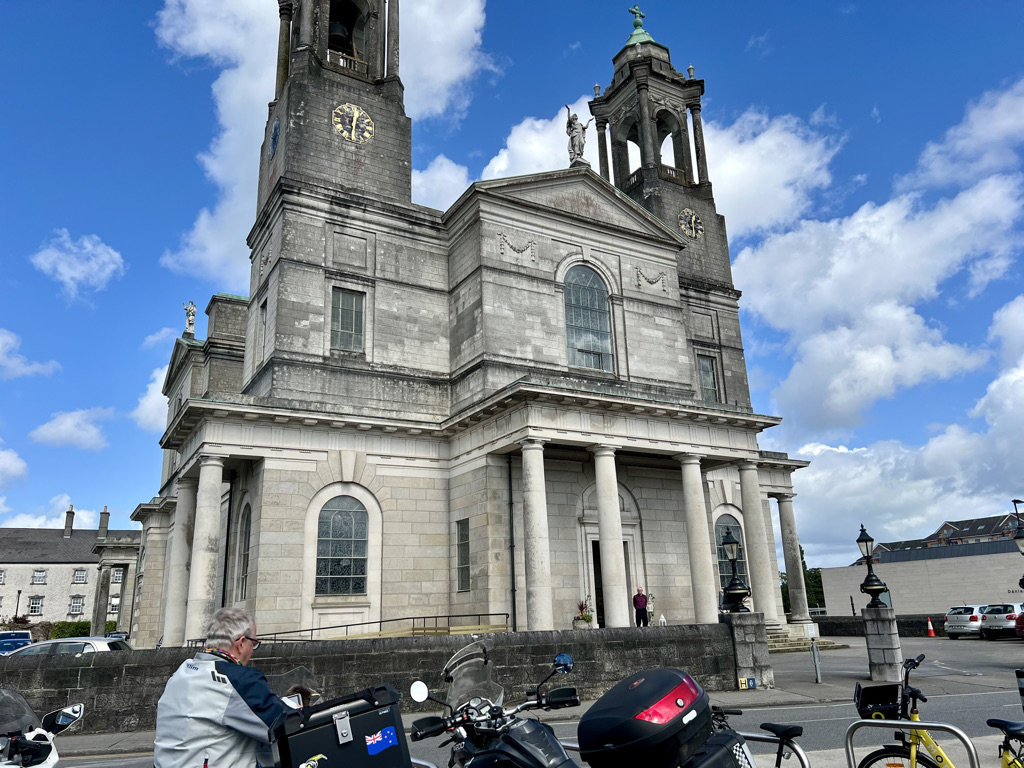
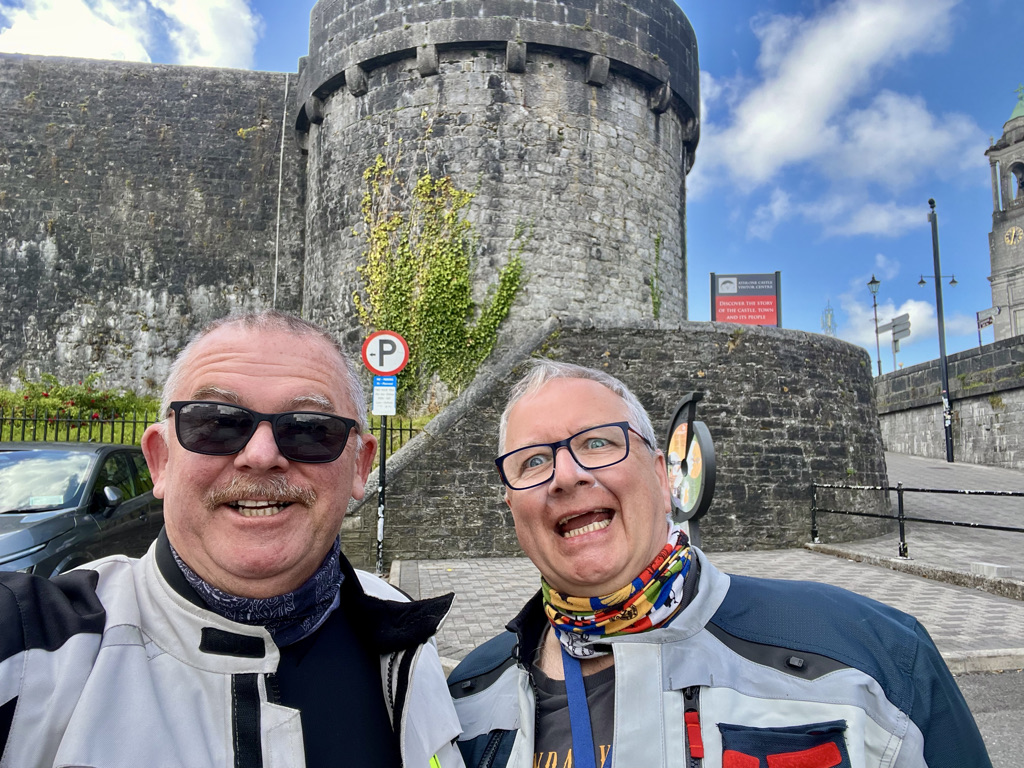
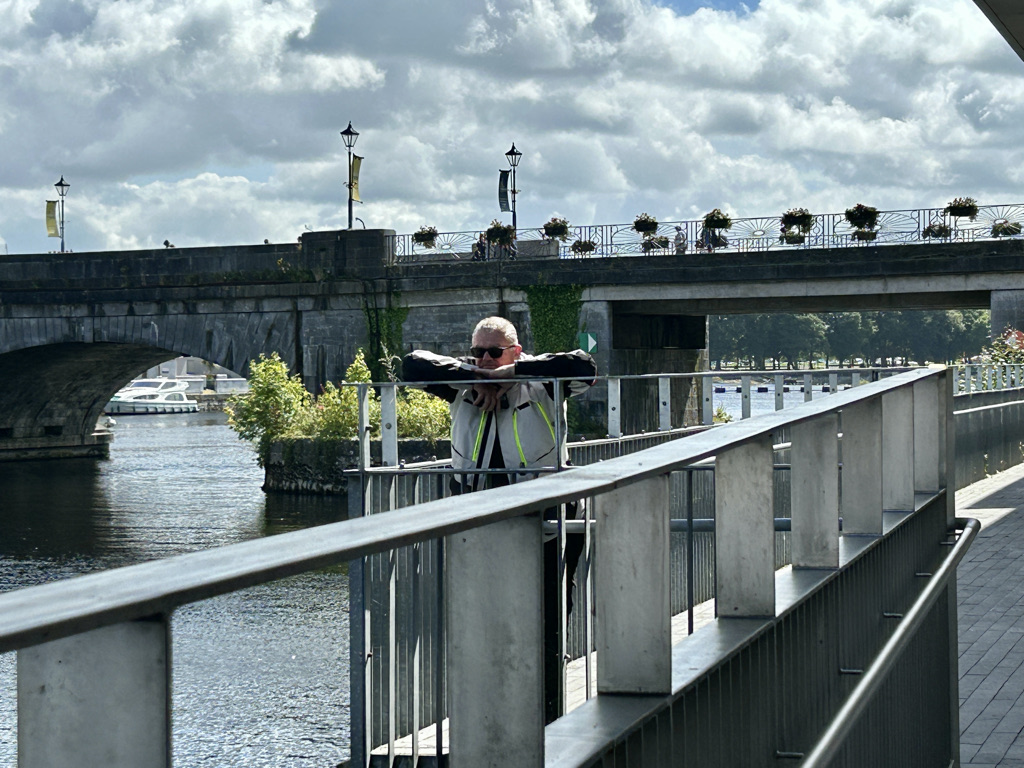
Next stop was the very impressive town of Athlone. Situated on the Shannon, it has a very impressive castle and a magnificent church of Saints Peter and Paul. There was a wedding taking place. We sat on the steps in the sun to relax for a while. We also enjoyed some people watching.

Moving on, we leave the town and strike out into the countryside once more. Leaving the traffic behind, we enjoy the twists and bends of these country lanes. We take in the sights and smells as they pass in the afternoon sun.

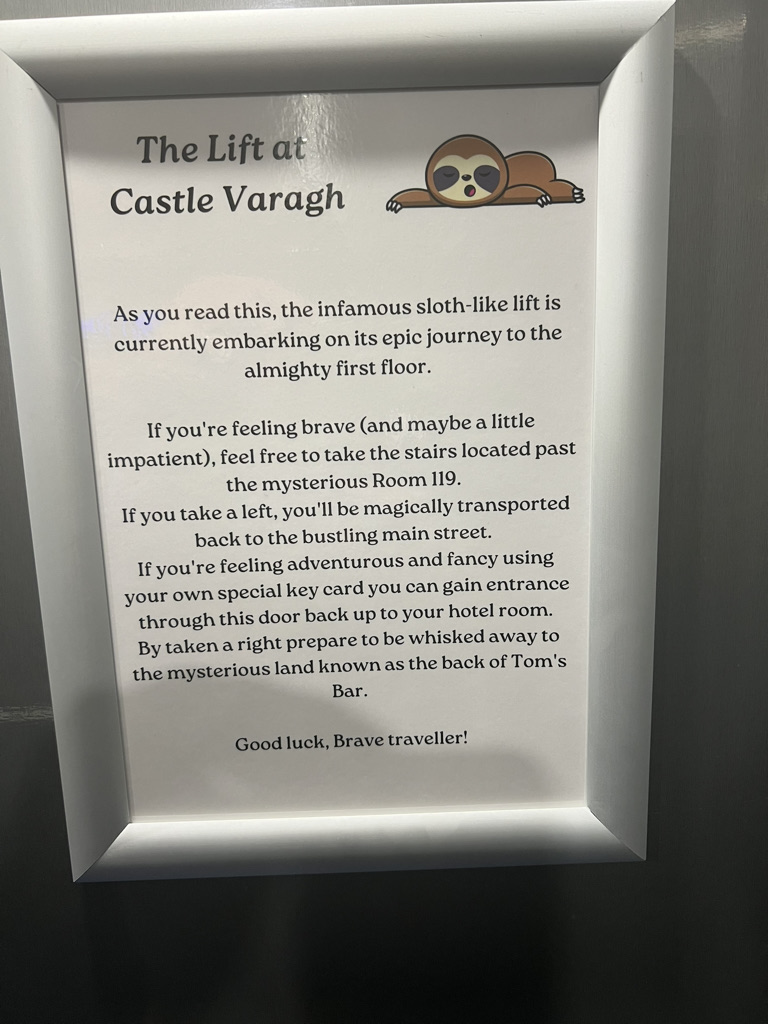
We are now in Castle Varagh hotel in Castlepollard for the night. The sign in the elevator makes us giggle.

Today has been a lovely and warm day. It was cloudy, with plenty of sunshine. The temperature was 22°C. Perfect for enjoying this beautiful country. A Guinness to rid the throat of the dust of the day beckons.

Day 17, Carrickfergus to Farnaght. Discovering Rural Ireland by Motorcycle: A Scenic Route from County Antrim to Leitrim, Passing Through Charming Towns and Lakeside Views

We leave our accommodation and head south towards the southern border of County Antrim.

There is a strong west wind blowing. It whips the waters around Belfast port into white waves and gives the trees a good workout. It is dry. A few spots of early morning drizzle quickly peter out. A quick call is made to BMW Belfast to pick up a part for my bike. What a great bunch of people there. Friendly and helpful. After an hour of chatting we move on.

We skirt along the borders of Counties Down and Armagh touching on the southern shore of Lough Neagh. It is the largest lake in the UK.

The wind buffets us strongly and brings a chill with it off the lough. We have to slow down to stay sfae in the wind.

Passing the towns of Lurgan, Craigavon, and Portadown, we skirt around Armagh in rolling green pasture land. Much slurry has been spread upon the fields. The nasal attack proves it.

Time for a break. Finding nothing in the pretty town of Markethill we press on to Keady and find a small cafe. We stop for a coffee and slice of something nice.

Continuing southwest, it is a short distance to the border. We cross into the Irish Republic and enter County Monaghan. The road signs turn from MPH to km/hr. The traffic noticeably quiets.

At the border the road changes from the C196 to the L3530. Same road. Different name.

The road winds its way through verdant green farmland. Ballybay has its bunting strung up. This is music festival season.

We cross into County Cavan and pass through the town of Cootehill. The very impressive St. Michael’s Church dominates the landscape. It is a big church for such a smallish town. You can’t miss it as you pass through.

We arrive in Cavan town itself. It is clearly the largest town in this region. It is bustling with shoppers. We park the bikes and find another cafe for a coffee and a sandwich. Hanging baskets of flowers are everywhere. Much care has been taken to present the town at its very best.

The wind still whips up the parasols in the cafe, and the clouds fly by at some speed. Threatening clouds are whisked away. Out of the wind, the 20°C temperature feels rather nice. In the wind, the chill drops it substantially.

Leaving Cavan heading southwest, we pass through Bellanagh. Then we leave the N55 onto the L2514. This is a road much less traveled. It is tough going on the backside, being very uneven in places, but the views over the pastures are beautiful.

We pass a myriad of lakes and Loch Gowna. The banks are dotted with fishermen trying their luck. It looks idyllic. The wind must be giving them some challenges, I would think.

We pass into County Longford and journey’s end at the Farnaught Farmhouse in County Leitrim.

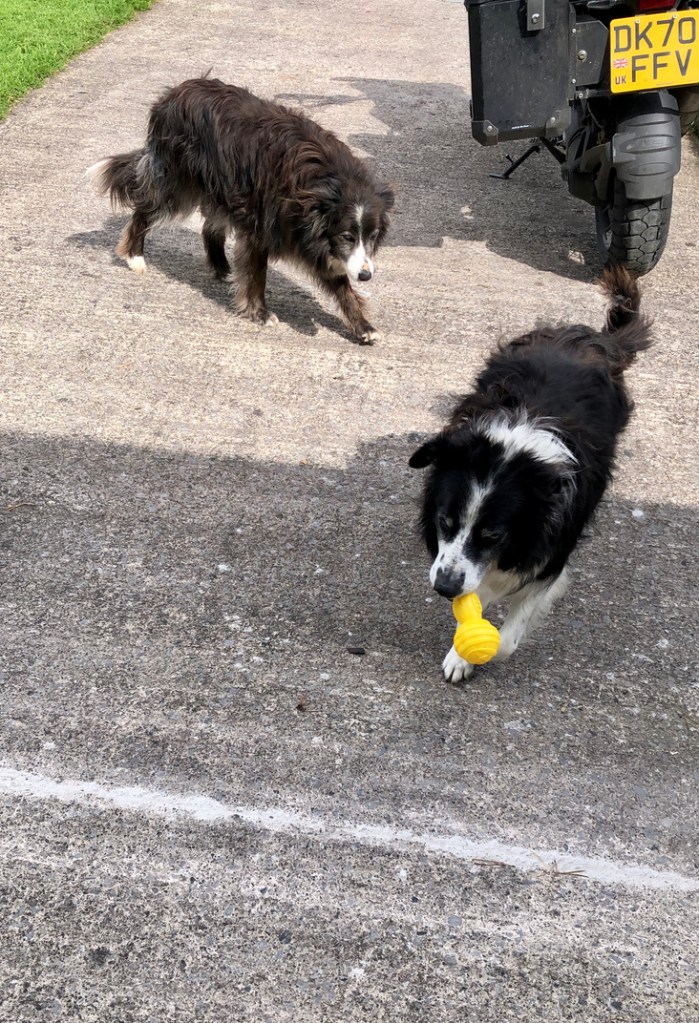
As we pull in, we are greeted by Gerry the farmer and his two elderly collies. They bring a toy bone with them and want to play a game of fetch. Of course, we oblige.

The afternoon sun is giving way to the evening now. A cup of tea on the patio out back and a chance to air out biker’s apparel are both taken. Time to relax and reflect on the day once more. This is a part of Ireland through which I have never been. I can’t say I have ever heard of the places we went through. I have no idea what to expect. Clearly, this is prime farm country. Mainly dairy it would seem.

We continue tomorrow and shall see what the day brings. More new territory for me at any rate.

Day 16, Redcastle to Carrickfergus. Scenic Route through Cushendun: Exploring the North Coast’s Coastal Beauty

The day started out full of hope. The forecasted bad weather had not materialised. 

Again another good breakfast set us up for the day. Hedging our bets we put on the wet weather gear again. More in the hope that putting it on would actually keep the bad weather away. 

So far so good.

We set off heading south on the R238 towards the border with Northern Ireland. At the village of Muff the Wild Atlantic Way ends on the Irish side of the border. Crossing the border the R238 becomes the A2. We are to follow its route for most of the day. 

Crossing north of Londonderry we join the Antrim Coastal Route. The road here is rather uninteresting in its early stages. It is a 100KM/hr trunk route and offers little of scenic or motorcycling interest. We press on. At Limavady, the route turns north on the B69. We take it to add some scenic interest. This also helps to avoid the worst of the holiday traffic.

This little road twists its way among the boggy grounds around Carrowclare and rejoins the A2 at Aghanloo.

We look for a cafe in Coleraine . Nothing open. We drop down into the pretty seaside town of Portstewart.

As we are parking the bikes up on the esplanade a traffic warden approaches. Oh dear we think. Welcome lads he says and starts to chat about where we have been and where we are going. He even suggests a better spot but we tell him we are only here for a coffee break. He recommends a cafe close by. Wishing us well he moves on. His recommendation is good. Chatting to the young man who served us we find out he is mad keen on rugby. I mention David Gallagher being born in Ramelton. It turns out he played for Letterkenny Rugby Club. They are the only team authorised by the All Blacks to wear the silver Fern on their shirt. You learn something every day.

We progress east. We pass through Portrush and pause to take some photos of the cliffs and ruined castle.

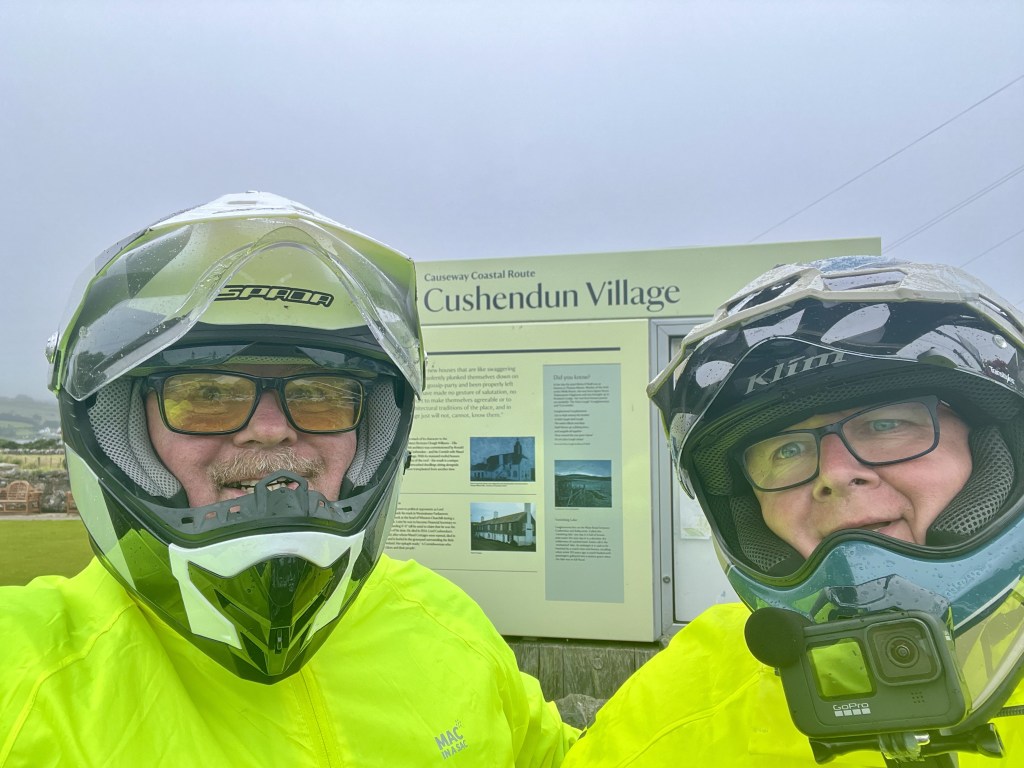
MIY. Men in Yellow

Continuing on passed the Bushmills distillery we arrive and join the throng at the giants Causeway car park. It is full. Teaming with people. I stay with the bikes having been before whilst Andy goes for a looky looky and to get his photos.

We continue on the A2 stopping at various spots to get photos and enjoy the cliff top views. To chat to people as well. They all want to know about our trip. We seem to draw them like a magnet.

We pass the busy towns of Ballintoy and Ballycastle.

Holiday makers grin and bear the chill and overcast conditions. Leaving Ballyboy the road climbs into cloud and fog encompasses us. Visibility drops to around 20 feet and the temperature becomes chilly. My visor keeps fogging up and we drop to 35mph. We turn off onto the B92. We descend through a series of hairpins below cloud level. We arrive into the conservation village of Cushendun.

In the sun it must be magnificent. The black and white colours of the buildings will pop. In the dull and drizzle it looked rather sad waiting for the sun to return.

Another photo. We move on.

The A2 hugs the coast now as the road clings to the shore. Only a stone wall separates us from the sea.

Now the heavens do their worst. As we arrive to pay a family a visit, the rain really comes. We use the loo and get a cup of tea. We know we have to continue to our overnight accommodation.

By the time we arrive and check in we are on the wet side of dry. Boots and gloves are sodden.

Time to reflect on the day and get the hair dryer out and try to dry boots and gloves.

In summation, today’s roads have been easy compared to those of recent times. Wide and fast. Great coastal views but lots of cars. Much more than we saw in Ireland. I do miss the empty roads of Ireland.