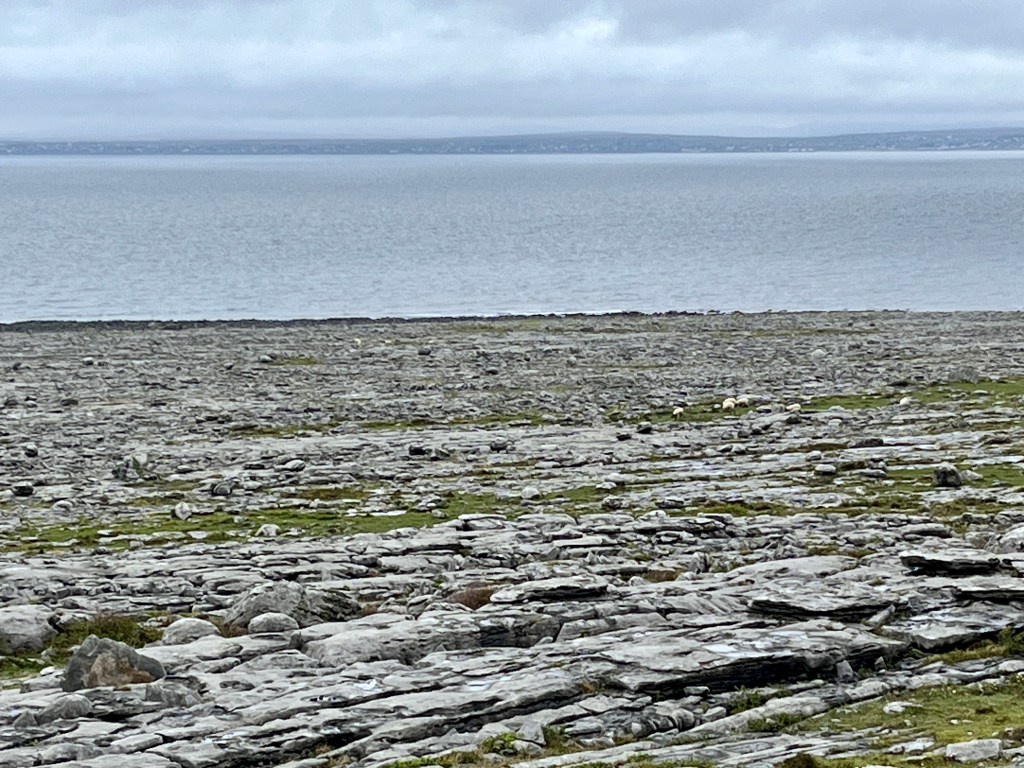
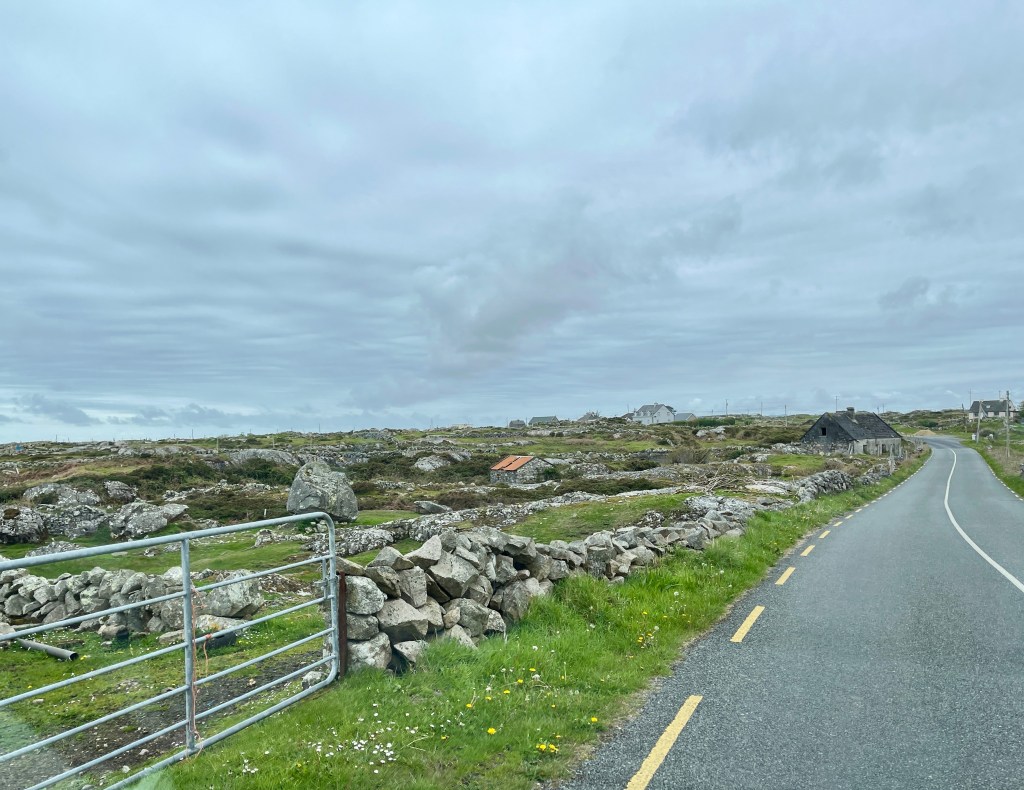
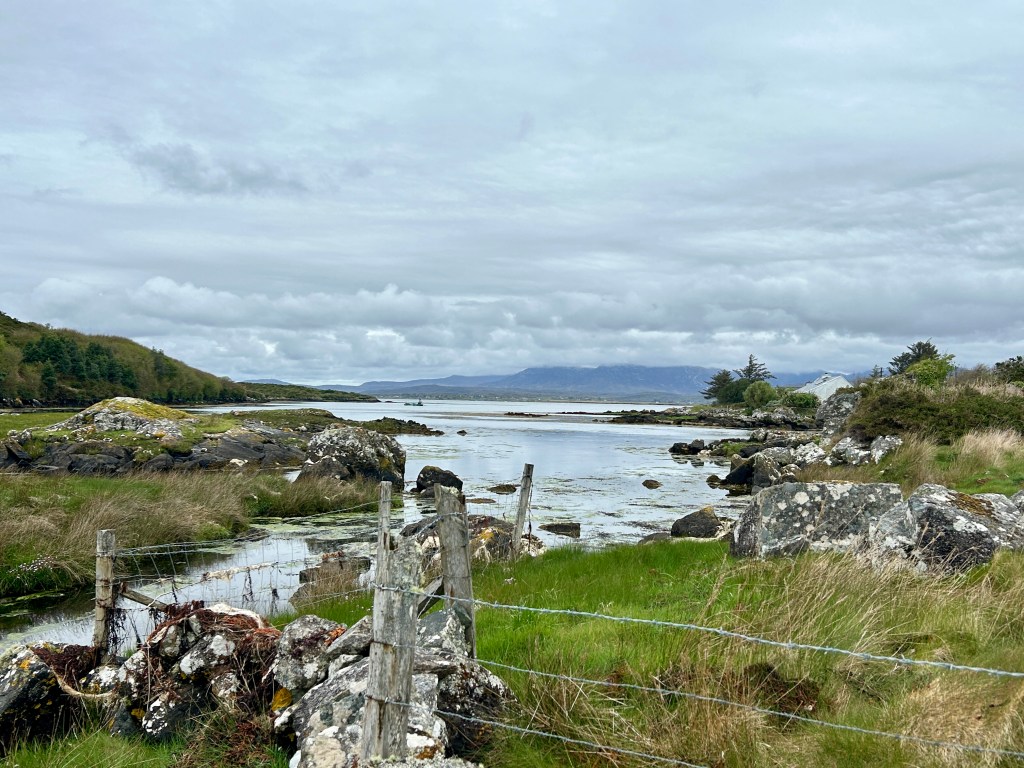
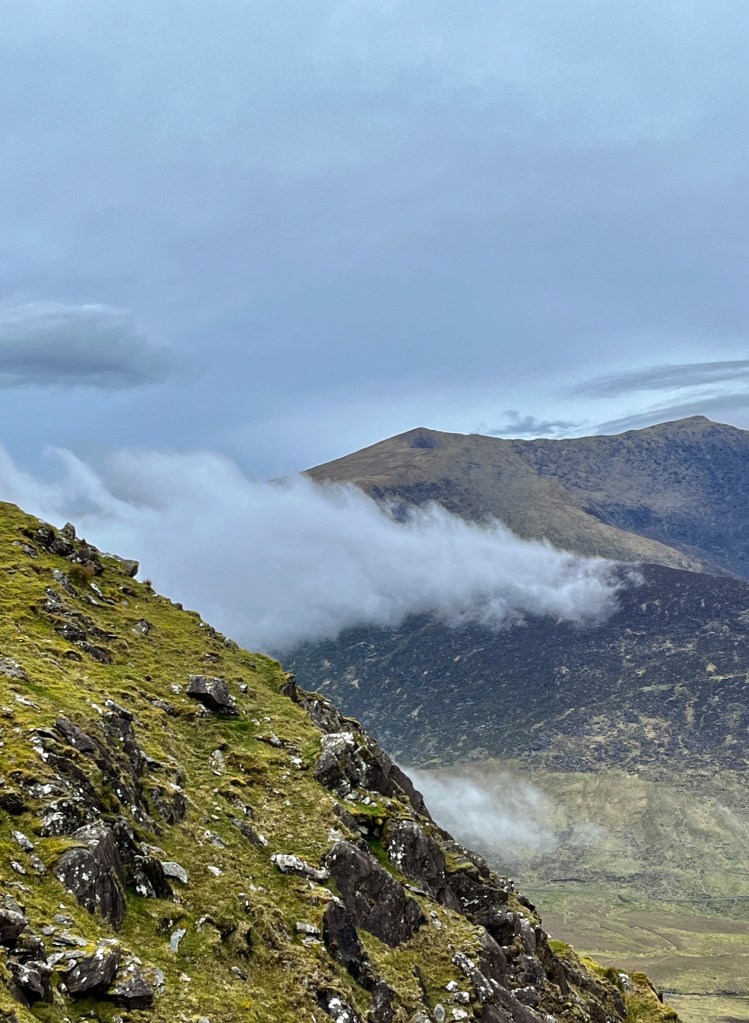
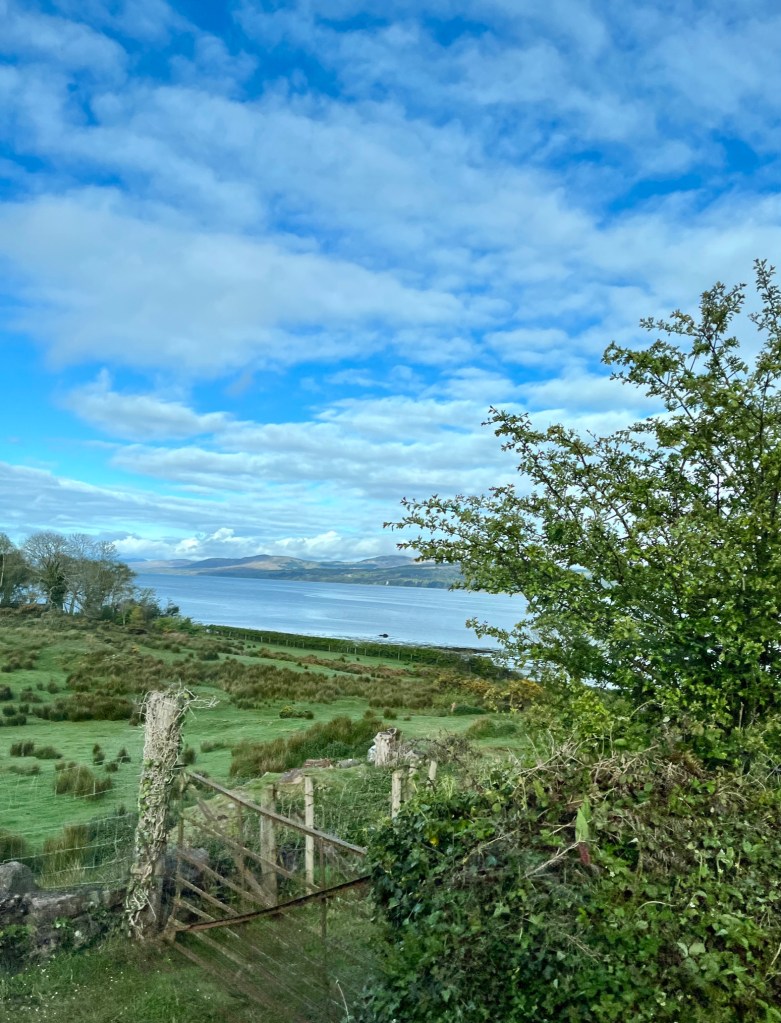
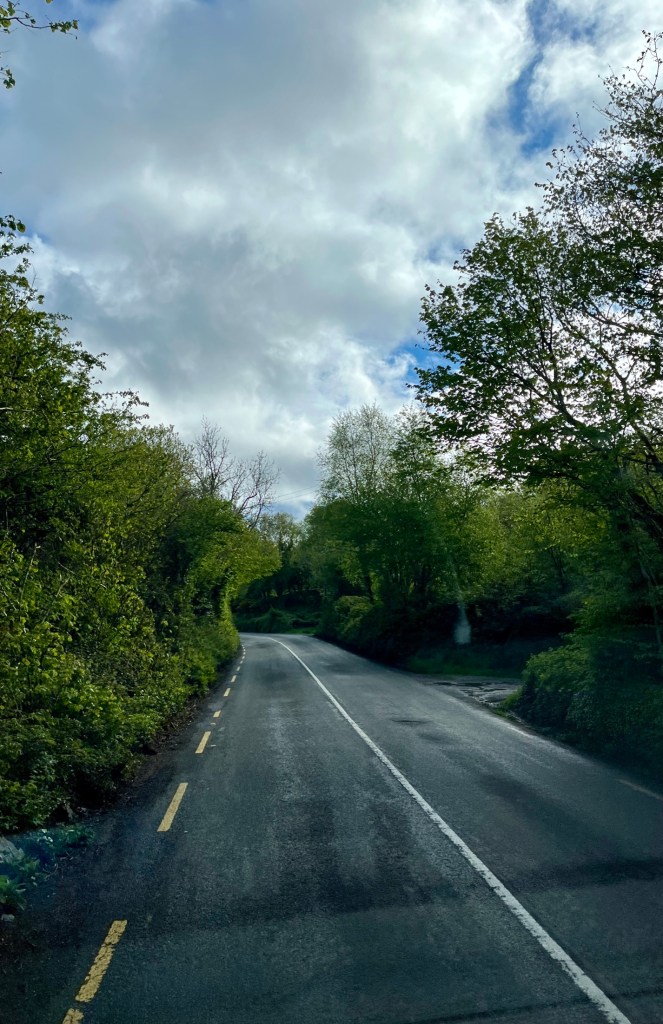
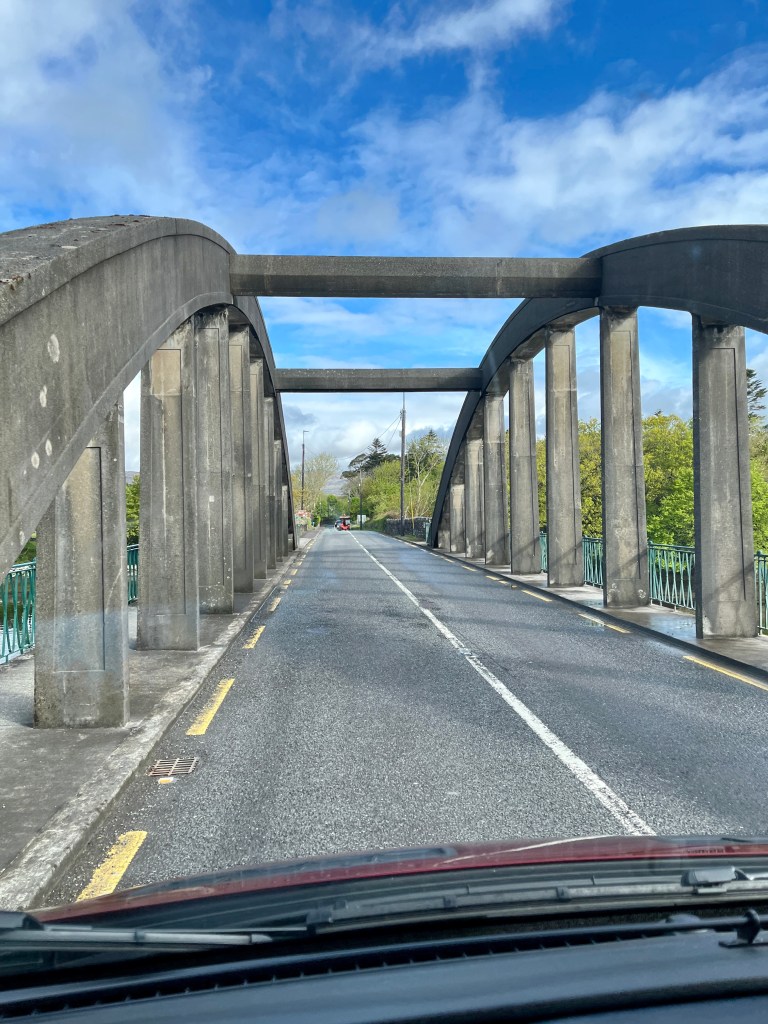
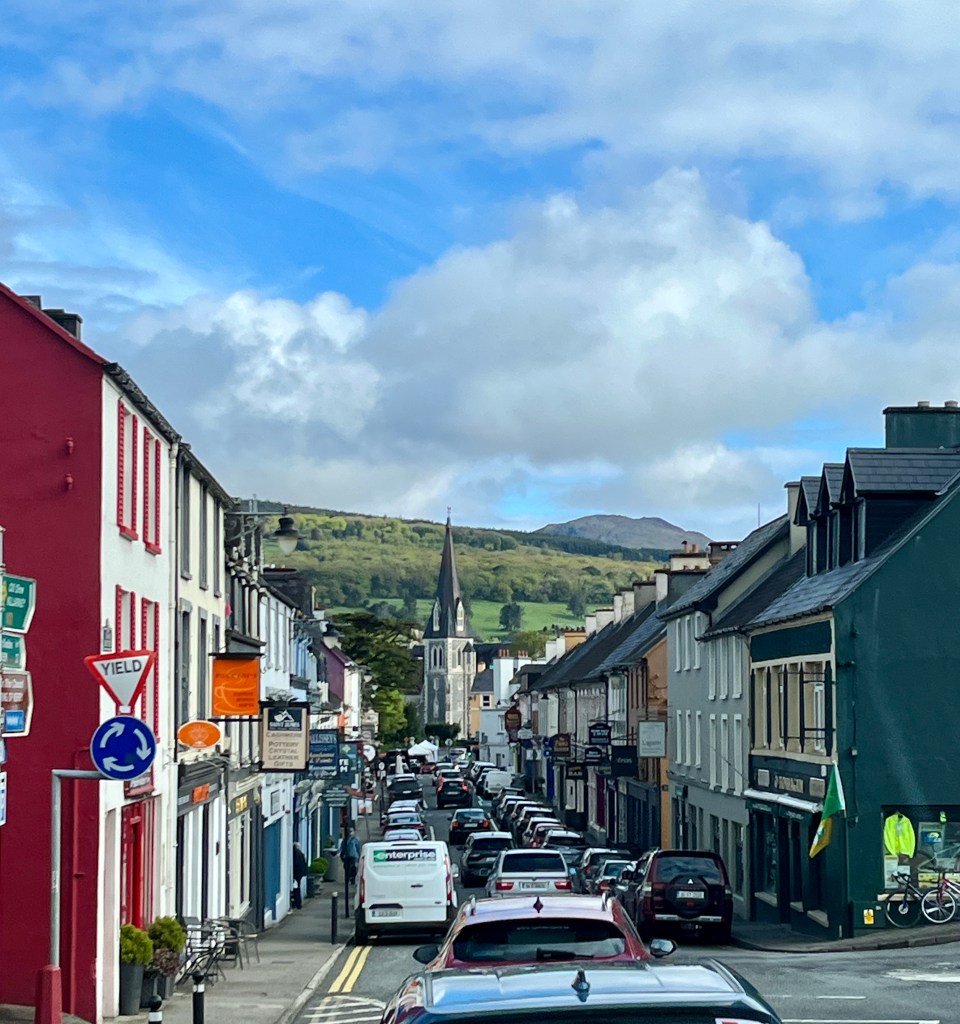
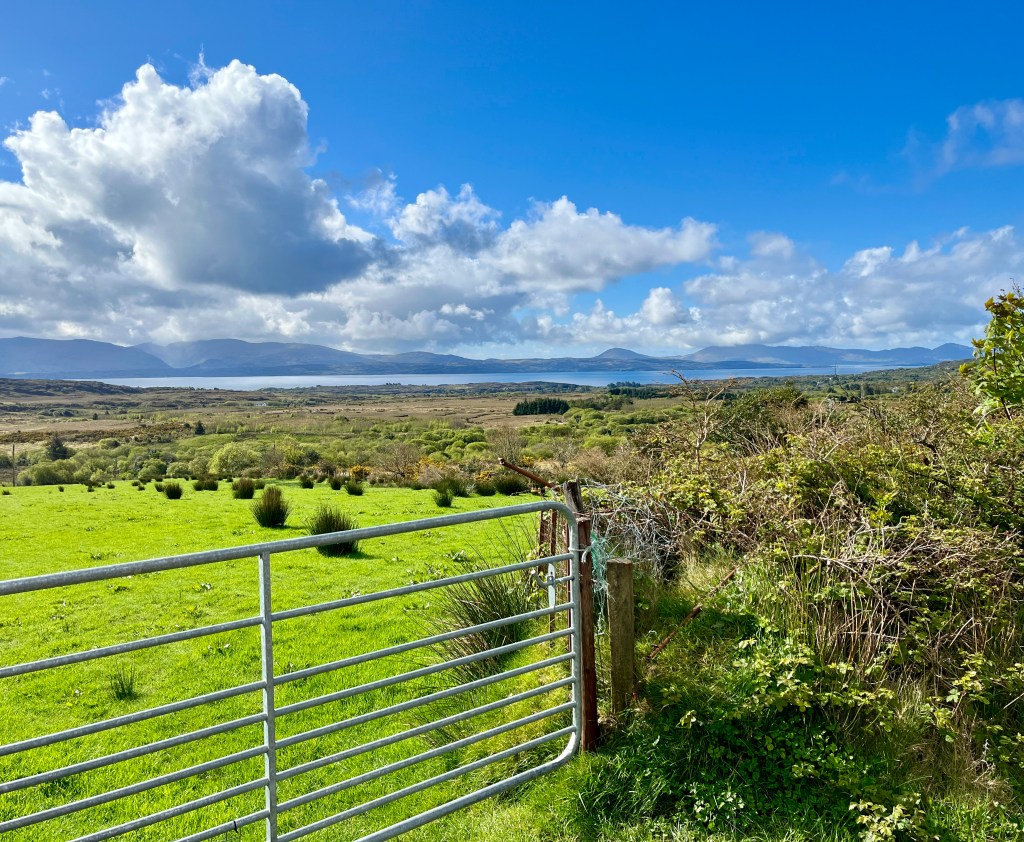
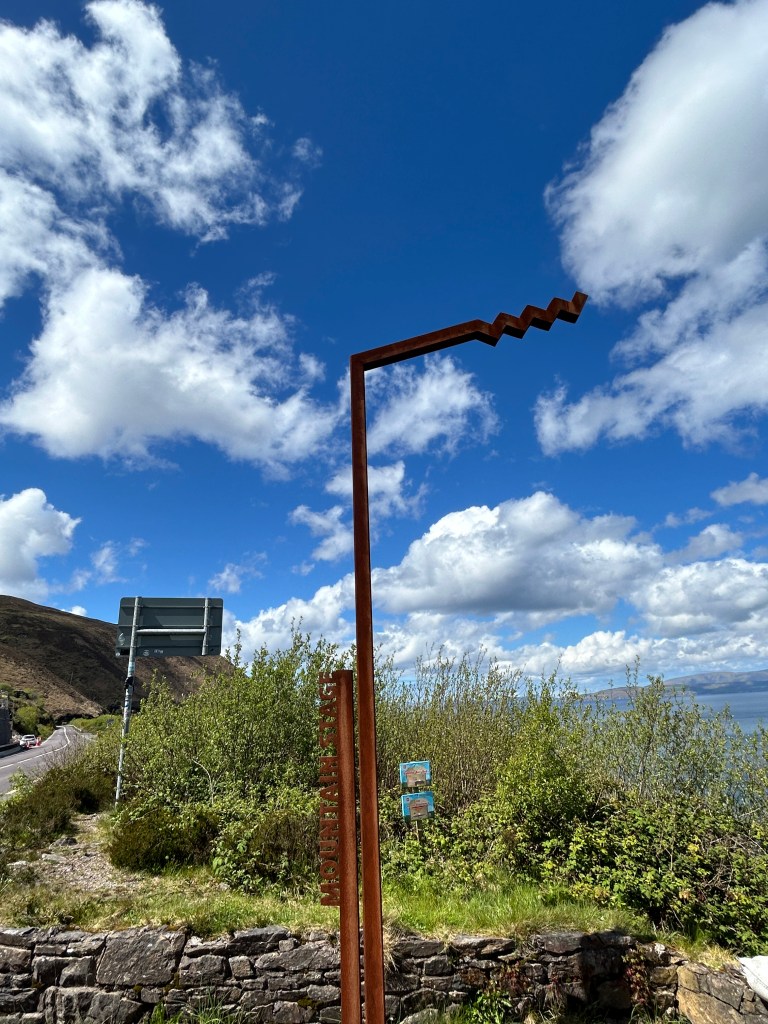
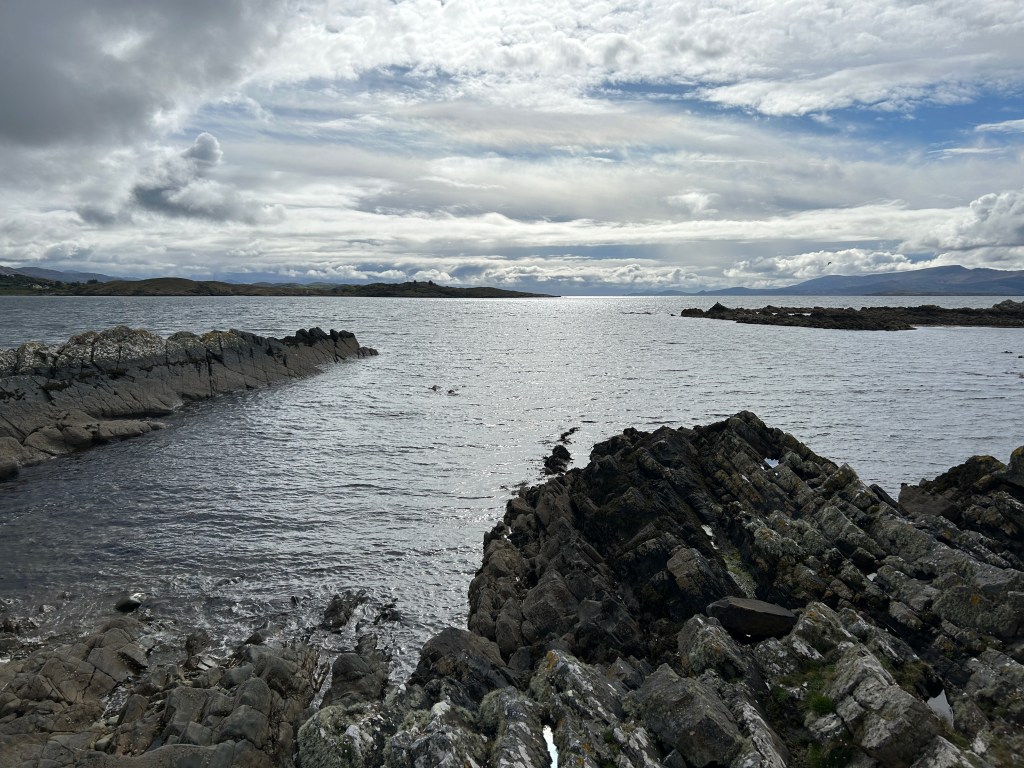
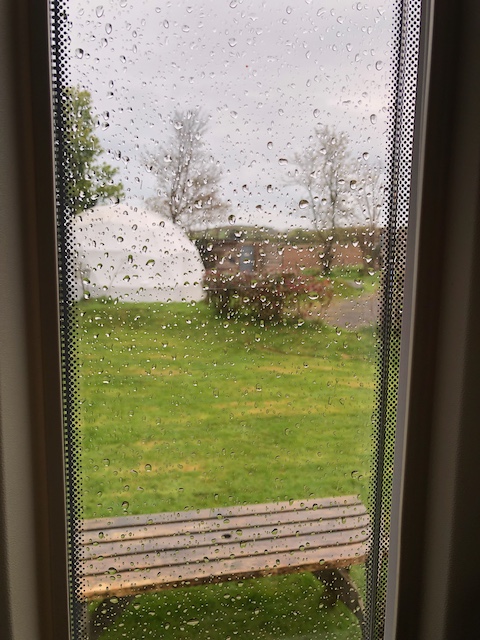
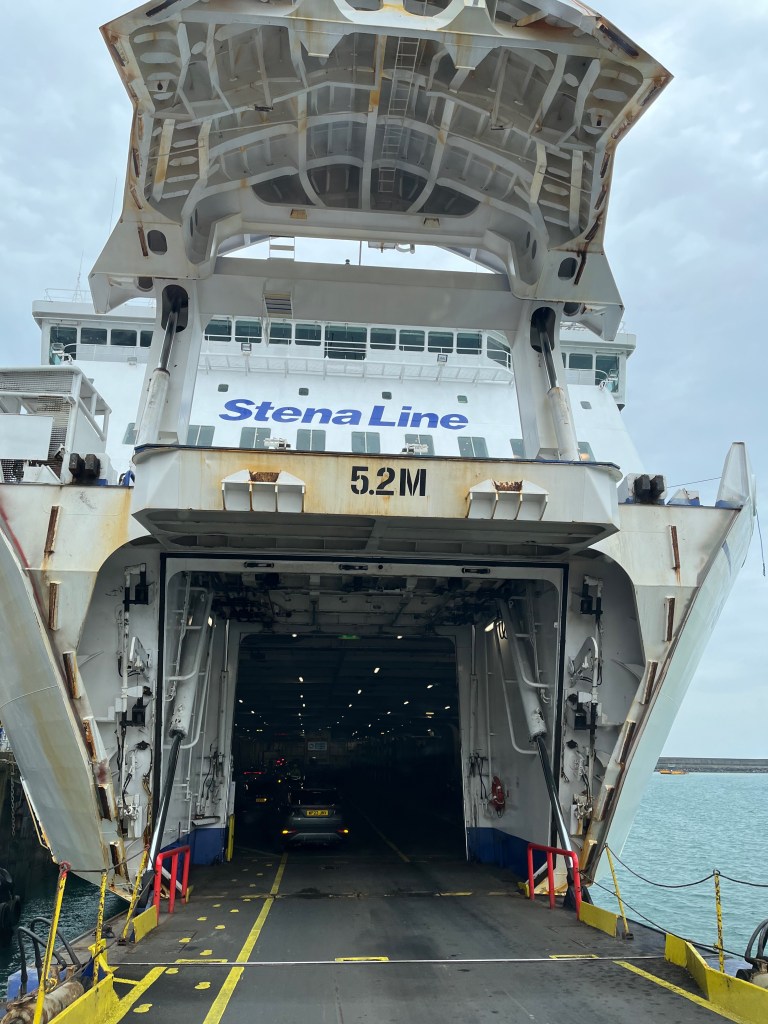
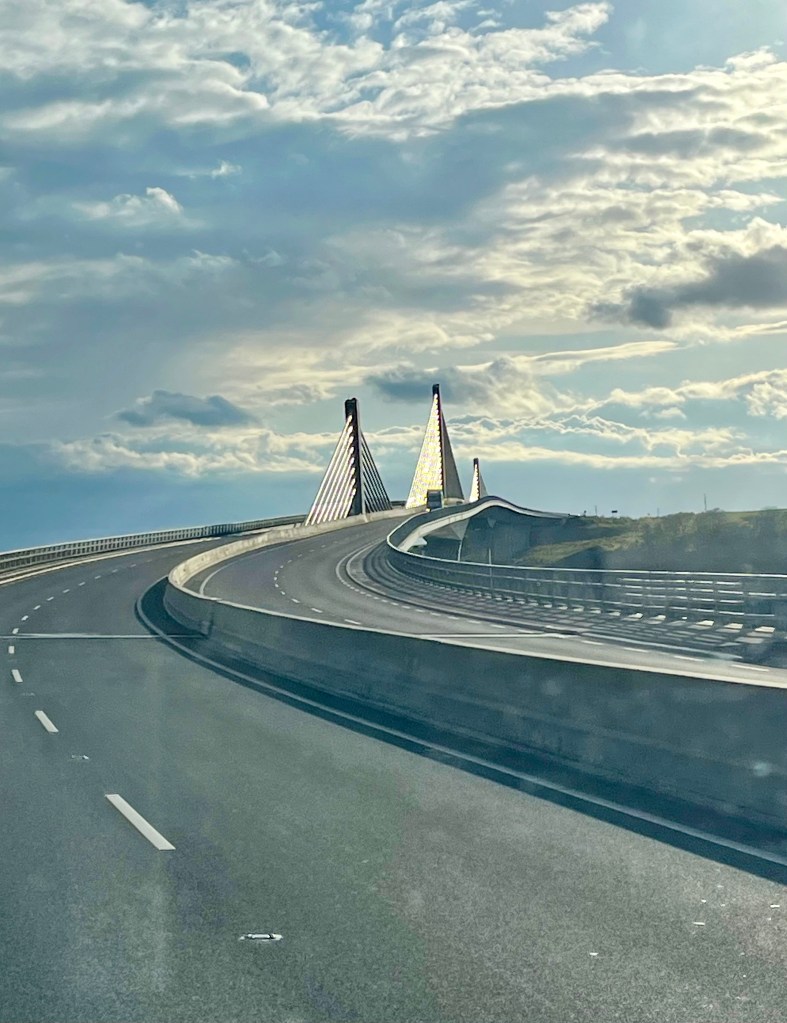
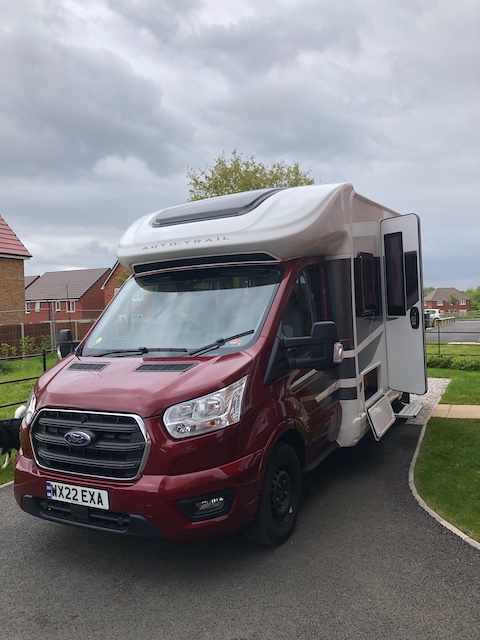
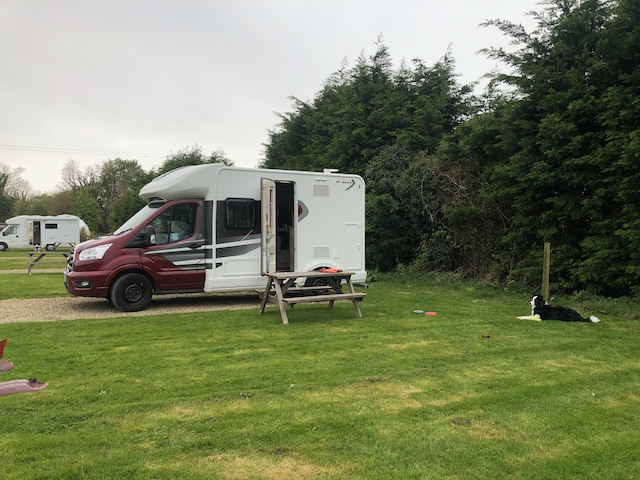
Day 8, Dingle to Doolin.

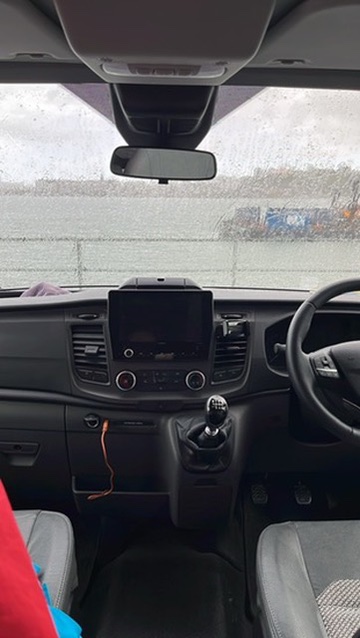
A chilly and crisp morning dawned. The skies were leaden. The rain held off but threatened. I unplugged the van from the power connection which we used to recharge our onboard batteries, computers and other gizmos. The water tank was refilled. Leia, our border collie was strapped into her harness and her seatbelt strap that fixes her harness to a seat belt anchor was attached to stop her being thrown about should I need to break heavily. All the cupboards have double locking to avoid spilling their contents when hitting the first bump. They were checked. We now have our pre departure routine set up perfectly. The sat nav was programmed with our final destination of Doolin. I don’t follow its instructions unless I get lost as we tend to turn off the beaten track to go and explore when the fancy takes us and the incessant “turn left, turn back” and so forth would drive me nuts. It does however give me a sense of the estimated time of arrival at journeys end.

We departed on the road back to Dingle. It is the only road available to me.

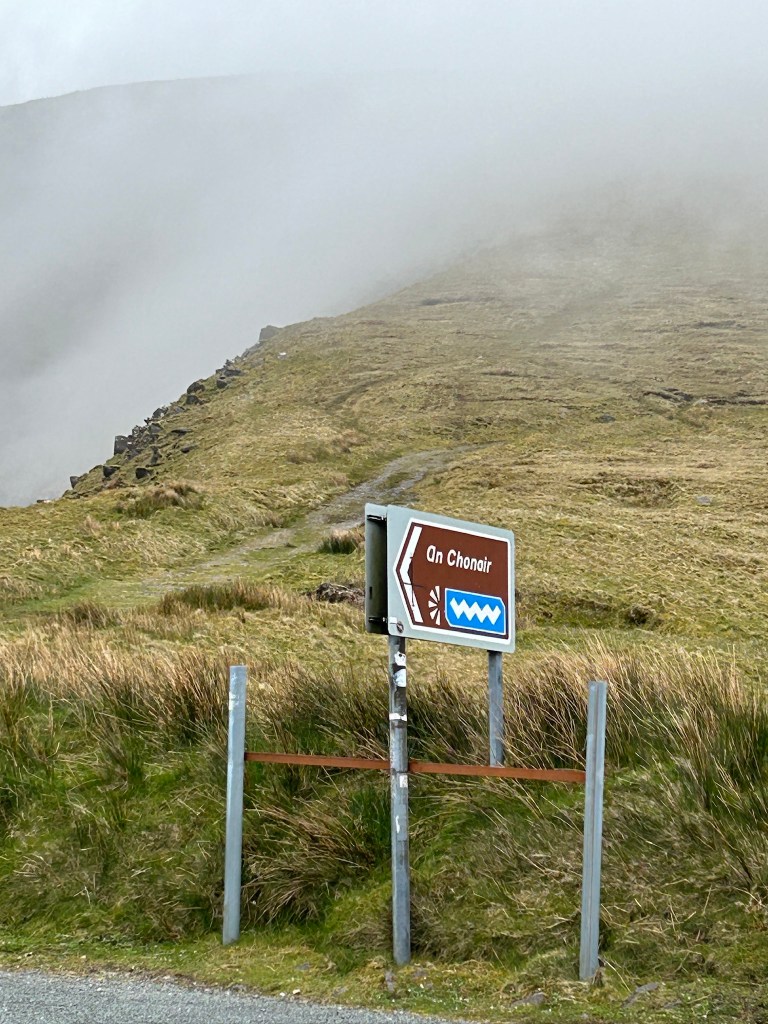
Skirting north of the town we then climbed steadily towards the Connor Pass. The road snaked its way along the hillsides gaining altitude all the time. A sign at the bottom of the climb forbids vehicles over 1.9 metres wide and more than 4 metres high. I could not see why. The road looked easy enough. Halfway up to the summit another sign warns that this is your last chance to turn back. We continued. At the summit is a small car park. You need to stop. No really you must. For the views are stunning.

Looking south you can see Dingle nestled in the bay. Looking north lies the small town of Cloghane. But the main feature is the wind. It blows stiffly from the north up the hills straight into your face. It brings tears to your eyes. It stings your cheeks. It makes you feel alive. The air is thick, cold and wet. It is fantastic. Orographic cloud forms around you. Not on the scale of Table Mountain in Cape Town or over the Rock of Gibraltar. But being so close it was impressive enough.

It is only on the descent on the north side do you understand the warnings seen on the way up. Much of the road is narrow single track. More than that though the road is at times blasted into the rock face. Whilst the road at tyre level may be just wide enough, it is the sheer rock face that threatens to rip open the roof of any camper van foolhardy enough to ignore the warning signs. It was a slow descent. Careful does it. But worth every minute of it. A sheer drop on the passenger side is only protected by barbed wire on wooden posts. Designed not to hold an erring campervan should you overdo it. More to make a nasty mess of your paintwork before the drop of hundreds of feet does the rest to your bodywork. Debbie refused to look!

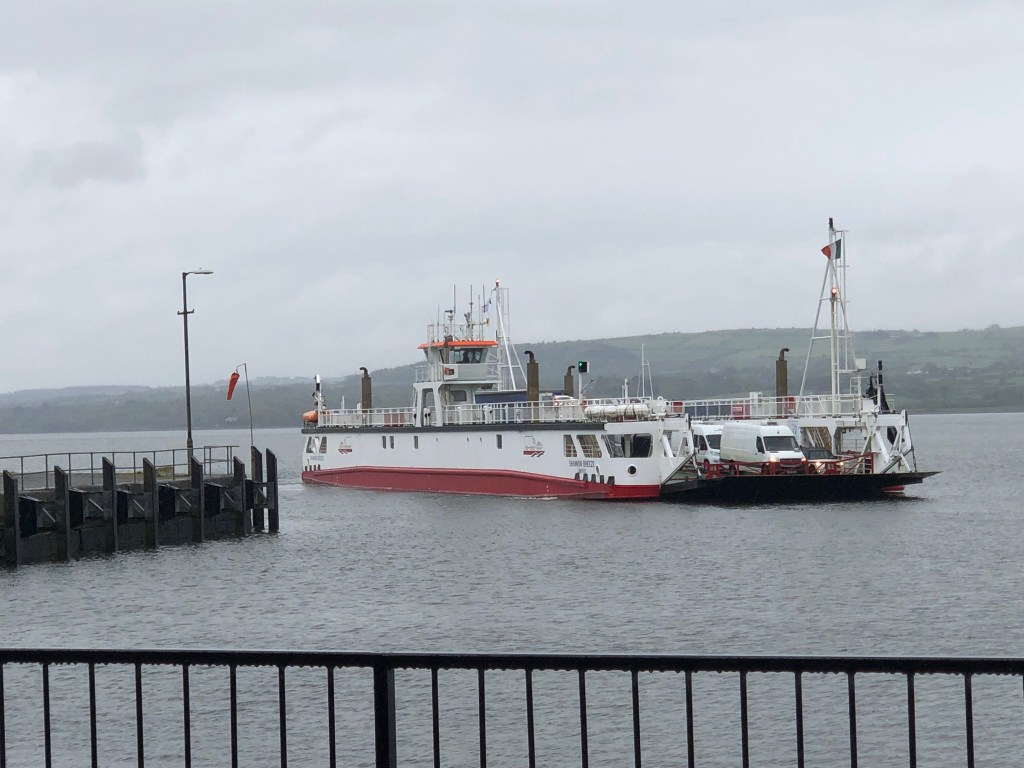
The road then descends along the north side of the Dingle peninsular into the rather nondescript large town of Tralee. From here it follows a rather flat and verdant landscape to the small town of Tarbert on the southern side of the River Shannon estuary. The wind sock on the end of the pier was drooping. That boded well for the crossing. A wind sock parallel to the horizon is not what my good lady would want to see.

Here you can take a ferry across to Killimer on the north side. You could avoid the ferry by going through the city of Limerick some distance to the east up river and drive another couple of hours to boot. But wheres the fun in that. I watched the ferry manoeuvre and dock. Smooth.

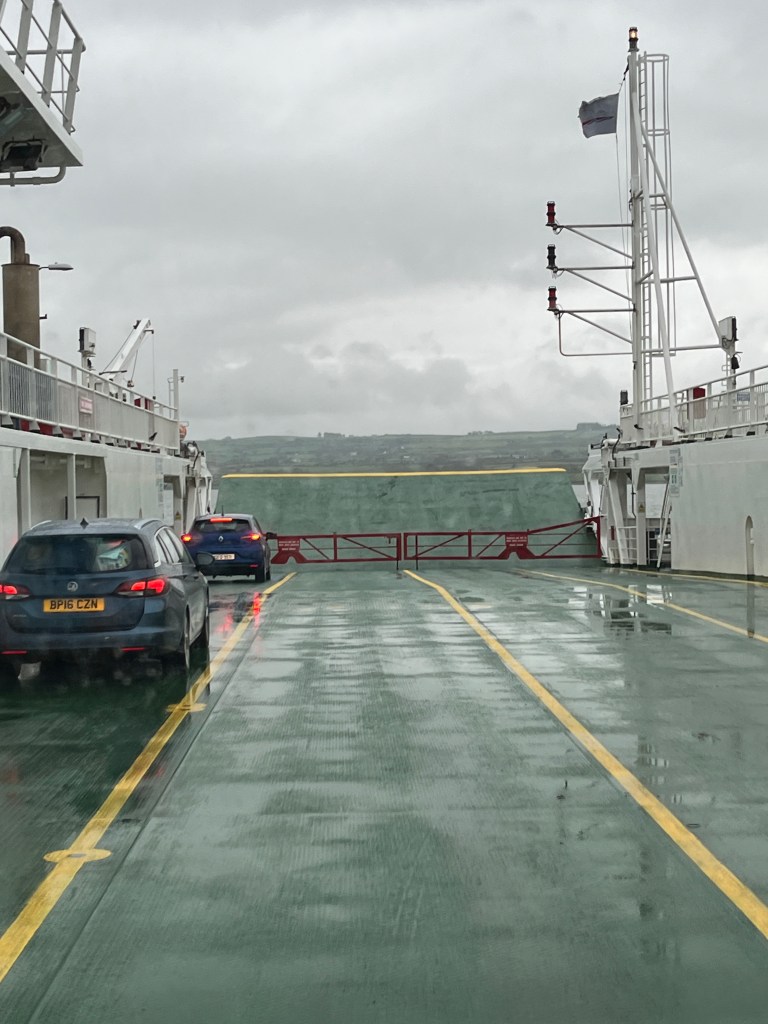
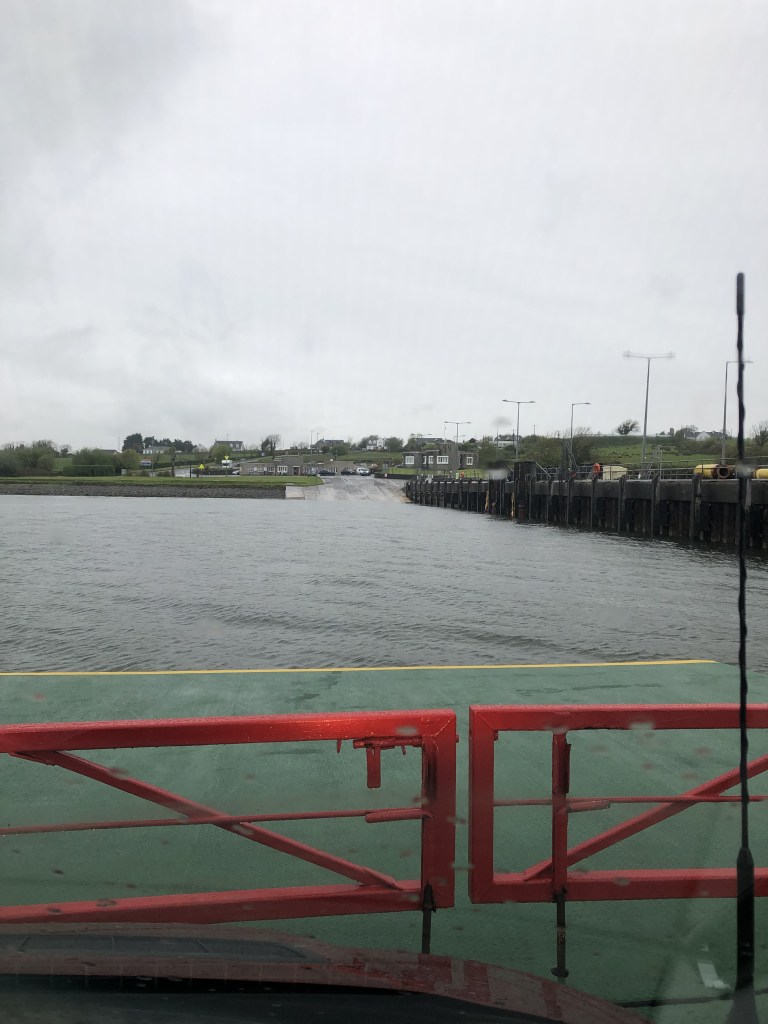
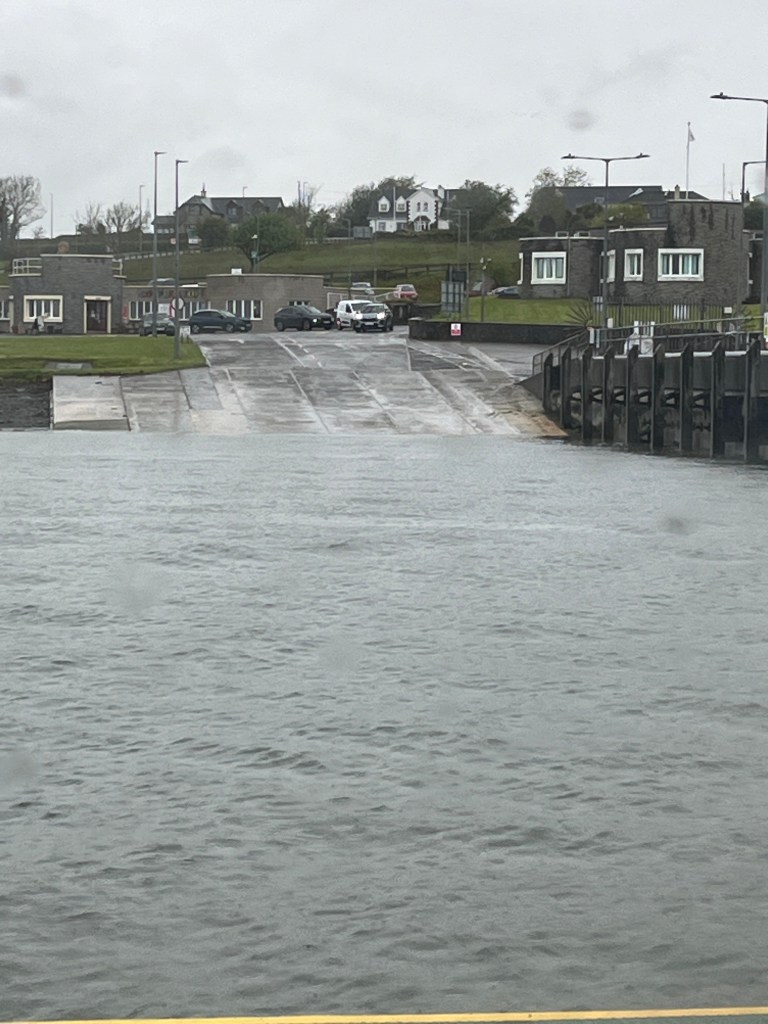
We boarded the Shannon Breeze for the short trip across the river. Two large power stations loom on each shore, one coal fired and the other oil fired. We stayed in the car for the heavens opened and it was more comfortable to do so. I could not help myself watching the operations. The dog slept through it all.

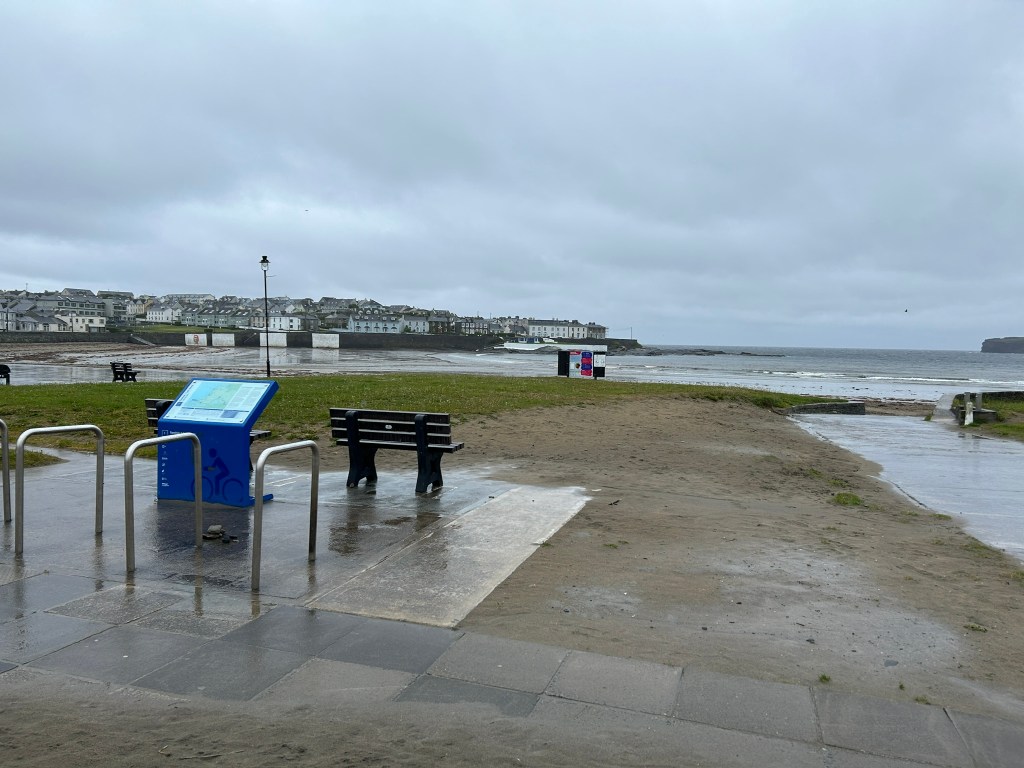
Now the heavens really opened. It lashed down. It made for slow driving as the visibility in the spray was poor. Passing through the rather grey town of Kilrush we pushed on to Kilkee where we stopped for a rest and to let the dog out. The wind came straight off the Atlantic and while Debbie prepared a lunch I took the dog along the beach for a walk.

It seems to me that in the past Kilkee (not to be confused by Kilkeel on the east coast) was a place to behold but has fallen on poorer times now. The sea front benches have rotten planks and the houses all looked weather beaten. But it is another of those places that you come across that has a few hidden secrets. Like Russell Crowe unveiling a statue to Richard Harris here. Theres more here to read.

We moved up the coast. The plan was to visit the renowned Cliffs of Moher. We had read about them and were looking forward to seeing them. We arrived at the entrance to the carpark .15 Euros to enter if you please.

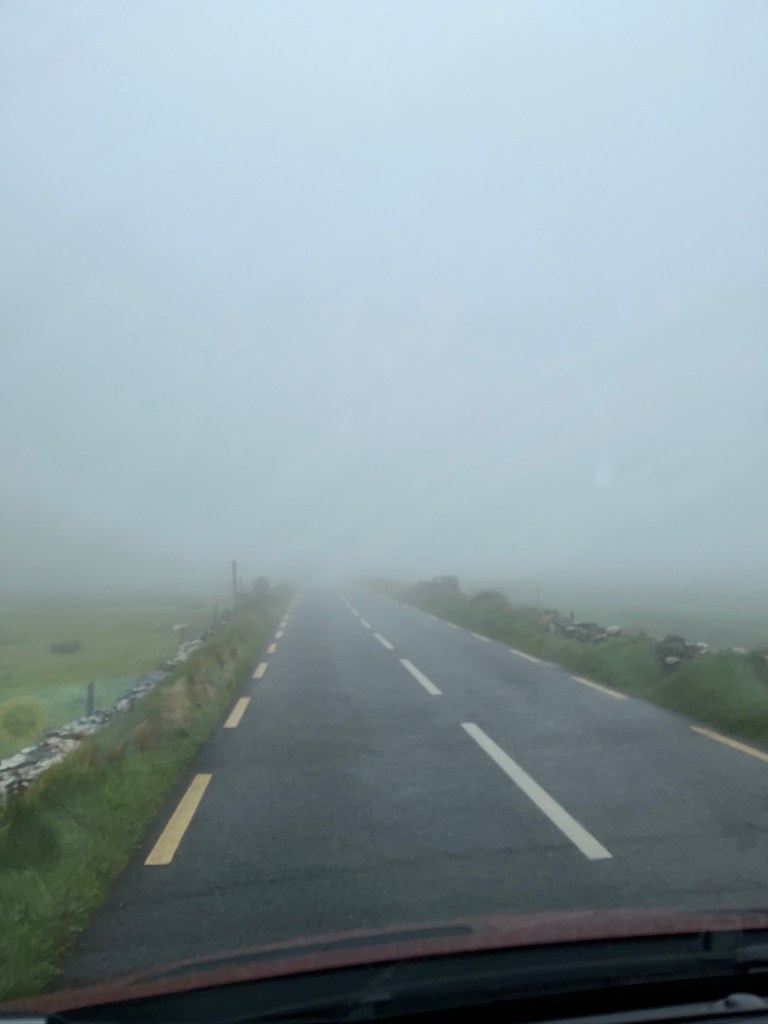
This is what we saw.

Nothing. Zip. Zilch. Sod all in fact. We were up in the clouds where the visibility was around 50 feet. A car park attendant did their best to usher us into the car park where we would be fleeced 15 Euros to see nothing at all. But still they tried. We declined and moved on to Doolin. My original choice for the night was a car park where in the past, according to various websites, motorhomes were welcome. A new sign saying ‘bugger off’ in more polite language meant finding somewhere else to stay.

O’Connors Riverside Caravan and Camping park were much more welcoming. Right across from it lies Fitz’s pub and bistro. So another day came to an end with us in the pub and the dog guarding the motorhome.

The highlights today were definitely Connor Pass and the Shannon crossing. The scenery in the latter half of the day was rather ordinary mainly due to the continuing poor weather. Surely it must break soon. Chin Chin!

Todays distance: 138 miles.

Total distance: 725 miles.

Day 7. Kilmakilloge to Dingle.

It rained last night. Of course it did. BUT. The morning dawned calm, cool and dry. When we retired last night as the daylight faded, dark and ominous clouds lurked on the western horizon where the Atlantic Ocean met the Lough.

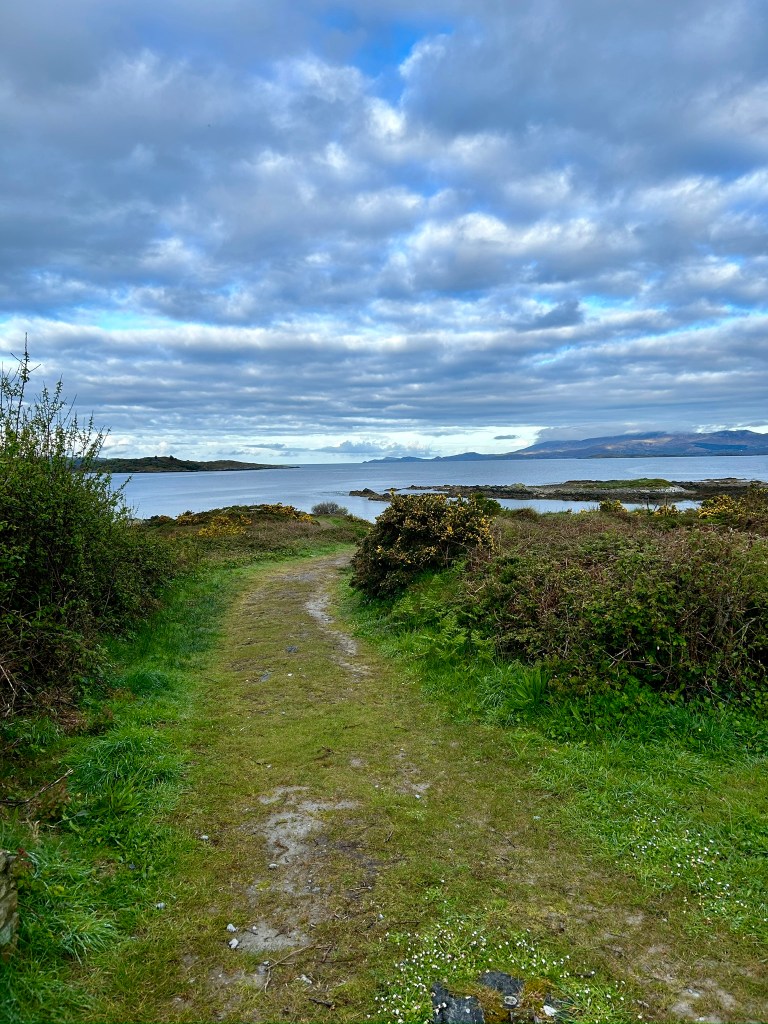
This was the morning that greeted us.

The track behind our van down to the sea and the Atlantic on the horizon.

We had a bit of a journey ahead of us to get to Dingle for our next stop. We would complete the navigation of the Beara Peninsular, then we would complete the Ring of Kerry and finally run along the Dingle peninsular to journeys end. As I sit here writing this, little did I know that most of the roads were shall we say a little on the narrow side for a motorhome.

We set off. We stopped for me to take a rest for the locals in vans, trucks and tour buses hurtled past going in the opposite direction and I to this day do not know how my wing mirror came through unscathed. I do have some embarrassing explaining to do to the hire company when I get back as to why the nearside van has a few scratches more than when I picked it up. Caused by the hedgerows that scraped by as I tried to avoid disappearing into them for the above reason! But what an awesome drive.

We actually got stopped in a traffic queue. The small town of Kenmare was pretty but I reckon this is the main hub of activity in these parts.

This is what counts as a traffic jam in these parts.

Just to the north of Kenmare the Ring of Kerry starts when you turn west onto the N70 along the southern side of the Iveragh Peninsular. What a road. Sometimes smooth and flat, sometimes horrible and lumpy but always with spectacular views before you. Except the aforementioned lorries and coaches. Maybe their drivers saw my UK number plates and saw me as tourist fair game. I winced waiting for the disintegrating wing mirror every time one went by. Roads Ireland, can you make your roads a little wider please? Or plant the hedges just a little further back. Thank you.

The island of Skellig Michael looms just offshore. It has a history that warrants a call to it but we don’t have time. We passed through a small seaside town called Waterville. It was very popular with tourists and locals alike. But wait. What is a bronze statue of Charlie Chaplin doing in this remote western outpost? Well he was a regular visitor to the town. Waterville is quite the place it would seem.

One of the must sees for me in this part of Ireland was Valentia Island. I remember well coming across the Atlantic on cargo ships heading for the western approaches to the English Channel, picking up radio messages, weather forecasts and safety transmissions from Valentia radio situated on the island. Here is their story. On 13 July 1866, SS Great Eastern steamed westward from Valentia Island laying telegraph cable behind her. The successful landing at Heart’s Content, Newfoundland on 27 July, established the first telegraph link between Europe and North America.

The small town of Portmagee lies on the south side of the bridge that links the island to the mainland and here we took a break to walk the dog, walk ourselves and have lunch. Its a delightful little place if ever you visit this way with its brightly painted houses and shops.

The road now turns east along the Northern part of the peninsular. It undulates following the terrain offering more staggering views across to the Dingle peninsular. I can clearly see the entrance to Dingle harbour away in the distance. I anchored there only last year. We still had over 70 miles to go.

After what seemed like an age we arrived in the bustling town of Dingle. This was clearly a must see place. There were at least 6 large tour coaches in the car park, at least 50 cars parked up and quite a throng moving about taking photos. Us included. We had an Ice cream. Of course Brits do when the temperature finally reaches double figures.

The sky closed in. Lest it rained, again, we hot footed it to our camp for the night at the Oratory House Campsite a few miles north of Dingle town. Said to be Europes most westerly campsite it just had to be visited.

Tomorrow we cross the River Shannon estuary and visit the Cliifs of Moher..

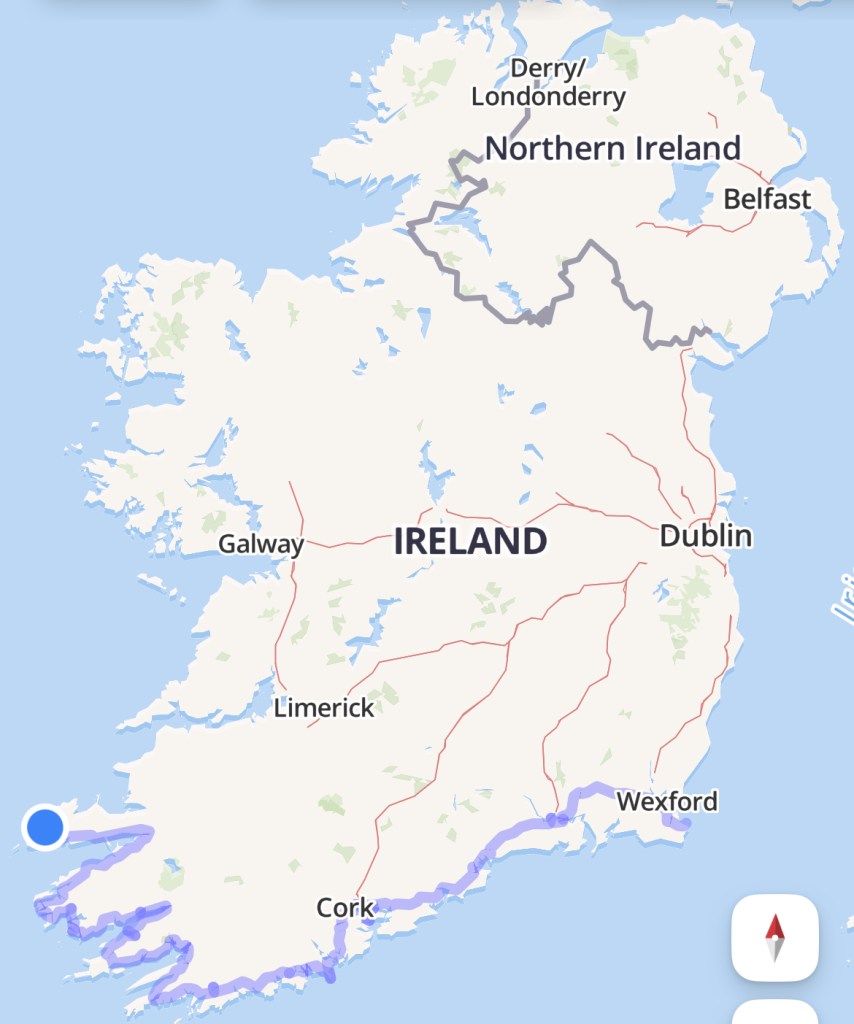
I leave you with a little map of our route so far after one week on the road.

Todays distance: 141 miles

Total Distance: 587 miles
Day 6, Timoleague to Kilmakilloge.

It rained heavily again overnight. The campsite was a bog by the morning. I am beginning to know why Ireland is so green. That, or we are just a bit unlucky with the weather.

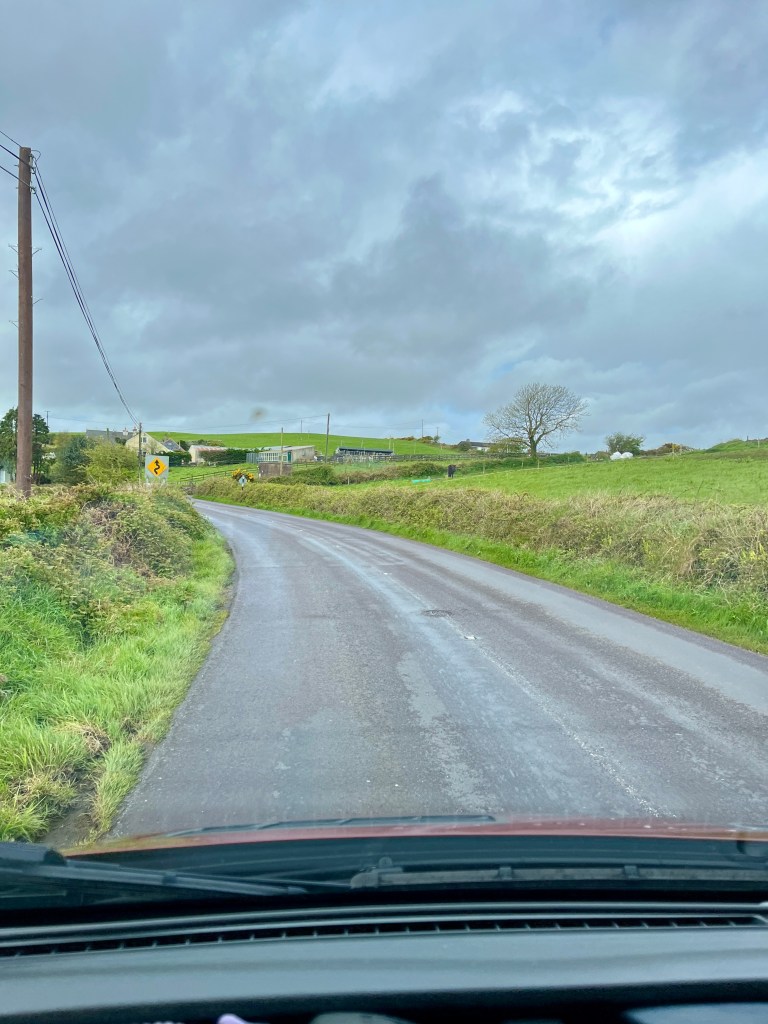
The roads around here are much narrower than those of recent days. Not always smooth either.

Traffic remains almost non existent compared to the UK.

The sea is ever present to our left and so it will remain for the days ahead as we follow the Wild Atlantic Way signposts leading us west.

We pass the towns of Clonakilty and Skibbereen. Here is Michael Collins birthplace. I will let you read about him here if you don’t know the name. He is very well known in Ireland.

The road is well posted and off it are far too many places to visit than time allows so we pushed on to Bantry for a Fish and Chip lunch. 

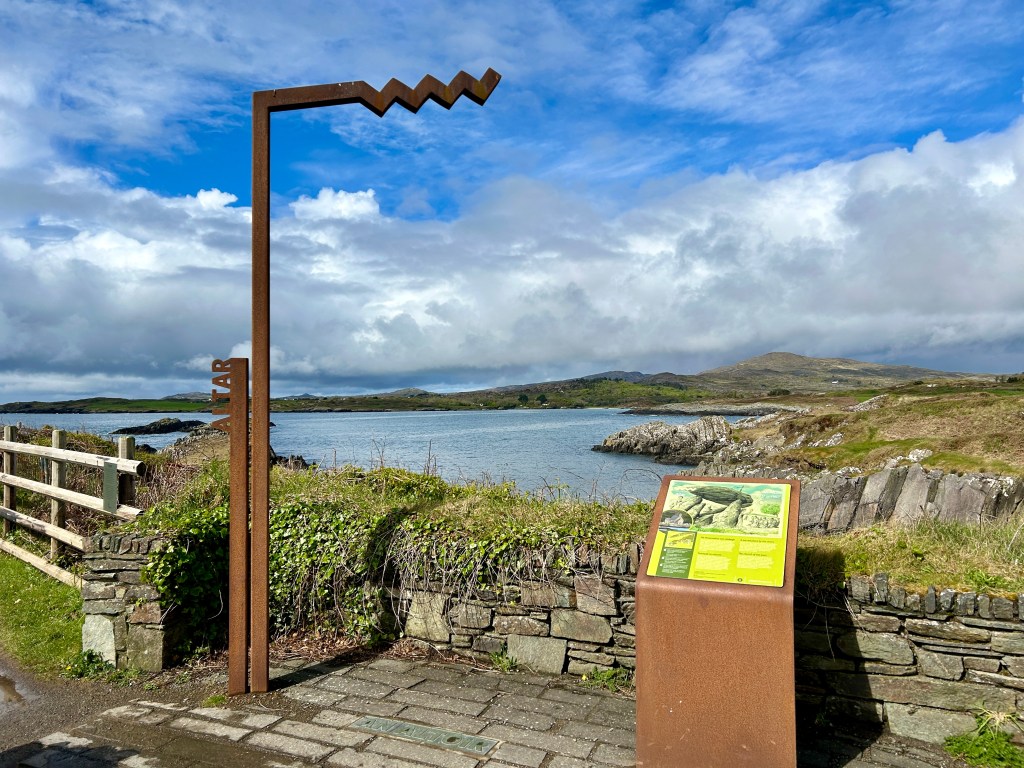
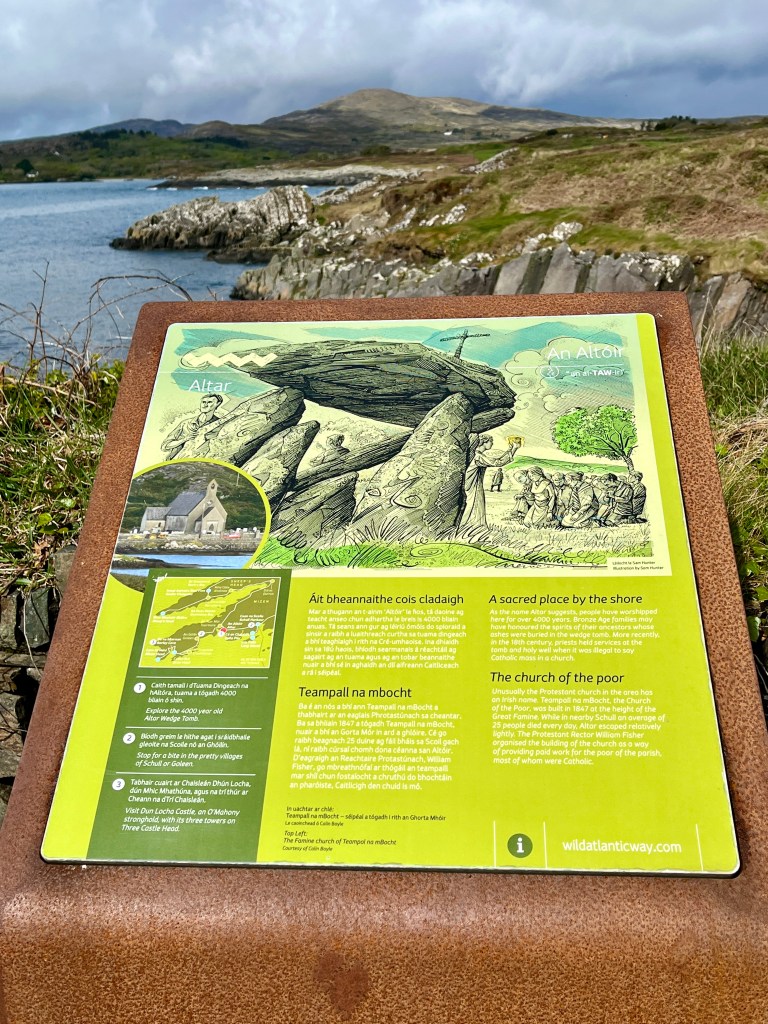
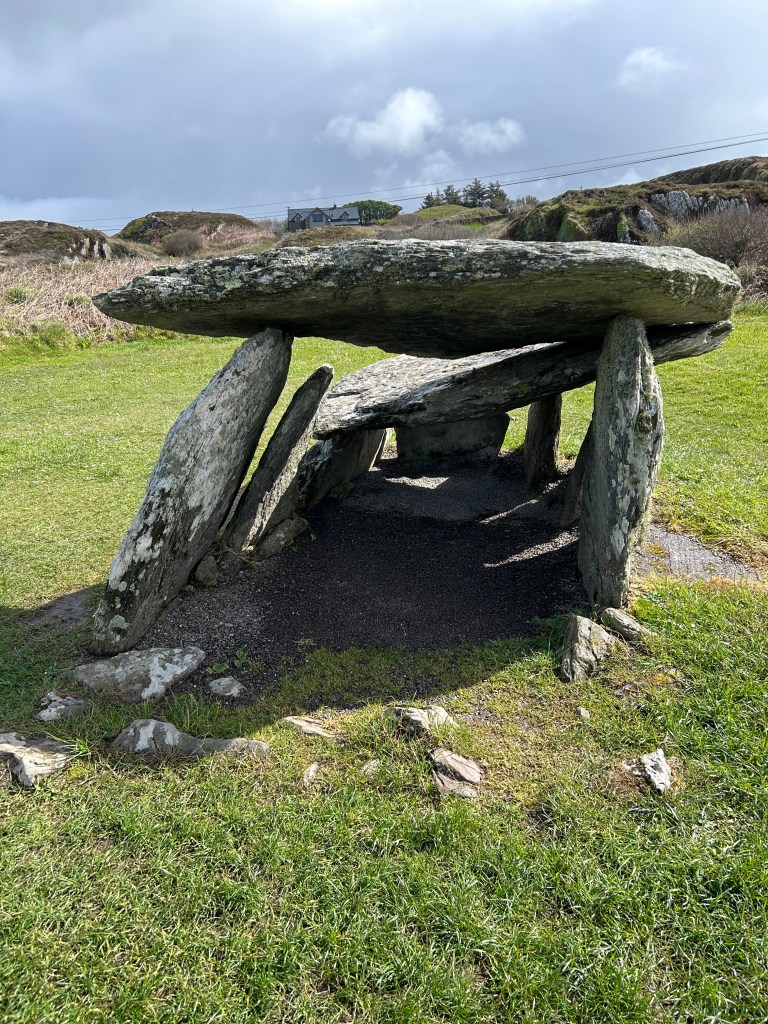
We did stop on the way at the Alter Wedge Tomb to go and take a look. I had read about this Holy place and wanted to see it for myself. It is a listed National Monument of Ireland. You can read more here.

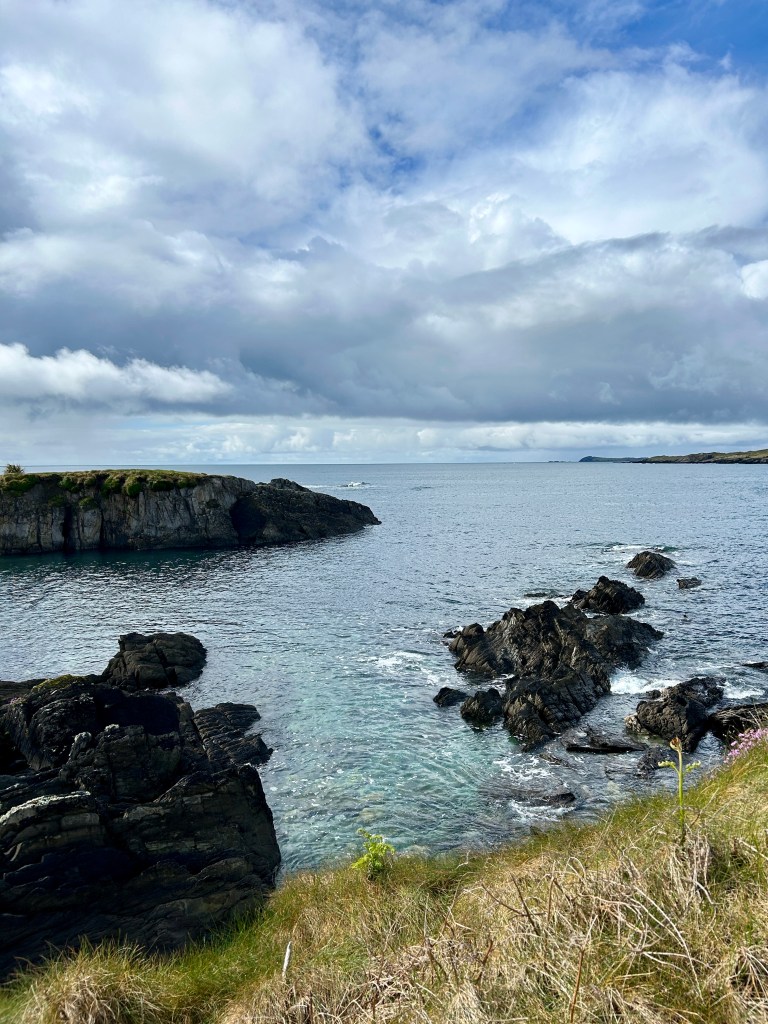
With your back to the tomb this is the view. The site was very well chosen.

We arrived and parked up in Bantry. It was pouring down but a rather sympathetic chip shop owner let a soggy dog and its owners come in and sit for lunch. 

The road now follows the coast of the Beara peninsular forming the north coast of Bantry Bay. I had been in here with a number of ships to anchor off Bantry. Whiddy Island is prominent in the bay and I had read about the flying boats based here that flew out to attack U boats in the second world war trying to protect the Atlantic convoys.

A chance pull over into a lay-by close to Adrigole to let faster cars pass me resulted in this unusual find.

More can be read about it here.

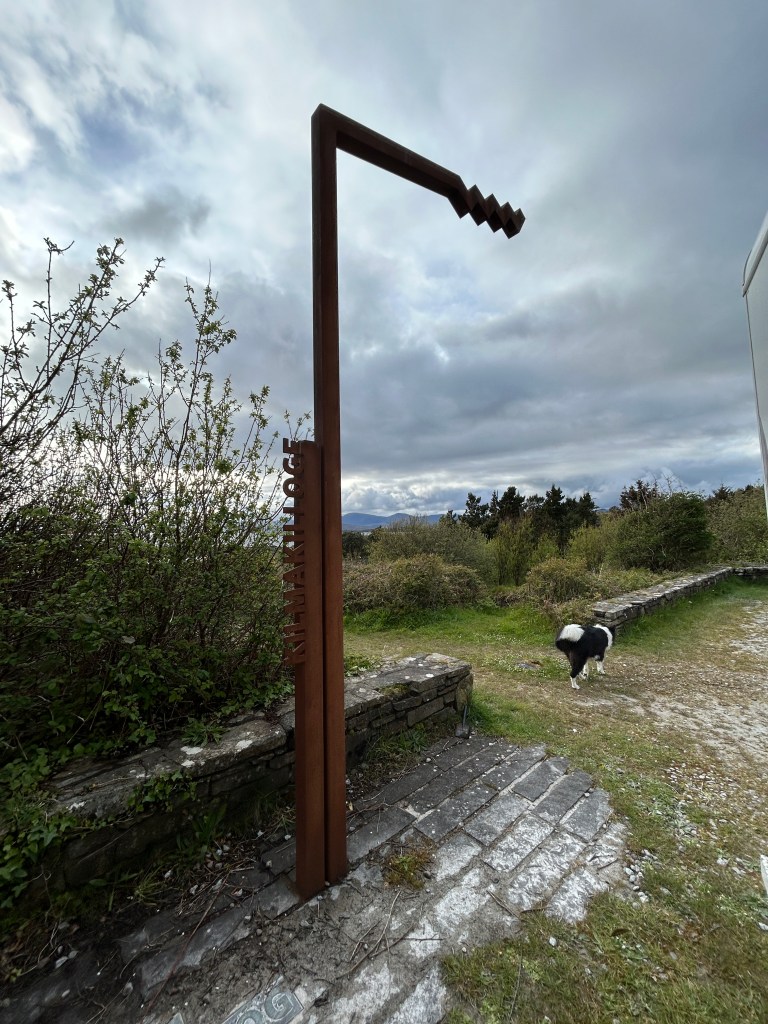
The sinuous road climbs hills and ducks into valleys with the omnipresent sea always as company. The coast is rugged. We pass Castletown-Bearhaven and climb up into a Coll over to a small town called Eyeries and then head North east briefly to our resting place for the night at Kilmakilloge. Even here out in the wilds there is history.

We are off grid here. Alone. Peace and quiet. I love it.

Tomorrow we start the Ring of Kerry. A must do so the guidebooks tell me.

Todays distance: 112 miles
Total distance: 446 miles.

Day 5. Cobh to Kinsale to Timoleague.

The rain thumped down onto the top of the van during the night. Strong and gusty winds rocked us about. By morning the weather had done its worst and the day dawned cloudy and cool but fine and clear.

We set off for the township of Kinsale to our south west. The tourist information office there marks the official beginning/end of the Wild Atlantic Way. 

This is a road that runs the length of the west coast of Ireland from Kinsale in the south to Malin head in the north of Northern Ireland. We would be following it a fair bit in the coming days.

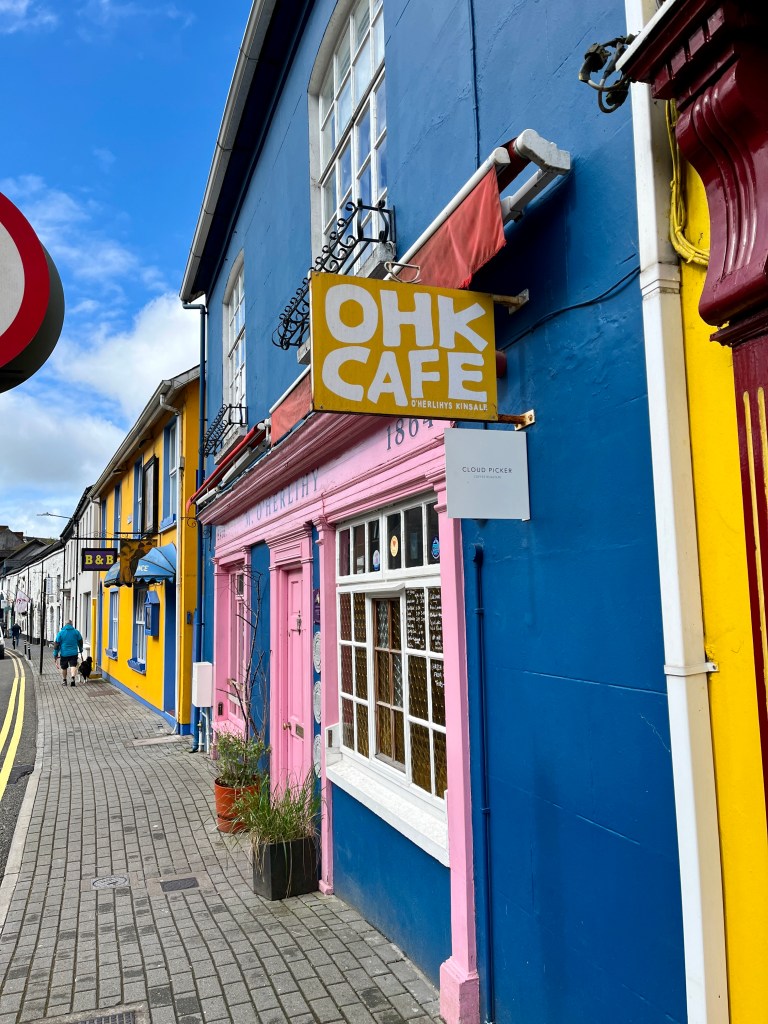
Kinsale is a lovely fishing town. It has a faintly Nordic feel to it.

The fortifications of Charles Fort and James Fort guard the narrow entrance from the sea. Charles Fort at Summercove is one of the finest examples of a 17th-century star-shaped fort in Europe, with 40-foot walls and several bastions. James Fort, dating from 1602, holds the equivalent position across the harbour mouth.

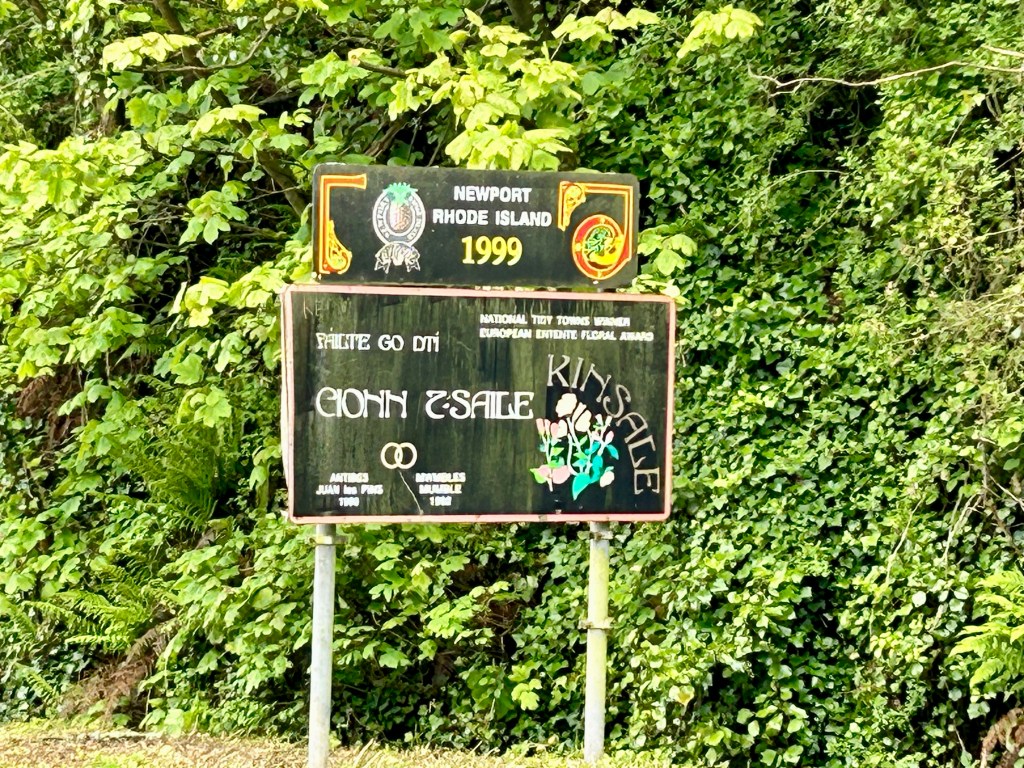
It is twinned with Newport, Rhode Island, Antibes, South of France and Mumbles in Wales.

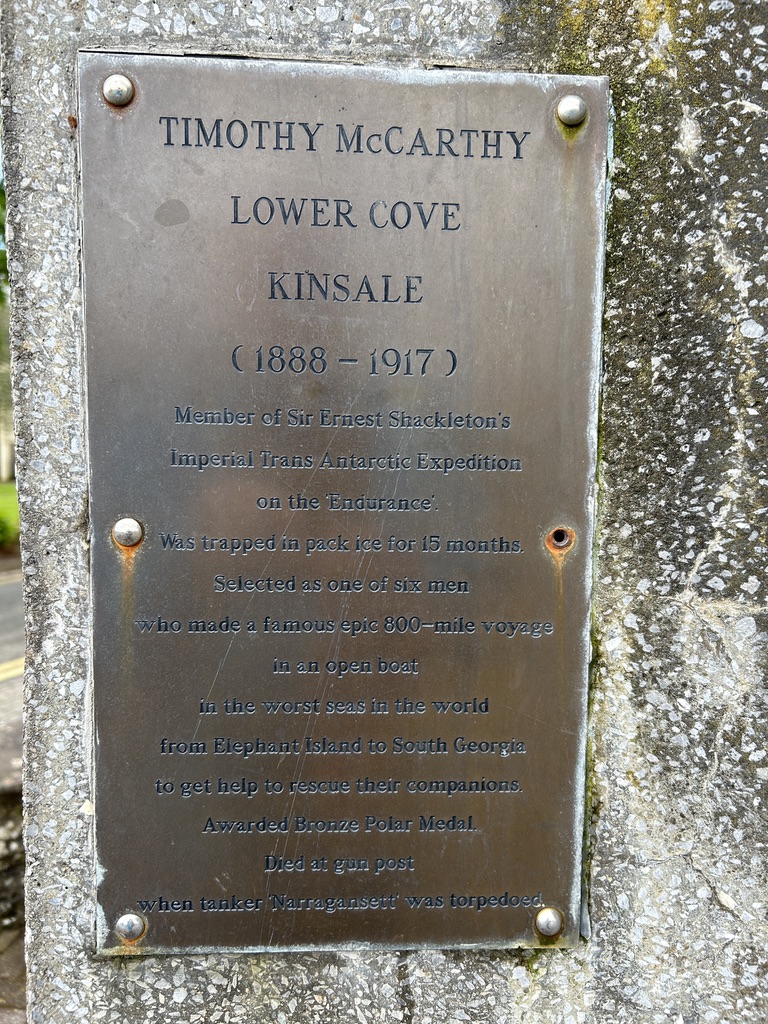
But what really caught my eye as I wandered around was these two. The McCarthy brothers, Timothy and Mortimer.

Having returned from Antarctica on my ship at the beginning of the year the history of these two gents really struck a chord with me. It was a chance find for me as I had no idea of their connection to Kinsale.

What I also did not know until my visit was that it was from here that James II escaped to France after his defeat at the Battle of the Boyne. Kinsale was also a port of call,in 1703, for the ship called Cinque Ports, which carried Alexander Selkirk on board. Selkirk went on to be marooned on a Pacific island, giving Daniel Defoe the idea for Robinson Crusoe. In 1601, Kinsale was the site of a battle in which English troops defeated Irish and Spanish opposition,resulting in the legendary ‘Flight of the Earls’, a mass exodus of Irish aristocrats to Europe.

Here also can be found the 16th-century Desmond Castle, a three-storey tower house built originally as a Custom House and used in Napoleonic times to house French prisoners of war. Today, the building houses Kinsale’s Museum of Wine.

Another notable building in Kinsale is the courthouse, now housing the regional museum. After the Lusitania was torpedoed by a German U-boat in 1915, an inquest was held in this building, with Captain Turner giving evidence before a jury of shopkeepers and fishermen.

It is amazing what you find when you explore off the beaten track.

Old head of Kinsale Signal Tower.

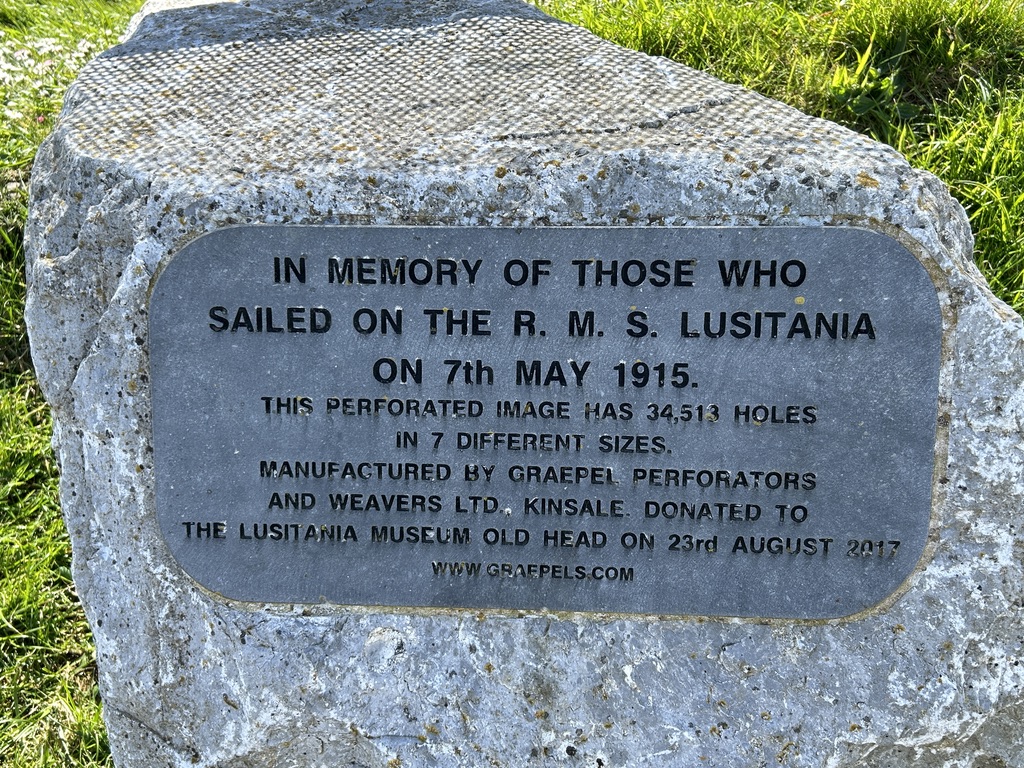
Having explored the town we headed south to Old Kinsale head adorned with a signal tower and lighthouse. The signal tower houses the Lusitania museum. The Old Head Signal Tower is just over 200 years old. It was built during the Napoleonic wars in response to the threat of a French invasion. There were 81 such towers with line-of-sight visibility from one to the next built to warn of any further invasions. Word could quickly spread around the coast all the way to Dublin. It was off the Old head of Kinsale that a German U boat sank the passenger liner Lusitania. On May 7, 1915, the German submarine (U-boat) U-20 torpedoed and sank the Lusitania. She was on passage from New York to Liverpool. Of the 1,959 men, women, and children on board, 1,195 perished.

It was a windswept and barren place.

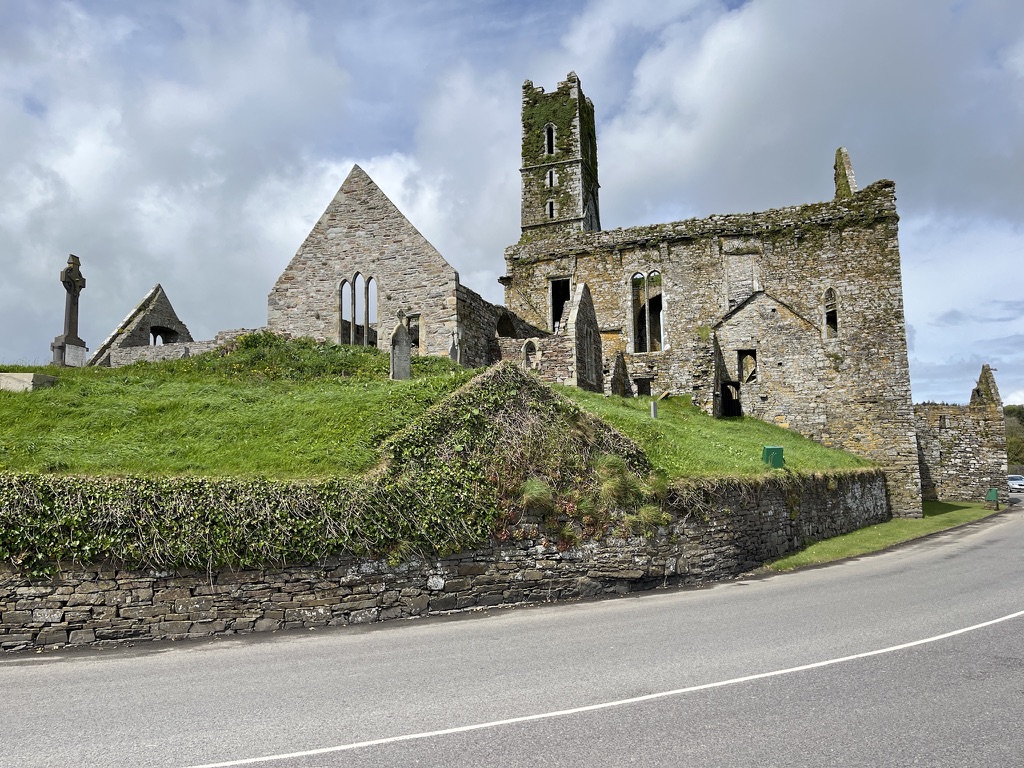
We continued to journeys end at our campsite for the night after a brief stop and the quaint village of Timoleague. This has been a great day. The further west we go the more rural the country becomes. Cities give way to towns and villages. This seems more like the Ireland we had imagined.

Todays Mileage: 55 miles
Total Mileage: 334 miles
Day 4. Waterford to Cobh.

I cant believe it! We woke to blue skies. It was still a cool 8C but what a stunning morning.

It was not to last long though.

I’ve said it before and its worth repeating. This countries roads are amazing. There seems to be new road surfaces everywhere. It makes for easy driving. The road from Waterford follows the N25. It is a pleasant start to the day. I could see that ahead a heavy bank of black cloud lurked. The road meanders through green and undulating countryside. Rolling hills of pasture lands dotted with dairy cows reminiscent of the Waikato region of the North Island of New Zealand slid past.

There are toll roads in Ireland. This was not one of them. Most of the way the speed limit was either 100 kms/hr dropping to 80 at times down to 50 when passing through towns. Some of those towns reminded me of France with their little houses and brightly painted shops.

We took a rest break in the small seaside town of Dungarvan. It is really worthwhile taking a punt and leaving the main highway now and then to explore these little places. Dungarvan is very pretty. The road snakes around the harbour and is dominated by the Anglo Norman 12th century castle and the imposing Saint Augustines Catholic church atop a hill at the exit to the town.

The road to Cobh leaves the Cork bypass and drops by winding tree lined roads to the harbour. The sea is ever your companion now. This road is the first taste of the narrow roads that lie ahead. But with little traffic it poses no real challenges. Just take it easy.

We stopped for the night in a motorhome parking bay right on the sea front not a stones throw from the small cruise terminal where I have docked a number of ships. We set off early from Waterford to arrive in Cobh before lunch giving us time to have a wander around the town and for Debbie to visit the Cobh Titanic and History museum covering the mass emigration to the USA following the Great Famine. The first photo below is of Annie Moor. The statue is located on the quayside at Cobh and I have a miniature of it at home given to me when I first called at the harbour on my own ship back in 2004. Here is her story.

We got back to the van just in time for dinner. Just as well. This was the view only a few minutes later

That was the end of day 4. Tomorrow the plan is to head down to Kinsale town and onto the lighthouse. This marks the official start of the Wild Atlantic Way and is the most southerly point of Ireland. Then it will be onto a spot for the night in a campsite somewhere close to Clonakilty. The domestic chores of laundry and so on need doing.

Distance travelled today: 73 miles.

Total distance so far: 279 miles.

Day 3. A day in Waterford City.

This was a day of rest from driving. A bit of sightseeing and a bit of reading a good book. I find that bringing a good book is essential. This is not about packing the miles on for the sake of doing it.

Not looking to be a fantastic start to the day really.

It rained overnight. It rained in the morning. In fact it just rained. This was going to be a soggy adventure at this rate.


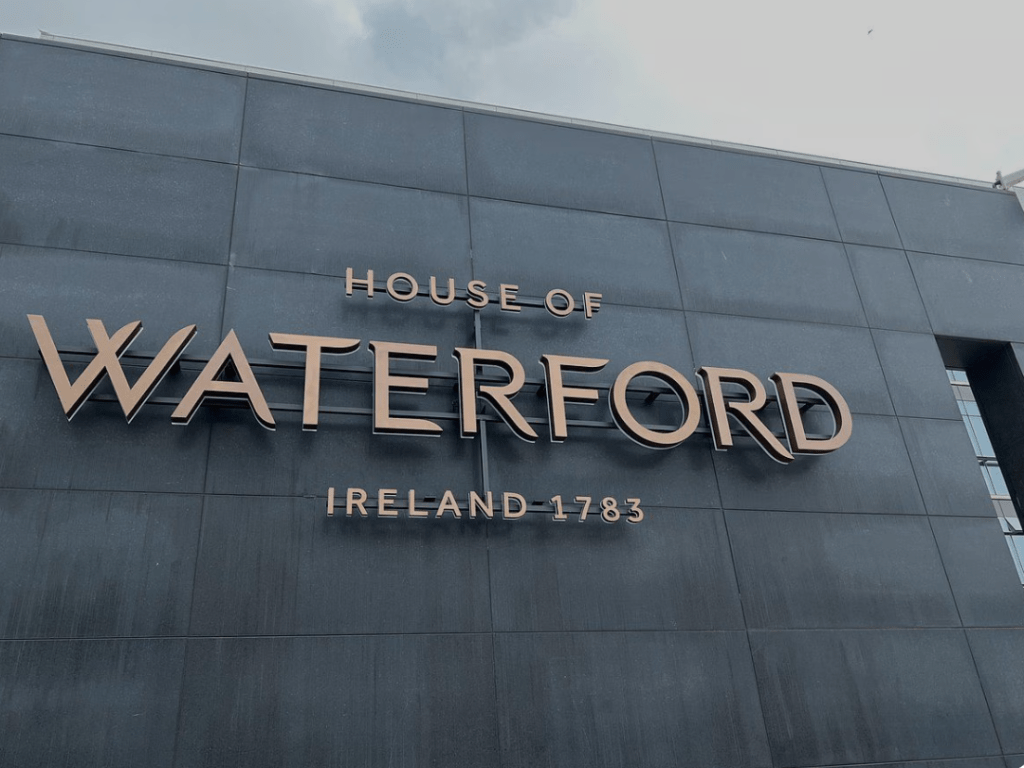
Debbie wanted to fulfil a bucket list item of visiting the Waterford Crystal factory and museum. So whilst she did that I took the dog for a walk into the city centre for a look around.

Again what struck me was the lack of garbage strewn around the streets thats commonplace in the UK now. No graffiti. A small road sweeper ran up and down the pedestrian precinct. There seemed to be a pride about the place. 

Waterford is a city steeped in history. You can read more here if you like

Other than being famous for its crystal, it was also the very first city in Ireland. Like most of these places, if you care to dig a little all sorts of interesting facts pop up. Like, for instance, the type of sand used to make Waterfords Crystal comes from Stourbridge in the UK also famous for its own glass works and not far from where we live in Worcestershire. Now I did not know that.
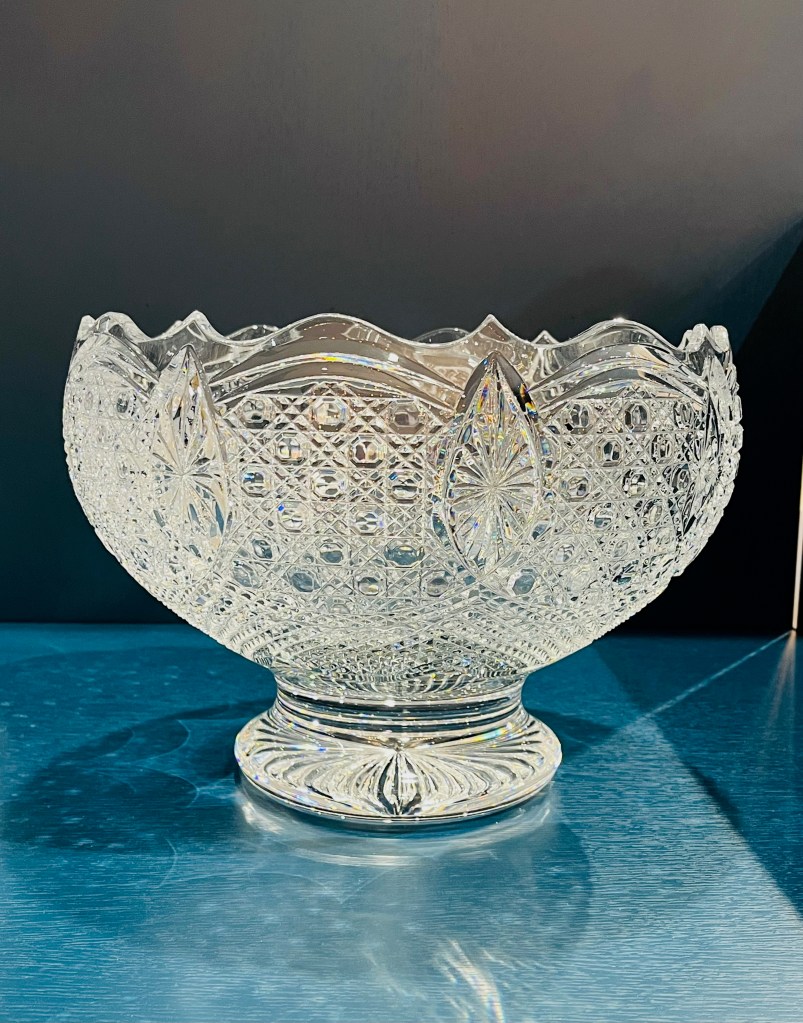
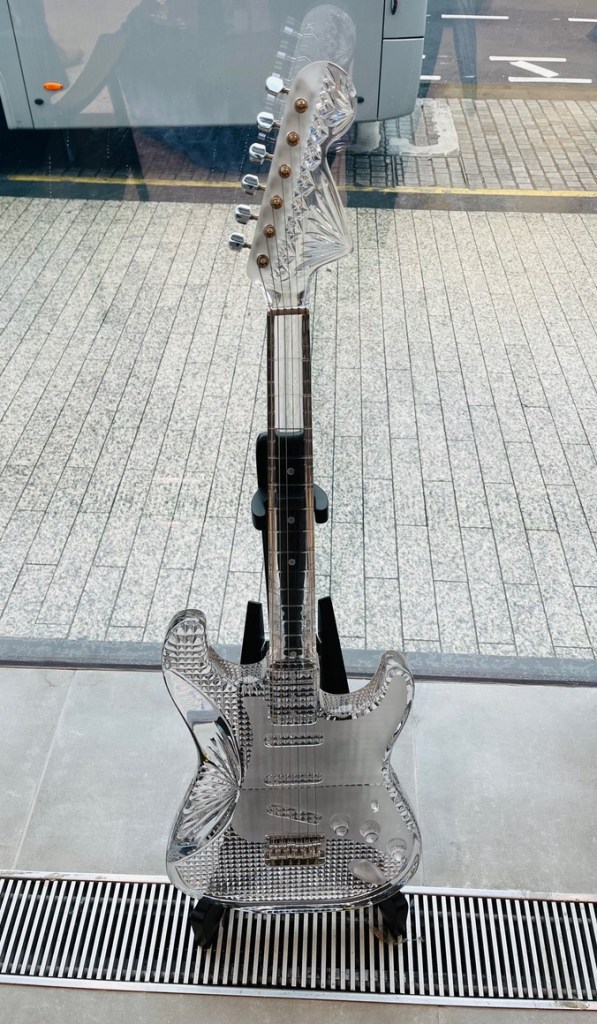
Debbie returned from her tour full of facts, figures and photos. By all accounts it is a must see and do place if you ever visit here. You can see more about Waterfords famous Crystal here.

The day was rounded off by visiting a local pub called The Hub and we decided to get in early. It is Saturday and local knowledge leads us to believe the pubs fill up quickly. The locals gave us a cursory nod. The dog however was the centre of attention. The Irish seem to like their dogs as well as their horses.

A pint of the cold and creamy black gold finished the day. Well what else could one have in an Irish pub?

Tomorrow we will set of early for Cobh. There is a small motorhome park that the guide books tell me is very popular as it is the best for visiting the town. Get there early to have a chance of a spot for the day it says so thats what we will do. I would like to show Debbie where we dock the ships when we come here and also for her to see the Cobh museum which I have been to before.

Day Two, Fishguard to Waterford.

Day two dawned cold, wet and quite miserable looking. Having said that, we both slept very well last night listening to the rain on the roof. The down side to living in a van however is that I have not figured out yet how to operate the heating. We both woke at around 3am due to the cold. I ended up putting my socks on vowing that job number one was how to get the heating to work.

Whilst the actual driving mileage was hardly astounding today at a mere 49 miles, which included two from the campsite to the ferry, the actual mileage needs to be adjusted to consider the 3 ½ hour ferry crossing on the Stena Nordica.

The Irish Sea  was lovely and flat. I used to be on this run myself back in my ferry days and the Irish Sea can be quite nasty. But not today.

What was particularly enjoyable about this crossing was I got to meet an old colleague of mine Captain Richard Davies. He is also the Fishguard Harbour pilot and boarded my own ship recently to take her from sea to the anchorage inside the harbour when we visited here last summer.

In what I suppose it would be seen as a busman’s holiday Debbie and I visited the bridge briefly to say hello to the officers. There I met Chief Officer Tom who just happened to know two of my First Officers on my own ship. It really is a very small world.

Having disembarked the ferry in the Port of Rosslare, our first call was to the animal quarantine department of the Irish customs to present our dogs papers for inspection. Having passed muster it was then a short journey down to our spot in the centre of the city of Waterford where we would spend the next two nights giving us a full day to explore the city.

The N25 runs all the way from Rosslare to Waterford. It is a delightful road to drive on. A good quality surface through lovely countryside runs over the New Ross bridge into County Waterford. What you notice almost right away is how clean and tidy this country is. No rubbish strewn roads like back home. Very little traffic on the roads. Reminds me so much of New Zealand.

At a mere 8°C it was overcast and chilly and the rain showers with persistent. Day three will be spent exploring the city of Waterford and I do hope we get some improvement in the weather.

Home for the night. Whilst the view out the window of the Waterside carpark may not be the most pleasant you will ever see, the location could not be better. 10 minutes walk into the city centre and the Waterford Crystal exhibition is the reason to be here.

Today’s Mileage :49 miles.

Total mileage: 206.

Day One. Home to Fishguard.

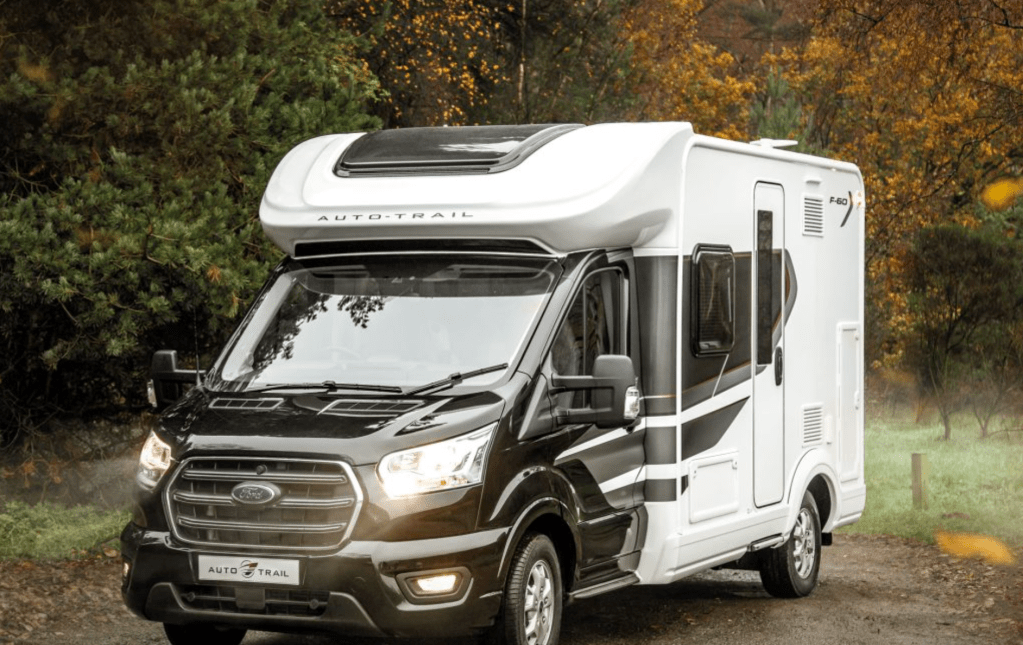
It was April 25th. The day. It was chilly and overcast when I picked up our home from the Midland Motorhome centre in the village of Inkberrow, Worcestershire for the next month. A Ford Motorhome Autotrail 60 fit for Debbie and I and Leia our Border Collie.

I initially took it to our home to load it up with the stuff needed to sustain the aforementioned travellers. You would think that makers of said vehicles would at least fit it out with a reasonable amount of storage thinking perhaps that folk would be residing in it for more than say 6 hours. But oh no! So we started stuffing what we thought we would need into any nook and cranny. Well at least until we settled in and realised that what we actually needed we had left behind.

It was to be a journey of around 5 hours to get from home to the ferry but I had not driven a manual gearbox vehicle for a long time nor had I driven a motorhome on the UK roads before so rather than rush to catch the 14:00 ferry on the 26th we decided to set off at a somewhat leisurely pace, stay overnight somewhere in the vicinity of the ferry port, get something to eat, a good nights rest and then meander on down to the port at our leisure.

What is immediately apparent is the size of the vehicle. It is a nippy wee thing. Its 6 gears motor it along quite comfortably. It does lean a bit in the corners. But it is more than capable of cruising along at 60 mph comfortably. That is until you hit the roads of rural England and Wales. Then you discover the rather hard suspension causes it to crash and thump over the appalling road surfaces that pass for main highways in the UK. The contents of the cupboards rattle and bang as the van shudders over every pothole. We stopped frequently to reset the cupboards contents, stretch our legs and let to the dog out for a sniff around. 

Home for the night was the Tregroes Caravan, camping and clamping park just 2 miles away from the ferry terminal. It was peaceful, quiet and set in a lovely park like area.  Lorraine greeted us like long lost friends. The on site restaurant served home cook fare of lasagnes, burgers, sandwiches and a variety of other items sure to satisfy most tastes. Washed down with a pint of Atlantic IPA on tap, it was a feast at the end of the day. Tomorrow we cross the Irish Sea and hope to meet an old colleague of mine. More on that tomorrow.

Day one had come to a close. 

Days mileage: 157.

Ireland Motorhome trip 2024

Well thats it then. No backing out now. Ferry tickets have been purchased. The motorhome has been hired. The adventure will begin very soon. April 25th to be precise. That is the day I pick this beastie up.

A Ford Autotrail F60 to be precise. This will be home for Debbie and I plus Leia the Border Collie as she will accompany us across to the south of Ireland, up the west coast, across the top and along to Belfast, across to Cairnryan in Scotland and if time allows, across to Buckie in Scotland of which more later and home. Buckie to home will be via a couple of places time left depending before I have to return the beastie on May 23rd. 4 weeks in total. Our last trip in a motorhome was two weeks around the South Island of New Zealand. You can read about that in the road trips section above in the menu bar.

Other than the two ferry crossings out and back I have not booked anything. We have no particular stops planned in Ireland. We shall see where the road takes us and what grabs our fancy. We have time.

There may be a pint of Guinness or Murphys along the way. Perhaps a decent stew. Maybe a wee bit of music. Time will tell.

The weather may play ball. It may not. It is the West of Ireland after all.

If any of you have been that way then all suggestions for must sees are welcome. However we will not follow the beaten tourist track so forget the Blarney Stone. Names of good pubs that like Border Collies will be welcomed.

If you fancy a read about the travels of two people and a dog in a steel box on wheels with basic facilities then follow along dear readers.

Up and down and through the mountain pass.

The final day dawned overcast, gloomy and threatening to rain. After all, our accommodation last night, Tigh-na-Cheo means house in the fog.

But knowing this was the final day we had a spring in our steps and packed for the last push mentally and physically.

The guide book says the 15 mile walk from Kinlochleven to Fort William is challenging and starts with a long sustained climb. From past experience I know that means argggh! It goes on to say the walk crosses a beautiful high mountain pass and then undulates between open moorland and forests before a long descent down into journeys end at Fort William. Considering that Kinlochleven is at sea level the clue as to how far the long sustained climb would be is that we had to reach the high mountain pass.

We left our accommodation to see two wild red deer munching the grass on the lawn outside. A good omen I thought.

This very day there was also a UK championship trail running competition about to start from Kinlochleven and so it was that just after we started the climb we had to move to one side of the path to let the super fit trail runners pass us. Around 30 of them. That smashed me mentally as I was already in 1st gear for the climb. I had to regather my thoughts.

It took around 2 hours of heart thumping, leg aching, hard breathing climbing up a rough and stony path to reach the first summit. I was goosed already and we had only gone 1 ½ miles! I stopped for a brief rest and looked behind me to see how far we had climbed. The view to the small town of Kinlochleven below was superb.

Then the rain started and the wind picked up. It gusted to around 30 knots. The wind chill was significant. Our saving grace was that the wind was on our backs. Even though I had my rainproof poncho on, plus my coat, thermal hoodie, shirt and vest I still got a bit chilled. The backs of my legs were wet in no time. It was quite uncomfortable. I felt a bit miserable at this stage.

We could have turned back but what was the point of that? We had come so far. The effect of the rain in the mountains was to recharge all of the waterfalls and within 30 minutes the green grey mountains now were streaked with white as foaming water ran down their flanks. It was staggeringly beautiful. There was a silver lining to the miserable weather.

It is difficult to imagine what life must have been like living up here. We passed the ruins of crofts. One even had the remnants of an old plough and farming implements scatterd about in rusted broken pieces. The stone walls of the animal pens were long disused.

Once somebodys home. Now long forgotten. A derelict farmouse at Tigh-na-Sleubhaich. ( translates to the house of the gully place.)

We now joined another of the old military roads that climbed up to the mountain pass called the Lairig Mor. It was exposed. It was barren but the scale of the highland scenery made me feel so very small. There was no shelter. We just had to keep going.

An information board in the middle of nowhere next to a stone cairn. It recalled the Battle of Inverlochy. We were standing at the very point where history was made 1645. The board tells the story of Dairmid Campbell. The board and cairn beside it mark the spot where Clan Donald abandoned the chase of the Campbells after the battle as they headed back the way we had just come through the Lairig Mor.

We skirted the flanks of the UKs highest mountain, Ben Nevis.

We then started the long and knee torturing descent into Glen Nevis and the walk to the end of the West Highland Way in the town of Fort William. Emotions were running high as we crossed the silver line on the pavement. We had the obligatory photos by the sign and bronze walker statue on the bench. In time we would reflect. My feet and ankles were complaining. I was wet and cold but I was warm inside.

That is it. Done and dusted. Toworrow I will give a brief note to sum up the experience. What did we learn, did we enjoy it, would we do it again?