Top Tips for Exploring the Wild Atlantic Way on a Motorcycle

I said that once we had returned to home I would write a few words about the trip. What we liked. What we did not and the do’s and don’ts.

A celebratory cinnamon bun having completed the trip.

There are plenty of books and maps to help in planning the Wild Atlantic Way. It’s best to visit any Irish Tourist office once you are in Ireland. Grab a handful of the free ones there. The entire route from Kinsale in the far south to Muff near the Northern Ireland border is very well signposted. Most of the tourist offices have maps divided into various regions. Examples include County Cork and the Ring of Kerry, and so forth.

I checked out various motorcycle forums, YouTube videos and general internet searches. There is so much information out there. Probably too much if I am honest. I included “must-dos” in the various forums. I added these roads where they fit into the basic route I had already planned.

I used the Calimoto app for planning the trip. It was easy to use and also the highlights are readily obvious. I downloaded the maps to use offline. I strongly recommend you do that. I did use Waze and google and Apple Maps for some background. Google Earth was also good to see what some of the very minor roads were like. Most places had cellphone signal. Only a bar or two was enough if near the towns and villages. But sometimes there was no signal at all. The downloaded maps became very useful then.

We used Stena Line ferries to and from Fishguard. They provided padded lashing straps for the bikes. There were no challenges using the ferry. The crew lashed the bikes. Its worth paying for access to the premium lounge. Plenty of food and drinks to stock up with.

We used bed and breakfasts where possible. When none were available we used hotels. I prefer the B+Bs as I like to meet the local landladies for a chat. Booking.com and AirBnB were handy. I did not find any decent Irish books or websites to find good B+Bs. There were so many B+Bs we passed that were not listed anywhere. I did ask one landlady why there is no decent directory of accommodation. She said the normal is just to rock up and knock on the door. This is to see if there were any vacancies. That approach isn’t helpful in some places. There were very few options, and there was no guarantee of a bed for the night. Do watch for this. Prices ranged from 80 Euros for the night to over 300 in some of the hotels. The standard was very good. There were a few quirky places and I loved them. Many of the pubs had accommodation but they tended to be noisy and no off street parking for the bikes.

Petrol (gas) stations were never a problem to find. Even the remotest places had a pump or two. Prices were cheaper in the bigger towns which is to be expected. We tended to fill up in the bigger places and top up if needed when remote.

So here are my do’s and don’ts.

Do’s

Whatever time you allow to do a particular leg then double it. Google maps often said 3 hours and it took 6. This is because unless you just want to get around as quick as possible then you simply have to stop. Then you get caught having a chat to a local. And oh how they can talk and I loved it. Often, sitting and having a coffee invited men to come and say hello. They would ask what we were doing and give tips on their best roads in the area. An hour was gone in no time! Then there are the photo stops and info boards at points of interest to read. Our day usually started around 9 am on the bikes. We would stop for lunch or coffee. We arrived at the B+B around 4 or 5 pm. Earlier if the weather was poor. That gave us time to have a hot shower and start to get wet stuff dried if possible. We tended to have a good lunch. In the evening, we would have a snack like an instant porridge pot. The B+Bs did not supply dinner but all had a kettle to boil water. Many were remote with nowhere in the area to go for food. Make sure to pack a box of porridge sachets or freeze dried soup. Keep them in your luggage for the evening if you need food. You can read the blog for an idea of mileage and the stops we made.

Do pack your bike for all weathers. It is called the Emerald Isle for a very good reason. You can get all seasons in one day. We were sat in the pouring rain one day miserable as hell. A local said don’t worry, summer will be along in 20 minutes. Sure enough it was. The wind on some of the west coast headlands can be significant. It can occur on peninsula’s at any time of the year.

Do avoid the obvious tourist traps if you travel in high season. We arrived at the Cliffs of Moher and they wanted 15 euros just to park. It was full of buses. We moved on. Slieve League in Donegal is better and less busy.

Do be familiar with any satnavs or apps that you use. We came across bikers touring on hire bikes. They had a preprogrammed route in a satnav. The bikers were struggling to use it because they were not familiar with it. It is all well and good when things are going right. But, if you leave the route or change it, they struggle.

Do I really need to tell you to make sure you and your bike are in tip top condition before you set out? Do I? This can be a rough ride in places and is tough going on any machine. The suspension will get tested. The tyres will get a beating. You will be challenged mentally and physically. Whilst you don’t need to be Mr Universe do make sure you are in good health before setting out. I make no apology for mentioning again the remote nature of some parts of the route.

We packed 10 days worth of undies and socks and around 5 T shirts. I included a pair of quick dry fishing shorts. I also added two decent polo shirts and a hoodie. Additionally, I packed a pair of chinos should we need semi decent clothing to eat out. Besides my boots, I packed a pair of slip on deck shoes. They are for wandering around the B+Bs and the towns in the evenings. Otherwise the day was spent in bike gear. This is not a fashion show. That gave us time to get into the trip before we needed to find a laundry. You can always get t shirts in pubs you visit and in the local supermarkets if you really need to. We got one from a great pub in Dingle. Well it’s a must is it not?

Do plan in a days rest now and then. We took two days off in a 22 day ride. One in Dingle and another in Clifden. Dingle is a fabulous place even if it is very touristy. Clifden has a great laundry service in the town. It also offers good eat and drink venues. It was absolutely worth it to get laundry done, rest, and check the bikes over. It was also great just to take a breather. This is quite stressful riding.

Irish roads can be interesting. You can be traveling over a brand new piece of road. The next minute, it suddenly reverts to teeth shaking and gravelly mush. Some of them are very narrow with stone walls close by or high hedges. Some can be rather rough in places. Tractors from the 1950s and 60s were plentiful bumbling along just around the next blind corner. You have been warned. The locals in cars and trucks don’t slow down much. Watch your lines through the curves. We encountered many cars crossing the center line on bends. Also beware the tourist coaches who really don’t care about anyone else. Again we had many encounters that left us scratching our heads.

Whenever we saw other motorbikes we always went and said hello. In the far west, we saw very few. We never missed a chance to catch up with a fellow biker.

Do be choosy about points of interest you really want to see when planning your route. Visiting every single location listed in the books is impossible. You would need at least 6 to 8 weeks to spare. I stuck to places of cultural and historical interest primarily. So many fabulous beaches are along the way that I gave up after a while. There were too many viewpoints overlooking a beach. Locals call them strands. After the first week, we only stopped at the really spectacular ones.

Do be sensible with the booze. Nobody likes a drunk, especially a lairy biker. The locals welcomed us in all the pubs we went into. I have become very fond of a cold Guinness. Not once did we come across anybody who had too much in the lovely pubs out west. Don’t be the first and spoil it for the rest who will come after you. The trip for me was really all about the people we met. The scenery was quite good too!

Do take a basic tool kit with you. Duct tape and cable ties are bikers friends. A puncture repair kit. Once you leave Cork and head west, you find fewer motorcycle shops. In large parts of the country, they reduce to zero. We were on BMW’s. There are two dealers on the entire Ireland so come prepared. Get good travel insurance that covers bikers. If possible, join the AA or RAC or similar for help if needed.

Do ride with a companion if you can. Some parts of the route are very remote. If anything untoward happens, having a mate along will really help. There were always cars and other travelers around but sometimes we did not see another soul for hours. Anyways, this is an adventure that really is best shared with a mate.

Another tip is to take two bread bags with you. You know the plastic bags that bread comes in. They are great if your boots get soaked and you cant dry them before the next day. Put dry socks on, put your feet in a bag and put your boots on. Feet keep dry even in a soggy boot. Likewise for your hands. If it rains, cover each glove with a bag. This keeps your gloves dry if you don’t have waterproof mitts. I never tour without two bread bags in my jacket pockets.

Do have the what3words app on your phone. Godsend for giving someone your location in any event if you need assistance. Particularly in the remote parts of west Ireland. Its free so why wouldn’t you?

If you have time, do plan to come down the middle of Ireland. Whilst not as rugged as the west coast it is as beautiful. It is often bypassed. It should not be. It is wonderful.

Don’ts.

Don’t plan the trip to death. We often took a wrong turn. Sometimes, we decided to venture off route up a road because it looked like a good road to ride. The calimoto app like most will always recalculate and get you back to your destination eventually.

Don’t rush. If you want to zip around, this blog is not for you. It’s meant for those who wish to enjoy the journey and not just the destination.

Don’t pass up the opportunity to have a chat with the locals. I found a simple good morning how are you today ended up passing an hour. In the entire time we were in Ireland we encountered Mr Angry only once.

Don’t spend money in the large supermarket chains unless you really must. Support the local businesses. There are loads of little local Supervalu supermarkets dotted about. They will thank you for it. We used local cafes and bakeries. They were really good. Besides, it is another opportunity to chat to the locals.

Don’t spend money on fancy visor cleaners. Go into your local specsavers or similar and pick up some spectacle cleaner. Much cheaper (sometimes free if you are a customer) and just as good. You will need it. I had anything from bird poo to flies to cow poo flung up at me. This is rural Ireland you are traveling through.

Don’t worry about the security of your bike. The B+Bs we used were mostly so remote they were totally safe. In the towns we stayed in the owners let us use a backyard or shed to put them in. One hotel had a secure car park. I took my big chain with me and used it once. Just take the usual precautions. Most people that were near the bikes just wanted to look at them. A couple of young kids had their photos taken on them. I never had any big concerns about security.

Don’t be tempted to have the full Irish breakfast every day. No really. Don’t. They are huge and totally awesome. Still, at 10,000 calories a pop, the rest of us mere mortals will be dead after a week. Unless you are one of those lucky people that can eat like that and live, avoid overindulgence. We had one a week. On a Sunday morning. Totally fabulous but makes the mornings ride a little uncomfortable with half of a small countries harvest in your stomach. Be warned. Public toilets were very scarce. Hence the use of cafes. They all had a toilet. Being of a certain age the availability of toilets is a consideration. You won’t read these top tips in any other blog!

In conclusion:

I am sure there is more I can write. Would I do it all again. You bet. I did the route in a motorhome with my wife and our dog and again on the bike. When I got back to Rosslare I wanted to turn around and go back again.

Ireland is awesome. It is everything you would expect it to be and so very much more. But for me it was all about the people. Like at home in New Zealand the people are genuinely interested in you. They are warm and welcoming. There is a wonderful community feel which has been lost elsewhere. My goodness can they talk! Quite often it was me that started it with a simple hello can you help me and away you go. From garages, to supermarkets to cafes to simply sat by the bike checking my phone people came to chat. Old people, children, grannies, land ladies, farmers on tractors, you name it they came. I will admit that in the beginning, I was very wary. I was thinking, oh what do they want? What can they pinch? It was just general suspicion. That’s sad because that’s the norm in other parts of the world. My fears were very quickly alleviated after my first few encounters. I would move to West Ireland tomorrow!

People say they will do it some day. Some day is not a day of the week. Go do it. Life is no dress rehearsal and this needs to be on your bucket list.

I hope this was helpful. Get in touch if there is anything more I can help with if you are thinking of doing the Wild Atlantic Way and Ireland in general for yourself. Safe riding.
Day 21, Bunclody to Tagoat. Final Day Motorcycle Tour in Ireland: from The Woodend Wanderer

Bunclody is a pretty little place situated on the River Slaney. It also lies right on the border between Counties Wexford and Carlow. The 1798 rebellion features heavily in Bunclody’s history. Many motorcycle tourists don’t come this way too often I imagine which is a pity. It is off the well-trodden routes. It is worth a visit and lies at the foot of Mount Leinster, which we passed yesterday. I wish we had more time to explore more.

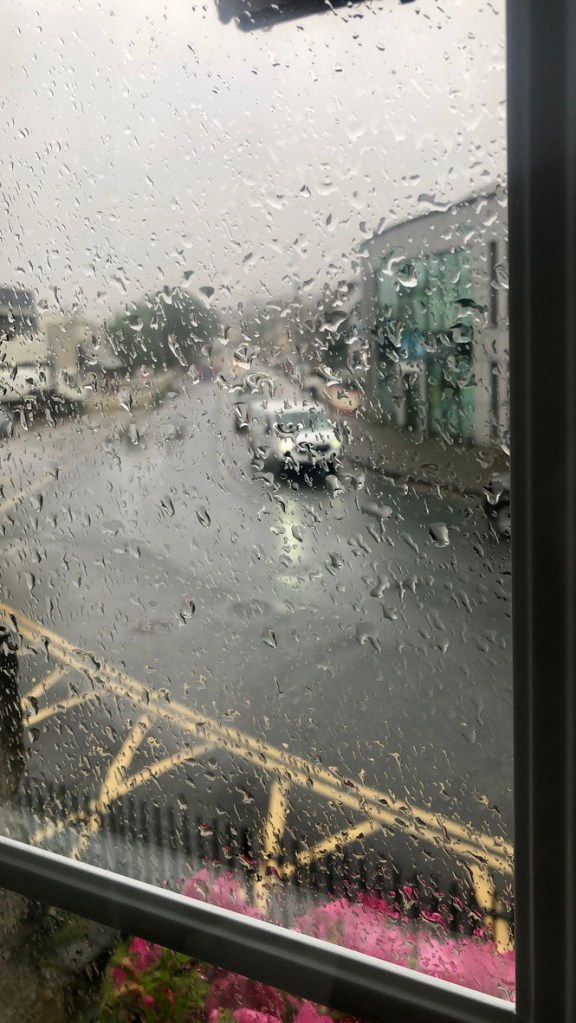
Not the most inspiring view out our window.

We woke up to persistent rain, as a frontal system was passing through, moving east. Curtains of drizzle blow across the landscape.

Our tour of Ireland started in the rain, and it looked like it would end the same way. Today was our final day. We felt quite sad, for the past 3 weeks have been simply superb. I will finish the blog with a summation page of feelings, emotions, do’s and don’ts. It will also include tips for anybody else that reads this and wants to do something similar.

After a hearty breakfast we bid farewell to the Meadowside B&B and our host Phyl. We donned the wet weather gear and set off north east. We crossed the river Clody. Then we turned southwest onto the L2026. 

The drizzle caused large plops of water to drip from the tree canopy above. The smell of the earthy woods and foliage was wonderful.

The road started to climb through pastures next the signs for the Leinster Way.

The wind now picked up as we approached the high ground. Cloud level is above us and we climb ever closer and disappear into it. Fog and mist are all around.

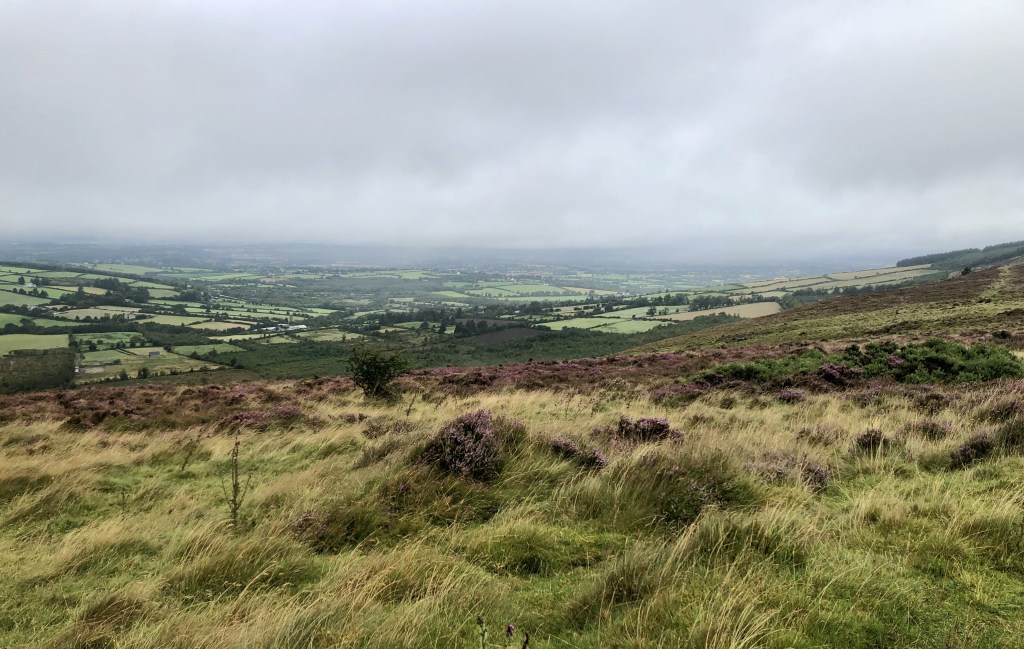
We are in glorious heather country again. Oh, how I love being up here. Yes, it is windy and wet and a little chilly. But the panoramas all around make up for that. The patchwork quilt of County Carlow spreads out around us. We pass a deer park information board in the mist. We see no deer. We do see a fox and plenty of sheep walking on the road.

As we descend on the L3005 down from the clouds and skirt the flanks of Slievebawn, suddenly blue skies unfold. The road dries. We dry. Huzzah!

Turning onto the L7045 we pass Killedmond. Bizarre name. We head for the small village of Borris and stop in a lay-by to remove the wet weather gear.

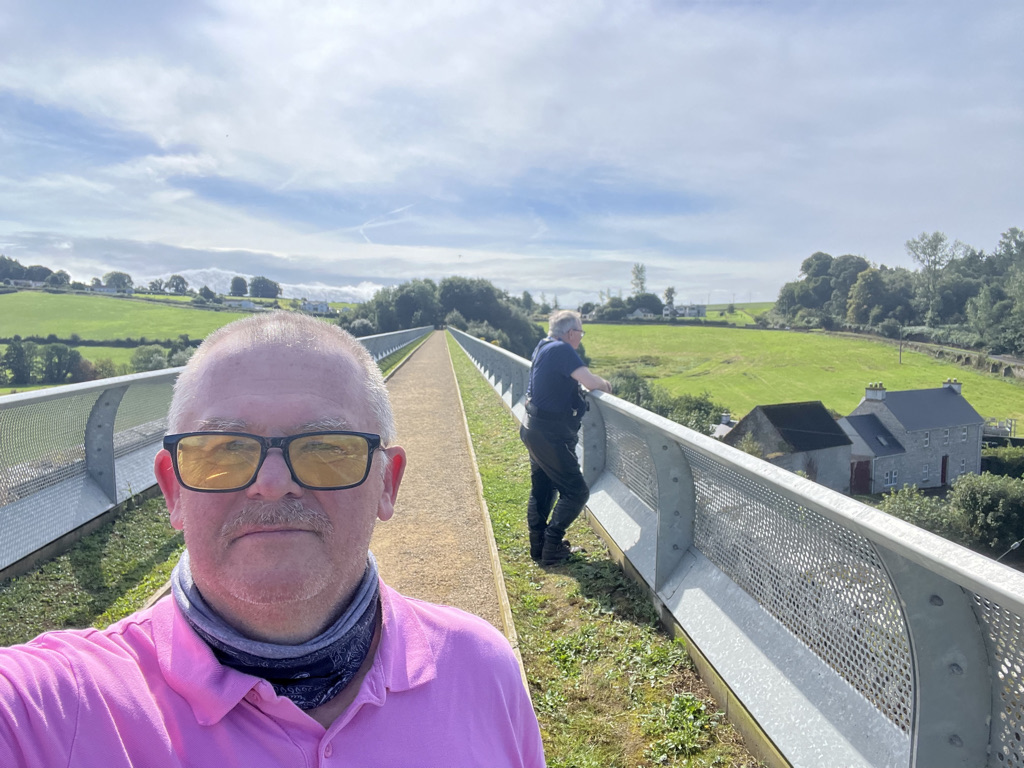
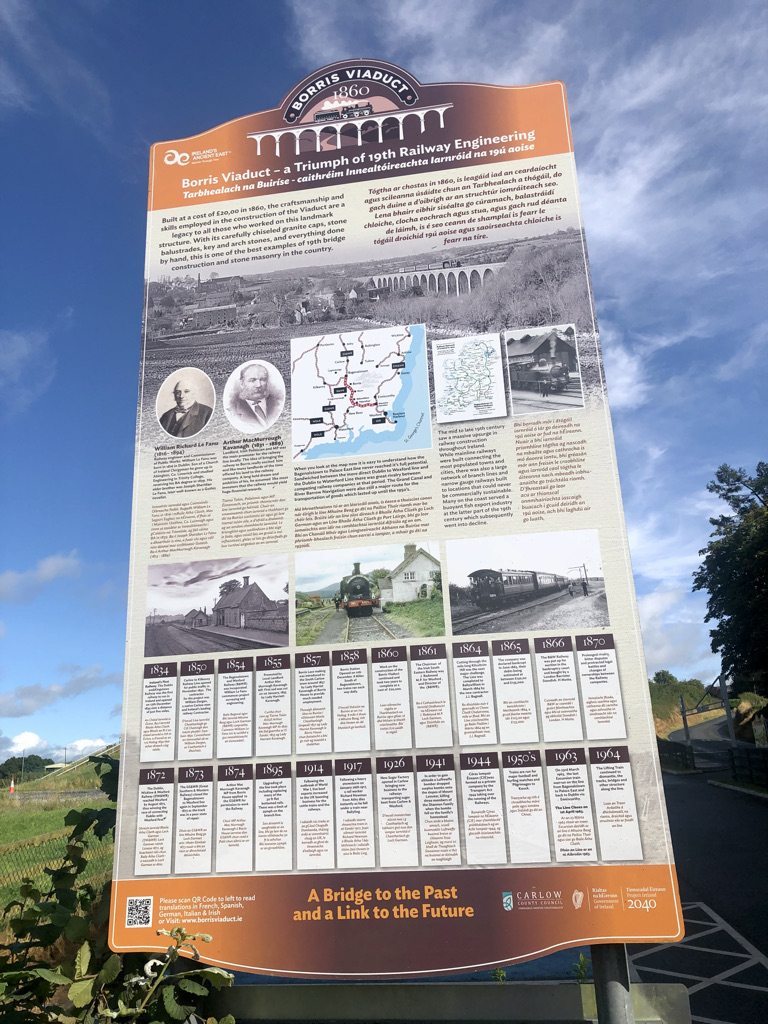
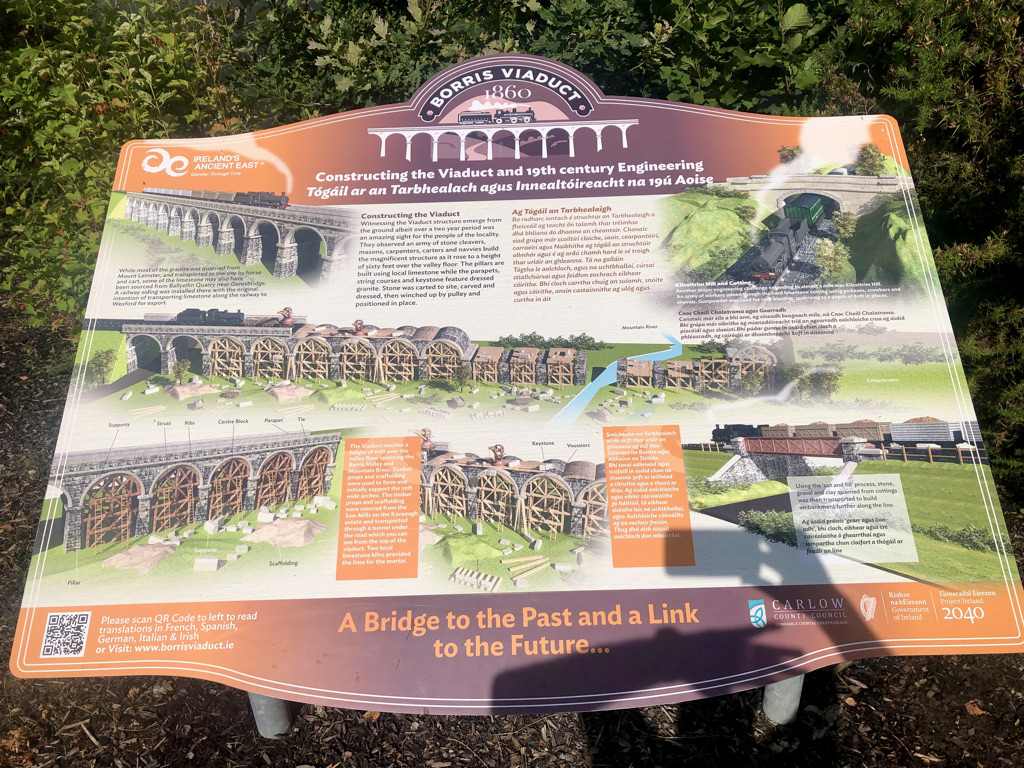
In a chance discovery, we see an enormous stone viaduct spread out before us. It needs exploring. Various notice boards describe it.

The Borris Railway viaduct is a truly impressive piece of railway heritage. You can walk over it where once the railway tracks were laid. Another example of finding hidden treasures if you wander off the track most trodden.

With less hindrance from wet weather gear we move on.

We pass the impossibly named village of Graiguenamanagh. We take the R703 and move along at a decent speed. We then cross the River Nore and enter Thomastown.

It is another pretty little place. Parking is a bit of an issue. We circle the one-way system twice and find a spot for the bikes. The Blackberry cafe hosts us for coffee. We have a slice of lemon cake and an almond tart. Both are scrumptious.

No really. Quality control only.

Duly refreshed we contuinue south on the R700. This is a fairly easy road to ride. Well surfaced and dry. Too many cars cross the centre white lines on the bends encroaching on our side of the road. Dont do that. You will kill a motorcyclist. We are on our guard all the time for this.

We enter the large town of New Ross by a bridge over the River Barrow.

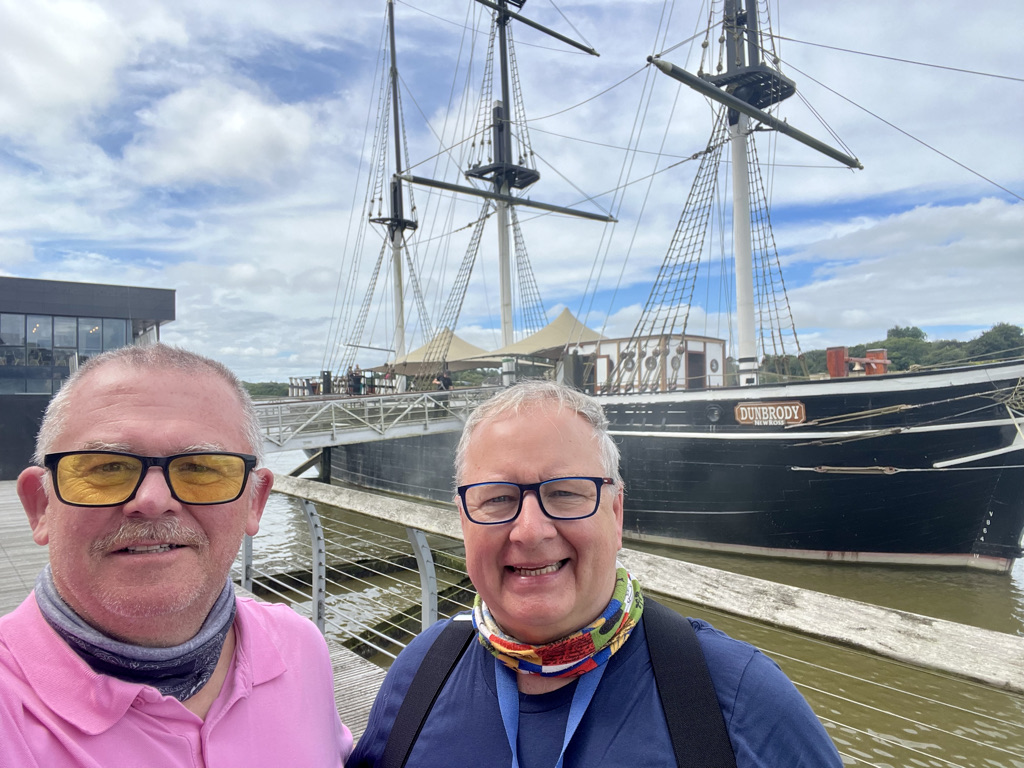
Upon the river lies the Dunbrody.

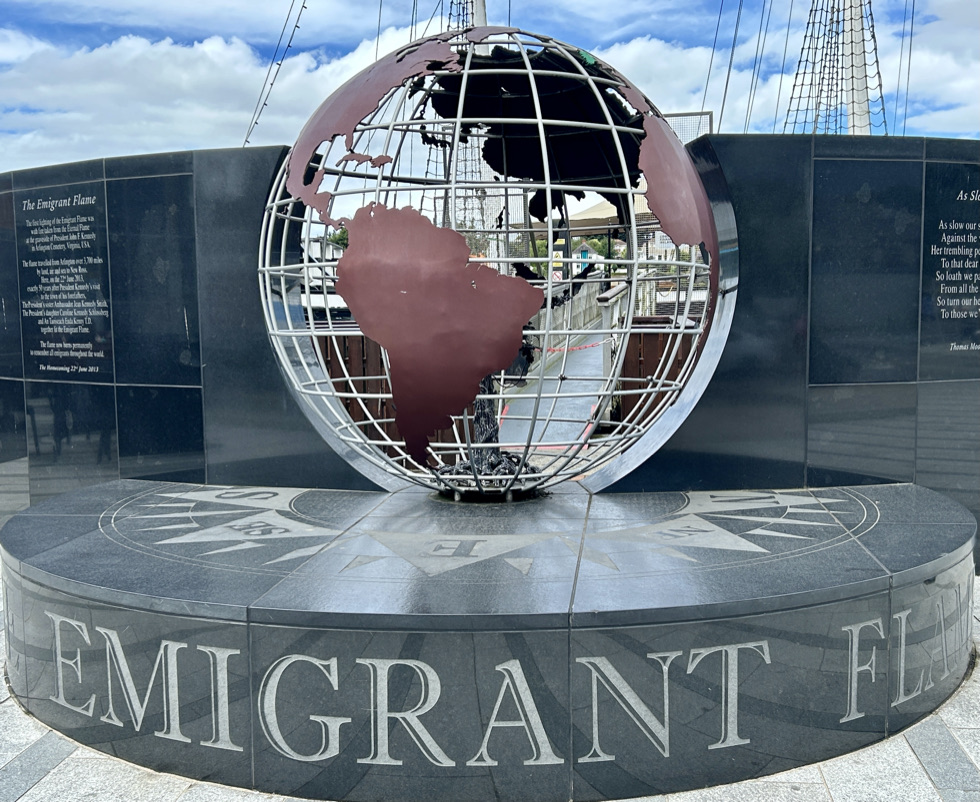
She was a ship that carried emigrants aboard. Many as a result of the great potato famine of 1845. You can read more here. This page even has a searchable emigrant database.

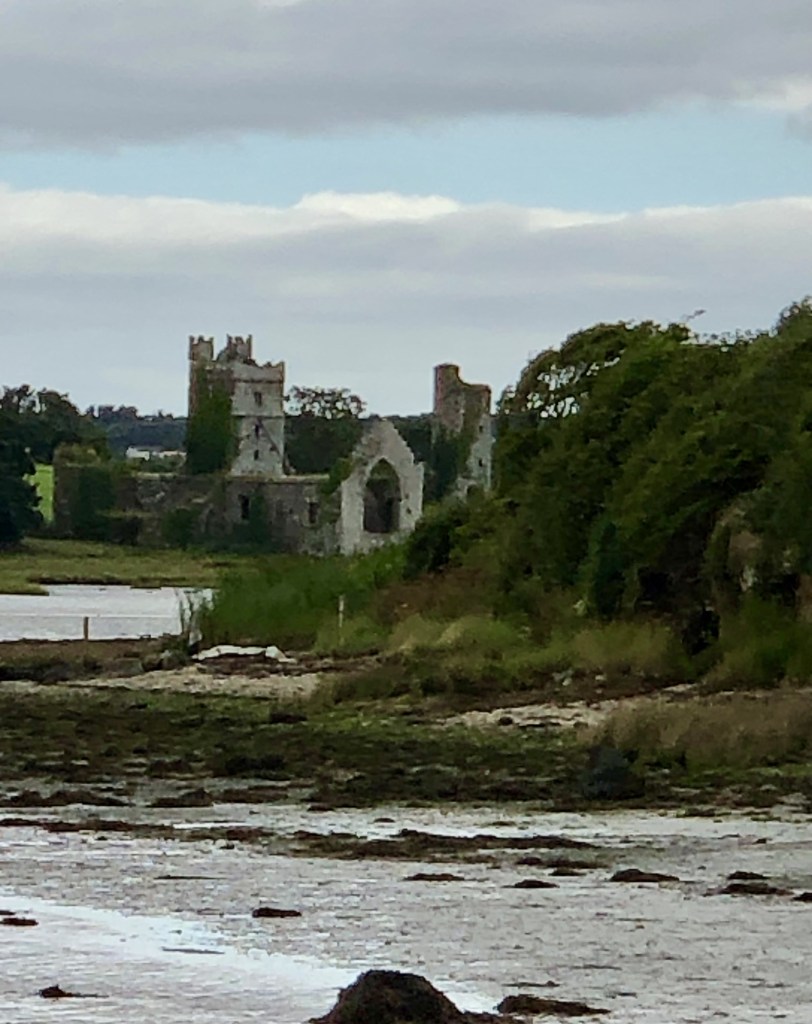
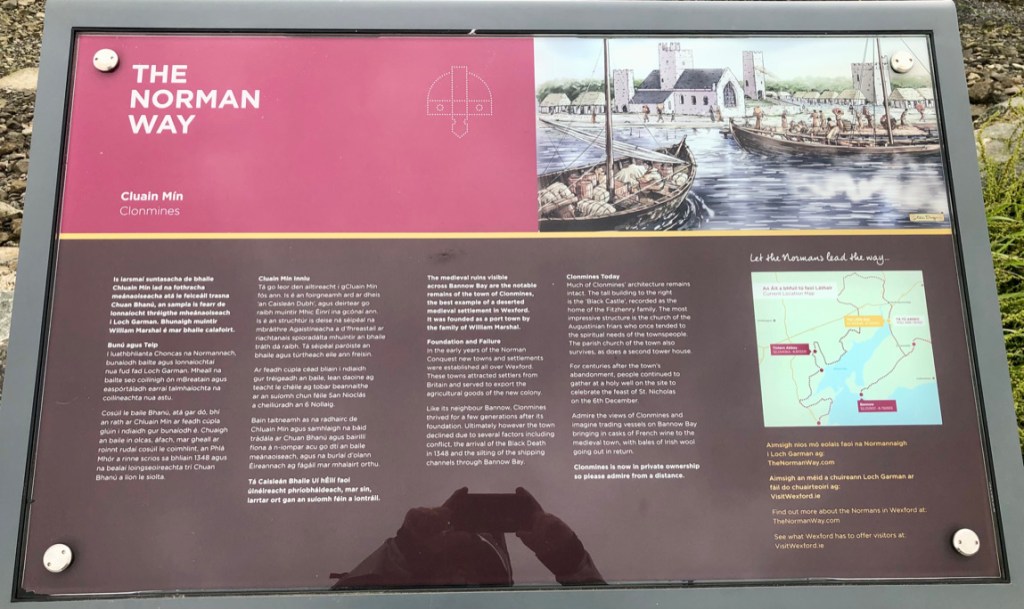
We take the road south once more. The countryside changes to open farmland and then coastal reed lands. The uplands are for the sheep. The lowlands are for the cattle and arable crops. The fields are different shades of colour reflecting their use. There is evidence all around of the Normans. Church towers are square. We chance upon signs for the Norman Way. The smell of the sea is suddenly in the air. It is heady and wholesome.

Passing through Wellingtonbridge we stop and soak in the views.

We continue following country lanes rather than the main highways. Around every corner, interesting architecture presents itself.

We divert down to Kilmore Quay just for a look.

It is a busy holiday makers gathering spot. Ice cream sellers appear to be doing rather well. We stretch our legs and take a wander around.

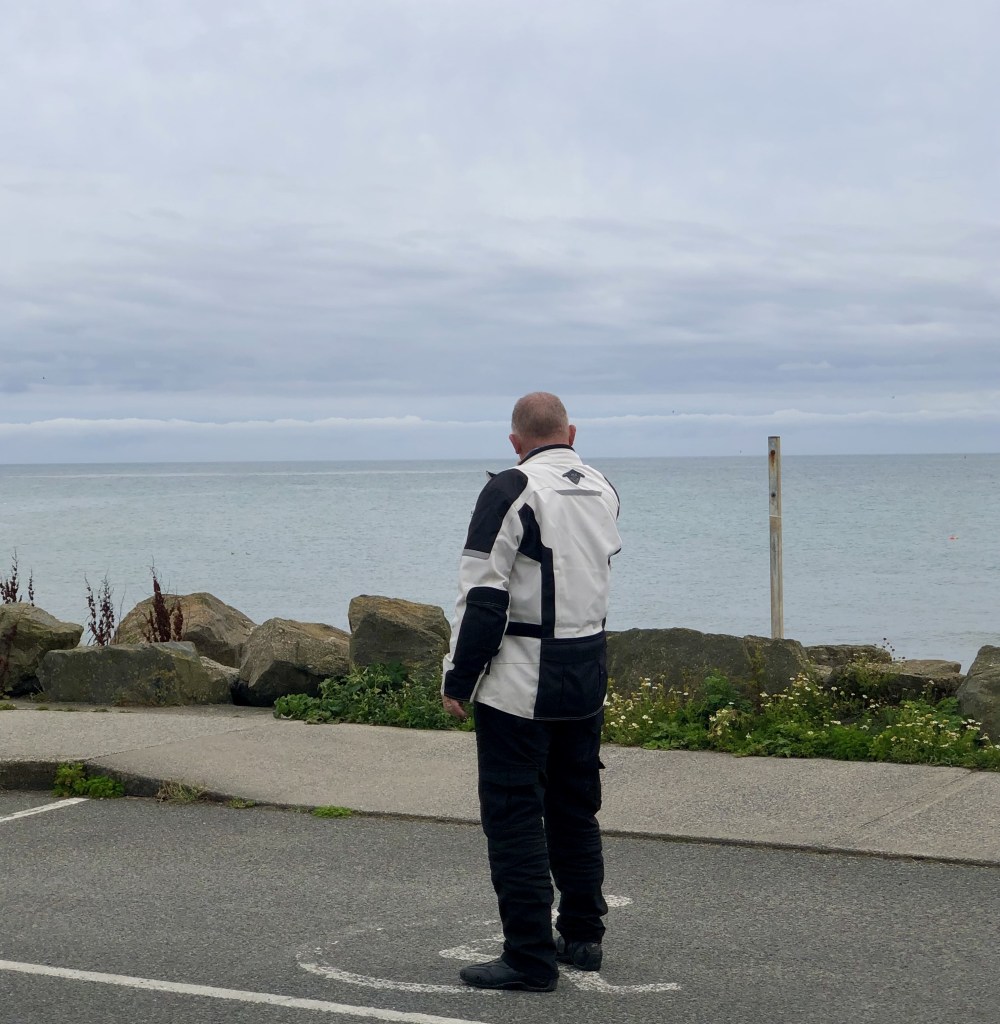
Time to stand and stare.

We have to check in to our accommodation near Rosslare for our last night. So, we press on to Kilmore. We continue to Tomhaggard (got to love that name). Broadway is next (we were in Hollywood yesterday). Finally, we reach Tagoat. 

The enormity of what we have done has not sunk in yet. It will. In time.

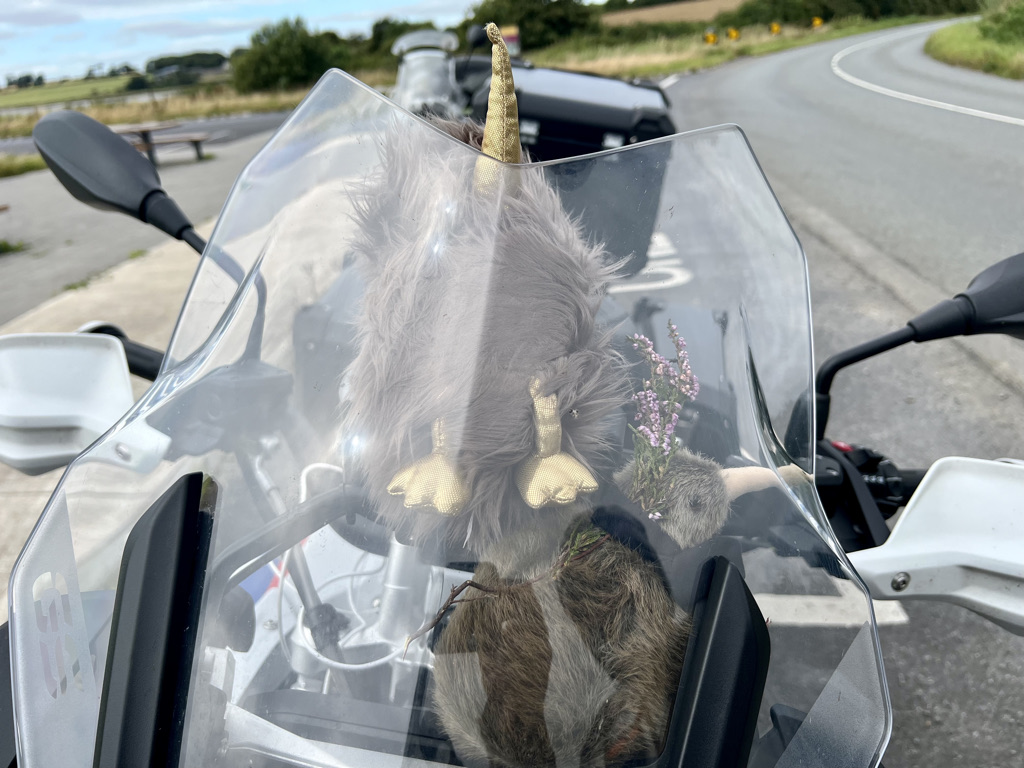
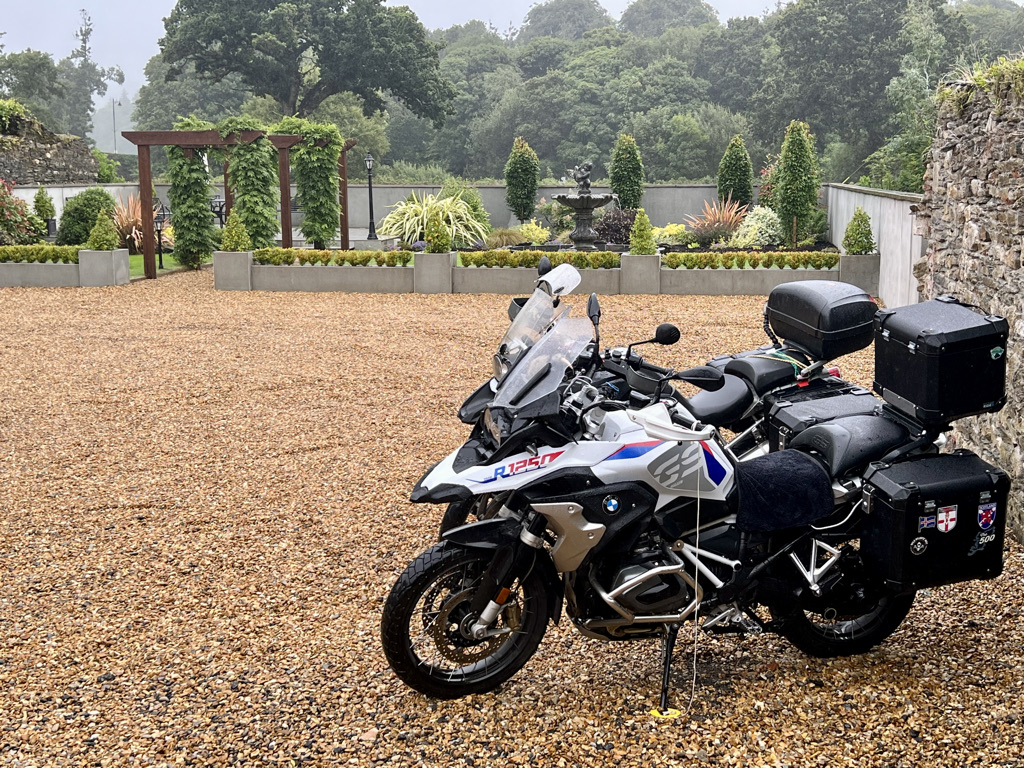
My two kiwis and heather. My guardians on the road since day 1.

Today has been another fabulous day in the saddle. Ireland is the country that keeps on giving. If seeing is believing then I am a convert.
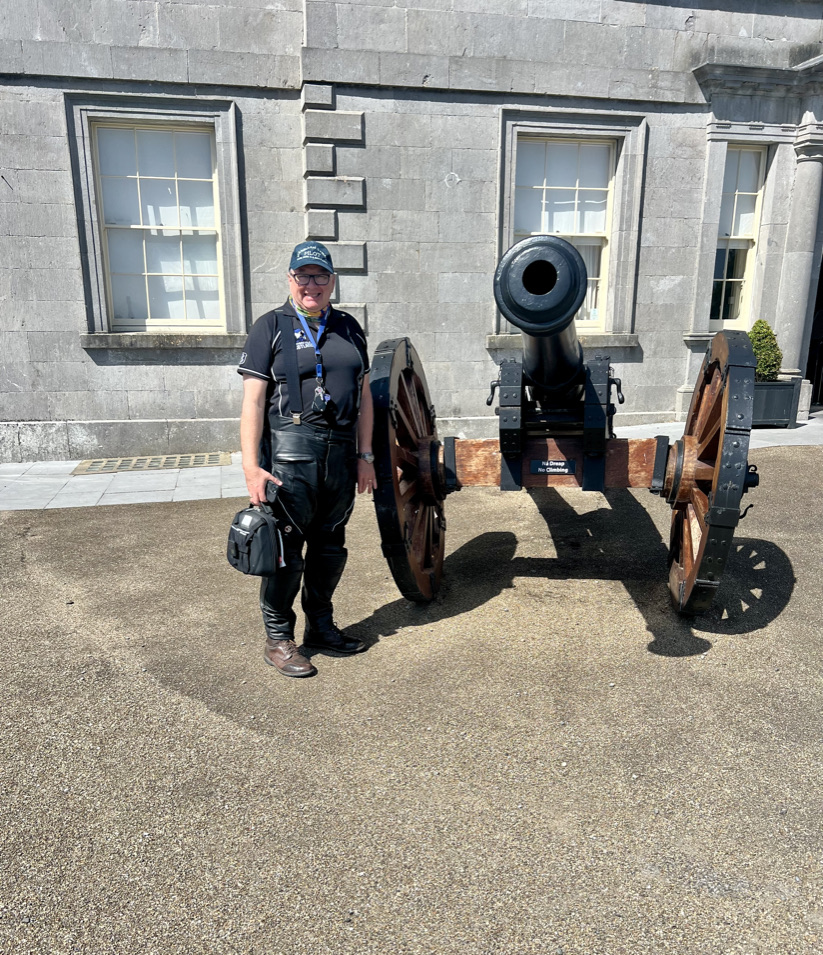
We have an early morning ferry home tomorrow morning. In a few days once I have gathered my thoughts I will do a final post. Until then farewell Ireland. You and your people are beguiling, enchanting, funny, witty, chatty, warm, and giving. I love you. I love you. I love you.
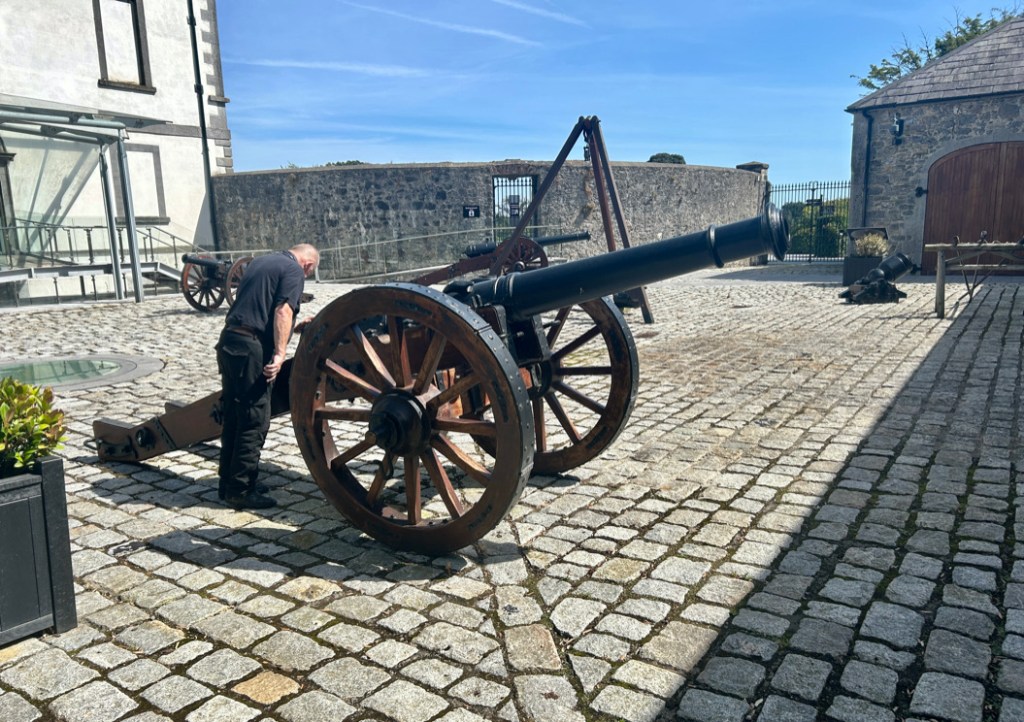
There will forever be a part of Ireland in our soul. Neither I or Andy will leave the Emerald Isle without leaving a part of us behind.

Day 19, Castlepollard to Kilcullen. Exploring Kells Abbey and Battle of the Boyne: A Historical Ride in Ireland

There were only two real goals to try and achieve today. One was to visit the site of Kells Abbey. This was because my wife Debbie had seen the Book of Kells in Dublin. I wanted to see where it had been kept for 700 years before being deposited in Trinity College Library Dublin. The other was the Battle of the Boyne site. I had read much on this and wanted to visit.

With that in mind we awoke to a glorious morning. A light warm breeze had kept the bikes free of dew overnight. After a decent breakfast we packed up our stuff onto the bikes and set off for Kells.

The road from Castlepollard to Kells is the R195 and is an easy ride in the morning sun. It is sunday. The smell of freshly mown lawns wafts on the warm breeze. It is rich. It reminds me of my boys following around the garden as I mowed the lawn when they were growing up. As the road reaches Kells we pass the Spire of Lloyd. A magnificent tower set atop a hill on the side of the road. 

Kells at first appearance is just another Irish town. Nothing remarkable stands out. But oh how I was wrong. A large square structure of white plastic sheeting around scaffolding stands proud. It is the Kells Abbey tower. The only remaining remnant of the original abbey. It is being restored and maintained and is hidden from view. I have to resort to a web picture to show you what it’s like. I must credit lovetovisitireland.com for the photo.

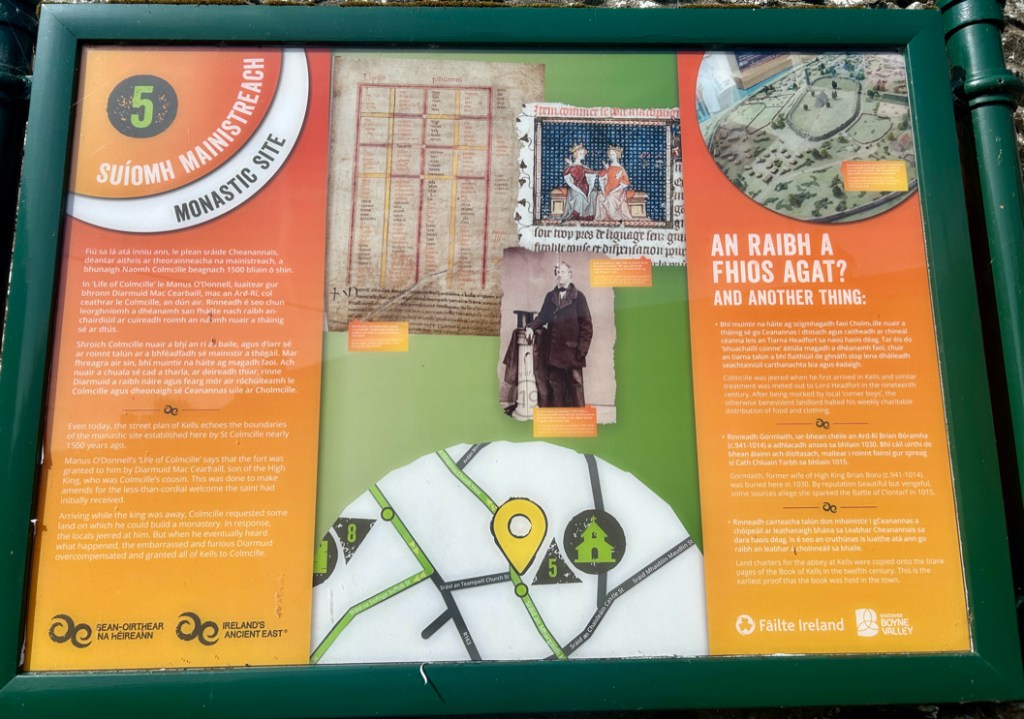
A fairly modern church, St Columba’s Church, now stands on the site of the old abbey. A picture board at the entrance alludes to the scene from the past. It is quite humbling.

Only the tower remains today. To think we were parked just outside the southern gate . We stop and reflect. We move on.

The R163 strikes east through Gibbstown and joins the N51. It is a nondescript road but carries us quickly to The Battle of the Boyne visitors centre.

We had just parked the bikes. We were heading to the cafe when we met three of the staff working at the centre. Employed by the OPW, Office for Public Works, they are a credit to to Ireland. How lucky we were. One of the men was Graham Hartnett. He was one of those amazing individuals that bring something special to your day.

Take a bow Graham. You are one special person.

We chatted and mentioned we were going for a coffee. He started to show us to the cafe. Outside the stately home that is now the visitors’ centre, he turned us to look over the battlefield.

The brown field behind us is the site of the battle.

Then he started to tell us about the battle. I was under his spell. His enthusiasm for the subject became infectious. Now I have been to the site of the Charge of the Light Brigade. I have also been to General Menchikov’s redoubt, Nagasaki, and Hiroshima. I listened to guides. But none came close to Graham’s talk on the Battle of the Boyne. Having read much, I thought I knew what the battle was all about. But Graham filled in much of what I was missing. You can read about this in books. But get someone like Graham to bring it alive in front of you……well that lasts a lifetime. Thank you Sir!

I also had no idea how much of European and UK history sprung from this one battle. For example, the Pope supported the Williamite cause against the Catholic Jacobites and much more. I strongly suggest you go. Seek out Graham and listen to his infectious and enthusiastic commentary. This 20 minutes in his company has epitomised our trip to Ireland. Warmth, friendship, and a willingness to share. The laser-enhanced demonstration of the battle in the visitors’ center is also truly excellent.

Time was pressing on. After a cup tea and delicious almond slice in the cafe we had to move on.

We had intended to go to the Newgrange neolithic site not far from the Boyne visitors centre. But we had ran out of time. We will save that for another day. 

Taking the L1601 we now go west next to the Boyne Navigation canal. We skirt around Navan and take the R161 Southwest. This leads us to the very pretty town of Trim. This very tidy town has it all.

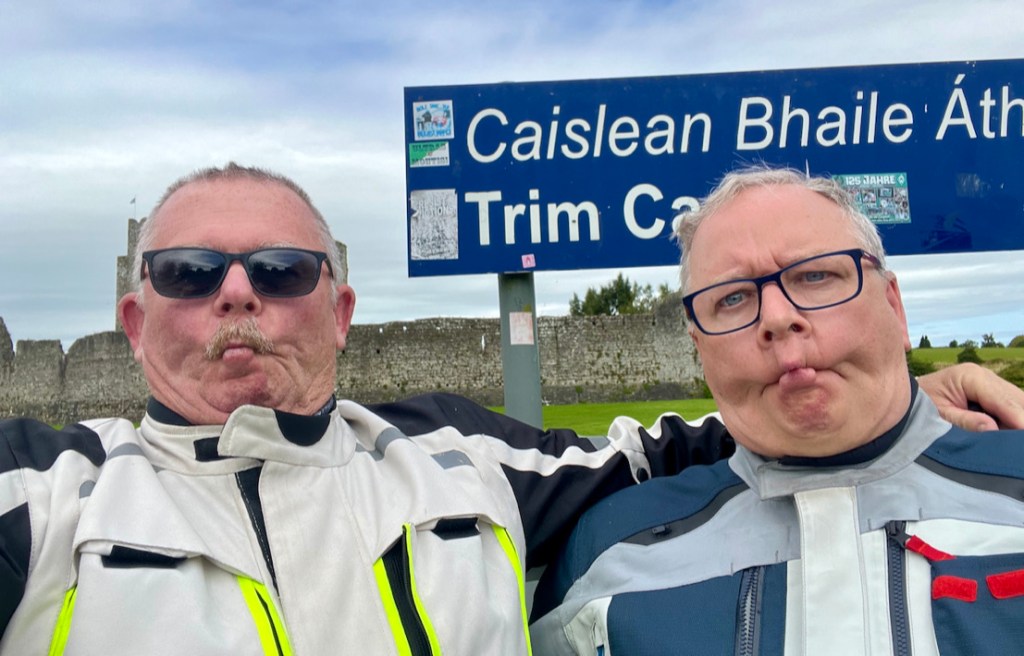
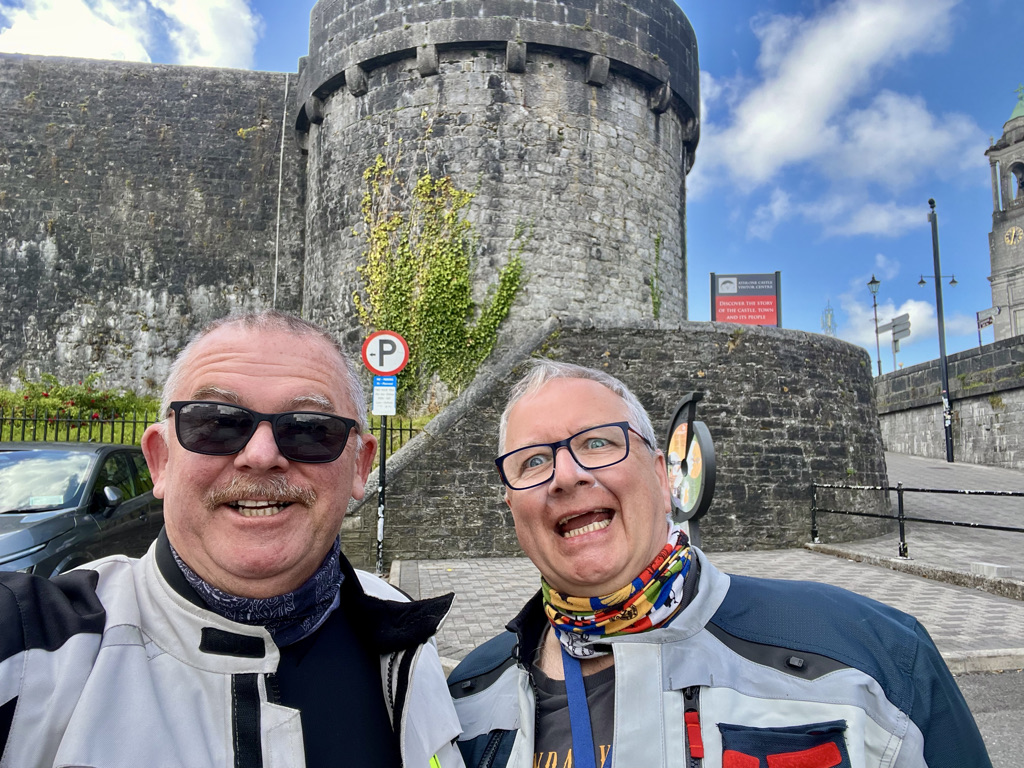
Two fellows trying to appear trim in Trim.

A castle, beautiful churches, a river and a substantial monument to the Duke of Wellington. Arthur Wellesey, better known as the 1st Duke of Wellington or ‘the Iron Duke’, was educated at Trim. He spent much of his childhood at the nearby Dangan Castle, his father’s country house (now in ruins). He was also an MP for Trim. Every day is a school day in Ireland. I had no idea of Wellingtons connection to Ireland.

The road from here on in follows farm tracks and country roads. It winds through pasture lands. We get our first glimpse of the Wicklow mountains where we shall be tomorrow. We pass the Curragh race course. It is huge. Immaculate grass clipped to perfection waiting for horses to rip it to shreds. We are in racing country.

Journeys end is in the small town of Kilcullen.

As the day draws to a close dark clouds gather. A few spots of rain spatter the window.

It has been a very different riding day today. Easy roads. Some rough in places, especially where they crossed the bogs south of Edenberry. The countryside could be anywhere in England: undulating and green, but with a certain feel to it. I can’t put my finger on it. That is until you interact with the wonderful local people. I do love this country.

Day 18, Farnaght to Castle Pollard. Discovering Hidden Gems: Motorcycle Journey Through Rural Ireland

My bovine alarm clock went off shortly before 5 am. Some young cows in an adjacent field took it upon themselves to herald the arrival of dawn. They did this by mooing to all and sundry.

The sun rose. It was lovely morning.

Opening the back door, two furry faces appeared. The two collies, Ben and Roy, came to say hello and get a chin scratch. What a lovely way to start the day.

We bid farewell to Gerry and Josephine and set off. The L1053 initially strikes north through green and rolling pasture land. Deciduous trees in full leaf line the road. The smell under their canopy in the early morning is divine.

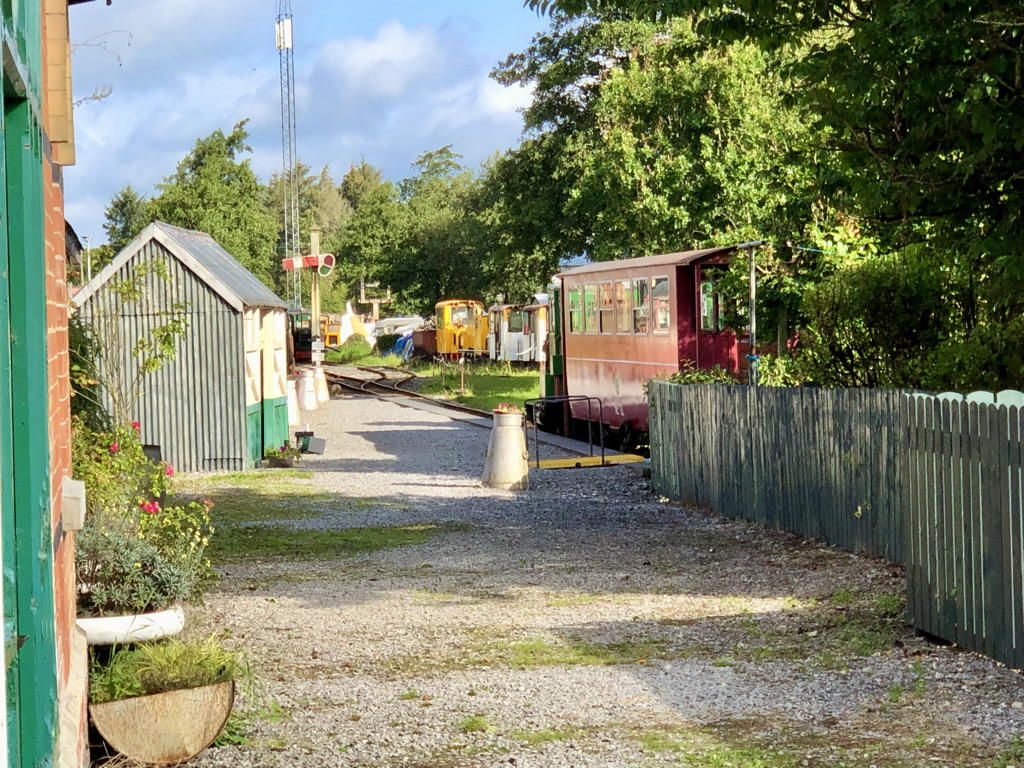
We pass through Gortletteragh and Mohill and join the R202. We ramp up the pace a little as this road has an 80 KMH speed limit and is more open. We continue into the small town of Dromod and park at the railway station. To be found here is the Cavan and Leitrim Railway museum.

Alas, it is closed. Peering through the fence, we see an odd collection of planes. There are old buses and various railway wagons and coaches, all in a sad state of decay. They hope for restoration one day. Andy spies somebody working in one of the dilapidated coaches. He says there is a steam engine coming tomorrow. We will miss it. We move on.

Taking the L1601, we progress north again up the east side of Lough Bofin and Lough Boderg. At Drumsna, we cross the River Shannon. The last time we crossed it was by ferry from Tarbert on the west coast. It is still a wide and impressive river this far inland.

Sticking to small and narrow local roads, we take the L1405 south through rolling farmland. This road is a single-lane track through woodlands and fields and is a delight to ride.

Arriving into Stokestown, we stop to refuel the bikes. What strikes me is that this entire area is one enormous dairy area. As far as the eye can see, green pastures and meadows stretch away to the horizons. Small hamlets of a few houses dot the landscape.

Frequent stops are made to let tractors bimble passed.

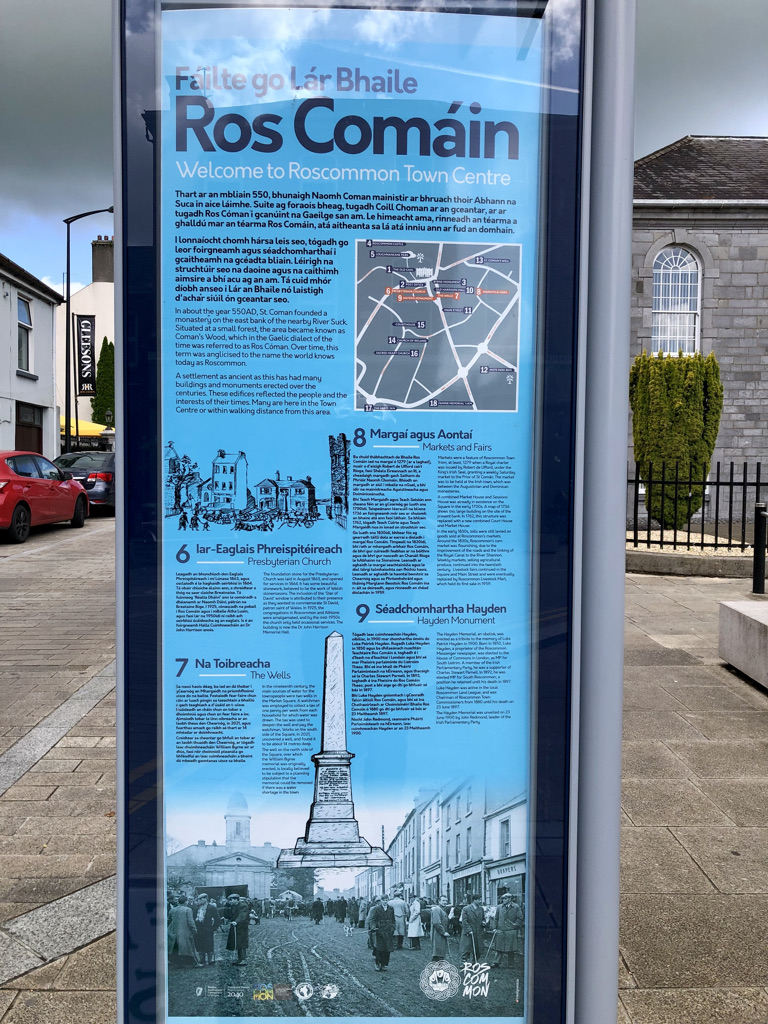
Continuing on to Ballyleague and Roscommon, it is time for a coffee. Roscommon is a busy wee place, and we park rather naughtily on a pavement in the square.

This is a pretty town with a rather impressive looking bank in the town square.

Andy finds a very nice cafe for a sojourn. On returning to the bikes, we see a man sitting on a bench with two golden retrievers at his feet. I ask whether I can say hello to them. They are 2 ½ and 4 years old. Beautiful, placid, and loved a scratch. So much so that the younger one kept putting her paw on me when I stopped.

We bid them farewell and press on.

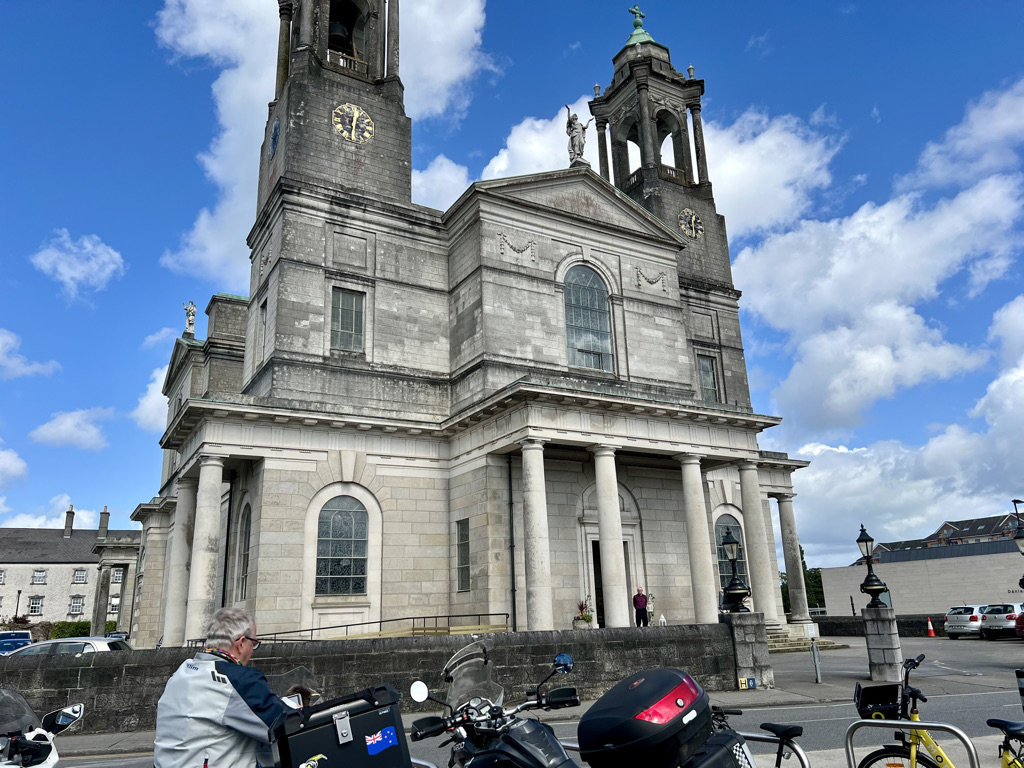
Next stop was the very impressive town of Athlone. Situated on the Shannon, it has a very impressive castle and a magnificent church of Saints Peter and Paul. There was a wedding taking place. We sat on the steps in the sun to relax for a while. We also enjoyed some people watching.

Moving on, we leave the town and strike out into the countryside once more. Leaving the traffic behind, we enjoy the twists and bends of these country lanes. We take in the sights and smells as they pass in the afternoon sun.

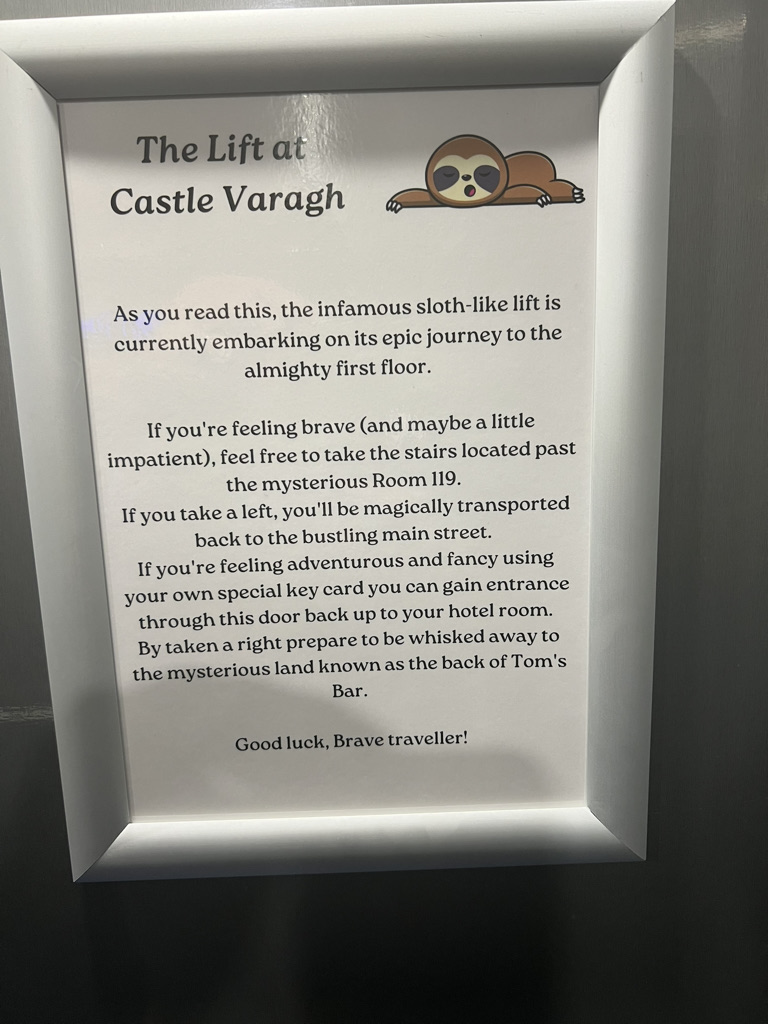
We are now in Castle Varagh hotel in Castlepollard for the night. The sign in the elevator makes us giggle.

Today has been a lovely and warm day. It was cloudy, with plenty of sunshine. The temperature was 22°C. Perfect for enjoying this beautiful country. A Guinness to rid the throat of the dust of the day beckons.

Day 28, Whitby to home and reflection

The 215 miles drive home was of no real value to thee trip. It was just to get home the quickest way possible, empty the van of all our stuff and give it a brief clean. But what it did do was give us time to reflect on the past month on tour. In no particular order here are our thoughts should you ever choose to do something similar yourself. Here are our 10 tips:

  1. Choose your van carefully. We wanted a permanent bunk so we did not have to worry about making it up every night. Particularly if we were tired or just wanted to go to bed early, or have an afternoon snooze. Ours lifted up to the ceiling of the van and we kept the duvet and pillows on it so it was just a case of lowering it and voila!. The down side was that it was across ways and needed some ladders to get into it even when it was down. Great if you are in your 20s, 30s etc, not 60s. Also to get to the loo one had to crawl over the other to get out. Make sure your van rental company uses Calor gas. It is readily available all over Ireland in supermarkets etc. Our rental company van had Flogas. Disaster. No suppliers in Ireland. Calor gas bottles will fit but you pay more. Also note that UK and Ireland gas bottle fittings differ. We were asked whether we had northern or Southern fittings by a supplier when I phoned them. I did not know. Turns out its northen or southern Ireland and they are different. Choose your van carefully.
  2. The Irish people are simply brilliant. We did not come across anybody who was less than super helpful, friendly and did not want to chat. Sometimes for a long time.
  3. Ireland is a glorious country. But allow plenty of time if exploring the west for the roads can be very narrow, the walls and hedges are high and right on the roadside and the locals drive like they own them. I suppose they do. The quality of the road surface varies from superb new tarmac to terrible. Average speeds therefore are way down on what you might expect.
  4. Ireland is not well served with campsites and motorhome pitches that you may be used to home. We did camp out in the wilds on some nights and that was adorable but you still need to empty the loo tank and fill up with water every three days or so. Places to do so were few unlike New Zealand where facilities are in virtually every town and garage. Be prepared and plan (but not to plan it to death. Allow some freedom). Those campsites we did stay at were well run and by super friendly people. Some were quite basic and others not so. All were clean and well kept. Of note was that in the Irish campsites you are more likely to have to pay extra for showers. Have 1 Euro coins with you.
  5. Even though the roads are as described the volume of traffic is way down on what you may expect at home. Often the roads were deserted unless around the big towns.
  6. If taking a dog into Ireland go via a ferry to Northern Ireland for the roads are seamless crossing the border. In fact you would not know there was a border other than the road signs change from Miles an hour to kilometres an hour and the welcome to Ireland sign. There was no evidence of any checks. We went on the ferry from the UK to Ireland and were directed to Customs as soon as we got off the ferry to clear the dog and check her paperwork. Not even a passport check on us. £220 pounds we paid before we left to have the dog vaccinated, wormed and a health certificate. Kerching! I could be wrong but crossing from Northern Ireland to Ireland and back would have been checkless and free.
  7. Don’t be afraid to start a conversation with people. I even ended up doing an advert for sun cream with a chemist in Ramelton simply because I said we came from New Zealand and I had a growth cut out of the arm skin. The Irish love to talk. No really they do. And talk a lot so make time for that.
  8. The volume of traffic when we crossed back to the UK increased very noticeably. How the heck did we ever allow so many heavy trucks on the UK roads. The road transport lobby must be very powerful. In Ireland on the other hand we saw very few big trucks. But we did avoid the motorways and the toll roads.
  9. Allow the occasional day to do absolutely nothing. You will be rewarded. Better to see less and take your time and enjoy what you see rather than belting around and spending all day driving. We usually set off around 10 and were camped up by 3 or 4 pm with plenty of rest breaks. Driving around the Irish west coast peninsulas can be taxing so slow down, enjoy the views and take breaks.
  10. Use your common sense. Don’t go around talking about politics, religion or any other sensitive topic. I found a conversation about rugby usually got the chat going no matter whether I was in a pub, supermarket of campsite. Like most countries in the world I have been to, just be polite. I often asked about Gaelic football and spent the next 20 minutes learning the rules from somebody with a pint of Guiness and speech that I understood around 50% of. But it did not matter.

So there you have it. Would we do it again? Absolutely! In a heartbeat. I loved Ireland so much. It reminded me constantly of New Zealand. It is stunningly beautiful, the people are beautiful, the air is clean and fresh. Whats not to like about that.

Todays Mileage:215 miles.

Total mileage home back to home: 2775 miles.

Day 27. A day in Whitby.

What a lovely place. Nestled in the valley where the River Esk meets the sea the natural harbour has drawn fishermen, whalers and sealers and seafarers for years. But my prime reason for being here was to see what more I could find out about Captain James Cook RN.

Whitby Harbour entrance dominated by the abbey on the southern side.

I have spent 45 years travelling the worlds oceans. I have visited many of the places that Cook did from the NW passage over Canada to Antarctica, from French Polynesia down to Australia, Tasmania and New Zealand. I have found some of the passages quite tough on the cargo ships I sailed on and back in the 80s before satellite navigation is so everyday as it is now we used sextants to find our way across the globe. But nothing can compare to what Cook and his expedition teams endured. I have read all his log entries and it is fascinating stuff.

The resident seagull sat on Cooks head refused to leave for a photo. The monument has a commanding view out to sea, standing in Peoples Park on Westcliff. More info here.

What I did not know was that his ships were built in Whitby. I had no idea of the scale of shipbuilding in this port. More here. One of the plaques at the foot of the monument says this:

I also did not know until today how much sea time Cook accrued as an apprentice sailing on colliers out of here to Newcastle and afield. It was at this time he became familiar with the different ships being built in Whitby.

How to absorb all this knowledge? Why ponder it whilst having a Fish and Chip with Prosecco afternoon tea at Hetty And Betties Ballroom. A delightful place. Who knew such an afternoon tea even existed, complete with mushy peas! Not sure if you put them in the scone or with the fish 😁.

Eeeee! It were grand!

The town clearly was one of wealth. Large Georgian town houses line the roads running down into the town. Now mainly guest houses, in their heyday they were magnificent. Bagdale Hall, a Tudor building dating back to 1516 stands proudly at the bottom of Bagdale just as you enter the town. Now a hotel and restaurant it is assured of a future.

The Old Smuggler Pub. Said to be the oldest building in Whitby dating back to 1401.

The afternoon drizzle descended so we returned to the motorhome. What a wonderful day. I loved Whitby. I love any harbour with a story to tell. Whitby has many still to be uncovered. This is a place worth visiting. Yes there is some tat on the north side. Amusement arcades that are the scourge of many and English seaside town are to be found here too. But keep away from those and the town has plenty to offer.

Tomorrow we drive home and my last entry for this road trip will be a summary of life in a motorhome with my wife and our dog travelling through Ireland, Scotland and England. What we liked. What we did not like and what we would do different if we ever did this again.

Todays distance: nothing by van but around 5 miles on foot.

Day 26, Lindisfarne to Whitby.

Why Whitby? Well one of my personal heroes has connections here. James Cook moved to Whitby and became an apprentice in a Quaker-owned shipping company. He trained and took coal between Newcastle and London. I intend finding out a bit more about him. An added bonus is that there is a Dracula connection and the town itself is meant to be very pretty.

Our journey today took us down the North East coast of England. It is a beautiful part of the country. White and golden sand beaches like Budle Bay dot the coast. Quaint seaside towns like Alnmouth sit quiet now. Located at the mouth of the River Aln, the village had a port supporting a small fishing industry and engaging in national and international trade. It was for a time a leading north-east centre for the export of grain and other foodstuffs, especially to London, and specialised in the import of timber and slate. These activities to some extent shaped the village, as granaries were constructed to store grain, and sawmills and a boatyard established to process wood and build ships. Most is long gone now.

We visited Warkworth. What a stunning place. Surrounded on three sides by the River Coquet, it is dominated by its magnificent castle. The old bridge that crossed the river still stands as does the gate house.

The main street is Castle street and it is lined by shops constructed in the same honey coloured stone. It is a stunning place. Nowhere can you go without seeing the castle perched on the high ground above the town.

We headed south to a part of the world where I spent some years of my life in Seaton Delaval. I went to see the schools that I attended from the ages of 4 to 15 and the houses my family lived in. Memories came flooding back. The bus stop where my mum would put me on the number 358 bus to Newcastle to be met at the other end by a family friend who would take me to see Newcastle United is still in the same position. As a 7 year old complete with my black and white hat and scarf I would stand at that very spot waiting for the bus with mum and there she would wait for me when I came back from the game as well.

We moved on to Whitley Bay and had a coffee at the Spanish City.

This Historic England photo is the best one I can find that shows the Spanish City in its heyday when I would visit it as a child. The fairground has all gone now. It has been covered over with car parks and a hotel. Such a shame. It was a real treat to go. There is not a child in that part of the country that had not been or wanted to go to the Spanish City. At least the dome and main facade have been renovated and saved. Time to move on.

We continued south, through the Tyne Tunnel to Durham where our eldest son went to university. I had hoped to stop and take a few photos for old time sake but alas that was not to be. The traffic was dreadful and there is a dearth of parking spots for 3 metre high camper vans. No problem for a car. After running through the city in vain we beat the retreat to our stop for the next two nights a mile to the west of Whitby town centre.

Durham Cathedral

Durham Cathedral will be forever special as our son gained his Masters and was given it in this cathedral. It is closely connected with Lindisfarne from whence we have come. It contains the shrines of Saints Cuthbert and Bede. The See of Durham takes its origins from the Diocese of Lindisfarne, founded by Saint Aidan at the behest of Oswald of Northumbria in about 635, which was translated to York in 664. The see was reinstated at Lindisfarne in 678 by the Archbishop of Canterbury. Among the many saints who originated at Lindisfarne Priory, the greatest was Saint CuthbertBishop of Lindisfarne from 685 until his death in 687, who is central to the development of Durham Cathedral.

It has been an emotional day. Reliving my past and revisiting old homes and schools certainly gives you goosebumps. My junior school has been demolished and a new one lies just up the road from it on what was the old schools playing fields. The ground of the old school is now a housing development. No more playing fields for the new one. A sign of the times.

Much to ponder on as I write.

Todays distance: 145 miles

Total Distance: 2560 miles.

Day 25, Lindisfarne. The Holy Island.

I had read about this place. I had heard it described as magical. I had visited as a child back in the 60s but only remember the causeway. It was 5 miles from our campsite to the island and we simply had to go. Debbie had it listed as a must see for her.

It was a cold and grey morning as we drove over the causeway following the published safe crossing times of 02:55 until 11:20. We would need to remain on the island at least until 15:20.

Those that ignored the timings in the past have paid the price of flooded cars and wet feet. Posts mark the causeway when its underwater and a refuge is provided for walkers crossing on foot should the tide flood faster than they are.

A film crew was already on site and had been for a number of days. An entire field had been given to them to park all the gubbins required to make a major movie on location. They were filming in one of the old houses in the village centre. The star is Cillian Murphy. A movie called 25 years later and due out next year.

We took the dog for a walk around the island to get the layout in our head. After around an hour and a half we took her back to the motorhome and returned ourselves to visit the castle and priory.

Sitting atop a rocky outcrop, Lindisfarne Castle started life as a Tudor fort built to guard the entrance to Lindisfarne Bay. from the Scots. It fell into disrepair and was rescued and restored as a home by a magazine owner and is now in the hands of the National Trust.

I found it to be a strange place. Neither old fort nor comfy home. Rather a bit of each which it is I suppose. It is windswept and surrounded my flat fields and the North Sea. In winter it is battered by storms. In summer is it battered by tourists feet. To me this was a holiday home. It lacked the warmth and touch of a ‘home’.

I came away with mixed feelings about the place. Deep down I think I would rather have seen it restored as a fort. But if not for a rich man it would still be a ruin.

We returned to the Priory.

Forgive me English Heritage for using your photo. But it is better than mine plus we cant use drones where it seems you can.

Now this is an altogether different experience. I cannot do the history of Lindisfarne Priory any justice here. You can read more here if you like. But this place really moved me. As I have mentioned before, I struggle to imagine the place back in its heyday. But the peace and serenity inside the ruins was wonderful. Birds chirped and hopped through the ruins. English Heritage do their best to inform you of the history. The Lindisfarne Gospels, St Cuthbert, St Aidan and the Viking raids. It is all rather overwhelming and of monumental significance to early Christianity on the British Isles. One of our sons studied at Durham University and it was in that city and its magnificent cathedral that I learned of the Gospels and Saints and how closely connected Durham is to Lindisfarne and why.

As we arrived at the Priory visitor centre the grey skies started to clear a little and the sun peeped through lighting up the pink stonework. It exuded warmth. Now I am not a particularly religious person but there was something about this placed that tingled.

The base of an old cross lies at the entrance between the Priory and St Marys Church opposite.

I adore the fact that in relatively modern times old traditions persist. The story of the ‘Petting stone’ made me smile.

We returned to the van to collect the dog and return to the town for lunch. A local crab sandwich. A bucket list item. Sad I know! It was Divine. With a capital D. The dog sat under our table and was the darling of the pub (as usual).

On returning to the campsite once the tide had receded enough for the causeway to become usable again we returned to our campsite to reflect on the day. We can see Holy Island in the distance from the van. It looks like any other low lying island off the English coast. Sandy, grass and with scrub covering the majority of it. Sheep are dotted about. But oh what history! Looking out to sea to the East one can imagine the Vikings approaching and seeing the same island we are looking at now. You need to go one day.

Todays distance: 11 miles

Total Distance: 2415 miles.

Day 24, Stirling to Lindisfarne.

The day started foggy and ended foggy with a bit of mist in between. We saw sod all when we left and in fact saw sod all when we arrived and in between it was sort of ok. The sun did its best to burn off the mist but failed miserably.

Who knew?

We set off and took the road east to Alloa and then picked up the signs for the Forth Road bridge. Having been across it on a motorcycle recently, I was telling Debbie to get her camera ready for the spectacular views of the old road bridge and the rail bridge.

This is what ensued.

The temperature dropped 4C as we crossed the bridge and then recovered the same amount as we left the other side. Clearly the effect of the water below was cooling the air above and the water vapour condensed into blanketing cloud and we saw very little. Oh well. On we went.

The road skirts around the south of Edinburgh. It is Saturday and I had to resist the temptation of going through the city centre. The traffic in Edinburgh is awful at the best of times. I turned off the motorway to take a break, give the dog a chance for a walk and get a coffee. To get back on track we motored cross country and as I have said before and will say again, get off the motorway to see the best of the country. We passed through the delightful little town of Haddington.

Its majestic architecture harks back to prosperous days. Honey and rose coloured buildings, parks and open spaces attest to the fact that once upon a time it was the fourth biggest town in Scotland after Aberdeen, Roxburgh and Edinburgh. Clearly this was a wealthy place. I think it still is. I loved the place.

We continued on to Eyemouth passing though the golf country of Dunbar. Golf courses everywhere.

Eyemouth had been mentioned to us by a friend as a place where something rather special lay. Eyemouth itself is a small fishing town with a lovely harbour, a great fish and chip shop (ask me how I know 🙂 ) and the site of the Widows and Bairns sculpture. I was moved by this poignant piece of art. Bairns incidentally is children.

The fact that each bronze figure represents a real person I found really moving. The artist has captured the dreadful event in the faces and poses of the wives and children of the lost fishermen. The figures are only around 10- 20 cms tall and I wanted to spend a lot longer looking at them. But the fog rolled in and the temperature dropped and I was standing in shorts and a T shirt.

We crossed the border into England and passed through the delightful town of Berwick Upon Tweed. From there it was a short hop to our campsite for the next two nights at Beal Farm just a few miles away from the causeway that links Lindisfarne, Holy Island to the mainland.

It has been another wonderful day of exploration. Our van trip is drawing to a close now but still we have Lindisfarne to explore and one more place before we head home. I will leave you with a doggie picture. Leia the border collie was waiting for mum to return to the van with fish and chips from Eyemouth chippie.

Todays Distance : 115 miles

Total Distance : 2404 miles.

Day 21, Buckie and Culloden.

What a day it has been. Of emotions, sunburn and filling in gaps in our knowledge of events of old.

The day dawned warm and clear with amazing blue skies. Debbie started the day off at the Buckie fishing and heritage centre.

The lady at our campsite reception recommended this as the place to go. She was armed with the knowledge that George Forbes Stevenson , her Great Grandfather was a butcher whose young son Alexander would become her Grandfather. George had a shop and we had an address. The entire family emigrated to new Zealand on the White Star Line ship Athenic departing Southampton on the 29th January 1926.

I don’t know about you but when we find out information on our ancestors it gives me a sense of wonder.

Georges shop is the property with the brown facade. It is now apartments. The building is unchanged from the day the family left it and headed for their new life in New Zealand. We filled in some gaps but the one question we wanted answered we did not manage. Why did a successful businessman in his 50s sell up and move to New Zealand? He had no known connections that we know of with New Zealand before going.

The shop would have been busy. It was right next door to what is now Buckpool and was the original harbour in Buckie. It can be seen just behind the house. It is now redundant when a new harbour was built further east. The old harbour has been filled in but the old walls remain.

We know the town prospered. I snapped this from a notice board in the town.

There was no more to be done in Buckie. It took us just a little over an hour to drive west to Culloden battlefield. On the way we chatted about what Debbie had found and what she had seen.

Culloden on the other hand is like many old battle fields around the world. It is now just a field. It is hard to imagine the horrors that took place in the very short 40 minute battle between the British Government troops and the Scottish Jacobite men. It was utter carnage and as you look out over the moor we both struggled to imagine the scene. It was a peat bog of muddy and wet heather and shrubs. In April. The site does its best to portray the scene. Stones mark the mass graves engraved with the Clan names.

You can only sit and look out at the line of red flags that marks the line of the Government troops and the blue flags marking the line of the Jacobites. It is a moving place.

We returned home thinking of the days events. There are still more questions to be answered. There always are. Tomorrow we start our journey south. There are still a few outstanding items to do though.

Todays distance: 110 miles

Total Distance: 2099 miles.