Day 28, Whitby to home and reflection

The 215 miles drive home was of no real value to thee trip. It was just to get home the quickest way possible, empty the van of all our stuff and give it a brief clean. But what it did do was give us time to reflect on the past month on tour. In no particular order here are our thoughts should you ever choose to do something similar yourself. Here are our 10 tips:

  1. Choose your van carefully. We wanted a permanent bunk so we did not have to worry about making it up every night. Particularly if we were tired or just wanted to go to bed early, or have an afternoon snooze. Ours lifted up to the ceiling of the van and we kept the duvet and pillows on it so it was just a case of lowering it and voila!. The down side was that it was across ways and needed some ladders to get into it even when it was down. Great if you are in your 20s, 30s etc, not 60s. Also to get to the loo one had to crawl over the other to get out. Make sure your van rental company uses Calor gas. It is readily available all over Ireland in supermarkets etc. Our rental company van had Flogas. Disaster. No suppliers in Ireland. Calor gas bottles will fit but you pay more. Also note that UK and Ireland gas bottle fittings differ. We were asked whether we had northern or Southern fittings by a supplier when I phoned them. I did not know. Turns out its northen or southern Ireland and they are different. Choose your van carefully.
  2. The Irish people are simply brilliant. We did not come across anybody who was less than super helpful, friendly and did not want to chat. Sometimes for a long time.
  3. Ireland is a glorious country. But allow plenty of time if exploring the west for the roads can be very narrow, the walls and hedges are high and right on the roadside and the locals drive like they own them. I suppose they do. The quality of the road surface varies from superb new tarmac to terrible. Average speeds therefore are way down on what you might expect.
  4. Ireland is not well served with campsites and motorhome pitches that you may be used to home. We did camp out in the wilds on some nights and that was adorable but you still need to empty the loo tank and fill up with water every three days or so. Places to do so were few unlike New Zealand where facilities are in virtually every town and garage. Be prepared and plan (but not to plan it to death. Allow some freedom). Those campsites we did stay at were well run and by super friendly people. Some were quite basic and others not so. All were clean and well kept. Of note was that in the Irish campsites you are more likely to have to pay extra for showers. Have 1 Euro coins with you.
  5. Even though the roads are as described the volume of traffic is way down on what you may expect at home. Often the roads were deserted unless around the big towns.
  6. If taking a dog into Ireland go via a ferry to Northern Ireland for the roads are seamless crossing the border. In fact you would not know there was a border other than the road signs change from Miles an hour to kilometres an hour and the welcome to Ireland sign. There was no evidence of any checks. We went on the ferry from the UK to Ireland and were directed to Customs as soon as we got off the ferry to clear the dog and check her paperwork. Not even a passport check on us. £220 pounds we paid before we left to have the dog vaccinated, wormed and a health certificate. Kerching! I could be wrong but crossing from Northern Ireland to Ireland and back would have been checkless and free.
  7. Don’t be afraid to start a conversation with people. I even ended up doing an advert for sun cream with a chemist in Ramelton simply because I said we came from New Zealand and I had a growth cut out of the arm skin. The Irish love to talk. No really they do. And talk a lot so make time for that.
  8. The volume of traffic when we crossed back to the UK increased very noticeably. How the heck did we ever allow so many heavy trucks on the UK roads. The road transport lobby must be very powerful. In Ireland on the other hand we saw very few big trucks. But we did avoid the motorways and the toll roads.
  9. Allow the occasional day to do absolutely nothing. You will be rewarded. Better to see less and take your time and enjoy what you see rather than belting around and spending all day driving. We usually set off around 10 and were camped up by 3 or 4 pm with plenty of rest breaks. Driving around the Irish west coast peninsulas can be taxing so slow down, enjoy the views and take breaks.
  10. Use your common sense. Don’t go around talking about politics, religion or any other sensitive topic. I found a conversation about rugby usually got the chat going no matter whether I was in a pub, supermarket of campsite. Like most countries in the world I have been to, just be polite. I often asked about Gaelic football and spent the next 20 minutes learning the rules from somebody with a pint of Guiness and speech that I understood around 50% of. But it did not matter.

So there you have it. Would we do it again? Absolutely! In a heartbeat. I loved Ireland so much. It reminded me constantly of New Zealand. It is stunningly beautiful, the people are beautiful, the air is clean and fresh. Whats not to like about that.

Todays Mileage:215 miles.

Total mileage home back to home: 2775 miles.

Day 27. A day in Whitby.

What a lovely place. Nestled in the valley where the River Esk meets the sea the natural harbour has drawn fishermen, whalers and sealers and seafarers for years. But my prime reason for being here was to see what more I could find out about Captain James Cook RN.

Whitby Harbour entrance dominated by the abbey on the southern side.

I have spent 45 years travelling the worlds oceans. I have visited many of the places that Cook did from the NW passage over Canada to Antarctica, from French Polynesia down to Australia, Tasmania and New Zealand. I have found some of the passages quite tough on the cargo ships I sailed on and back in the 80s before satellite navigation is so everyday as it is now we used sextants to find our way across the globe. But nothing can compare to what Cook and his expedition teams endured. I have read all his log entries and it is fascinating stuff.

The resident seagull sat on Cooks head refused to leave for a photo. The monument has a commanding view out to sea, standing in Peoples Park on Westcliff. More info here.

What I did not know was that his ships were built in Whitby. I had no idea of the scale of shipbuilding in this port. More here. One of the plaques at the foot of the monument says this:

I also did not know until today how much sea time Cook accrued as an apprentice sailing on colliers out of here to Newcastle and afield. It was at this time he became familiar with the different ships being built in Whitby.

How to absorb all this knowledge? Why ponder it whilst having a Fish and Chip with Prosecco afternoon tea at Hetty And Betties Ballroom. A delightful place. Who knew such an afternoon tea even existed, complete with mushy peas! Not sure if you put them in the scone or with the fish 😁.

Eeeee! It were grand!

The town clearly was one of wealth. Large Georgian town houses line the roads running down into the town. Now mainly guest houses, in their heyday they were magnificent. Bagdale Hall, a Tudor building dating back to 1516 stands proudly at the bottom of Bagdale just as you enter the town. Now a hotel and restaurant it is assured of a future.

The Old Smuggler Pub. Said to be the oldest building in Whitby dating back to 1401.

The afternoon drizzle descended so we returned to the motorhome. What a wonderful day. I loved Whitby. I love any harbour with a story to tell. Whitby has many still to be uncovered. This is a place worth visiting. Yes there is some tat on the north side. Amusement arcades that are the scourge of many and English seaside town are to be found here too. But keep away from those and the town has plenty to offer.

Tomorrow we drive home and my last entry for this road trip will be a summary of life in a motorhome with my wife and our dog travelling through Ireland, Scotland and England. What we liked. What we did not like and what we would do different if we ever did this again.

Todays distance: nothing by van but around 5 miles on foot.

Day 26, Lindisfarne to Whitby.

Why Whitby? Well one of my personal heroes has connections here. James Cook moved to Whitby and became an apprentice in a Quaker-owned shipping company. He trained and took coal between Newcastle and London. I intend finding out a bit more about him. An added bonus is that there is a Dracula connection and the town itself is meant to be very pretty.

Our journey today took us down the North East coast of England. It is a beautiful part of the country. White and golden sand beaches like Budle Bay dot the coast. Quaint seaside towns like Alnmouth sit quiet now. Located at the mouth of the River Aln, the village had a port supporting a small fishing industry and engaging in national and international trade. It was for a time a leading north-east centre for the export of grain and other foodstuffs, especially to London, and specialised in the import of timber and slate. These activities to some extent shaped the village, as granaries were constructed to store grain, and sawmills and a boatyard established to process wood and build ships. Most is long gone now.

We visited Warkworth. What a stunning place. Surrounded on three sides by the River Coquet, it is dominated by its magnificent castle. The old bridge that crossed the river still stands as does the gate house.

The main street is Castle street and it is lined by shops constructed in the same honey coloured stone. It is a stunning place. Nowhere can you go without seeing the castle perched on the high ground above the town.

We headed south to a part of the world where I spent some years of my life in Seaton Delaval. I went to see the schools that I attended from the ages of 4 to 15 and the houses my family lived in. Memories came flooding back. The bus stop where my mum would put me on the number 358 bus to Newcastle to be met at the other end by a family friend who would take me to see Newcastle United is still in the same position. As a 7 year old complete with my black and white hat and scarf I would stand at that very spot waiting for the bus with mum and there she would wait for me when I came back from the game as well.

We moved on to Whitley Bay and had a coffee at the Spanish City.

This Historic England photo is the best one I can find that shows the Spanish City in its heyday when I would visit it as a child. The fairground has all gone now. It has been covered over with car parks and a hotel. Such a shame. It was a real treat to go. There is not a child in that part of the country that had not been or wanted to go to the Spanish City. At least the dome and main facade have been renovated and saved. Time to move on.

We continued south, through the Tyne Tunnel to Durham where our eldest son went to university. I had hoped to stop and take a few photos for old time sake but alas that was not to be. The traffic was dreadful and there is a dearth of parking spots for 3 metre high camper vans. No problem for a car. After running through the city in vain we beat the retreat to our stop for the next two nights a mile to the west of Whitby town centre.

Durham Cathedral

Durham Cathedral will be forever special as our son gained his Masters and was given it in this cathedral. It is closely connected with Lindisfarne from whence we have come. It contains the shrines of Saints Cuthbert and Bede. The See of Durham takes its origins from the Diocese of Lindisfarne, founded by Saint Aidan at the behest of Oswald of Northumbria in about 635, which was translated to York in 664. The see was reinstated at Lindisfarne in 678 by the Archbishop of Canterbury. Among the many saints who originated at Lindisfarne Priory, the greatest was Saint CuthbertBishop of Lindisfarne from 685 until his death in 687, who is central to the development of Durham Cathedral.

It has been an emotional day. Reliving my past and revisiting old homes and schools certainly gives you goosebumps. My junior school has been demolished and a new one lies just up the road from it on what was the old schools playing fields. The ground of the old school is now a housing development. No more playing fields for the new one. A sign of the times.

Much to ponder on as I write.

Todays distance: 145 miles

Total Distance: 2560 miles.

Day 25, Lindisfarne. The Holy Island.

I had read about this place. I had heard it described as magical. I had visited as a child back in the 60s but only remember the causeway. It was 5 miles from our campsite to the island and we simply had to go. Debbie had it listed as a must see for her.

It was a cold and grey morning as we drove over the causeway following the published safe crossing times of 02:55 until 11:20. We would need to remain on the island at least until 15:20.

Those that ignored the timings in the past have paid the price of flooded cars and wet feet. Posts mark the causeway when its underwater and a refuge is provided for walkers crossing on foot should the tide flood faster than they are.

A film crew was already on site and had been for a number of days. An entire field had been given to them to park all the gubbins required to make a major movie on location. They were filming in one of the old houses in the village centre. The star is Cillian Murphy. A movie called 25 years later and due out next year.

We took the dog for a walk around the island to get the layout in our head. After around an hour and a half we took her back to the motorhome and returned ourselves to visit the castle and priory.

Sitting atop a rocky outcrop, Lindisfarne Castle started life as a Tudor fort built to guard the entrance to Lindisfarne Bay. from the Scots. It fell into disrepair and was rescued and restored as a home by a magazine owner and is now in the hands of the National Trust.

I found it to be a strange place. Neither old fort nor comfy home. Rather a bit of each which it is I suppose. It is windswept and surrounded my flat fields and the North Sea. In winter it is battered by storms. In summer is it battered by tourists feet. To me this was a holiday home. It lacked the warmth and touch of a ‘home’.

I came away with mixed feelings about the place. Deep down I think I would rather have seen it restored as a fort. But if not for a rich man it would still be a ruin.

We returned to the Priory.

Forgive me English Heritage for using your photo. But it is better than mine plus we cant use drones where it seems you can.

Now this is an altogether different experience. I cannot do the history of Lindisfarne Priory any justice here. You can read more here if you like. But this place really moved me. As I have mentioned before, I struggle to imagine the place back in its heyday. But the peace and serenity inside the ruins was wonderful. Birds chirped and hopped through the ruins. English Heritage do their best to inform you of the history. The Lindisfarne Gospels, St Cuthbert, St Aidan and the Viking raids. It is all rather overwhelming and of monumental significance to early Christianity on the British Isles. One of our sons studied at Durham University and it was in that city and its magnificent cathedral that I learned of the Gospels and Saints and how closely connected Durham is to Lindisfarne and why.

As we arrived at the Priory visitor centre the grey skies started to clear a little and the sun peeped through lighting up the pink stonework. It exuded warmth. Now I am not a particularly religious person but there was something about this placed that tingled.

The base of an old cross lies at the entrance between the Priory and St Marys Church opposite.

I adore the fact that in relatively modern times old traditions persist. The story of the ‘Petting stone’ made me smile.

We returned to the van to collect the dog and return to the town for lunch. A local crab sandwich. A bucket list item. Sad I know! It was Divine. With a capital D. The dog sat under our table and was the darling of the pub (as usual).

On returning to the campsite once the tide had receded enough for the causeway to become usable again we returned to our campsite to reflect on the day. We can see Holy Island in the distance from the van. It looks like any other low lying island off the English coast. Sandy, grass and with scrub covering the majority of it. Sheep are dotted about. But oh what history! Looking out to sea to the East one can imagine the Vikings approaching and seeing the same island we are looking at now. You need to go one day.

Todays distance: 11 miles

Total Distance: 2415 miles.

Day 24, Stirling to Lindisfarne.

The day started foggy and ended foggy with a bit of mist in between. We saw sod all when we left and in fact saw sod all when we arrived and in between it was sort of ok. The sun did its best to burn off the mist but failed miserably.

Who knew?

We set off and took the road east to Alloa and then picked up the signs for the Forth Road bridge. Having been across it on a motorcycle recently, I was telling Debbie to get her camera ready for the spectacular views of the old road bridge and the rail bridge.

This is what ensued.

The temperature dropped 4C as we crossed the bridge and then recovered the same amount as we left the other side. Clearly the effect of the water below was cooling the air above and the water vapour condensed into blanketing cloud and we saw very little. Oh well. On we went.

The road skirts around the south of Edinburgh. It is Saturday and I had to resist the temptation of going through the city centre. The traffic in Edinburgh is awful at the best of times. I turned off the motorway to take a break, give the dog a chance for a walk and get a coffee. To get back on track we motored cross country and as I have said before and will say again, get off the motorway to see the best of the country. We passed through the delightful little town of Haddington.

Its majestic architecture harks back to prosperous days. Honey and rose coloured buildings, parks and open spaces attest to the fact that once upon a time it was the fourth biggest town in Scotland after Aberdeen, Roxburgh and Edinburgh. Clearly this was a wealthy place. I think it still is. I loved the place.

We continued on to Eyemouth passing though the golf country of Dunbar. Golf courses everywhere.

Eyemouth had been mentioned to us by a friend as a place where something rather special lay. Eyemouth itself is a small fishing town with a lovely harbour, a great fish and chip shop (ask me how I know 🙂 ) and the site of the Widows and Bairns sculpture. I was moved by this poignant piece of art. Bairns incidentally is children.

The fact that each bronze figure represents a real person I found really moving. The artist has captured the dreadful event in the faces and poses of the wives and children of the lost fishermen. The figures are only around 10- 20 cms tall and I wanted to spend a lot longer looking at them. But the fog rolled in and the temperature dropped and I was standing in shorts and a T shirt.

We crossed the border into England and passed through the delightful town of Berwick Upon Tweed. From there it was a short hop to our campsite for the next two nights at Beal Farm just a few miles away from the causeway that links Lindisfarne, Holy Island to the mainland.

It has been another wonderful day of exploration. Our van trip is drawing to a close now but still we have Lindisfarne to explore and one more place before we head home. I will leave you with a doggie picture. Leia the border collie was waiting for mum to return to the van with fish and chips from Eyemouth chippie.

Todays Distance : 115 miles

Total Distance : 2404 miles.

Day 17, Culdaff Beach to Golden Sands holiday park.

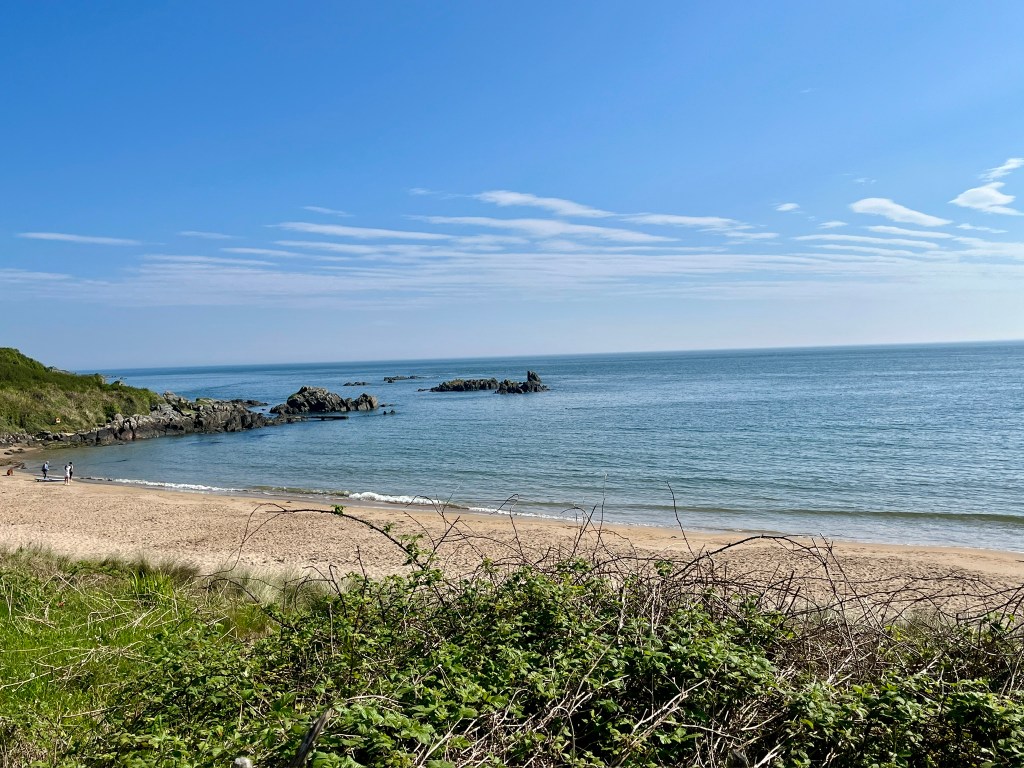
Today dawned bright, calm and warm. It had all the makings of a really lovely day for our last on the Wild Atlantic Way. It would be only 70 miles from start of day to the rest place for the evening. I wanted to be on the County Antrim coast to set us up to visit the Giants Causeway the following day. Under a bright blue sky we set off.

As I was to turn right out of the beach carpark I spied this right opposite and thought it was another gem of a find and simply had to be researched for more information. Alas I could find nothing so if there are any sleuths out there I would be interested to know. Not least why an RAF pilot is flying a Royal Navy aircraft.

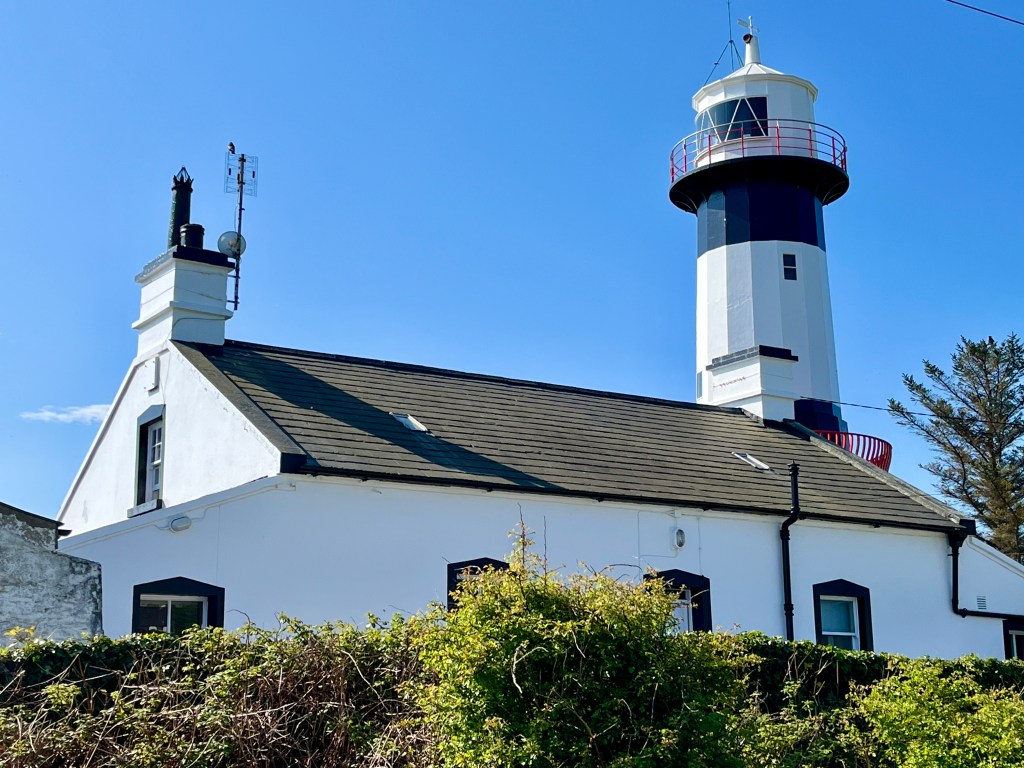
On we went following green and pleasant lanes to the west coast of Lough Foyle. I wanted to see the lighthouse at Inishowen head. It flashes Fl(2) WRG 10s. This means that it is a sectored light having a white sector, a green sector and a red sector and flashes twice in 10 seconds. The fact it is sectored means that is covering a danger. To be safe and clear of the danger you must stay in the white sector as you approach the Lough. If you see a green light you are too far to starboard and need to come to port to enter the white sector. If you see red you are too far to port and need to alter your course to starboard to enter the white sector. It is likely guiding ships into Lough Foyle passed some outlying rocks or sandbanks. Here is the mariners chart showing the light house circled and the three coloured sectors. The red is indeed covering outlying sandbanks whilst the green helps clear the headland. By keeping the light dead ahead and white ships can safely enter the Lough.

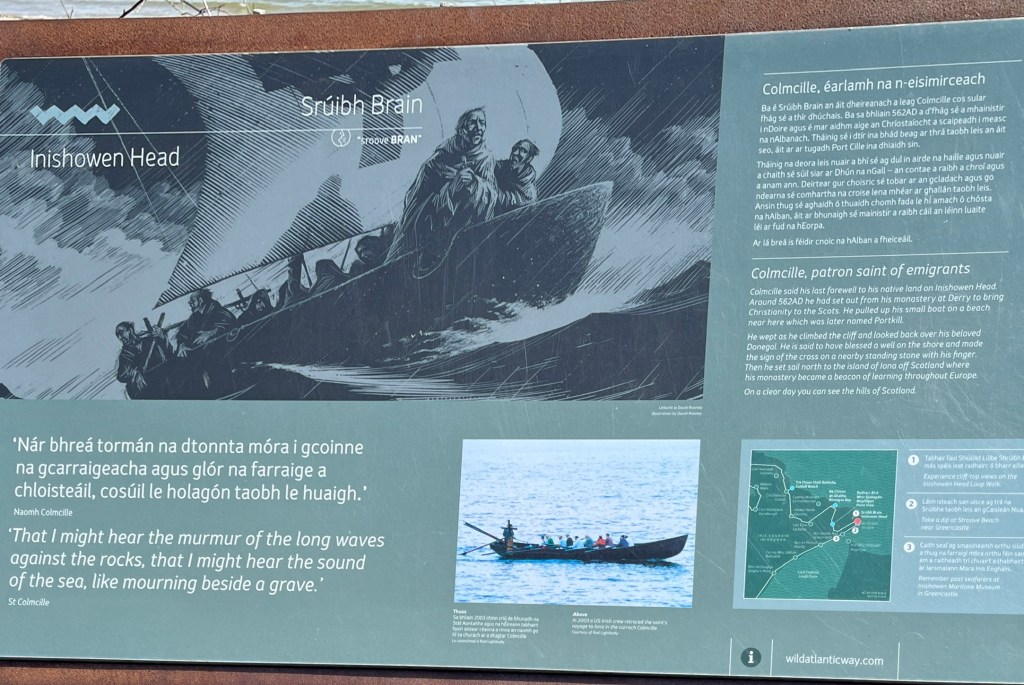
But as I have mentioned previously it is what you find that you did not know about that brings these places to life.Next to the lighthouse there was this information board.

The board talks of Colmcille. You may know him better as Columba. For it was from here that Columba sailed to Scotland and the Island of Iona to take Christianity to the Picts. I have been to his monastery on Iona but I always thought he left Ireland from closer to Rathlin island further east along the coast. If interested you can read more here.

We then took the road south along the Lough to the delightful little town on the waters edge of Greencastle to take on supplies before continuing south to the larger town of Moville. Still modest in size, Moville is a quintessential seaside town. It was a very pleasant little place. A notice board in the town states “Moville was a point of embarkation for travellers, especially emigrants, to Canada and the United States of America. In the late 19th century, steamships of the Glasgow-based Anchor Line and Allan Line made port at Moville while en route to and from New York, while just after the turn of the 20th century, the Canadian Pacific Line also established a terminal at the port as part of their service connecting Liverpool and Montreal for Canadian-bound Irish immigrants.”

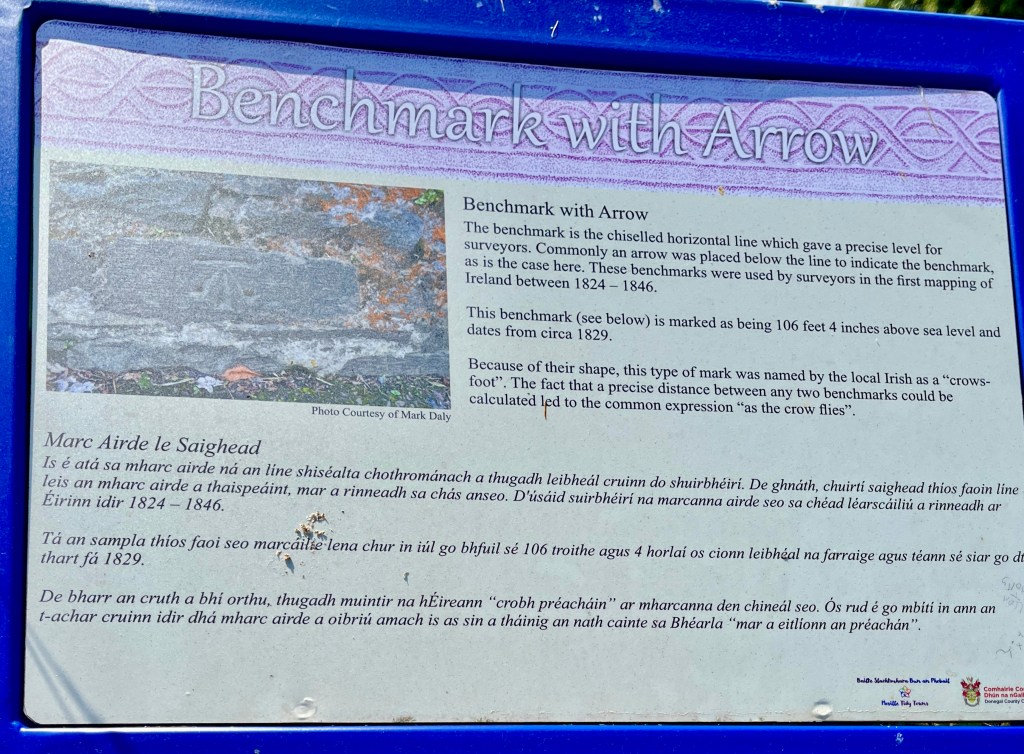
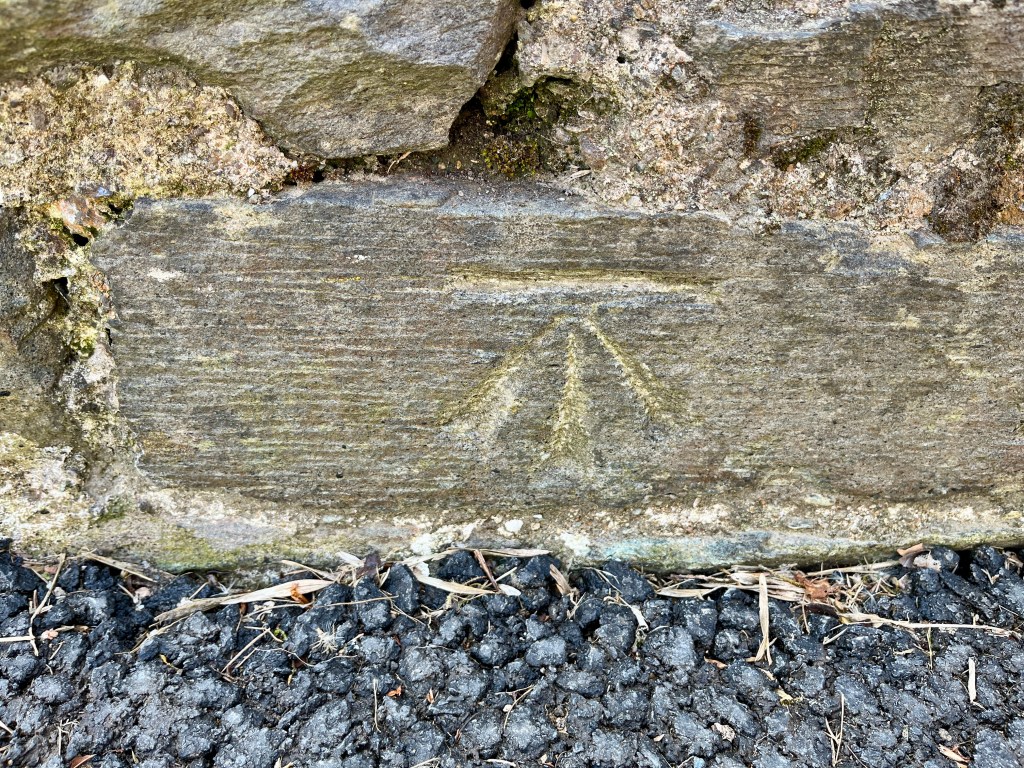
Another feature on interest was an arrow carved in a stone in a layby that we stopped briefly in, in yet another blink and you miss it item of interest. I can imagine that the sealed road was a cart track when the surveyors stone was inlaid into the wall.

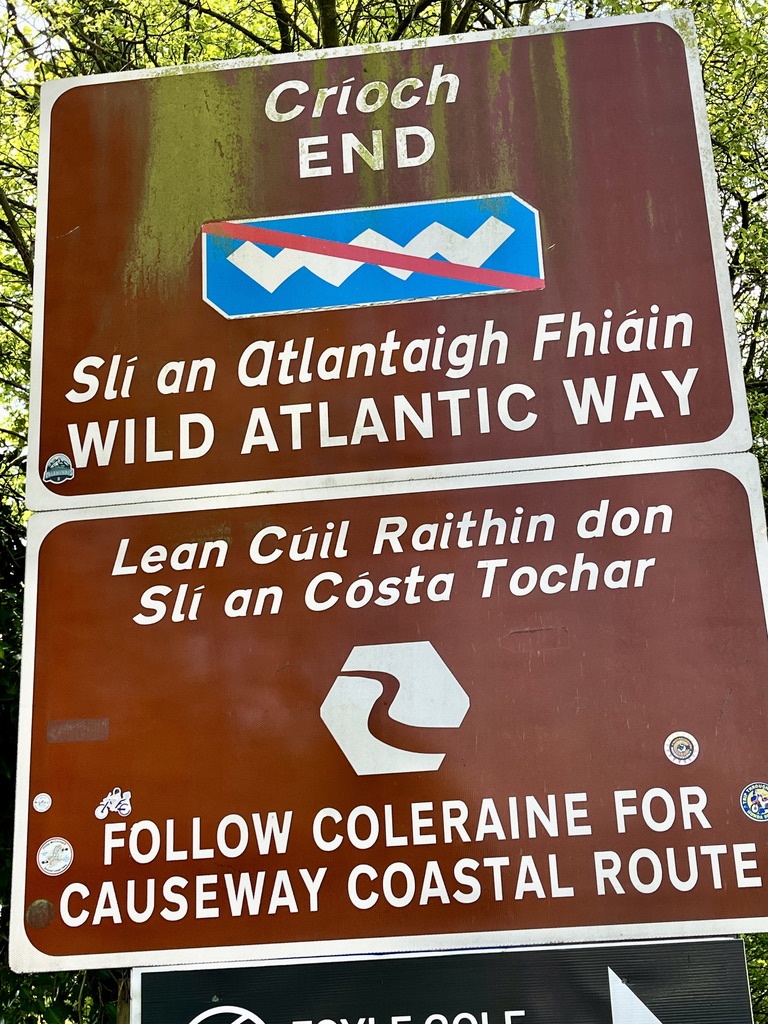
We continued on to the border with Northern Ireland and the end of the Wild Atlantic Way. The way ends right on the border in the rather nondescript town of Muff.

In the blink of an eye the road signs are in miles per hour instead of Kilometres and the phone numbers on businesses are now familiar UK format. There is no formal border crossing, no duty free, nothing. The road changes from the R238 on the Irish side to the A2 on the Northern Irish side. It is the same road. All the formalities we went through in Rosslare with the dog and the expense and the visit to Irish customs simply don’t exist here. We could simply have crossed the border and back with zero checks at all. Weird!

We passed through the large town of Derry/Londonderry. The name depends on who you talk to. The first road sign for Londonderry had the London spray painted over.

The adventure is not over yet. We will now pass along the Antrim Coast tourist route to get to our ferry in Belfast. We still have another 11 days with the van so we will cross to Scotland as there is still unfinished business there to attend to.

Our campsite tonight is the Golden Sands campsite in Benone. It is huge and busy and full of families enjoying the weather parked on top of each other. It is not our cup of tea at all but it was all I could find that had space available on a Saturday night. The glorious weather has brought everybody out for the weekend. Give me Sleepy Hollows campsite with its 10 pitches over this any day. There must be close to 300 caravans, motorhomes and large caravan homes here. But it will do for a night.

Todays distance: 70 miles.
Total distance: 1544 miles.
Day 10 Clifden to Lough Doo.

Today has been a good day. Why? Hang on and I will tell you.

Todays itinerary was suggested by a work colleague of mine. As mentioned yesterday Brian is the HR Director onboard ship and he is from round these parts. But before we got to his neck of the woods there was some sightseeing to do.

We left Clifden campsite and dropped down into the town and lo and behold what did we see. Two things of interest. One was a statue of two famous aviators, Alcock and Brown and the other was a collection of vintage and veteran motorcycles with riders wearing numbered tabards.

The first transatlantic flight landed just south of Clifden. You can read more here. This was rather poignant as we has also visited the landing site of the first Trans Tasman flight made by Guy Menzies when doing our South Island motorhome trip a few years ago.

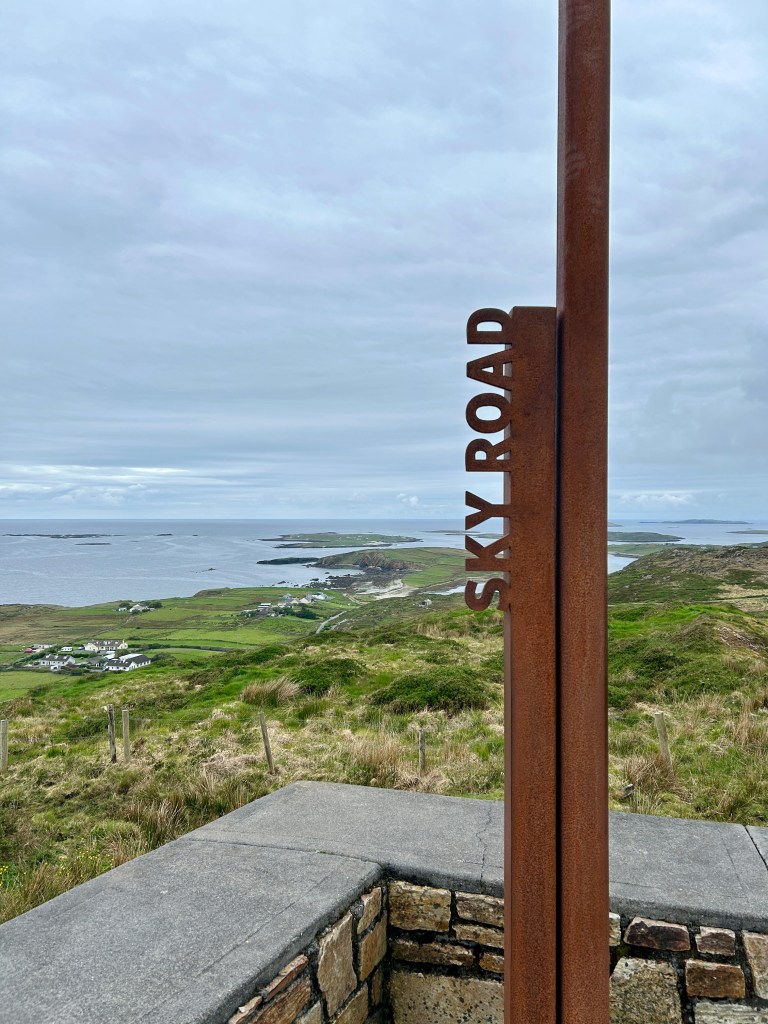
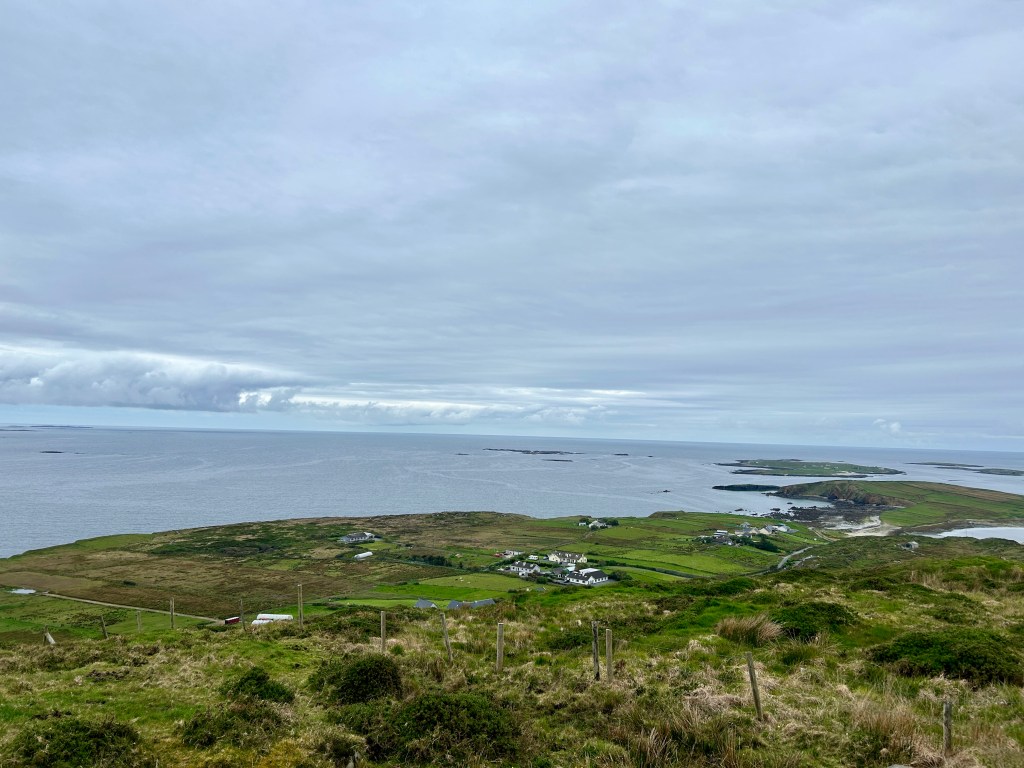
We set of to run around the circuitous route to the west of Clifden known as the Sky Road. You quickly appreciate how it got its name as the road climbs steadily out of Clifden. It is narrow in a car never mind a motorhome. At times it is precipitous but once at the top….oh my!

Whilst snapping away at the views and trying to talk to the horse who it turns out has zero conversation, these guys turned up.

These chaps were doing the annual Galway Rally. This is its 44th year. I got talking to them. Of course I did. The chap wearing vest 71 is from Fox glacier in New Zealand. You could not make this stuff up. He comes over every year to ride with his friend, sat on the bike wearing 76. His friend owns both bikes but lends one out so they can ride together. The chap from new Zealand met his friend some 20 years ago whilst on holiday. He comes over from New Zealand every year since to take part in the rally.

Our dog Leia was interested too and wowed a few onlookers with her good looks

From there we set off for my colleagues home village where the family used to own the local hotel. We thought we would go a take a few photos for him. Little did we know his brother still lived in the village. The roads got really narrow at times. Thank goodness there is little traffic.
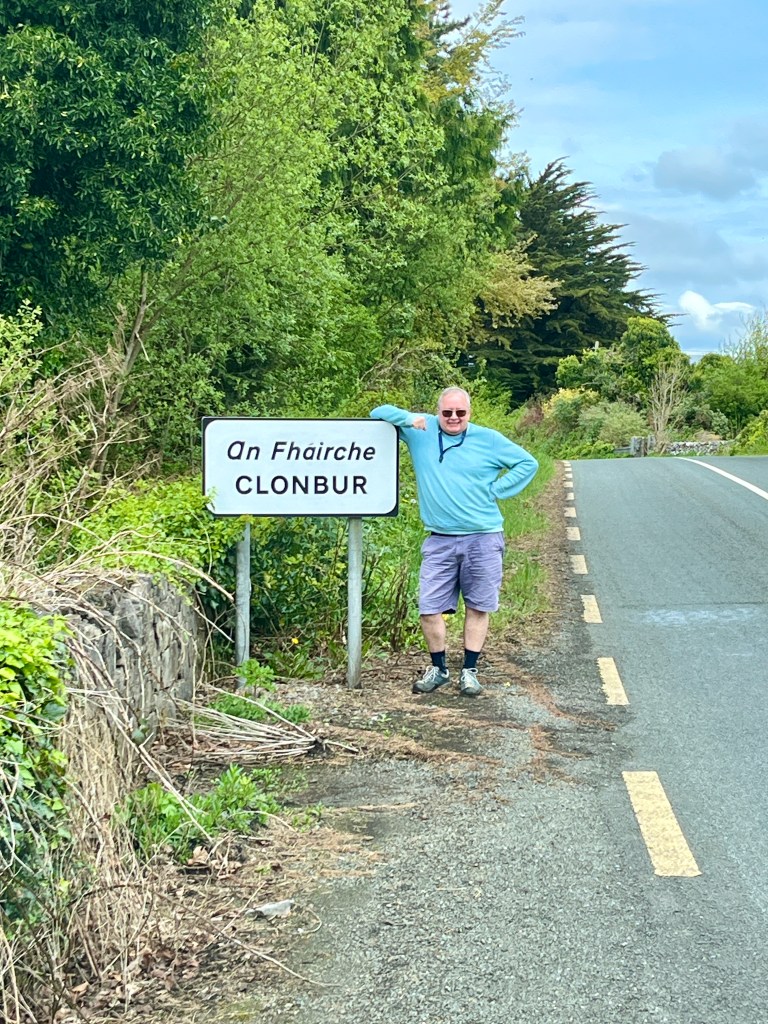
The road from Mam Cross across the moors and along the Lough to the village of Clonbur could easily have been lifted out of New Zealand. The hills, the moors and even the plants and trees all looked the same. There is me trying to look suave in my driving gear.

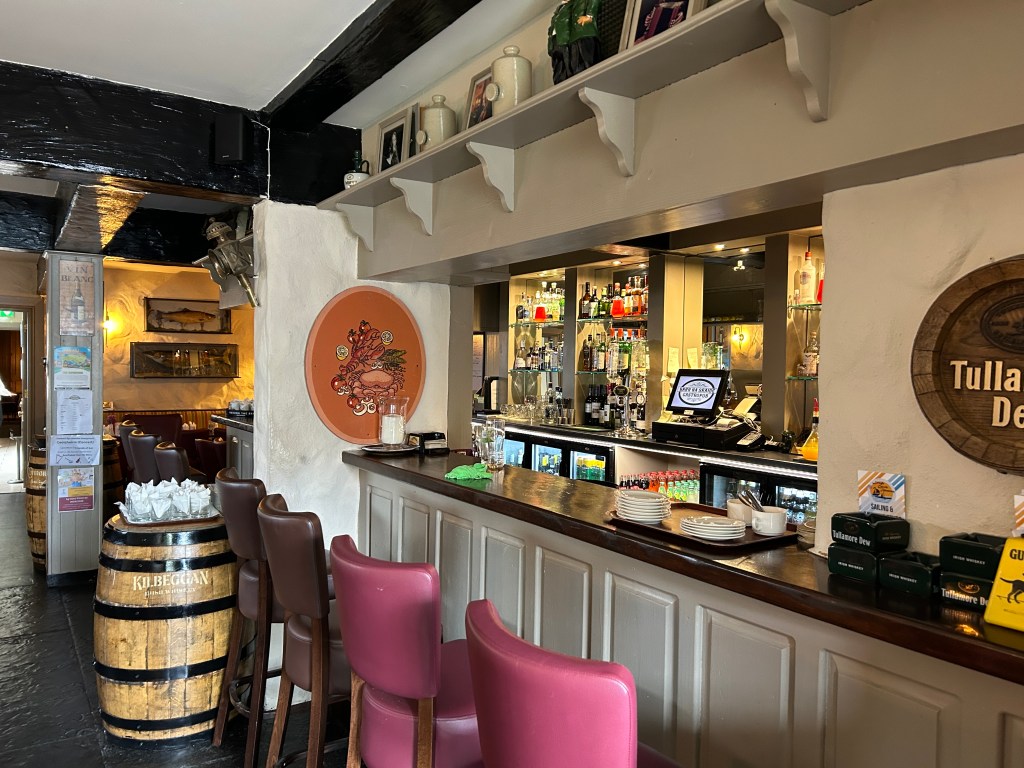
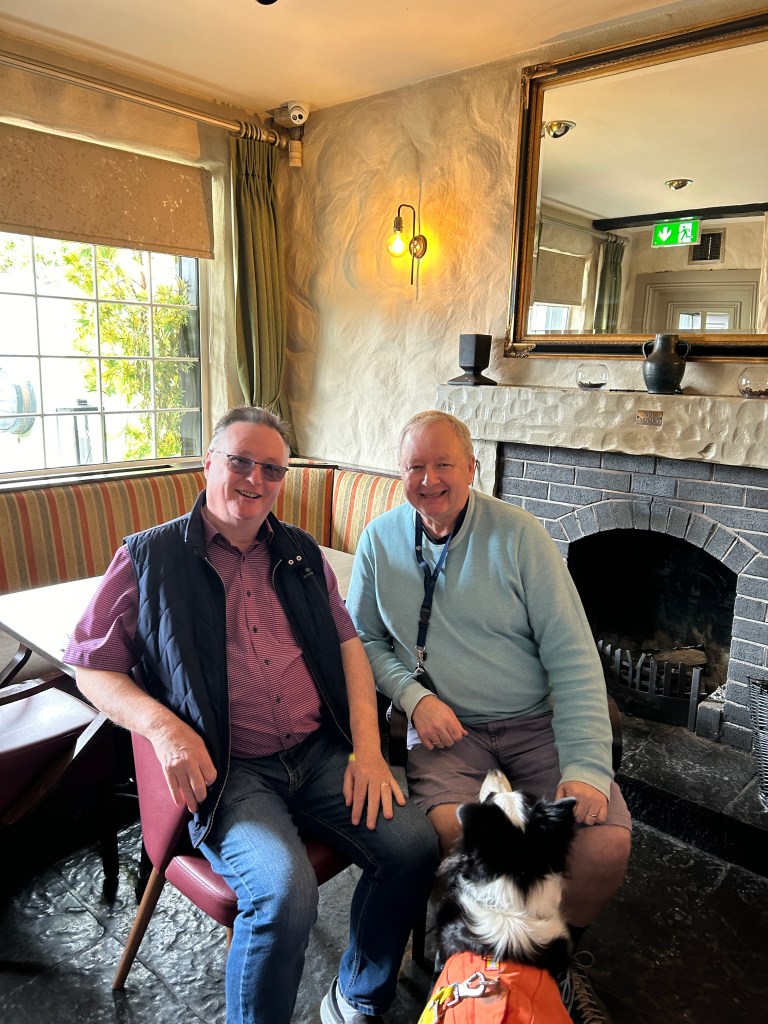
Brians brother Eddie came over to greet us whilst we were having some lunch on the old family hotel. . My goodness he is a clone! We had a great chat.

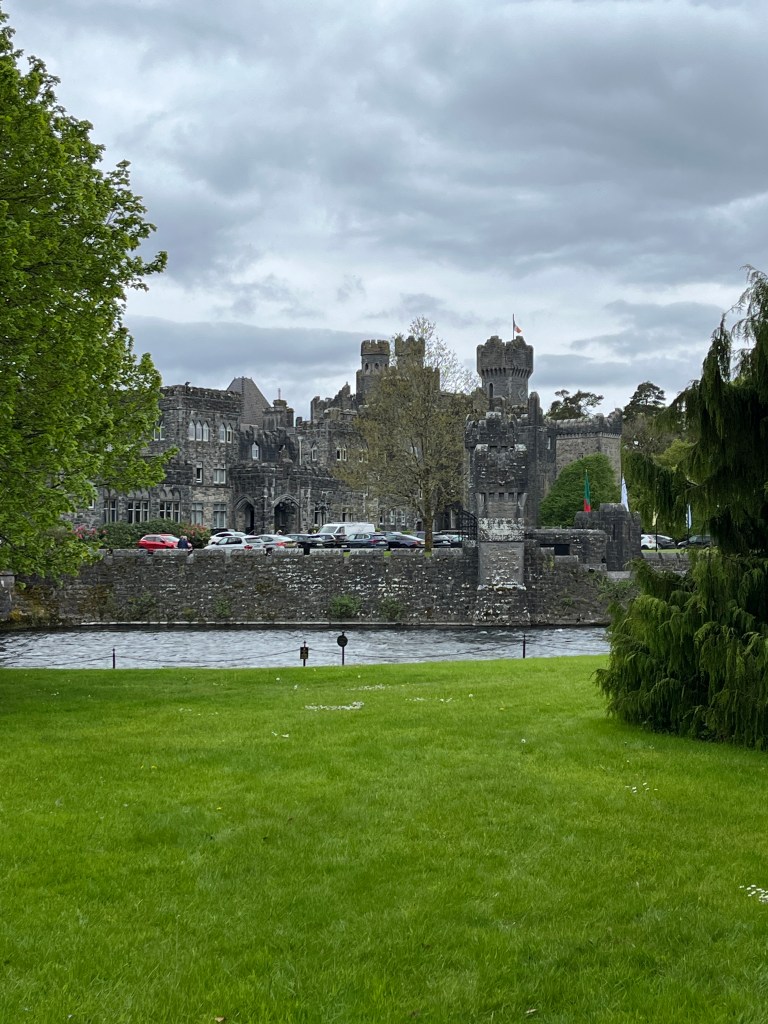
We continued onto Cong just over the border in County Mayo. Its claim to fame was that The Quiet Man with John Wayne and Maureen O’Hara was filmed there. It is a stunning little place. A short walk away is Ashford Castle which is now an exclusive Hotel resort and Spa and featured in the film.

A statue of the two leading actors immortalises the films poster.

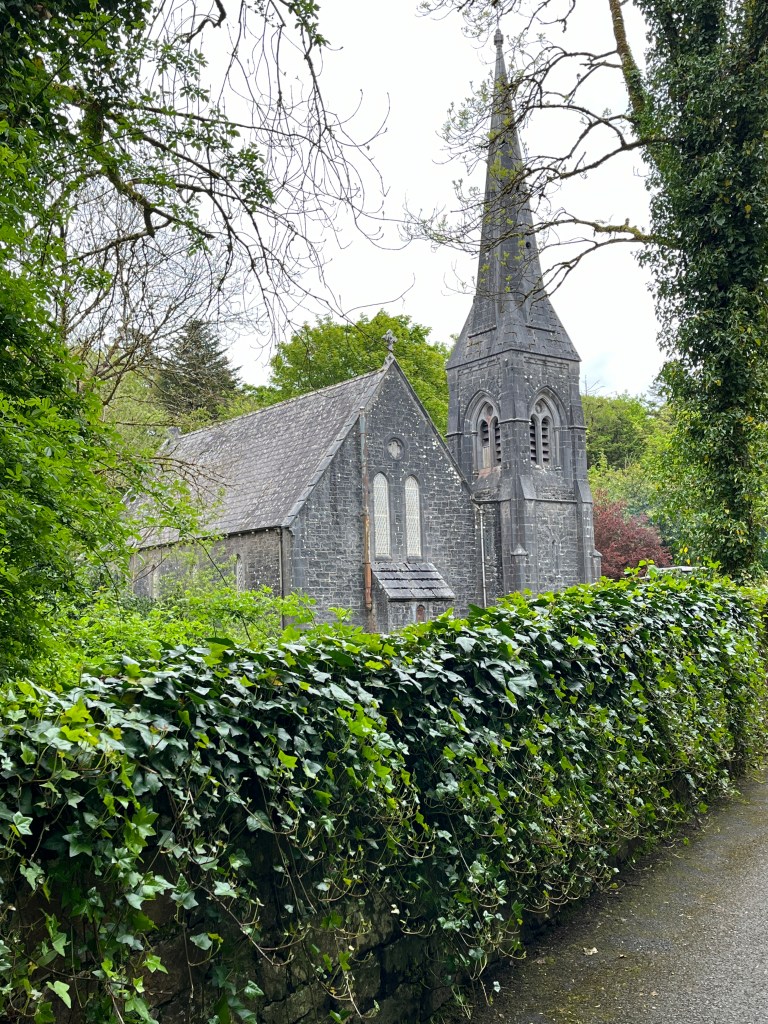
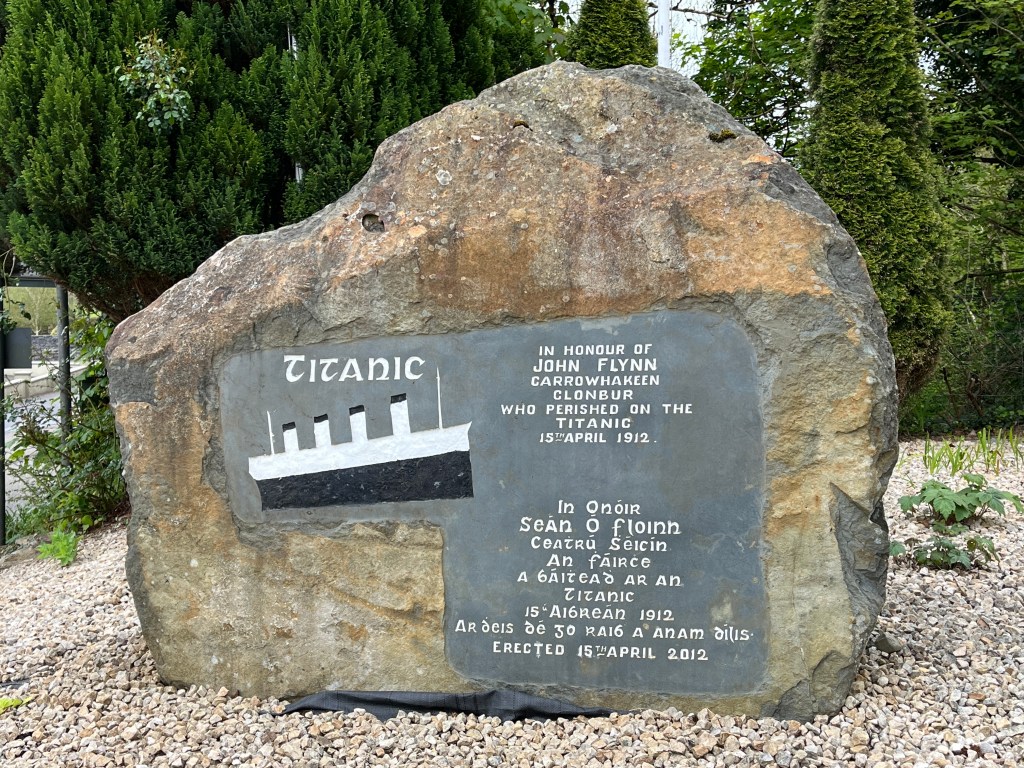
We back tracked to Conbur and saw this little surprise.

Another little surprise find, missed if you don’t deviate off the normal tourist route.

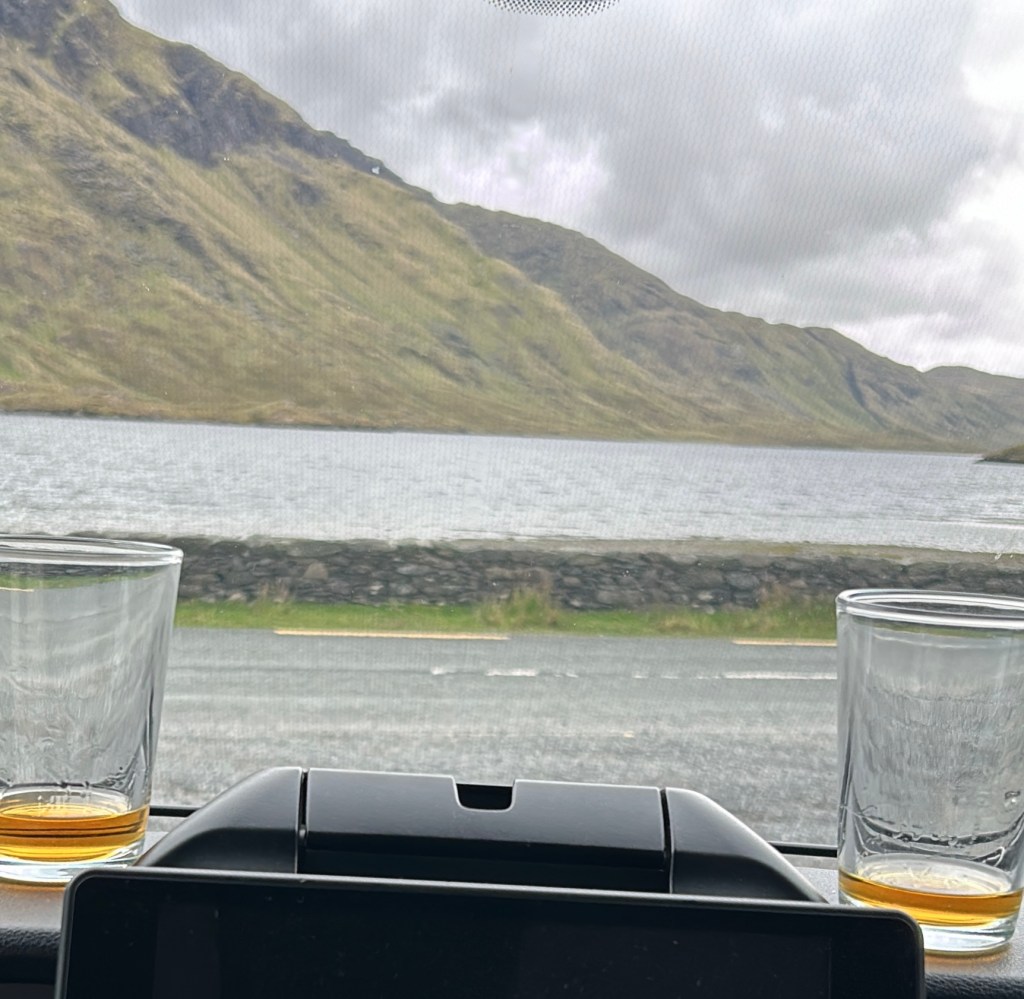
We took Eddies recommendation of the back road through the hamlet of Finney before arriving at our spot for the night. A parking bay alongside Lough Doo. We are alone. It is perfect. Except for the biting sand flies that have rather taken a fancy to us.
The view from the van.
Only one thing left to do.

A wee glass of Jamiesons to watch the sun go down with. Night night.

Todays distance: 90 miles

Total distance: 937 miles.